
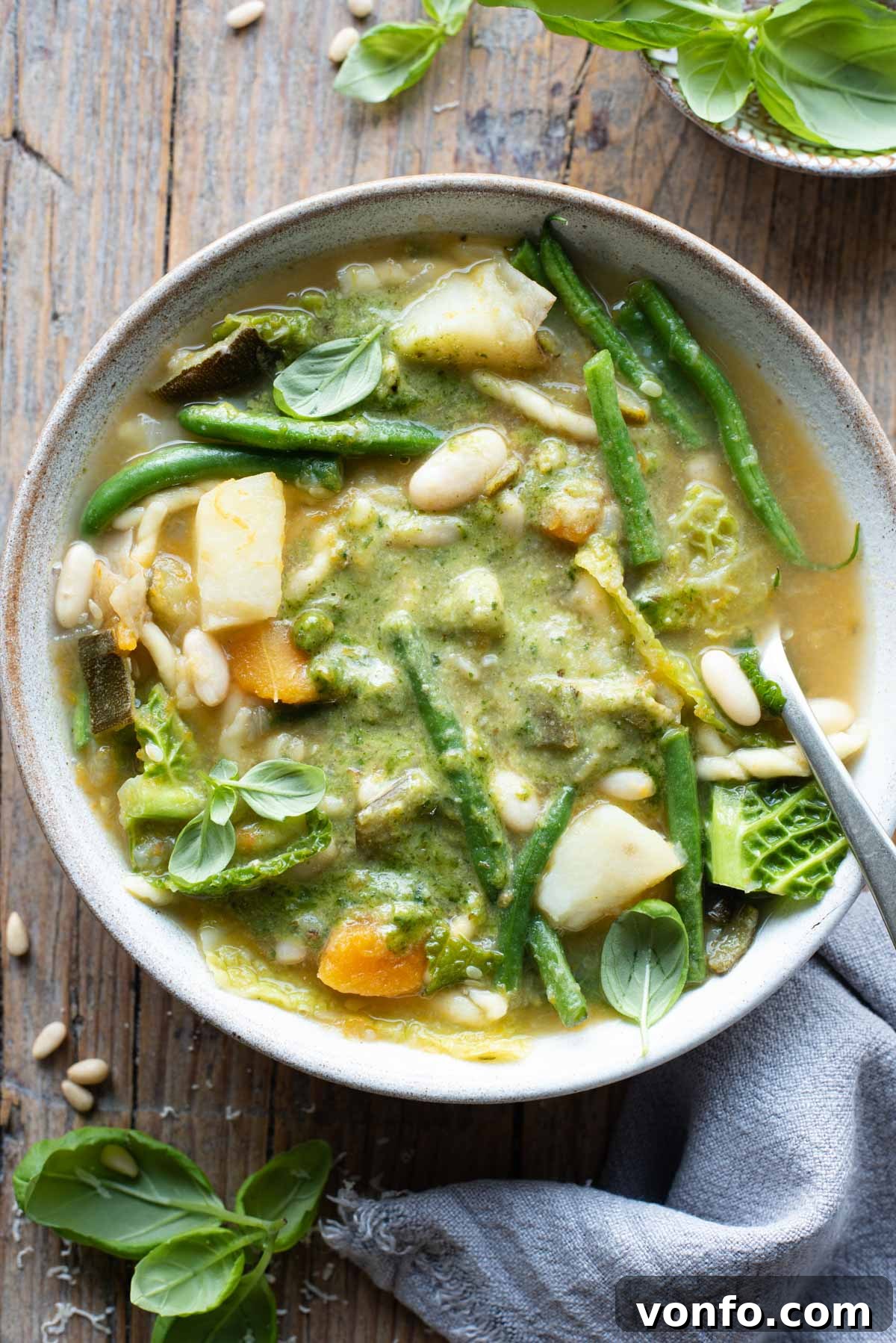
Ligurian Minestrone Soup is a true culinary gem from the beautiful Italian region of Liguria. This robust and flavorful soup is a celebration of fresh, seasonal produce, meticulously prepared and brought to life with a generous topping of homemade Genovese pesto. Overflowing with nourishing ingredients like butternut squash, tender zucchini, crisp cabbage, protein-rich beans, and comforting pasta, this recipe offers a deeply satisfying and wholesome meal that is both incredibly delicious and exceptionally healthy.
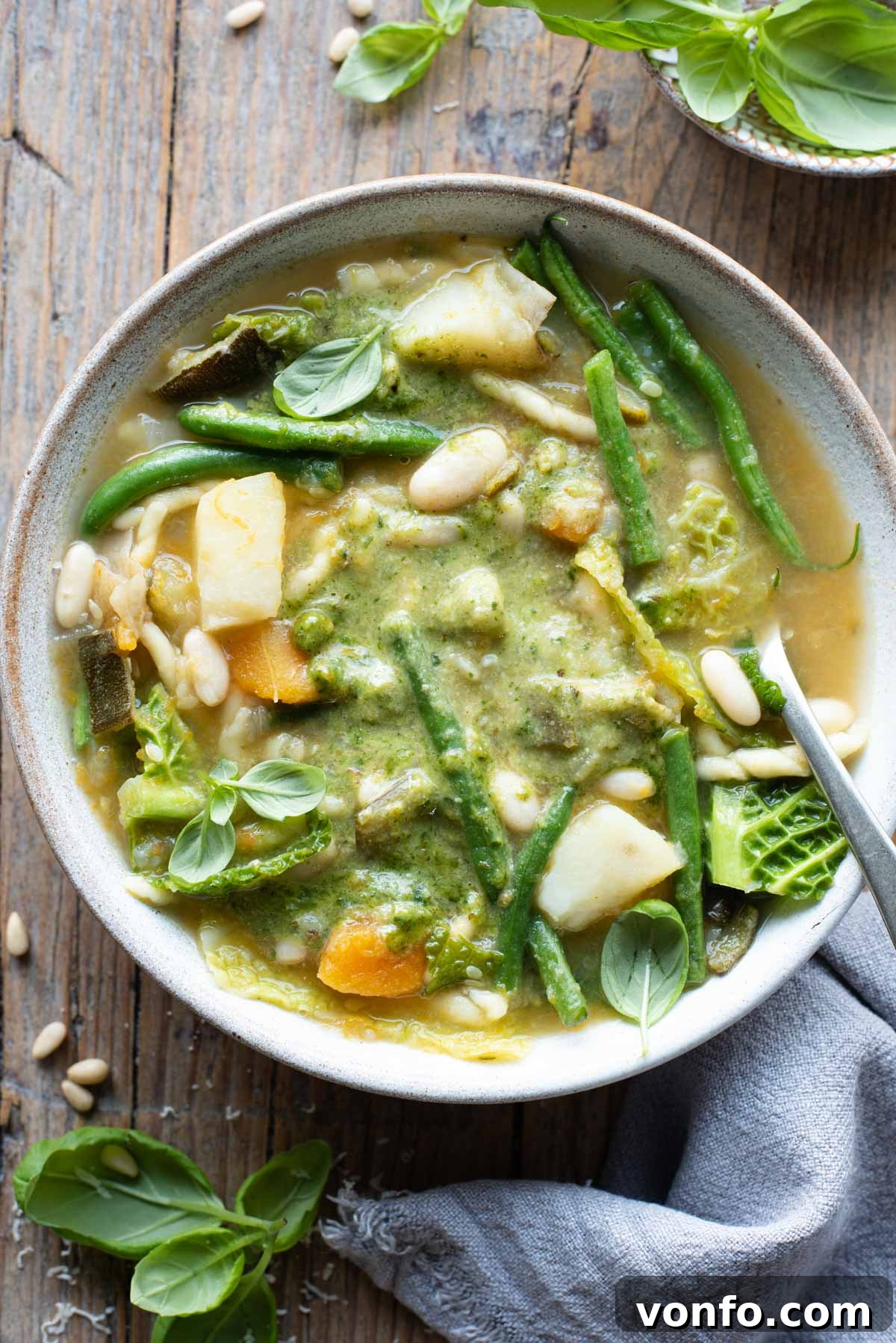
Discovering Ligurian Minestrone: A Taste of Italy’s Northwest
Minestrone is a cherished staple across Italy, a versatile soup that truly embodies the essence of Italian home cooking. Its character changes from region to region, from household to household, and most importantly, with the rhythm of the seasons. While some versions, like our Tuscan Minestrone or the light and fresh Minestrone Primavera, embrace tomatoes or lighter vegetables, the Ligurian iteration, known as Minestrone alla Genovese, stands out for its unique profile.
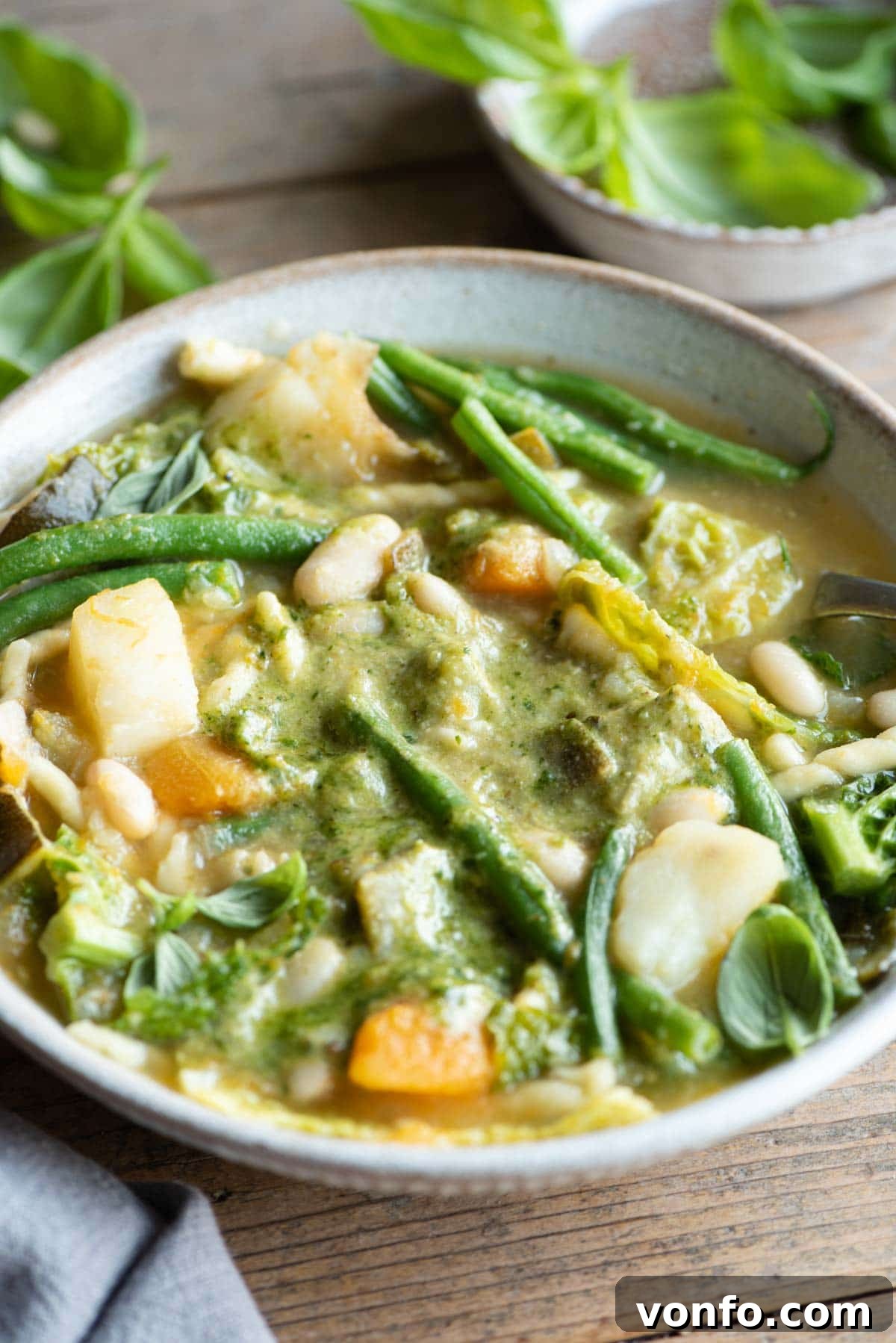
Unlike many other regional minestrones, the authentic Ligurian version typically contains no tomatoes. Its rich, savory broth forms the perfect canvas for a medley of garden vegetables, beans, and a touch of pasta. What truly elevates Minestrone alla Genovese is the exquisite addition of basil pesto. Swirled in at the very end, the vibrant, aromatic basil pesto infuses the soup with an unparalleled depth of flavor and freshness that is utterly irresistible. Trust us when we say: homemade pesto is not just an option, it’s an absolute must for achieving that truly authentic Ligurian taste.
This traditional recipe is also naturally vegetarian, making it a fantastic choice for those seeking plant-based meals (just ensure you use vegetable stock and a vegetarian-friendly hard cheese for your pesto, such as a non-animal rennet Parmesan or Pecorino alternative). Pair this wholesome soup with a crusty slice of artisanal bread or a piece of salty focaccia, and prepare to be transported to the sun-drenched hills of Liguria with every spoonful.
Essential Ingredients for Authentic Ligurian Minestrone
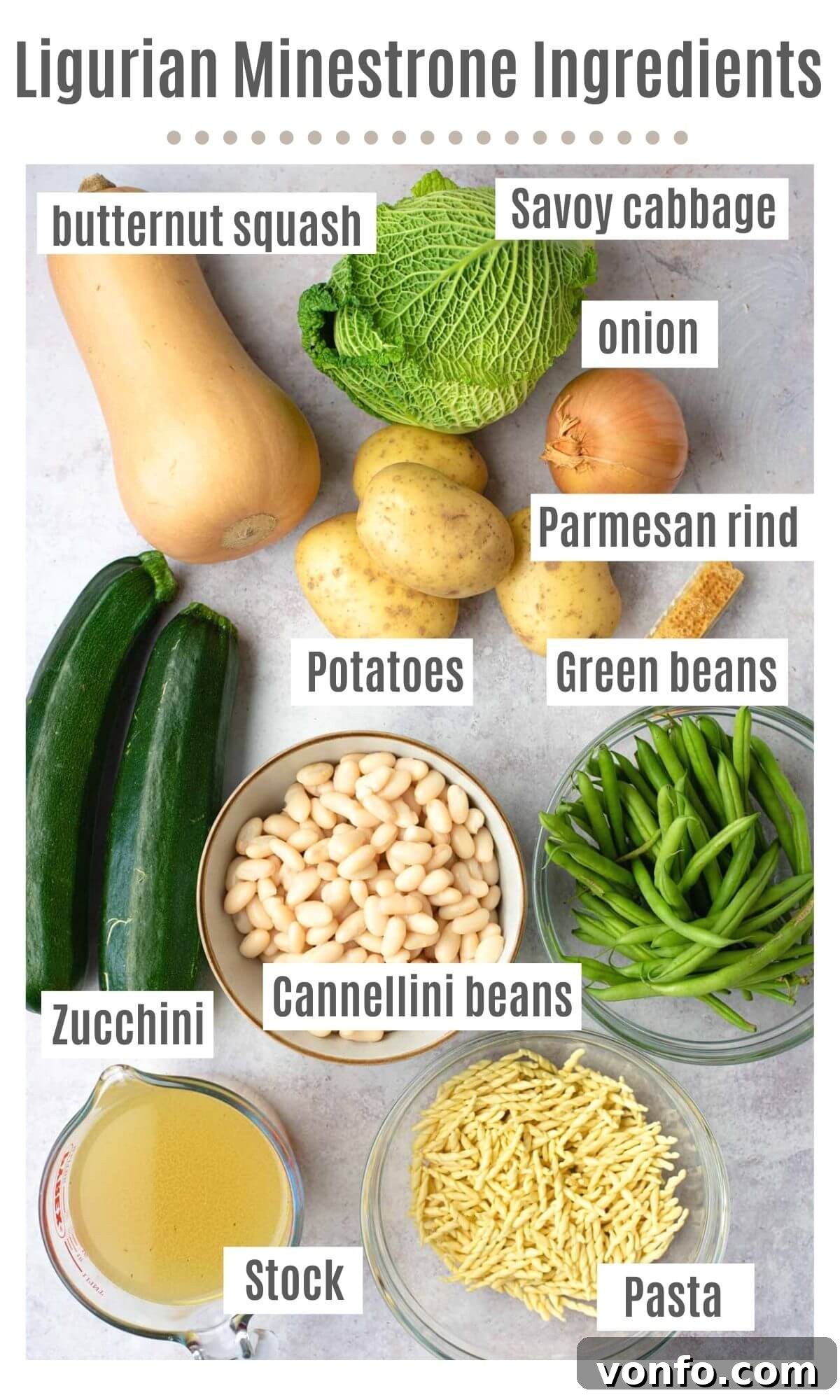
Crafting the perfect Ligurian Minestrone begins with selecting the finest ingredients. Below, you’ll find a detailed list of what you’ll need, along with helpful tips and potential substitutions to ensure your soup is nothing short of spectacular. The image below provides a visual guide to gather your components before you begin cooking.
For the Minestrone Soup:
- Onion: A single, finely chopped onion forms the aromatic base of this hearty soup, adding a subtle sweetness as it softens.
- Butternut Squash: We recommend a small butternut squash, yielding approximately 3 cups (450g) once chopped. Its creamy texture and sweet flavor are delightful. Feel free to substitute with any other winter squash variety or even carrots for a similar earthiness.
- Potatoes: Four medium potatoes, cut into bite-sized cubes (around 3 cups/450g), provide a comforting starchiness that thickens the soup slightly and adds body.
- Zucchini (Courgette): Two medium zucchini contribute a fresh, slightly sweet note. If zucchini isn’t available, eggplant (aubergine) makes a wonderful alternative, absorbing the rich flavors of the broth.
- Green Beans: About 2 cups (180g) of fresh green beans, cut into halves or thirds, ensure they are easy to enjoy with a spoon. They add a lovely crunch and verdant color.
- Cannellini Beans: Two cups (300g) of canned cannellini beans are convenient and provide a creamy texture and protein boost. Borlotti beans are another excellent traditional choice. If using dried beans, remember to soak them overnight and cook them thoroughly before adding them to the soup.
- Pasta: Approximately 1.5 cups (150g) of a short or small pasta shape, such as ditalini, elbow macaroni, or small shells, is ideal. The pasta adds a satisfying chewiness and helps make the soup a complete meal.
- Stock: Seven cups (1.6 liters) of either chicken or vegetable stock. Opt for a low-sodium variety to better control the seasoning of your soup. For a strictly vegetarian version, vegetable stock is essential.
- Parmesan Rind: This is an optional but highly recommended secret ingredient! Adding a parmesan rind to the simmering soup infuses it with an incredible depth of umami and cheesy flavor. I often freeze leftover rinds specifically for this purpose.
For the Fresh Genovese Pesto:
The pesto is the crown jewel of this dish, so using fresh, high-quality ingredients is paramount. Below is what you’ll need for a truly authentic Genovese pesto.
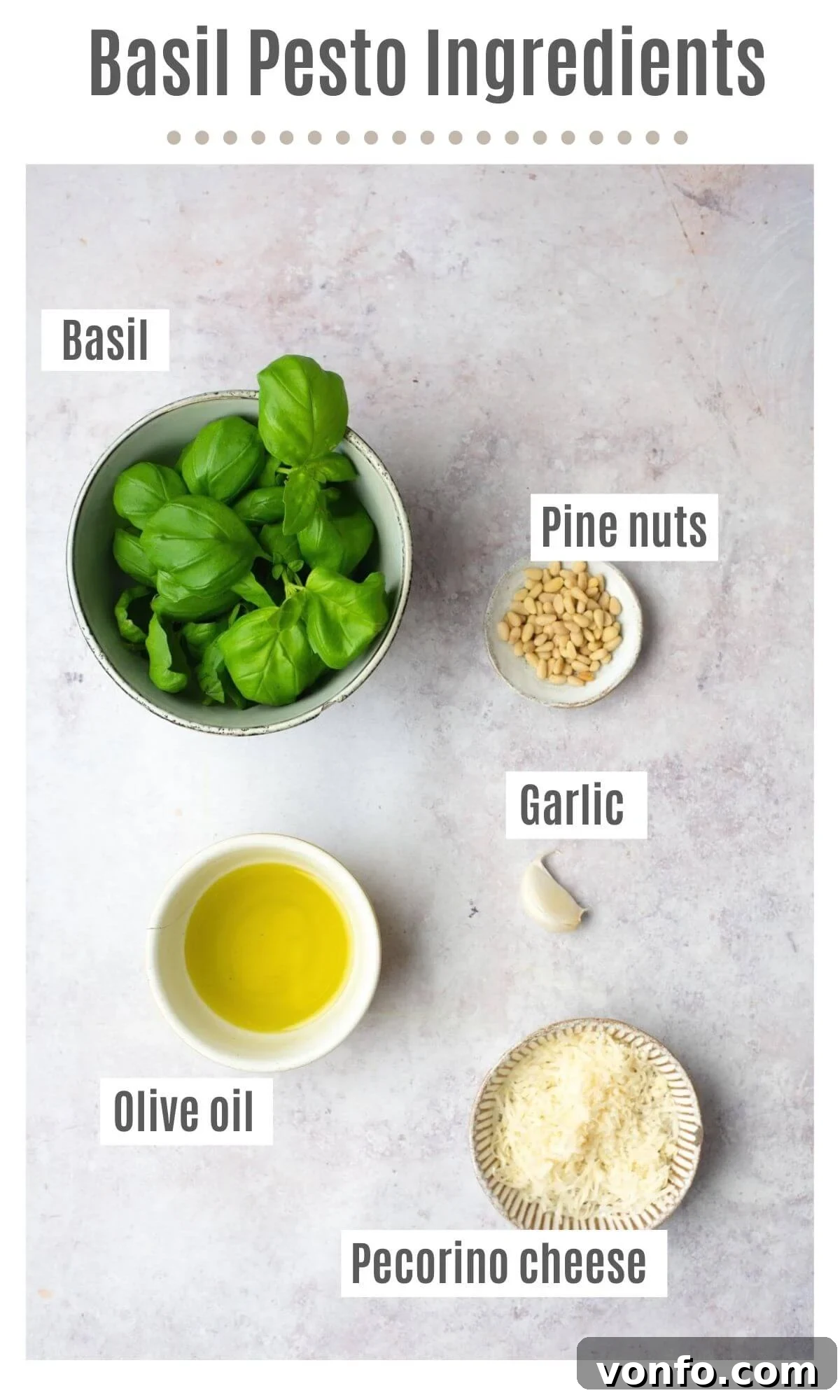
- Fresh Basil: Two tightly packed cups (50g) of fresh basil leaves are the star. Ensure the basil is vibrant green, without any bruising or wilting, for the best flavor and color.
- Pine Nuts: Two tablespoons (30g) of pine nuts provide a delicate, buttery richness. For variations, walnuts, cashews, or even pistachios can be used, offering distinct yet equally delicious flavor profiles.
- Garlic: A single small clove, or half of a large one, is all you need. The garlic should enhance, not overpower, the delicate basil.
- Pecorino or Parmigiano Reggiano Cheese: Two-thirds of a cup (40g) of freshly grated Pecorino or Parmigiano Reggiano cheese, or a mixture of both, adds a salty, savory kick. Remember to use a vegetarian-friendly hard cheese if making a fully vegetarian soup.
- Extra Virgin Olive Oil: One-third cup (80ml) of good quality extra virgin olive oil is crucial. Its fruity, peppery notes bind the pesto together and contribute significantly to its taste.
- Salt: To season the pesto to perfection.
Step-by-Step Guide to Crafting Your Ligurian Minestrone
Preparation Tips for a Smooth Cooking Process!
- Begin by washing and preparing all your vegetables. Finely chop the onion, and then cut all other vegetables into uniform, bite-sized pieces to ensure even cooking.
- Have your chosen stock measured and ready to go. This streamlines the cooking process.
Follow these detailed steps to create your nourishing Ligurian Minestrone, enhanced by vibrant homemade pesto.
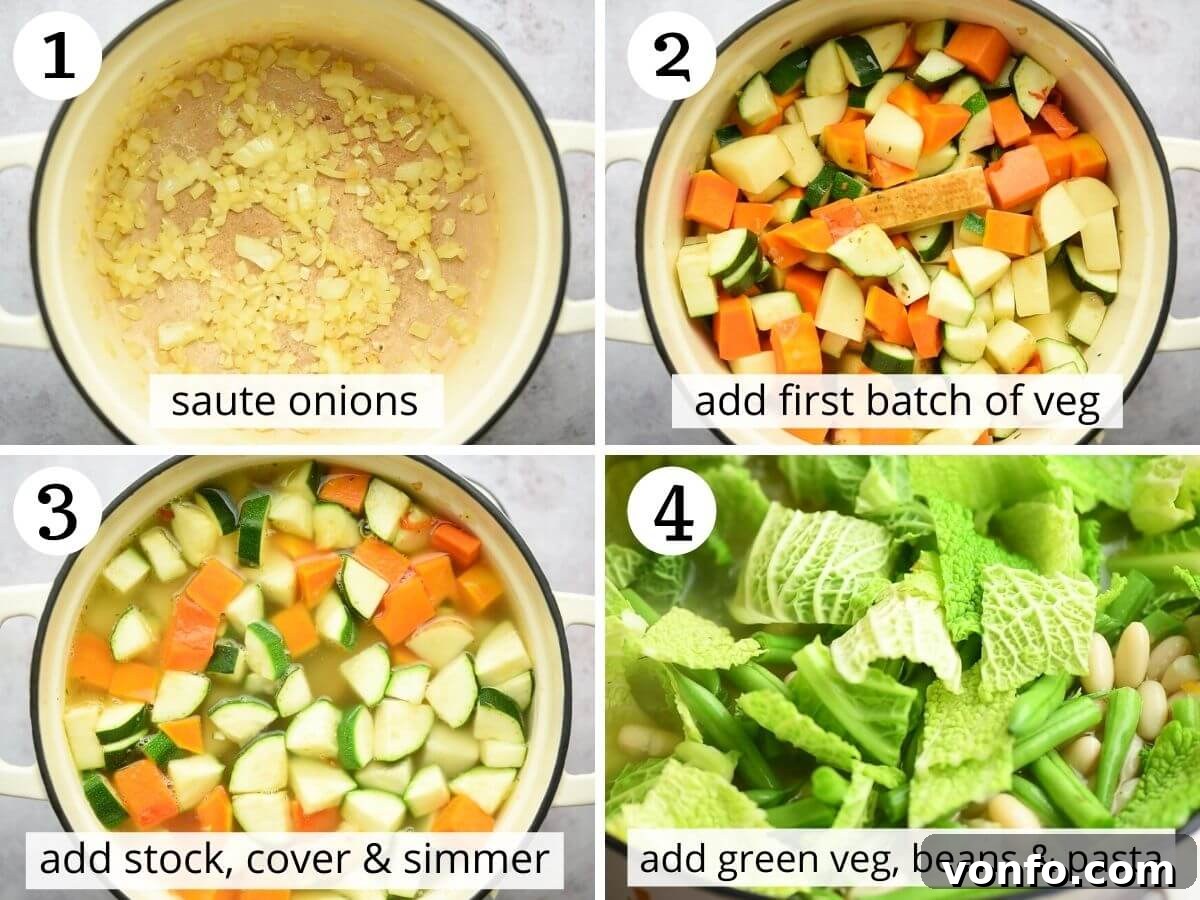
- Sauté Aromatics and First Vegetables: In a large, deep pot or Dutch oven, heat 1-2 tablespoons of high-quality olive oil over medium heat. Add the finely chopped onion and sauté gently for 2-3 minutes until it becomes soft and translucent. Next, add the diced butternut squash, zucchini, and potatoes to the pot. If you’re using a Parmesan rind, add it now to infuse the broth with its rich flavor. Pour in 6.5 cups (1.6 liters) of your chosen stock and add a good pinch of salt. Bring the mixture to a boil, then reduce the heat to low, cover the pot, and let it simmer for 25 minutes. This allows the harder vegetables to soften and flavors to meld beautifully.
- Add Remaining Vegetables and Pasta: After 25 minutes, uncover the pot. Stir in the savoy cabbage, green beans, and canned cannellini beans. Add the short pasta. Cover the pot again and let it cook for 5 minutes, which will help wilt the cabbage. Then, uncover and continue to simmer for another 5 minutes, or until the pasta is al dente and the vegetables are tender but still hold their shape.
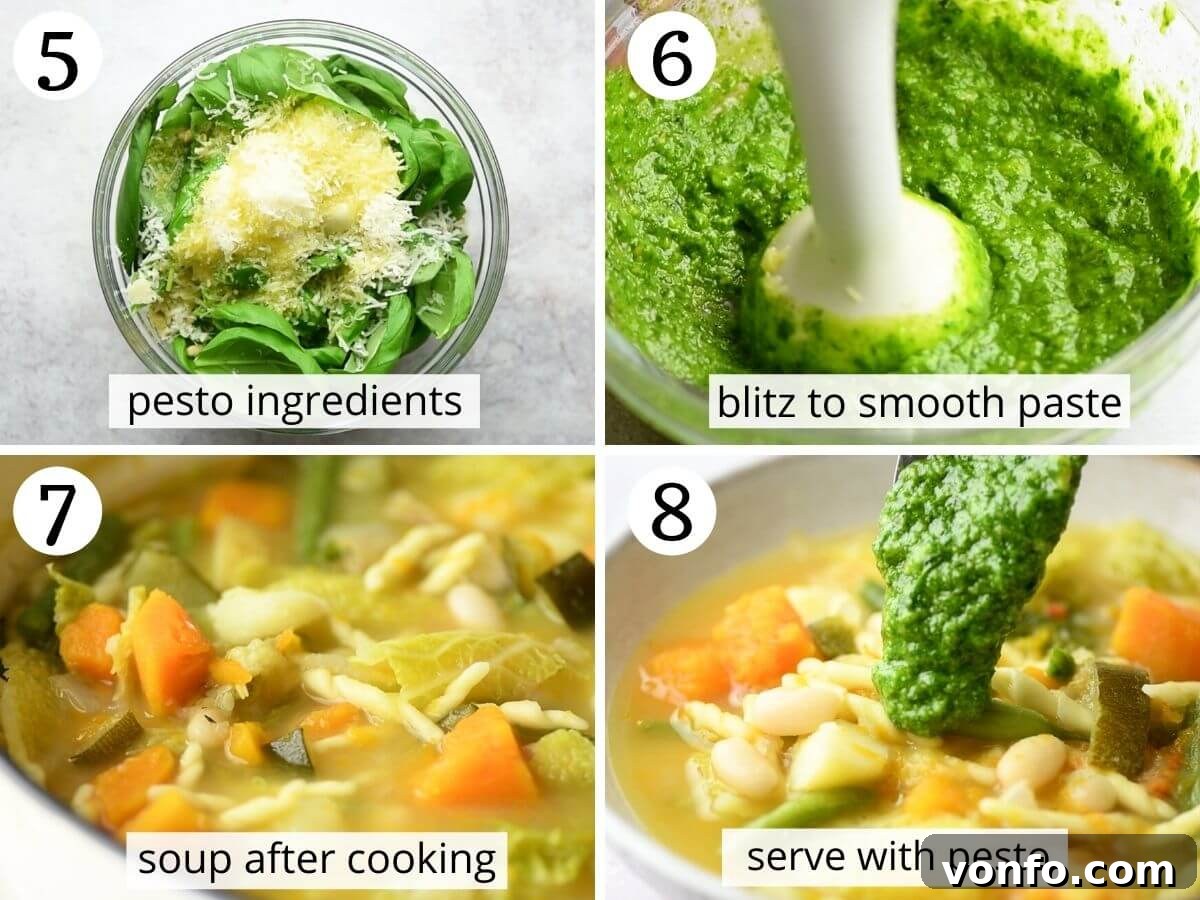
- Prepare the Fresh Pesto: While the soup finishes cooking, prepare your Genovese pesto. Combine all pesto ingredients – fresh basil, pine nuts, small garlic clove, grated Pecorino or Parmigiano Reggiano cheese, and olive oil – in a bowl. Using an immersion blender, blitz the ingredients until they form a smooth, vibrant green paste. Alternatively, you can use a food processor for a slightly chunkier pesto, or a traditional mortar and pestle for the most authentic texture and flavor.
- Season and Serve: Once the soup is fully cooked, taste and adjust the seasoning with additional salt if needed. Ladle the hot, steaming minestrone into individual serving bowls. Top each bowl with a generous, heaped teaspoon of the freshly made basil pesto. Stir the pesto into the soup just before eating to release its full aromatic potential. Serve immediately with extra bread for dipping!
Expert Tips & Frequently Asked Questions for Perfect Minestrone
To help you master this delightful Ligurian Minestrone, here are some comprehensive tips and answers to common questions:
- Embrace Vegetable Versatility: Minestrone is a wonderfully adaptable soup. It’s the perfect recipe for utilizing any leftover vegetables you have in your fridge. Don’t be afraid to experiment with what’s in season or what you have on hand. Root vegetables like carrots and parsnips, leafy greens like kale or spinach, or even bell peppers can be great additions.
- Uniform Vegetable Cuts: For even cooking and ease of eating, always ensure your vegetables are cut into consistent, bite-sized pieces. This not only guarantees a harmonious texture in every spoonful but also allows all ingredients to cook through at roughly the same rate.
- Optimal Pasta Addition: Pasta tends to absorb liquid and can become mushy if left sitting in the soup for too long. For the best texture, we highly recommend adding pasta only to the portions you plan to eat immediately. If you’re making a large batch for leftovers, cook the pasta separately and add it to individual bowls just before serving.
- Using Dried Beans: If you prefer to use dried cannellini or borlotti beans instead of canned, make sure to soak them overnight (typically for at least 12 hours) before cooking. Once soaked, you can add them to the pot at the same time you add the stock in Step 1, allowing them to cook until tender along with the other hardier vegetables.
- Making it Vegetarian: This Minestrone is easily adaptable for a fully vegetarian diet. Simply ensure you use a high-quality vegetable stock instead of chicken stock. For the pesto, choose a vegetarian-friendly hard cheese that uses non-animal rennet, such as specific brands of Parmesan or Pecorino alternatives.
- Storing Leftovers: Leftover Minestrone Soup, without pasta added, will keep beautifully in an airtight container in the refrigerator for up to 2-3 days. Reheat gently on the stovetop until piping hot.
- Freezing Minestrone: This soup freezes exceptionally well, making it ideal for meal prep. Freeze the soup (without added pasta) on the same day it’s made for optimal freshness. Store in freezer-safe containers for up to 3 months. Thaw overnight in the refrigerator and reheat as directed for leftovers, adding freshly cooked pasta if desired.
- Pesto Application and Storage: Always add the pesto to individual servings of soup, rather than directly to the main pot. Adding it to the entire pot can cause the delicate flavors of the pesto to diminish over time. Leftover homemade basil pesto will stay fresh in an airtight container in the refrigerator for up to 3 days. A thin layer of olive oil on top can help prevent browning.
More Delicious Italian Soup Recipes to Explore
If you’ve enjoyed this Ligurian Minestrone, we invite you to discover more comforting and authentic Italian soup recipes from our collection:
- Pappa al Pomodoro (Italian Bread Soup)
- Carabaccia (Tuscan Onion Soup)
- Italian Lentil Soup (Zuppa di Lenticchie)
- Tuscan Chickpea Soup
- Tuscan Farro Soup with Beans
We hope you thoroughly enjoy preparing and savoring this authentic Ligurian Minestrone Soup. If you’ve tried this recipe or any other delightful dish from our blog, please don’t hesitate to rate it and share your experience in the comments section below. Your feedback means the world to us! You can also stay connected and discover more of our delicious food by following us on Facebook, Instagram, and Pinterest, or by signing up for our newsletter.
Ligurian Minestrone Soup with Pesto Recipe Card
This recipe combines hearty vegetables and pasta with the fresh, aromatic kick of homemade Genovese pesto. A true taste of Liguria!
Quick Facts:
- Prep Time: 15 minutes
- Cook Time: 30 minutes
- Total Time: 45 minutes
- Servings: 8 servings
Ingredients for Minestrone:
- 1 onion, finely chopped
- 1 small butternut squash (approx. 3 cups/450g), peeled and diced
- 4 medium potatoes (approx. 3 cups/450g), diced
- 2 zucchini (courgette), diced
- 2 cups green beans (180g), cut into 1-inch pieces
- ¾ cups savoy cabbage (250g), shredded
- 2 cups canned cannellini beans (300g), rinsed and drained (see notes for dried beans)
- 1.5 cups short pasta (150g), e.g., ditalini or small shells
- 1 parmesan rind (optional, but highly recommended for flavor)
- 7 cups chicken or vegetable stock (1.6 liters), low sodium
- 1-2 tablespoons olive oil
- Salt, to taste
Ingredients for Genovese Pesto:
- 2 tightly packed cups fresh basil leaves (50g)
- 2 tablespoons pine nuts (30g)
- 1 small clove garlic
- ⅔ cup freshly grated Pecorino or Parmigiano Reggiano cheese (40g)
- ⅓ cup olive oil (80ml)
- Salt, to season
Instructions:
- Prepare Ingredients: Finely chop the onion and dice all other vegetables into uniform, bite-sized pieces. Have your stock ready.
- Sauté Onions and First Vegetables: In a large, deep pot, heat 1-2 tablespoons of olive oil over medium heat. Add the finely chopped onion and sauté for 2-3 minutes until soft.
- Simmer Harder Vegetables: Add the diced zucchini, squash, and potatoes to the pot. Pour in 6.5 cups (1.6 liters) of stock and add a good pinch of salt. If using, add the Parmesan rind. Bring to a boil, then cover the pot, reduce heat to low, and simmer for 25 minutes.
- Add Remaining Ingredients: Uncover the pot. Add the green beans, canned cannellini beans, shredded cabbage, and pasta. Cover again for 5 minutes to wilt the cabbage, then uncover and simmer for another 5 minutes, or until the pasta is cooked al dente and vegetables are tender.
- Make the Pesto: While the soup simmers, combine all pesto ingredients (basil, pine nuts, garlic, cheese, olive oil, and a pinch of salt) in a bowl. Use an immersion blender to blitz until a smooth paste forms. Alternatively, use a food processor or a traditional mortar and pestle.
- Serve: Taste the soup and adjust salt as needed. Ladle the hot soup into bowls. Top each serving with a heaped teaspoon of fresh basil pesto. Stir the pesto into the soup just before eating. Serve immediately.
Notes:
- Dried Beans: If using dried beans, soak them overnight (at least 12 hours), then add them to the pot at the same time as the stock in Step 3.
- Vegetable Choices: This soup is highly versatile. Use any seasonal vegetables you have on hand.
- Cutting Vegetables: Cut all vegetables into similar, bite-sized pieces for even cooking and easy eating.
- Pasta Timing: To prevent pasta from getting mushy, only add it to the portions of soup you plan to eat immediately. If preparing for leftovers, cook pasta separately and add just before serving.
- Pesto Storage: Leftover pesto can be stored in an airtight container in the fridge for up to 3 days. Pour a thin layer of olive oil on top to prevent discoloration.
- Leftovers & Freezing: Store leftover soup (without pasta) in the fridge for 2-3 days or freeze for up to 3 months. Freeze on the day it’s made for best quality.
Helpful Information for All Recipes:
- I always use extra virgin olive oil in all of my recipes unless stated otherwise.
- When I use canned or jarred tomatoes of any kind, I always use Cirio or Mutti brands for the best results and flavor.
- All vegetables are medium sized unless stated otherwise.
- All recipes are tested and developed using a fan (convection) oven.
- Find out more about how nutrition is calculated.
- Check out our must-have Italian Pantry Staples.
- You can also find all our Essential Kitchen Tools for Italian Cooking.
Nutrition Information (per serving):
Please note: Nutrition information is an approximation and can vary based on ingredients and preparation.
- Calories: 349 kcal
- Carbohydrates: 47g
- Protein: 15g
- Fat: 13g
- Saturated Fat: 3g
- Polyunsaturated Fat: 2g
- Monounsaturated Fat: 7g
- Cholesterol: 3mg
- Sodium: 162mg
- Potassium: 1006mg
- Fiber: 7g
- Sugar: 5g
- Vitamin A: 6818 IU
- Vitamin C: 38mg
- Calcium: 167mg
- Iron: 3mg
Tried this Recipe?
We’d love to hear from you! Leave a comment below and let us know how your Ligurian Minestrone turned out.