
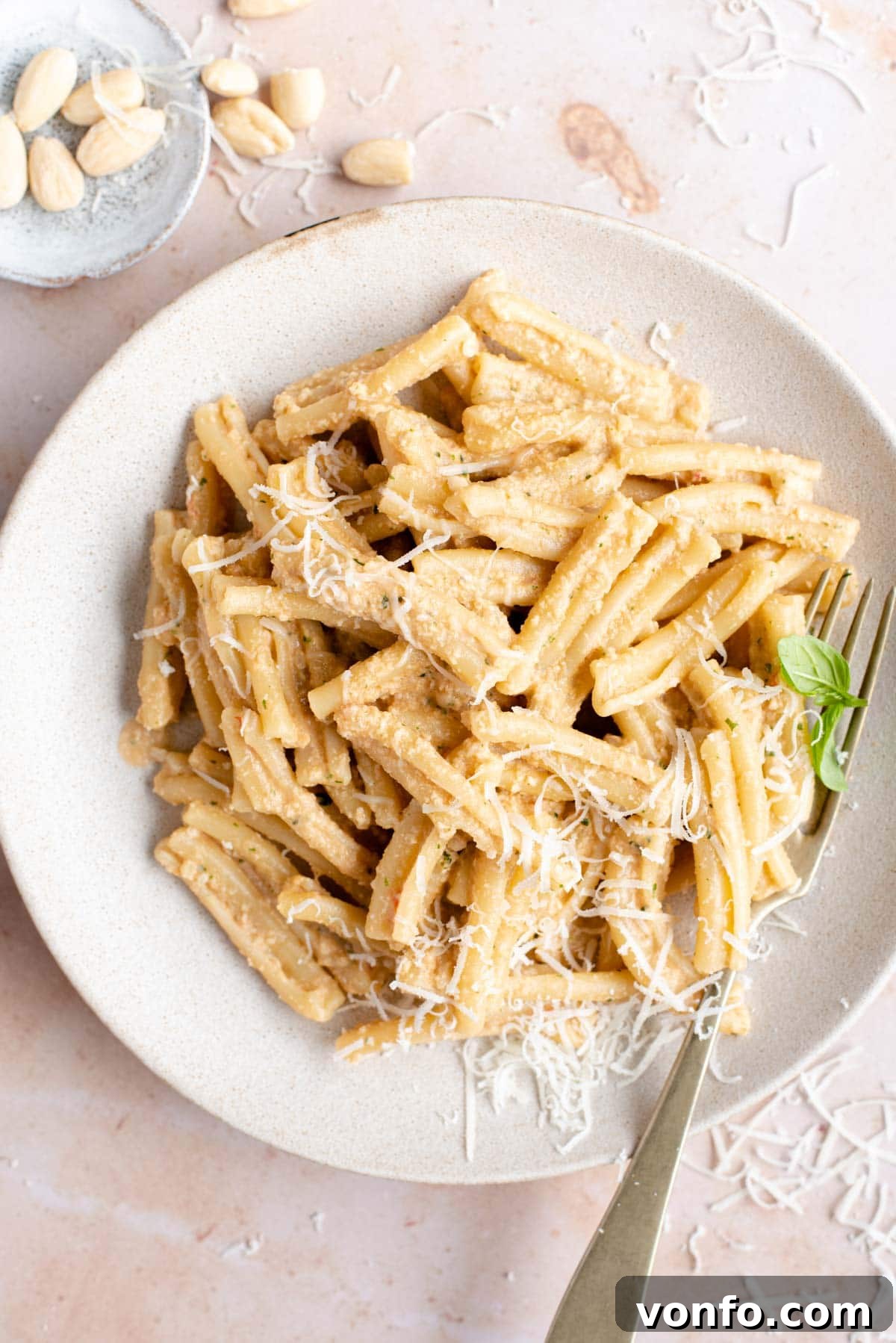
Transport your taste buds straight to the sunny shores of Trapani, Sicily, with this incredible **Pesto alla Trapanese**. Unlike its green Genovese cousin, this vibrant red pesto celebrates the rich bounty of Sicilian ingredients: sweet fresh tomatoes, crunchy almonds, aromatic basil, pungent garlic, and savory Pecorino cheese. It’s remarkably easy to make, delivering an explosion of fresh Mediterranean flavors in under 10 minutes. Perfect for tossing with pasta for a quick, delicious weeknight dinner, or as a versatile condiment for countless other dishes!
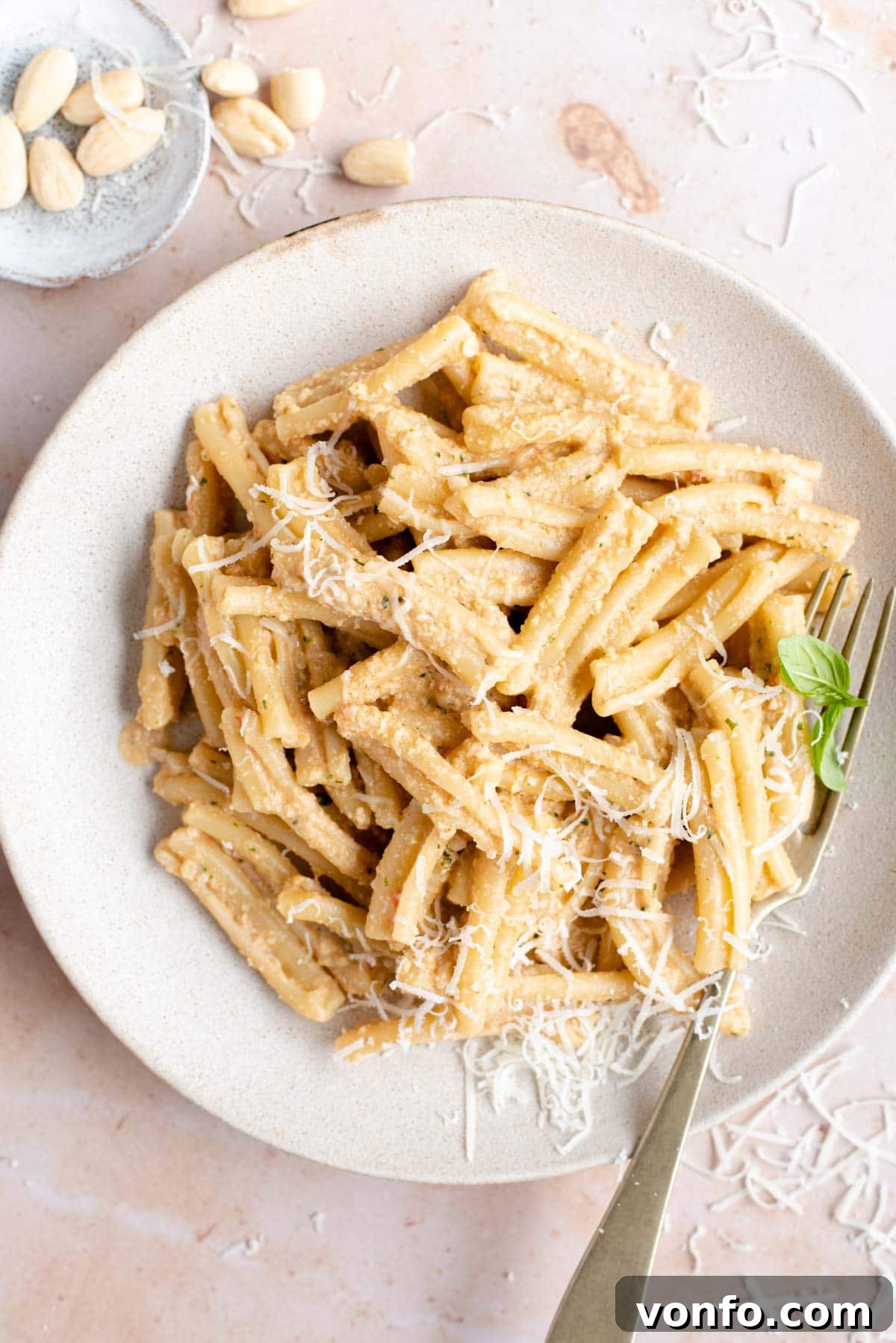
If you’re already a devotee of traditional Ligurian Basil Pesto, prepare to fall even deeper in love with Pesto alla Trapanese. Hailing from the western Sicilian city of Trapani, this regional specialty offers a distinctive and equally delightful flavor profile. It’s truly a celebration of fresh produce, combining the sweetness of ripe tomatoes with the nutty depth of almonds, the herbaceous notes of basil, the subtle kick of garlic, and the salty tang of Pecorino cheese. Each ingredient plays a crucial role in creating a harmonious and unforgettable sauce.
While it makes an undeniably delicious and incredibly quick pasta sauce, its versatility extends far beyond that. Imagine it as a vibrant dip for crusty bread, a flavorful spread for crostini, a zesty addition to salads, or even as a unique base for sandwiches and wraps. The possibilities are truly endless, and its rapid preparation time makes it an ideal choice for busy cooks seeking maximum flavor with minimal effort. This easy, step-by-step recipe, complete with photos and detailed tips, will guide you through creating your own authentic Sicilian pesto. Enjoy!
What Makes Pesto alla Trapanese Unique? A Dive into Sicilian Flavors
Pesto alla Trapanese, often referred to as Sicilian pesto, stands apart from the more widely known Genovese basil pesto. Its origins are deeply rooted in Trapani, a port city in western Sicily. Legend has it that Trapanese sailors, traveling to the Ligurian port of Genoa, encountered their famous basil pesto. Inspired, they returned home and adapted the concept using the abundant local ingredients available to them.
This regional variation swaps pine nuts for almonds, a staple in Sicilian confectionery and savory dishes. Instead of relying solely on basil, fresh, sun-ripened tomatoes become the star, lending a beautiful red hue and a natural sweetness. The result is a richer, slightly chunkier, and undeniably fresh pesto that perfectly embodies the vibrant culinary spirit of Sicily. It’s a reflection of the island’s history and its diverse influences, showcasing how simple, high-quality ingredients can create something truly extraordinary.
Essential Ingredients for Authentic Sicilian Pesto
Crafting the perfect Pesto alla Trapanese begins with selecting the right ingredients. Each component contributes to the pesto’s signature taste and texture. Below, you’ll find a detailed look at what you need and some essential tips for each.
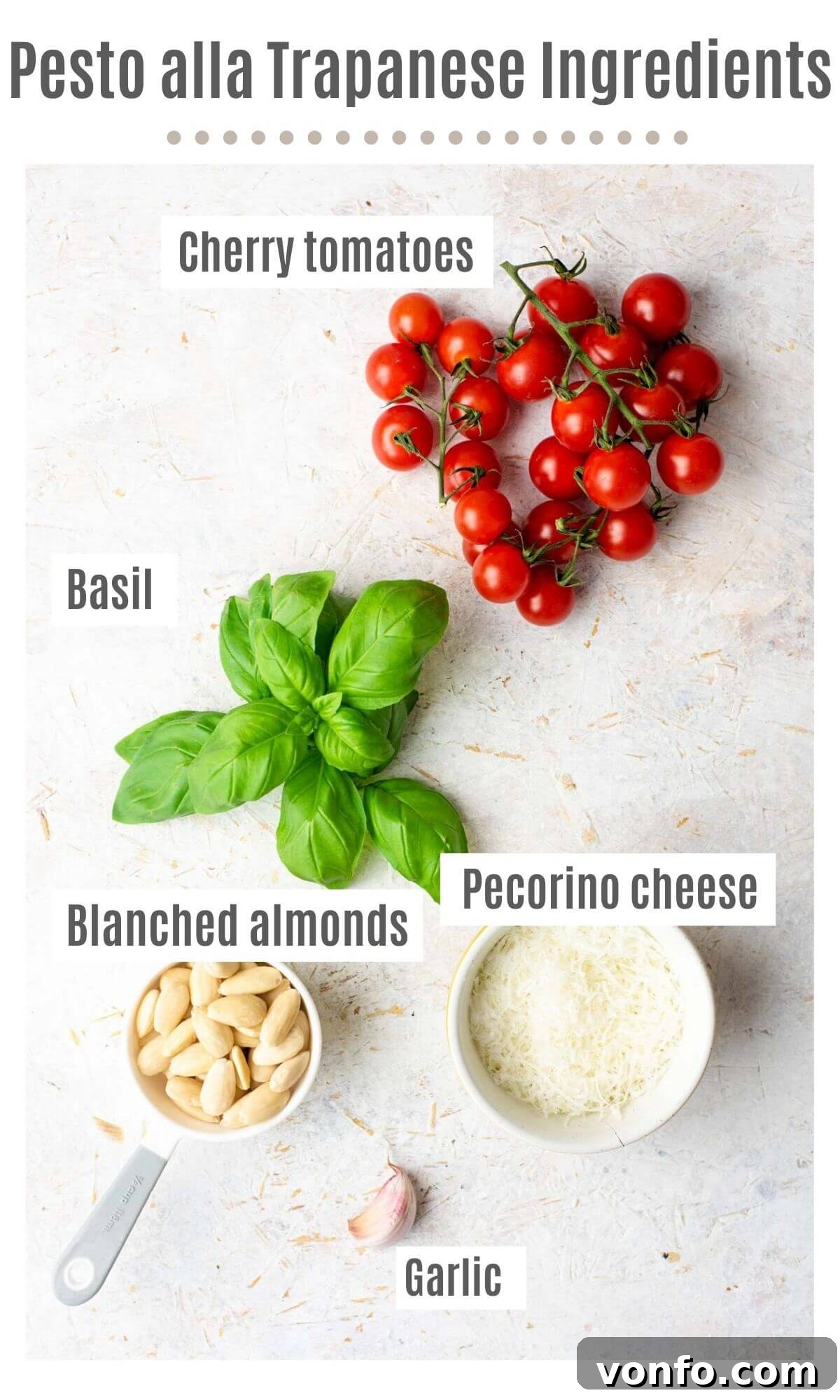
- Tomatoes: The cornerstone of this pesto. We highly recommend using fresh cherry tomatoes for their intense sweetness and lower water content. This helps achieve a perfectly balanced pesto without it becoming too watery. However, larger, ripe tomatoes will also work well; just be sure to properly deseed and drain them to prevent excess moisture.
- Blanched Almonds: For a smooth, refined pesto, skinless (blanched) almonds are essential. If you start with almonds that still have their skins on, you’ll need to blanch them yourself first. This involves a quick dip in boiling water followed by an ice bath, which makes the skins slide off effortlessly. Toasting the almonds lightly in a dry pan before blending enhances their nutty flavor significantly.
- Pecorino Cheese: Traditionally, a good quality, freshly grated Pecorino cheese is used. Its sharp, salty, and tangy flavor is characteristic of Sicilian cuisine and complements the other ingredients beautifully. While Parmesan can be used as a substitute in a pinch, Pecorino offers that authentic, robust taste.
- Fresh Garlic: Always opt for fresh garlic cloves. Their vibrant, pungent aroma and taste are crucial to the pesto’s overall profile. Avoid dried or powdered garlic, as they simply won’t deliver the same depth of flavor.
- Fresh Basil: A generous handful of fresh basil leaves adds a sweet, peppery, and aromatic touch. Its bright green color and fragrant notes are indispensable for true Italian pesto.
- Extra Virgin Olive Oil: Though not explicitly listed in the original snippet, high-quality extra virgin olive oil is absolutely vital for any pesto. It emulsifies the ingredients, creates a smooth consistency, and adds a fruity, peppery depth of flavor. You’ll add this gradually to achieve your desired texture.
- Salt and Freshly Ground Black Pepper: Essential for seasoning and balancing the flavors. Pecorino is quite salty, so always taste before adding extra salt.
Step-by-Step Guide to Making Pesto alla Trapanese
Making this Sicilian pesto is incredibly simple and fast. Follow these steps for perfect results every time:
1. Prepare and Toast the Almonds
Start by toasting your blanched (skinless) almonds. Place them in a dry, non-stick pan over medium heat. Toast for a few minutes, stirring occasionally, until they turn lightly golden and fragrant. This step significantly deepens their nutty flavor, which is crucial for the pesto. Once toasted, remove them from the pan and let them cool completely. This prevents them from “cooking” the other ingredients when blended.
2. Blanch and Peel the Tomatoes
Bring a small pot of water to a rolling boil. While the water heats, take each cherry tomato and carefully cut a small ‘X’ shape into its bottom. This scoring helps the skins peel off easily after blanching. Once the water is boiling, add the scored tomatoes and boil for just 1-2 minutes. You’ll know they’re ready when you see their skins begin to crack and loosen.
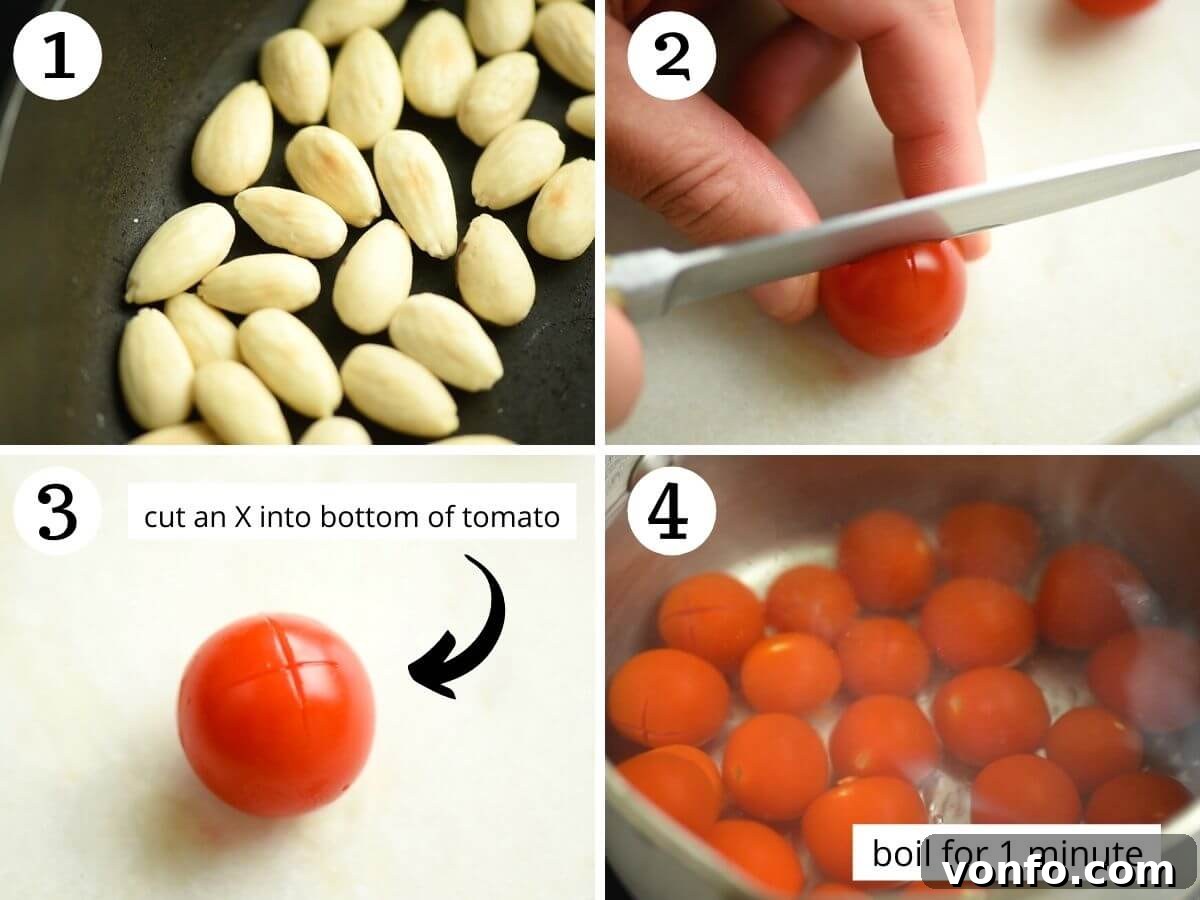
3. Peel and Deseed the Tomatoes
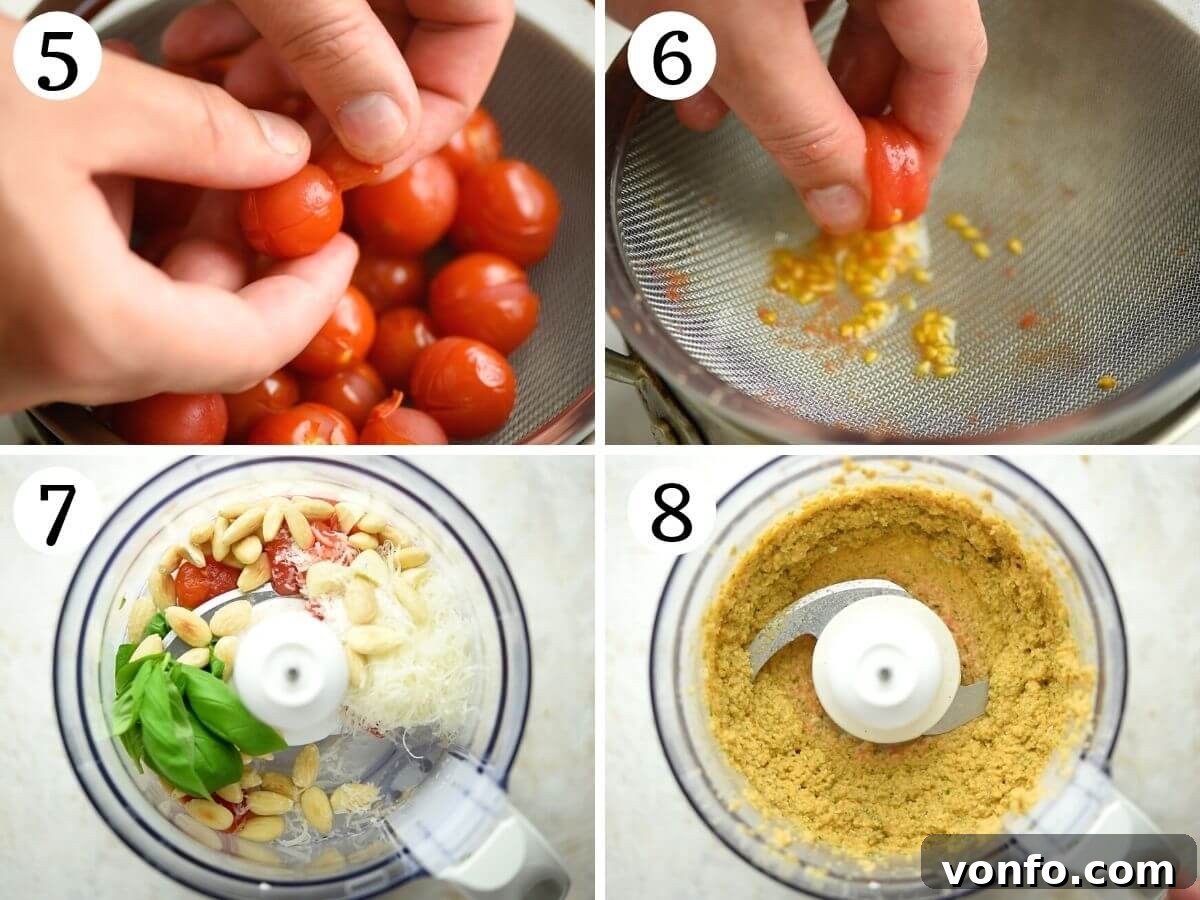
Carefully drain the blanched tomatoes and transfer them to a bowl of ice water to stop the cooking process, or simply let them cool for a few minutes until they are easy to handle. Once cooled, gently peel off all the skins. Next, carefully squeeze each tomato to remove any excess juice and seeds. This step is vital to prevent your pesto from becoming too watery or having an undesirable gritty texture. Set the peeled and deseeded tomatoes aside.
4. Blend to Perfection
Now, combine all your prepared ingredients. Add the peeled and deseeded tomatoes, toasted almonds, freshly grated Pecorino cheese, fresh garlic clove, and fresh basil leaves into a food processor. Begin to blitz the mixture, slowly drizzling in good quality extra virgin olive oil until you achieve a fine, rustic pesto consistency. You can adjust the amount of olive oil to reach your preferred thickness. If you don’t have a food processor, an immersion blender works wonderfully, or you can go old-school with a mortar and pestle for a truly traditional texture.
5. Season and Serve
Once blended, taste the Pesto alla Trapanese and adjust the seasoning as needed. The Pecorino cheese often provides enough salt, but feel free to add a pinch more if desired, along with a grind of fresh black pepper. Your homemade Sicilian pesto is now ready to be enjoyed!
If Serving with Pasta: The Perfect Pairing
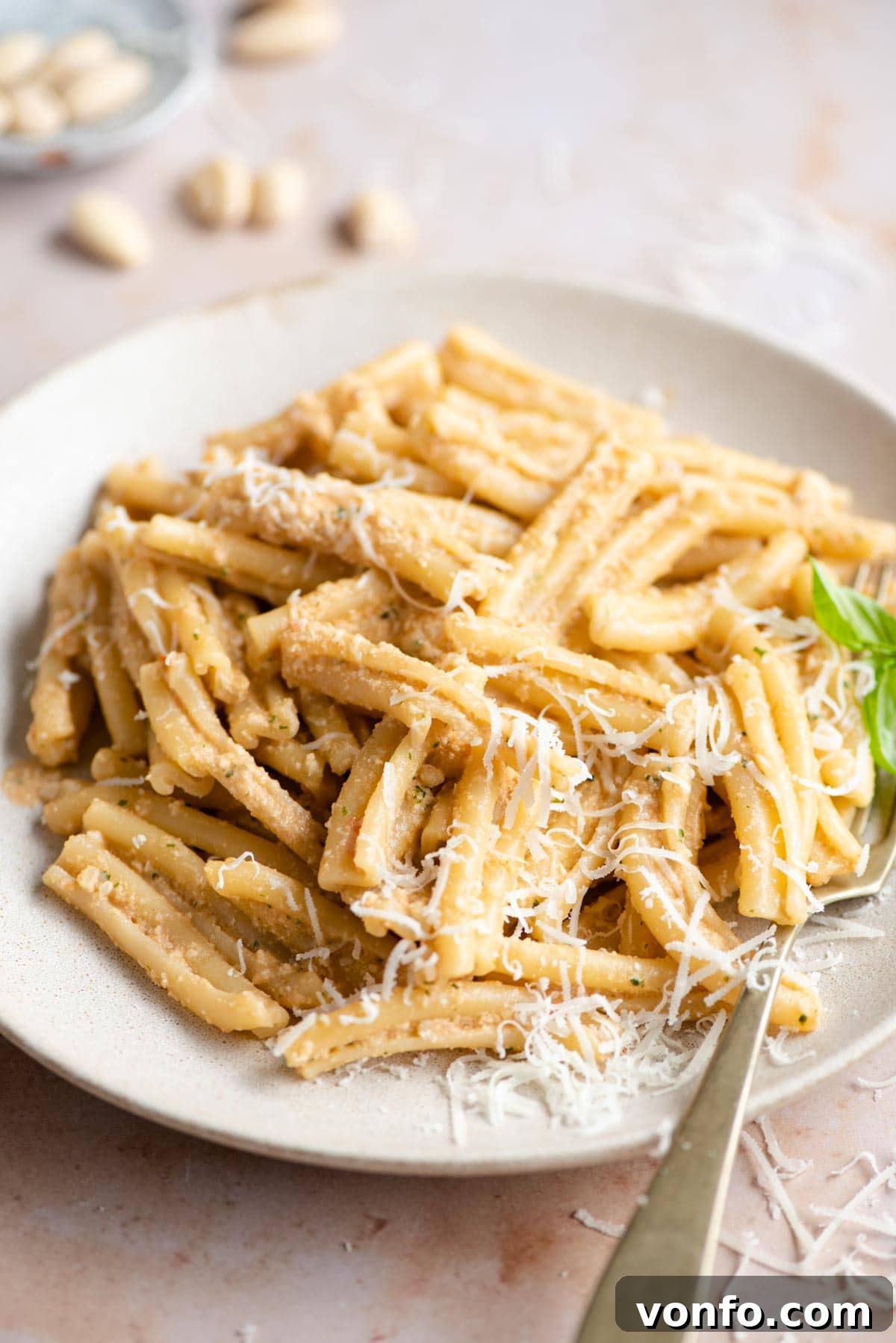
Pesto alla Trapanese is arguably at its best when generously tossed with pasta. To achieve that perfect, silky coating, boil your favorite pasta until al dente according to package instructions. Before draining, reserve about 1 cup of the starchy pasta water. Drain the rest of the pasta and return it to the pot. Add your fresh Pesto alla Trapanese to the warm pasta. Gradually add the reserved pasta water, a tablespoon at a time, mixing gently until the pesto emulsifies with the water and evenly coats every strand of pasta. You likely won’t need all of the reserved water. Taste and add salt if necessary, then serve immediately, perhaps with an extra sprinkle of Pecorino and a fresh basil leaf.
Beyond Pasta: Versatile Ways to Enjoy Sicilian Pesto
The beauty of Pesto alla Trapanese lies in its incredible versatility. While it’s a stellar pasta sauce, don’t limit its potential! Here are just a few ideas to inspire you:
- Crostini and Bruschetta: Spread it generously on toasted bread slices, then top with cured meats, fresh mozzarella, or extra basil for an impressive appetizer.
- Salad Dressing: Thin it out slightly with a little extra olive oil and a splash of red wine vinegar for a vibrant and flavorful salad dressing. It’s particularly good with mixed greens, cherry tomatoes, and grilled vegetables.
- Delicious Dip: Serve it as a dip with fresh vegetables, pita bread, or crispy Grissini (Italian Breadsticks). It’s a fantastic alternative to hummus or other creamy dips.
- Sandwiches and Wraps: Use it as a spread instead of mayonnaise or mustard to elevate your everyday sandwiches and wraps with a burst of Mediterranean flavor.
- Grilled Meats and Fish: Spoon it over grilled chicken, pork, or white fish like cod or snapper for an instant flavor boost.
- Eggs and Omelets: Swirl a spoonful into scrambled eggs or spread it inside an omelet for a sophisticated breakfast or brunch.
- Pizza Base: For a unique pizza, use Pesto alla Trapanese as your base instead of traditional tomato sauce. Top with fresh mozzarella and your favorite ingredients.
- Vegetable Roasts: Toss roasted vegetables like zucchini, eggplant, or bell peppers with Pesto alla Trapanese after cooking for an extra layer of flavor.
Recipe Tips and FAQs for Pesto alla Trapanese
- Why Score Tomatoes? Gently cutting a small cross at the bottom of each tomato before blanching is a simple yet crucial step. It ensures the skins loosen and peel off with remarkable ease, saving you time and effort.
- Achieving the Right Consistency: The consistency of your pesto can be adjusted. If you’re using it as a pasta sauce, remember to reserve some starchy pasta water to thin it out and create a silky coating. For salads or dips, a little extra olive oil can help achieve the desired texture.
- Do I Need to Blanch the Tomatoes? Yes, absolutely. Blanching and peeling the tomatoes are essential steps. Without it, your pesto will be too wet and will have an undesirable gritty texture from the skins. It only takes about a minute, and the improvement in texture is well worth the minimal effort.
- How Long Does Pesto alla Trapanese Last? This fresh pesto will keep beautifully in an airtight container in the refrigerator for up to 4 days. For longer storage, you can freeze it in small portions (e.g., ice cube trays) for up to 3 months. To prevent discoloration and extend freshness, pour a thin layer of olive oil over the surface of the pesto before storing.
- Can I Make it Without a Food Processor? Yes, certainly! Traditionally, pesto was made using a mortar and pestle (mortaio e pestello in Italian). This method provides a more rustic texture and can be a meditative cooking experience. Simply grind the ingredients in stages until you reach your desired consistency.
- Can I Use Other Nuts? While almonds are traditional, some variations or personal preferences might lead to using other nuts. Pine nuts, common in Genovese pesto, could work, but would alter the flavor profile. Walnuts or cashews would also lend a different taste and texture. For an authentic experience, stick to blanched almonds.
- Can I Make It Vegan? Yes! To make Pesto alla Trapanese vegan, simply omit the Pecorino cheese. The pesto will still be incredibly flavorful from the tomatoes, almonds, basil, and garlic. You could experiment with a nutritional yeast blend for a cheesy flavor if desired.
More Authentic Sicilian Recipes to Try
Sicily’s culinary heritage is rich and diverse. If you loved this pesto, be sure to explore more of our favorite Sicilian dishes:
- Pasta Alla Norma (Eggplant Pasta): A classic dish featuring fried eggplant, rich tomato sauce, and salted ricotta.
- Sicilian Pizza (Lo Sfincione): A thick-crust, spongy pizza topped with a flavorful tomato sauce, onions, anchovies, and breadcrumbs.
- Homemade Sicilian Cannoli (shells and filling): Iconic crispy pastry shells filled with sweet, creamy ricotta.
If you’ve tried this **Pesto alla Trapanese** recipe or any other delicious dish on our blog, we would love to hear from you! Please don’t forget to rate the recipe and share your thoughts in the comments section below. Your feedback truly helps us and other home cooks. You can also **FOLLOW US** on FACEBOOK, INSTAGRAM, and PINTEREST for daily inspiration and more culinary adventures. Or, sign up for our NEWSLETTER to receive new recipes directly in your inbox every week!
Helpful Info for All Recipes
- We always recommend using extra virgin olive oil in all of our recipes unless specifically stated otherwise for optimal flavor and health benefits.
- For canned or jarred tomatoes of any kind, we consistently choose Cirio or Mutti brands. Their superior quality ensures the best results and authentic Italian flavor in your dishes.
- Unless otherwise specified, all vegetables mentioned in our recipes are assumed to be medium-sized.
- All recipes on this site are meticulously tested and developed using a fan (convection) oven to ensure reliable results.
- Find out more about how nutrition is calculated and why it should only be used as an approximation.
- Check out our must-have Italian Pantry Staples to stock your kitchen for authentic Italian cooking.
- You can also find all our Essential Kitchen Tools for Italian Cooking to equip yourself like a pro.
Nutrition Information (per serving)
Calories:
152
kcal
|
Carbohydrates:
6
g
|
Protein:
8
g
|
Fat:
12
g
|
Saturated Fat:
3
g
|
Polyunsaturated Fat:
2
g
|
Monounsaturated Fat:
6
g
|
Trans Fat:
1
g
|
Cholesterol:
13
mg
|
Sodium:
159
mg
|
Potassium:
243
mg
|
Fiber:
2
g
|
Sugar:
2
g
|
Vitamin A:
429
IU
|
Vitamin C:
13
mg
|
Calcium:
181
mg
|
Iron:
1
mg
Nutrition information is automatically calculated, so should only be used as an approximation.