
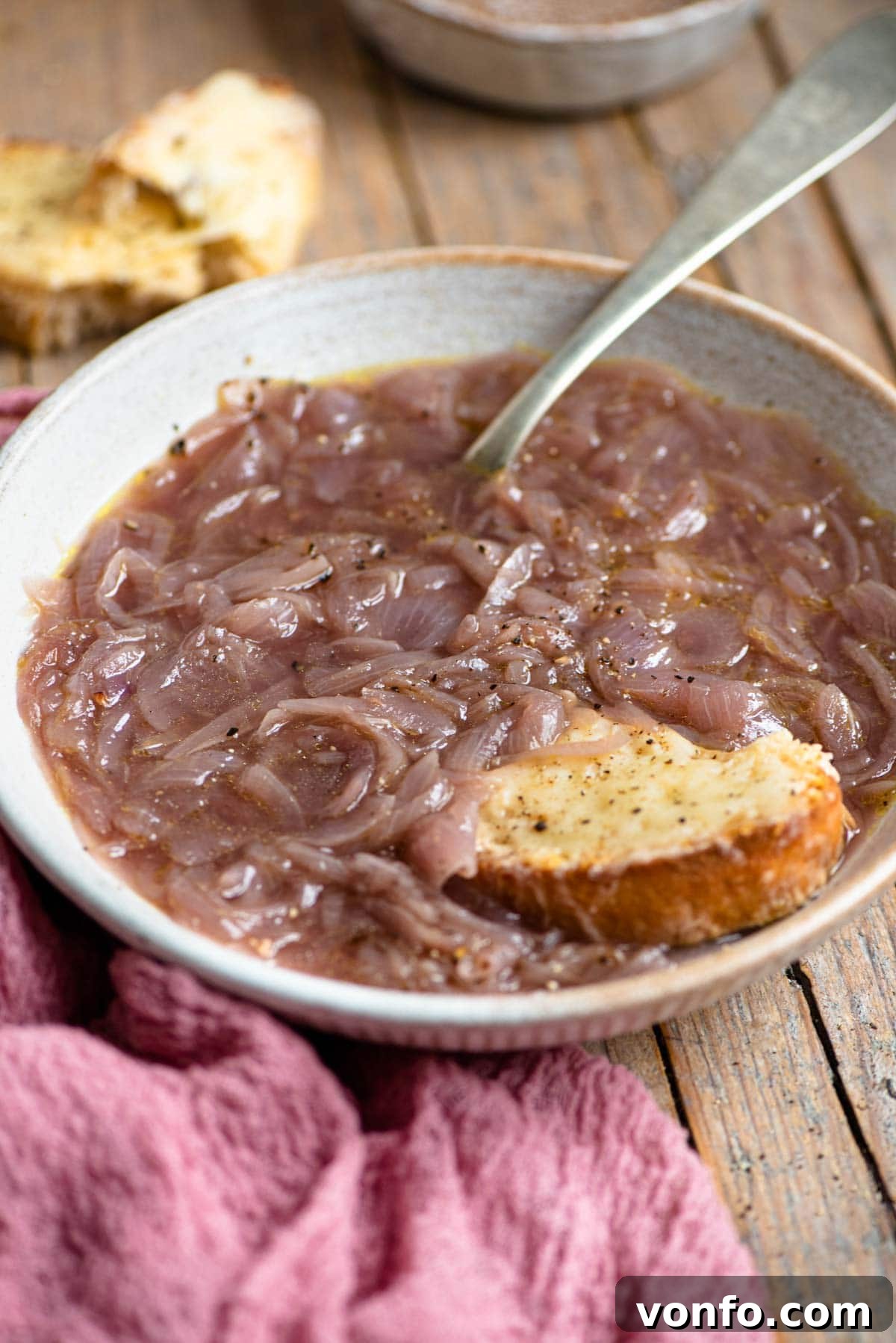
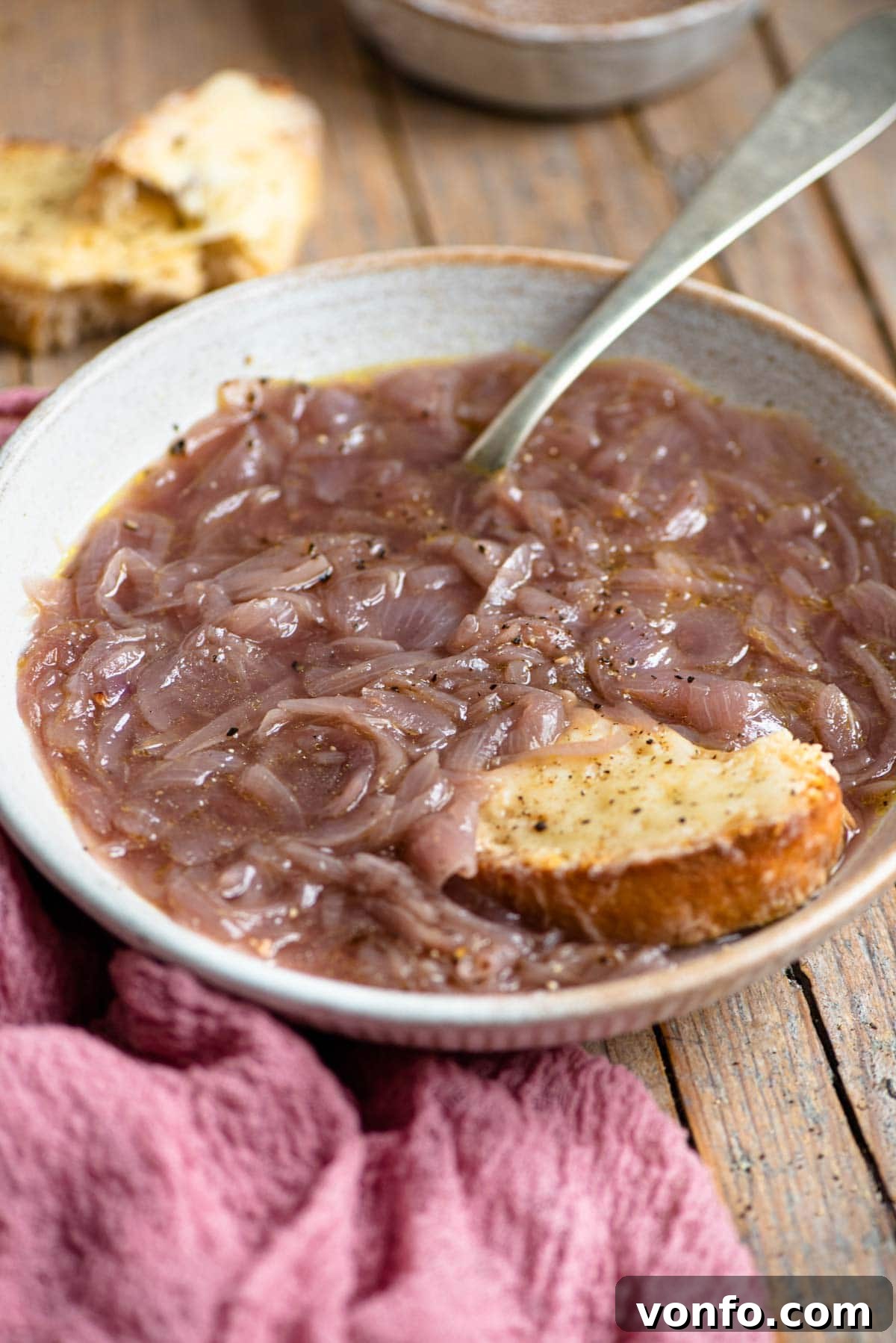
Carabaccia, an exquisite Tuscan onion soup, stands as a testament to Italy’s rich culinary heritage. This sweet and savory masterpiece, characterized by its slow-cooked red onions and delicate white wine broth, offers a depth of flavor that is both comforting and sophisticated. Remarkably easy to prepare, it promises a rich taste experience, especially when served alongside a slice of golden, cheesy toasted bread.
Journey back in time to the heart of Tuscany, and you’ll find Carabaccia – a soup whose origins can be traced all the way to the illustrious Renaissance era. Legend has it that this humble yet profound dish was a personal favorite of none other than Leonardo da Vinci himself. The original recipe was a fascinating blend of slowly cooked red onions, robust vegetable stock, a whisper of cinnamon, and an unusual thickener: ground almonds.
While the historical appeal of the almond-thickened version is undeniable, and the taste surprisingly delightful, its texture often presents a challenge for modern palates. The ground almonds, upon soaking up the liquid, tend to transform the soup into an almost porridge-like consistency, which, let’s be honest, might not be what you’re looking for in a soup. Moreover, this traditional variant doesn’t age gracefully; its texture degrades quickly, making it less ideal for leftovers.
Thankfully, culinary traditions evolve. Over the centuries, the Carabaccia recipe has been thoughtfully adapted to suit contemporary tastes and textures, while still preserving its authentic soul. The version we’re about to explore is my personal favorite, a refined take on the classic that sidesteps the textural quirks of the original, offering a consistently smooth and incredibly flavorful experience.
In this perfected recipe, we’ve gracefully omitted the ground almonds, allowing the natural sweetness and depth of the onions to shine through. To elevate the flavor profile, we introduce dry white wine, which adds a complex, aromatic layer that truly transforms the soup. Traditionally, this Tuscan delight is served with a slice of crusty, toasted bread nestled at the bottom of the bowl. However, I find an irresistible charm in topping my crusty bread with generous shavings of Parmigiano Reggiano, creating a rich, melt-in-your-mouth accompaniment perfect for dunking into the savory broth.
The Essence of Tuscan Flavors: Ingredients You Need
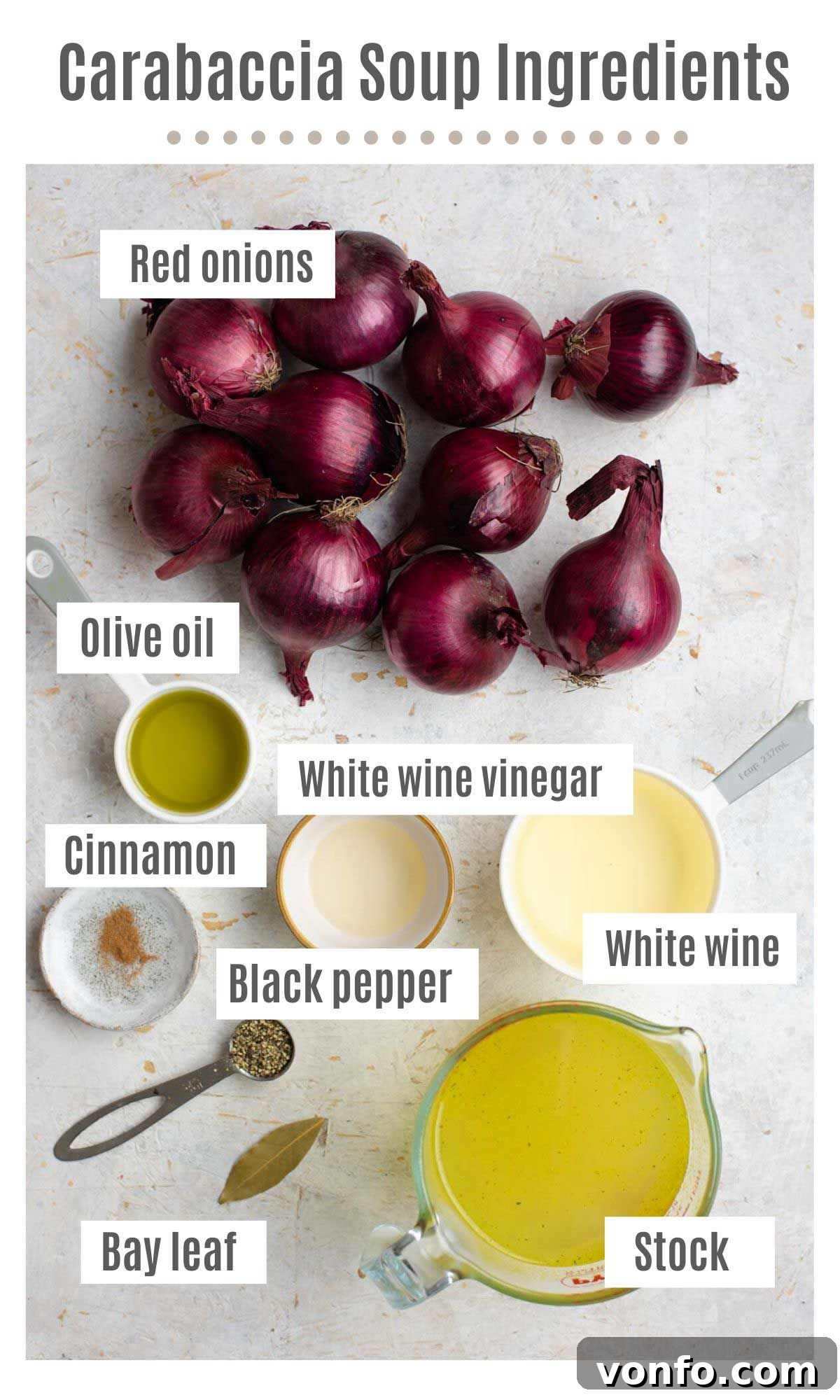
Crafting an exceptional Carabaccia that honors its heritage while appealing to modern tastes requires a selection of simple, yet crucial, ingredients. The beauty of this soup lies in the quality of its components and the care taken in their preparation. Below, we’ll delve into each key ingredient, offering tips to ensure your Carabaccia is as authentic and delicious as possible.
- Red Onions: The Heart of Carabaccia
While white or brown onions can certainly be used in various recipes, for a truly authentic Tuscan Carabaccia, red onions are indispensable. Their natural sweetness and beautiful purple hue, which mellows into a rich golden brown during slow cooking, contribute significantly to the soup’s distinctive flavor and appearance. Slow cooking red onions unlocks their sugars, leading to a deep, caramelized sweetness that forms the core of this soup. Don’t compromise on this ingredient for the best results.
- Cinnamon: A Subtle Warmth
The addition of cinnamon might seem unexpected in a savory soup, but in Carabaccia, it plays a critical role. You need just a small pinch – no more than 1/4 teaspoon – to impart a delicate hint of warmth and aromatic complexity without overpowering the other flavors. The goal isn’t to make the soup taste like cinnamon, but rather to add an elusive note that elevates its overall profile. Be precise with this measurement to achieve the perfect balance.
- Stock: The Flavor Foundation
Traditionally, vegetable stock is used for Carabaccia, maintaining its gentle and nuanced flavor profile. However, if you prefer, good quality chicken stock can also be an excellent alternative, adding a slightly richer body. It’s crucial to avoid beef stock, as its robust and often overpowering flavor would completely mask the delicate sweetness of the onions and the subtle spice notes that define Carabaccia. When using store-bought stock, opt for a low-sodium variety to have full control over the seasoning.
- Dry White Wine: Aromatic Depth
A good quality dry Italian white wine is paramount for enhancing the soup’s complexity. Varieties like Pinot Grigio, Vermentino, or a dry Sauvignon Blanc would work wonderfully. The wine introduces a nuanced acidity and aromatic depth, which deglazes the pan and intertwines beautifully with the caramelized onions, creating a more sophisticated and layered flavor. Ensure it’s a wine you would enjoy drinking, as its character will profoundly influence the soup’s final taste.
- Olive Oil: The Tuscan Standard
As with most Italian cooking, extra virgin olive oil is essential. It’s the medium for slowly caramelizing the onions, imparting its fruity, peppery notes to the base of the soup. Use a good quality olive oil for the best flavor foundation.
- White Wine Vinegar: Balancing Sweetness
A tablespoon of white wine vinegar might seem minor, but it’s key to balancing the sweetness of the onions and the richness of the wine. It adds a touch of brightness and acidity that prevents the soup from becoming cloying, ensuring a well-rounded and harmonious flavor.
- Salt and Freshly Ground Black Pepper: Essential Seasoning
These fundamental seasonings are vital for bringing out the best in all the ingredients. Salt enhances flavor, while freshly ground black pepper adds a subtle warmth and a gentle bite. Season to taste throughout the cooking process, adjusting as needed.
Crafting Carabaccia: A Step-by-Step Guide
The secret to a truly great Carabaccia lies in patience, particularly during the slow cooking of the onions. This process transforms them from pungent to wonderfully sweet and tender, forming the flavorful foundation of the soup.
1. Prepare the Onions
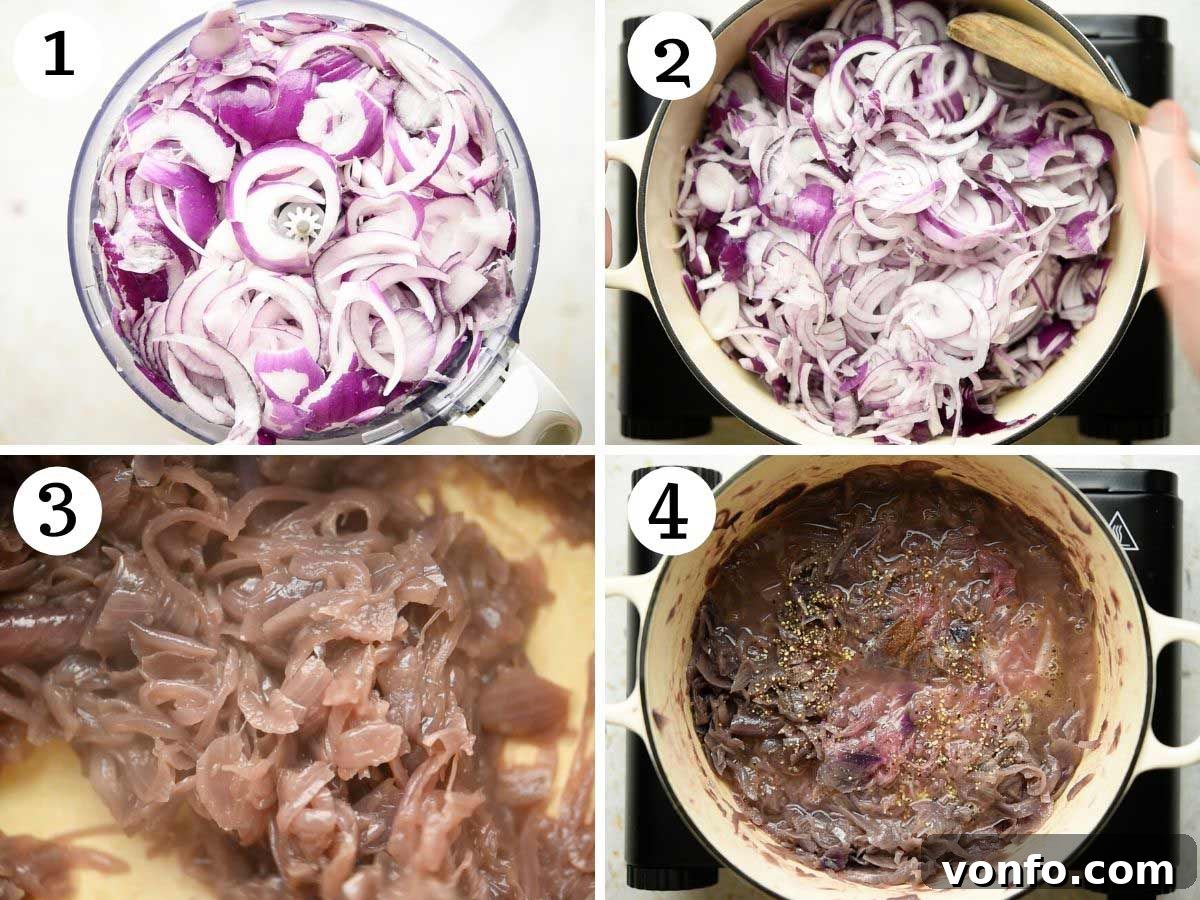
Begin by peeling your red onions (approximately 2 lbs or 1 kg) and trimming off their ends. Slice each onion in half vertically. The next crucial step is to slice them as thinly as possible. This uniform thinness is key for even caramelization and a silky-smooth texture in the finished soup. For efficiency, I often rely on a food processor equipped with a slicing attachment, which makes quick work of this task while ensuring perfect, paper-thin slices. If slicing by hand, take your time to achieve the finest possible cuts. (Refer to photo 1 for visual guidance on onion preparation).
2. Slowly Caramelize the Onions
Heat 2-3 tablespoons of olive oil in a large, deep pot or Dutch oven over a medium-low heat. Add the thinly sliced onions to the pot and stir them thoroughly to ensure every slice is coated in the oil. Sprinkle a generous pinch of salt over the onions. This initial salting helps draw out moisture, aiding in the softening process. Now, the most important part: cook the onions very slowly. This process will take approximately 40-45 minutes. The goal is to achieve a profoundly soft, tender, and translucent consistency where the onions are practically falling apart, without any browning. Browning would introduce bitterness, which is not desired in Carabaccia. Stir occasionally to prevent sticking and ensure even cooking. Patience here is truly a virtue, as this step develops the foundational sweetness of your soup. (Observe photos 2 & 3 for the ideal appearance of slow-cooked onions).
3. Deglaze and Build Flavor
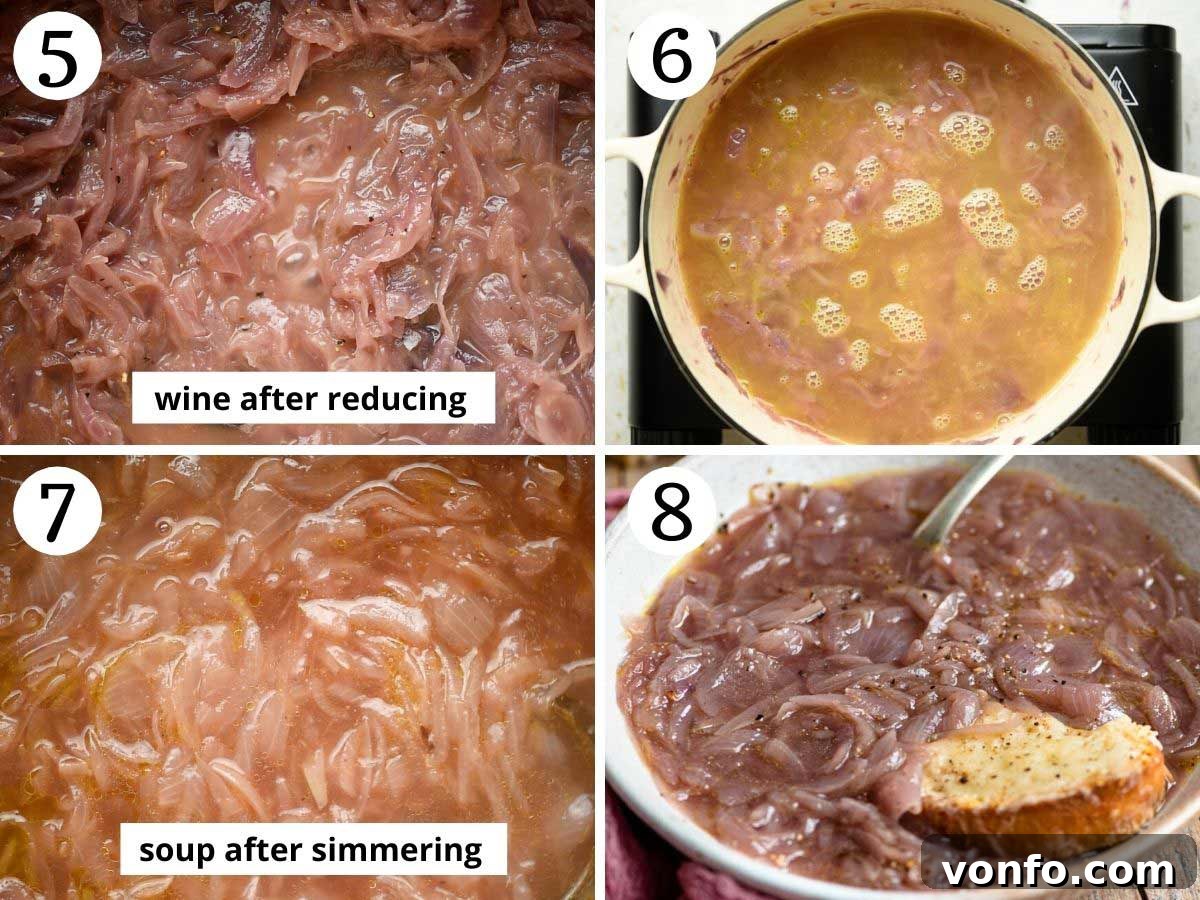
Once the onions are perfectly soft and sweet, it’s time to deepen the flavors. Pour in the white wine vinegar (1 Tbsp), the dry white wine (1 cup / 240 ml), a small pinch of cinnamon (around 1/4 tsp), and the freshly ground black pepper (1/2 tsp). Increase the heat slightly to bring the mixture to a gentle simmer. Allow it to simmer steadily until the wine has reduced by half. This reduction concentrates the wine’s flavors and allows its alcohol to cook off, leaving behind a rich, aromatic essence that will beautifully infuse your soup. (Photos 4 & 5 illustrate the reduction process).
4. Simmer to Perfection
After the wine has reduced, add the vegetable stock (4 cups / 1 liter) and the bay leaf to the pot. Bring the soup back to a gentle simmer, then reduce the heat to low, cover, and let it cook for another 30 minutes. This simmering period allows all the flavors to meld together harmoniously, creating a rich, complex, and incredibly satisfying broth. The bay leaf will infuse the soup with its subtle aromatic notes, which you’ll remove before serving. (Follow photos 6 & 7 for this simmering stage).
5. Serve with Cheesy Bread
Once the soup has simmered and its flavors are fully developed, it’s ready to be served. Ladle the hot Carabaccia into bowls. The traditional Tuscan way is to place a slice of toasted or grilled crusty bread at the bottom of each bowl before adding the soup. For an extra touch of indulgence, top your bread with a generous amount of freshly grated Parmigiano Reggiano and allow it to melt slightly, creating a gooey, savory crown. This cheesy bread is perfect for soaking up every last drop of the flavorful broth. (Photo 8 depicts the perfect serving suggestion).
Expert Recipe Tips and FAQs for Carabaccia
- Serving Suggestions: Elevating Your Experience
While the traditional Tuscan method involves placing toasted bread at the bottom of the bowl before pouring the soup, I wholeheartedly recommend my favorite approach: serving the soup topped with a slice of toasted (or grilled) crusty bread adorned with melted Parmigiano Reggiano. The rich, salty cheese adds an incredible layer of flavor and texture that perfectly complements the sweet and savory soup. Consider using a rustic, crusty bread like sourdough or a good country loaf for optimal dunking and flavor absorption. You can also lightly rub the toasted bread with a garlic clove for an extra aromatic kick.
- Achieving the Perfect Texture: Thickening Your Soup
The traditional Carabaccia is naturally quite brothy, highlighting the soft onions. However, if you prefer a slightly thicker soup, you can easily achieve this with a cornstarch slurry. Simply mix 1 tablespoon of cornstarch (or cornflour) with 2 tablespoons of cold water until smooth. Stir this mixture into the simmering soup and continue to gently simmer for a few more minutes until it thickens to your desired consistency. Be careful not to over-thicken, as a little goes a long way.
- Choosing the Right Stock: A Flavor Foundation
When opting for store-bought stock, prioritize quality. A good stock forms the backbone of your soup, so investing in a reputable brand will make a noticeable difference. More importantly, always choose a low-sodium stock. This allows you to control the salt content precisely, seasoning to your preference without the risk of an overly salty dish. Taste and adjust your seasoning throughout the cooking process, especially after the stock has simmered and reduced slightly.
- Leftovers and Freezing: Enjoying Carabaccia Later
Carabaccia is a fantastic soup for making ahead. Leftovers will keep beautifully in an airtight container in the fridge for 1-2 days, allowing the flavors to meld and deepen even further. For longer storage, this soup freezes exceptionally well. Portion it into freezer-safe containers or bags and freeze for up to 3 months. When you’re ready to enjoy it again, simply thaw it completely in the refrigerator overnight, then reheat gently on the stovetop until piping hot. Avoid rapid thawing or high heat when reheating to maintain the soup’s texture and flavor.
- Making it Vegetarian or Vegan: Simple Adjustments
This Carabaccia recipe is inherently vegetarian, thanks to the use of vegetable stock. To make it vegan, simply ensure your bread is dairy-free and omit the Parmigiano Reggiano topping. You could explore plant-based parmesan alternatives or simply enjoy it with plain toasted crusty bread.
Carabaccia Vs. French Onion Soup: A Culinary Comparison
Though both are celebrated onion soups, Carabaccia and French Onion Soup possess distinct personalities. French Onion Soup is typically made with a rich beef stock, often features garlic, and is thickened with flour. It’s famously topped with a substantial crouton and a thick layer of melted Gruyère cheese, then often browned under a broiler. Carabaccia, on the other hand, distinguishes itself with sweet red onions, a lighter vegetable stock (or chicken), and a subtle hint of cinnamon. It traditionally avoids garlic in the broth, focusing purely on the caramelized onion sweetness and the bright notes from white wine and vinegar. The cheese accompaniment is usually a lighter sprinkle of Parmigiano Reggiano, not a heavy blanket. Both are comforting and delicious, but they offer vastly different flavor experiences, each a masterpiece in its own right.
More Delightful Italian Soup Recipes You Might Like
Italy’s culinary landscape is abundant with soul-warming soups. If you’ve enjoyed the historical and flavorful journey of Carabaccia, you might also find delight in these other traditional Italian soup recipes, each offering its unique taste of Italy:
- Hearty Italian Lentil Soup (Zuppa di Lenticchie): A robust and nourishing classic, perfect for any season.
- Vibrant Green Pea Soup with Crispy Prosciutto: A fresh and flavorful soup with a delightful savory crunch.
- Rustic Tuscan Chickpea Soup (Zuppa di Ceci): Simple, wholesome, and packed with Mediterranean flavors.
- Comforting Pastina Soup (Italian Chicken Noodle Soup): The ultimate Italian comfort food, soothing for both body and soul.
- Wholesome Tuscan Farro Soup with Beans: A hearty grain and bean soup that embodies rustic Tuscan simplicity.
If you’ve embarked on the culinary adventure of making this Carabaccia recipe or tried any other delightful recipe from our collection, please don’t hesitate to rate the recipe and share your experience in the comments section below. Your feedback is invaluable, and I truly love hearing from you! For more delicious food inspiration and to stay updated on what I’m cooking up, be sure to FOLLOW ME on FACEBOOK, INSTAGRAM, and PINTEREST.
Carabaccia (Tuscan Onion Soup) – Recipe Card
Most of our recipes come with step-by-step photos, helpful tips, and tricks to ensure perfect results on your very first try, and even video tutorials!
Recipe Details:
- Author: Emily
- Prep Time: 10 mins
- Cook Time: 1 hr 15 mins
- Total Time: 1 hr 25 mins
- Servings: 4 servings
Ingredients
- 2 lbs red onions, (1kg)
- 1 cup dry white wine, (240ml)
- 4 cups vegetable stock, (1 litre)
- 1 bay leaf
- 1 small pinch cinnamon, (around 1/4 tsp)
- 1 Tbsp white wine vinegar
- 2-3 Tbsp olive oil
- 1/2 tsp freshly ground black pepper
- Salt, to taste
Instructions
- Peel and cut the ends off of the onions (2 lbs/1 Kg) and slice them in half. Finely slice the onions as thin as you can, preferably using a food processor with a slicing attachment for quick and easy preparation.
- Heat the olive oil in a large, deep pot. Add the sliced onions and stir to coat them in the oil. Add a pinch of salt and cook the onions very slowly over a medium-low heat until they are really soft and breaking apart. This process will take 40-45 minutes; ensure the onions do not brown at all.
- After cooking the onions to perfection, add the white wine vinegar (1 Tbsp), white wine (1 cup/240ml), a small pinch of cinnamon, and freshly ground black pepper (1/2 tsp). Let the mixture simmer until the wine has reduced by half, concentrating the flavors.
- Pour in the vegetable stock (4 cups/1 litre) and add the bay leaf. Bring the soup back to a simmer and let it cook gently for another 30 minutes, allowing all the flavors to meld beautifully.
- Serve the Carabaccia hot with a slice of toasted or grilled crusty bread, ideally topped with melted Parmigiano Reggiano for an extra burst of savory goodness.
Notes
- Serving suggestion – In Tuscany, a toasted slice of bread is often placed at the bottom of the bowl before adding the soup. You can follow this tradition or serve it topped with toasted bread and melted Parmigiano Reggiano (my preferred method).
- Texture – If you desire a slightly thicker soup, you can stir in a cornstarch slurry. Mix 1 tbsp cornstarch with 2 tbsp water until smooth, then add to the simmering soup. Continue to simmer until it thickens slightly.
- Using store-bought stock – When using store-bought stock, always opt for a good quality, low-sodium variety. This allows you to meticulously control the amount of salt added to your soup for perfect seasoning.
- Leftovers & freezing – Any leftover Carabaccia will keep well in an airtight container in the fridge for 1-2 days. For longer storage, it can be frozen for up to 3 months. Ensure the soup is completely thawed before reheating until piping hot.
Helpful Info for All Recipes
- I consistently use extra virgin olive oil in all my recipes unless specified otherwise.
- For canned or jarred tomatoes, I always recommend Cirio or Mutti brands to achieve the best flavor and results.
- Unless otherwise stated, all vegetables mentioned are of medium size.
- All recipes provided are thoroughly tested and developed using a fan (convection) oven.
- Find out more about how nutrition is calculated.
- Explore our list of must-have Italian Pantry Staples.
- You can also discover all our Essential Kitchen Tools for Italian Cooking.
Nutrition Information
Here’s an approximation of the nutritional values per serving:
- Calories: 256kcal
- Carbohydrates: 39g
- Protein: 3g
- Fat: 7g
- Saturated Fat: 1g
- Sodium: 954mg
- Potassium: 452mg
- Fiber: 13g
- Sugar: 13g
- Vitamin A: 557IU
- Vitamin C: 17mg
- Calcium: 223mg
- Iron: 2mg
Nutrition information is automatically calculated and should only be used as an approximation.
Did you try this recipe? Leave a comment below!