
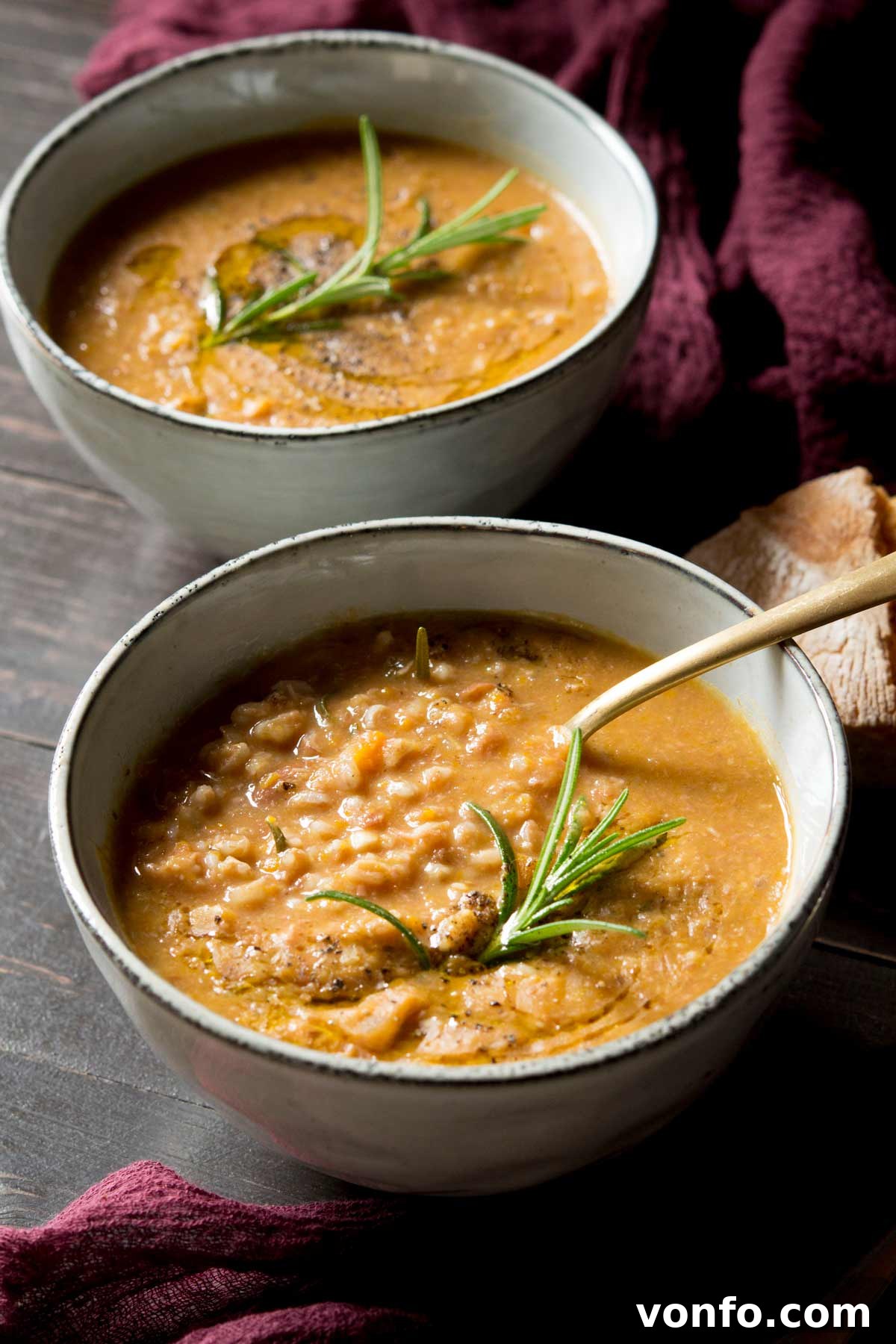
Experience the comforting embrace of a truly authentic Tuscan Farro Soup. This simple yet profoundly delicious dish features a harmonious blend of hearty vegetables, creamy borlotti beans (also known as cranberry beans), savory pancetta, and aromatic garlic and rosemary. It’s a wonderfully flavorful and incredibly nutritious meal, perfectly crafted to provide warmth and comfort during the colder months, making it an ideal addition to your recipe repertoire.
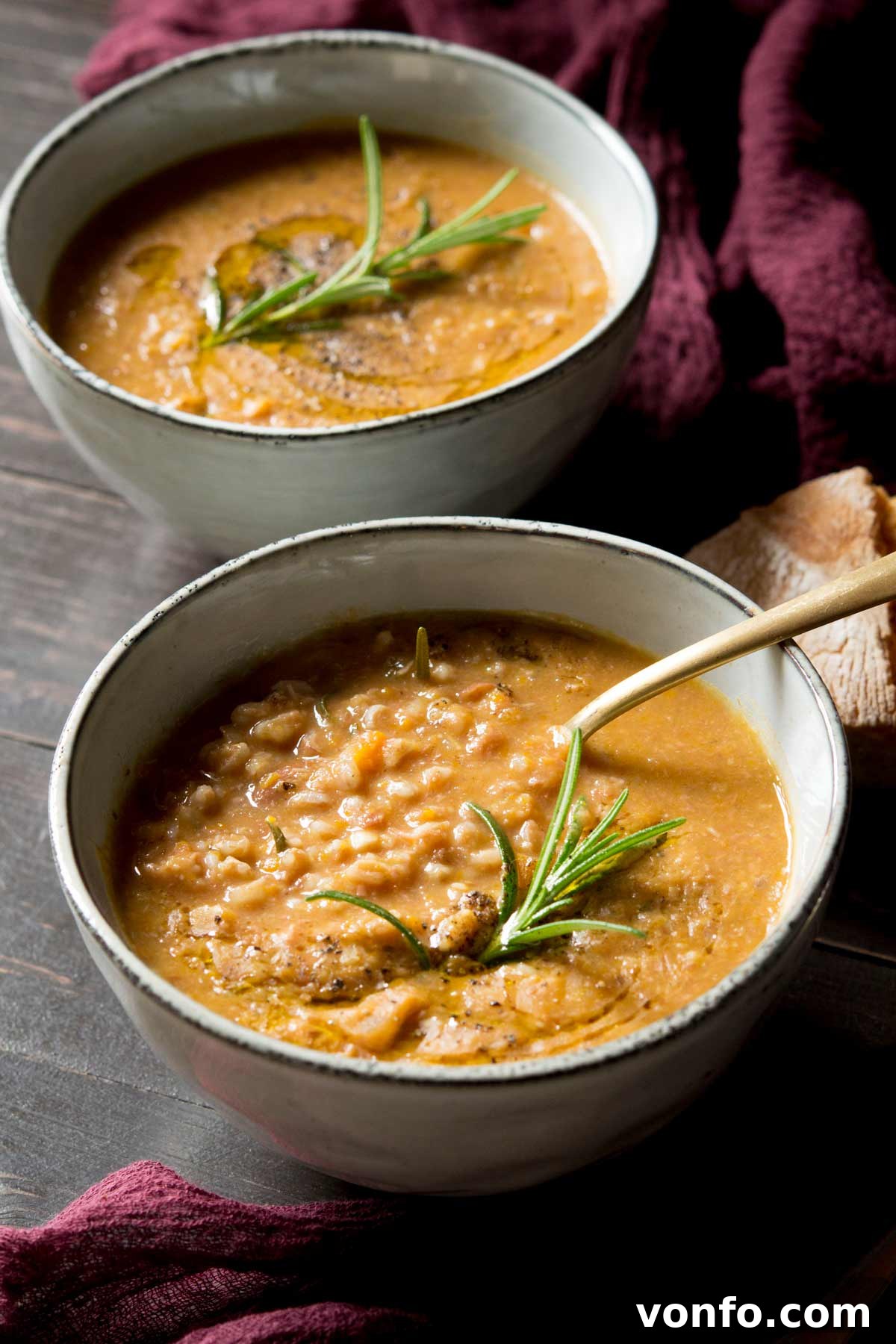
Why You’ll Fall in Love with This Tuscan Farro Soup
This Tuscan Farro Soup isn’t just a meal; it’s an experience that transports you straight to the heart of Italy. Its rustic charm lies in its simplicity, yet every spoonful bursts with layers of exquisite flavor. The combination of sweet, robust root vegetables, the smoky depth of pancetta, the creamy texture of borlotti beans, and the earthy chewiness of farro creates a symphony for the palate. It’s a nourishing dish that feels both indulgent and incredibly wholesome, promising to become a cherished family favorite. Whether you’re seeking a soul-warming dinner or a substantial lunch, this soup delivers on all fronts, offering both culinary delight and essential nutrients.
Serve it generously with plenty of crusty artisan bread or a slice of warm homemade rosemary focaccia, perfect for soaking up every last drop of its rich broth!
Understanding Farro: Italy’s Ancient Grain
Farro, an ancient Italian wheat grain, holds a revered place in Italian culinary history, similar to how quinoa is valued in South American cuisines. It’s a staple across Italy, especially in central regions like Tuscany, celebrated for its unique nutty flavor and satisfying chewy texture. Often compared to spelt or barley, farro distinguishes itself with a subtle sweetness and a remarkable ability to absorb the rich flavors of any dish it’s incorporated into.
There are three main types of farro: *farro piccolo* (einkorn), *farro medio* (emmer), and *farro grande* (spelt). Most commonly found in stores is emmer, available in whole, semi-pearled, or pearled forms. Whole farro retains all its bran, making it the most nutritious but requiring a longer cooking time and often an overnight soak. Semi-pearled farro has some of the bran removed, offering a good balance of nutrition and quicker cooking. Pearled farro has most of the bran removed, cooking the fastest and requiring no soaking, making it ideal for soups like this. Regardless of the type, farro is a powerhouse of nutrition, rich in fiber, protein, and essential minerals like magnesium and iron, contributing significantly to a healthy diet.
Its versatility extends beyond soups; farro is equally delicious in hearty stews, vibrant salads, and even as a substitute for rice in risottos, making it a valuable grain to incorporate into your cooking.
The Essence of Tuscan Cuisine
Tuscan cuisine is famous for its “cucina povera” philosophy, which translates to “poor cooking.” This doesn’t imply a lack of quality but rather a celebration of humble, seasonal ingredients transformed into extraordinary dishes through simple, skillful preparation. It’s a culinary tradition deeply rooted in fresh, local produce, olive oil, legumes, and bread. Our Tuscan Farro Soup embodies this spirit perfectly. It takes basic, accessible ingredients and elevates them into a robust, satisfying meal that truly nourishes the soul. The emphasis is on letting the natural flavors of high-quality ingredients shine, creating a dish that is both comforting and authentically Italian.
Essential Ingredients for an Authentic Flavor
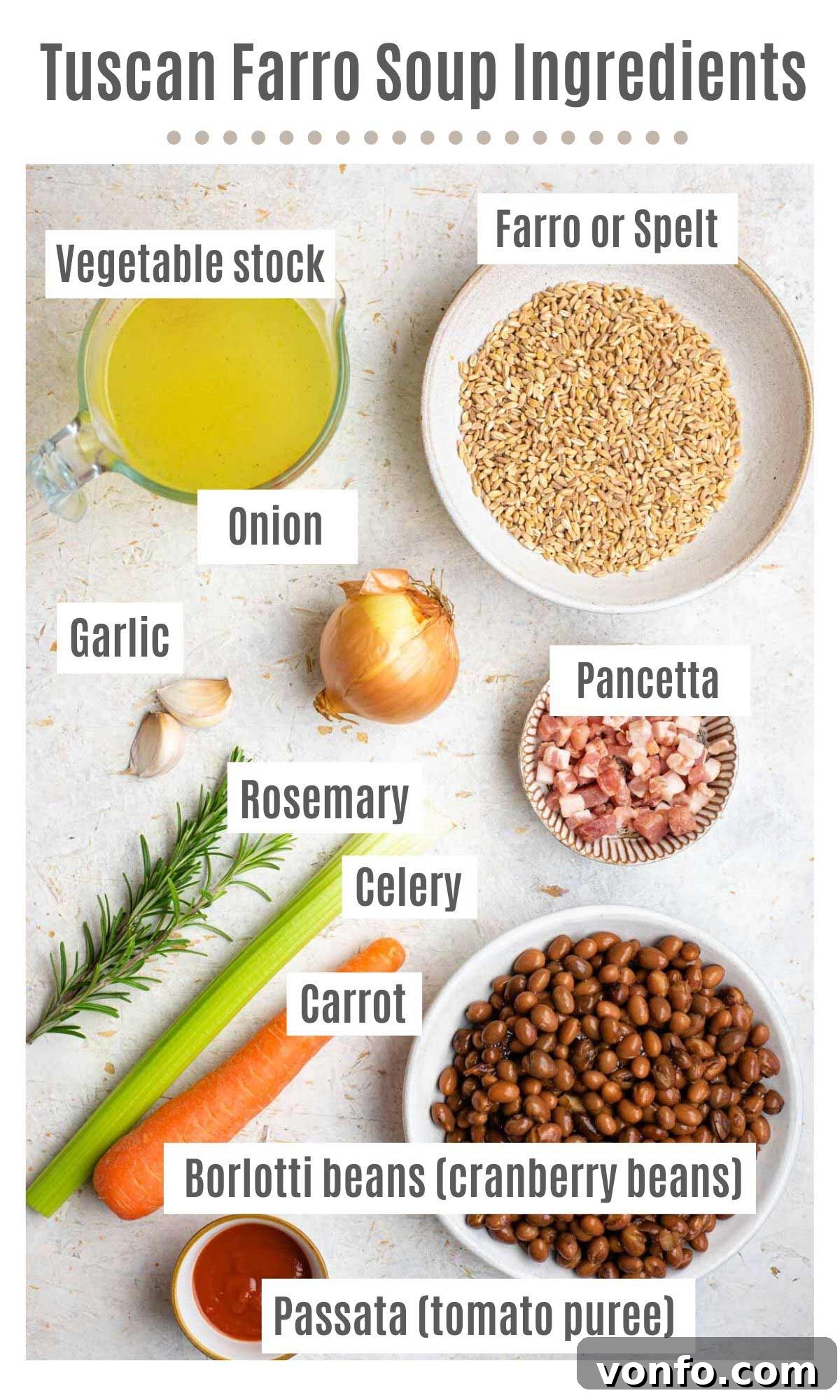
Crafting this soulful Tuscan Farro Soup requires a selection of fresh, high-quality ingredients that collectively build its profound depth of flavor. Here’s a detailed look at what you’ll need:
- Farro: The star of our soup, offering a delightful nutty flavor and a satisfying chew. While pearled farro cooks faster, semi-pearled is a fantastic option for a balance of texture and nutrition. If farro is unavailable, spelt or barley make excellent alternatives, offering similar hearty textures. Remember to rinse farro thoroughly before cooking to remove excess starch.
- Soffritto Vegetables (Carrot, Celery & Onion): This aromatic base is fundamental to Italian cooking. Finely chopped, these vegetables are gently sautéed to release their natural sweetness and create the foundational layer of flavor for the soup.
- Garlic: Adds a pungent, aromatic kick that complements the other savory elements. Freshly minced garlic is always best for maximum flavor.
- Rosemary: A quintessential herb in Tuscan cooking, rosemary infuses the soup with its distinctive piney, slightly peppery aroma. Fresh sprigs are highly recommended for the best results.
- Pancetta: Cubed smoked pancetta contributes a rich, savory, and slightly salty depth to the soup. As it renders, it releases flavorful fat that is used to sauté the vegetables. For a vegetarian version, simply omit the pancetta and add a little more olive oil to sauté the vegetables.
- Borlotti Beans (Cranberry Beans): These beautiful, speckled beans are creamy and tender, adding body and protein to the soup. Canned borlotti beans are convenient and require rinsing. If using dried borlotti beans, ensure they are soaked overnight and cooked until tender before adding to the recipe. Cannellini beans can be used as a substitute if borlotti are hard to find.
- Vegetable Stock: The liquid base for our soup. A good quality vegetable stock is crucial for a flavorful broth. You can use homemade stock or a low-sodium store-bought variety.
- Passata (Tomato Puree): This smooth, strained tomato product adds a touch of sweetness and acidity, enhancing the overall richness and color of the soup without overpowering the other flavors. Tomato paste can be used as a concentrated alternative if passata is not available.
- Olive Oil, Salt & Pepper: Extra virgin olive oil is used for sautéing and as a finishing drizzle, adding a fruity, peppery note. Salt and freshly ground black pepper are essential for seasoning to taste, bringing out the best in all the ingredients.
Refer to the image below, showcasing all the fresh, vibrant ingredients you’ll need to create this delightful Tuscan Farro Soup!
Step-by-Step Guide to Crafting Your Tuscan Farro Soup
Follow these simple steps to create a hearty and flavorful Tuscan Farro Soup that will impress everyone at your table.
- Prepare the Soffritto: Begin by finely chopping your carrot, celery, and onion. Heat one tablespoon of olive oil in a large pot or Dutch oven over a medium-low heat. Add the chopped vegetables and sauté gently, stirring occasionally, until they become soft and translucent, usually about 8-10 minutes. This slow cooking allows their natural sugars to caramelize, building a sweet foundation for your soup.
- Add Pancetta and Garlic: Once the vegetables are tender, add the cubed smoked pancetta and finely chopped garlic to the pot. Cook for another 3-4 minutes, stirring frequently, until the pancetta starts to crisp slightly and the garlic becomes fragrant. Be careful not to burn the garlic.
- Incorporate Beans and Stock: Rinse the canned borlotti beans thoroughly under cold running water to remove excess sodium. Add the rinsed beans to the pot along with 2 cups (500ml) of vegetable stock. Bring the mixture to a gentle simmer.
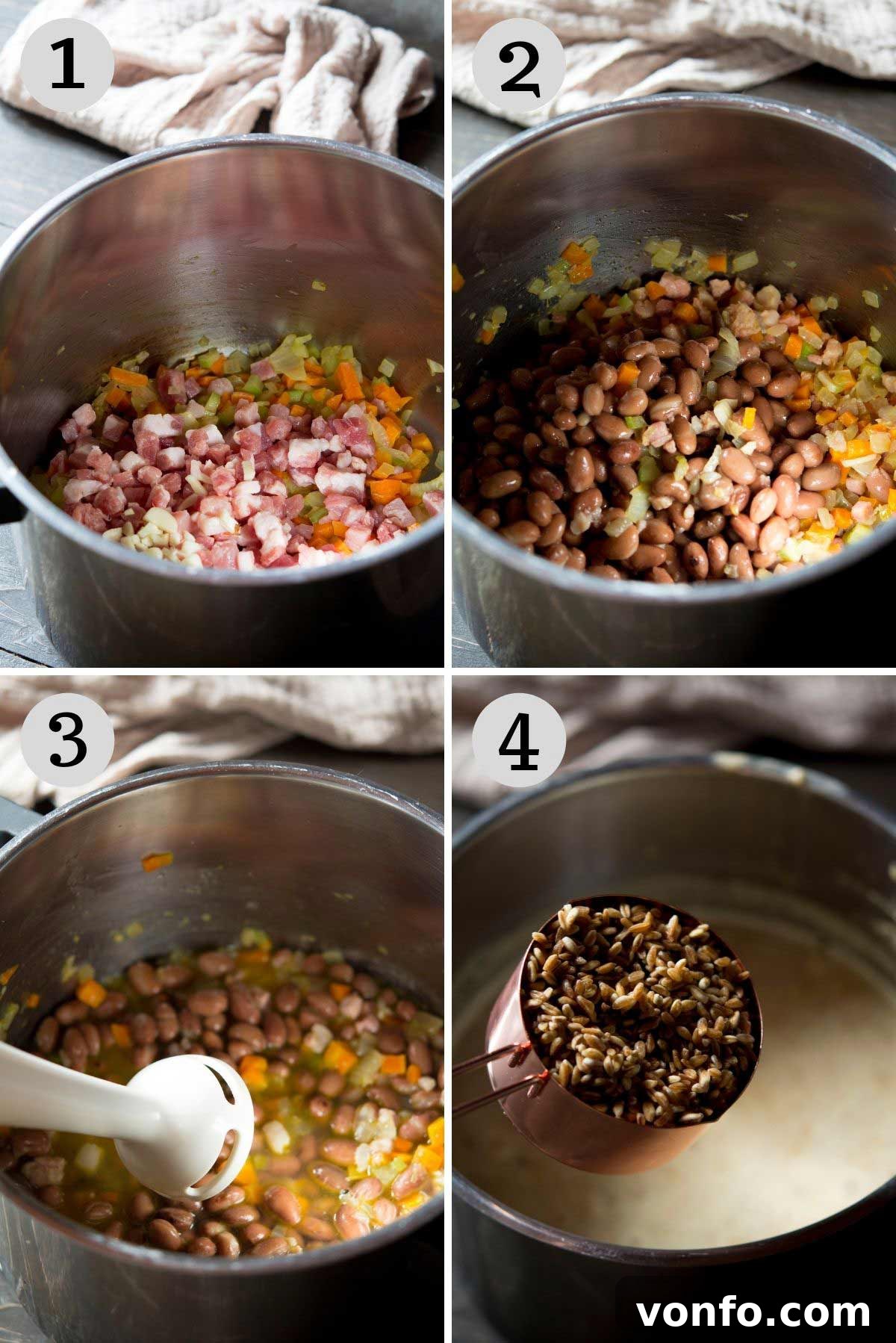
- Create a Smooth Base: Using a hand-held immersion blender, carefully blitz the mixture of beans, vegetables, and pancetta directly in the pot until it forms a creamy puree. Don’t worry if it’s not perfectly smooth; a slightly rustic texture adds to the charm of the soup. This step gives the soup a rich, thick consistency while still allowing for the chewiness of the cooked farro.
- Add Farro and Remaining Liquids: Place the pot back over a medium heat. Ensure your farro has been thoroughly rinsed under cold running water. Add the rinsed farro (or spelt/barley) to the pureed soup base. Stir in the passata (tomato puree), the remaining 3 cups (750ml) of vegetable stock, and the sprigs of fresh rosemary. Season with a pinch of salt and freshly ground black pepper.
- Simmer to Perfection: Bring the soup back to a simmer, then reduce the heat to low, cover the pot, and cook for 30-40 minutes, or until the farro is cooked through and tender with a slight chew. Stir occasionally to prevent sticking.
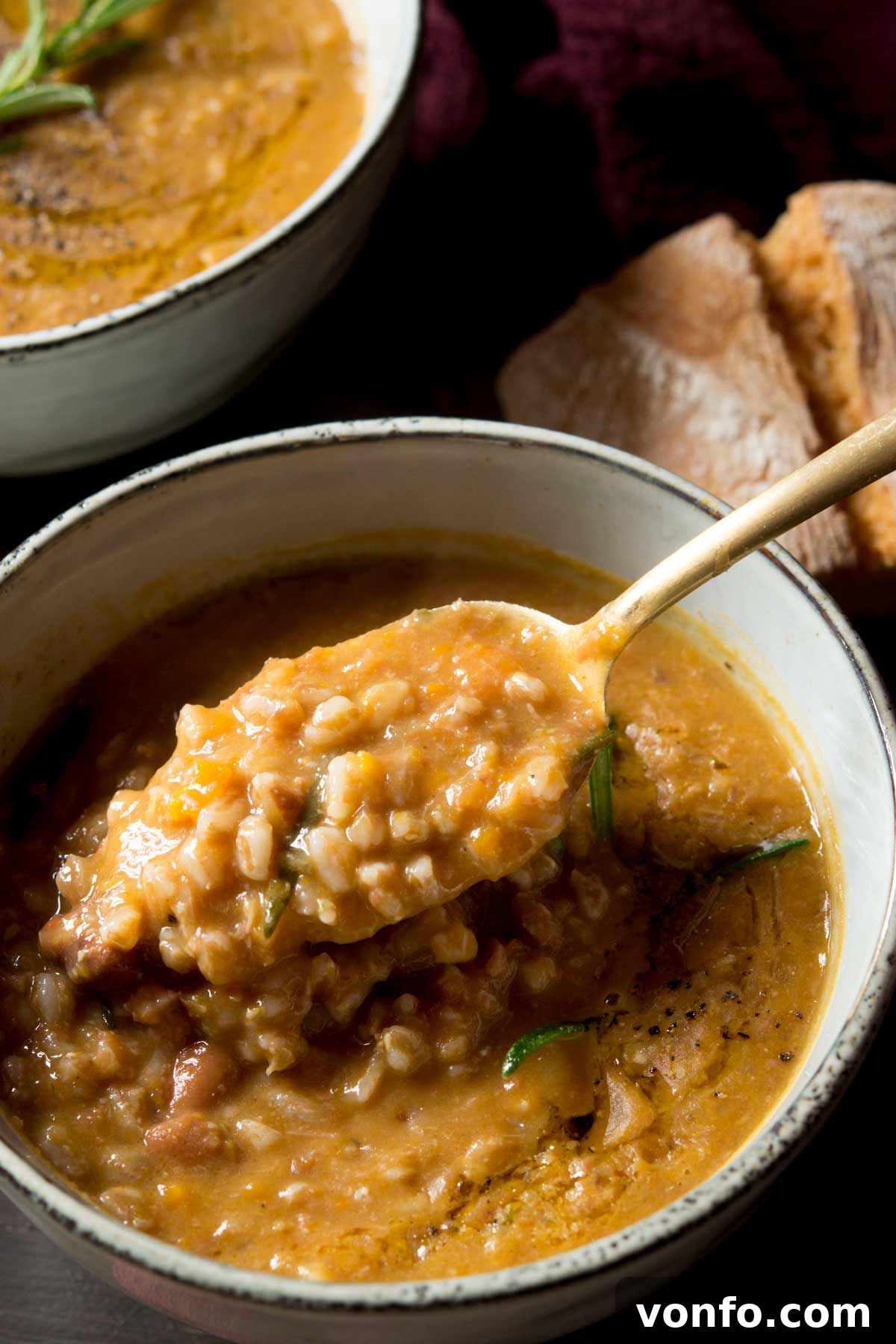
- Serve and Enjoy: Ladle the steaming Tuscan Farro Soup into large bowls. Finish each serving with a generous drizzle of high-quality extra virgin olive oil and an extra sprinkling of freshly ground black pepper. Serve immediately with plenty of crusty bread for dipping.
Expert Tips for the Perfect Farro Soup
- Rinse Your Farro: Always rinse your farro thoroughly under cold running water for a few seconds before adding it to the soup. This removes any surface starch and ensures a cleaner, more distinct grain texture.
- Achieving the Perfect Texture: Our recipe suggests blending the majority of the soup before adding the farro, creating a creamy base with the hearty chew of the cooked grain. If you prefer a more rustic, chunky soup, you can skip the blending step entirely and enjoy all the ingredients in their whole form.
- Make it Vegetarian or Vegan: This soup is easily adaptable. To make it vegetarian, simply omit the pancetta. For a vegan version, also ensure your vegetable stock is vegan-friendly and adjust seasoning as needed.
- Don’t Overcook the Farro: Farro should be tender but still have a pleasant chew (al dente). Overcooking can make it mushy. Start checking for doneness around the 30-minute mark.
- Adjust Consistency: If your soup becomes too thick during cooking or reheating, you can easily thin it out by adding a splash more vegetable stock or water until it reaches your desired consistency.
- Quality of Ingredients Matters: Using good quality extra virgin olive oil, fresh vegetables, and a rich vegetable stock will significantly enhance the overall flavor profile of your soup.
- Seasoning: Taste and adjust seasoning as you go. The amount of salt needed will depend on the saltiness of your stock and pancetta. Finish with fresh black pepper.
Serving Suggestions for Your Tuscan Delight
While delicious on its own, this Tuscan Farro Soup truly shines when paired with a few simple accompaniments. A generous drizzle of high-quality extra virgin olive oil before serving adds a luxurious finish and enhances the flavors. Freshly grated Parmesan cheese (or a vegan alternative) sprinkled on top introduces a delightful salty, umami kick. For an extra layer of freshness, consider a sprinkle of chopped fresh parsley or a few more rosemary leaves. A crisp green salad with a light vinaigrette makes for a refreshing contrast, balancing the richness of the soup. And of course, don’t forget that crusty bread or homemade focaccia – essential for scooping up every last drop of the rich broth!
Variations & Customizations
- Grain Alternatives: While farro is traditional, feel free to experiment with other grains. Pearled barley or whole spelt are excellent substitutes that offer similar textures and nutritional benefits. Quinoa can also work for a gluten-free option, though it will change the texture considerably.
- Add Leafy Greens: Stir in a handful of chopped kale, spinach, or Swiss chard during the last 10 minutes of cooking for an added boost of nutrients and vibrant color.
- Spice it Up: For those who enjoy a little heat, a pinch of red pepper flakes added with the garlic can provide a delightful subtle warmth.
- Different Legumes: If borlotti beans are hard to find, cannellini beans (white kidney beans) or great northern beans are fantastic alternatives that will still provide a creamy texture.
- Extra Veggies: Feel free to add other root vegetables like parsnips or diced potatoes for even more heartiness. Add them along with the carrots and celery to ensure they cook through.
- Smoky Additions: For an even deeper smoky flavor, consider adding a smoked ham hock to the broth while simmering, removing it before blending.
Frequently Asked Questions About Tuscan Farro Soup
Farro is an ancient wheat grain highly popular in Italy, known for its nutty flavor and chewy texture. If farro isn’t available, excellent substitutes include pearled barley or spelt, which offer similar textures and cooking properties. For a gluten-free option, quinoa can be used, though the final texture will be different.
No, farro is a form of wheat and therefore contains gluten. If you need a gluten-free version, substitute farro with a gluten-free grain like quinoa or brown rice. Ensure all other ingredients, especially the vegetable stock, are also gluten-free.
Absolutely! This soup tastes even better the next day as the flavors have more time to meld and deepen. You can prepare the entire soup in advance and store it in the fridge until you’re ready to serve. Just note that the farro may absorb more liquid and soften further upon storage.
The soup will keep beautifully in an airtight container in the fridge for 3-4 days. It’s also suitable for freezing. You can freeze the soup for up to 3 months in freezer-safe containers. Thaw it completely in the refrigerator overnight before reheating gently on the stovetop, adding a splash of stock or water if needed, until piping hot.
It depends on the type of farro. Whole farro often benefits from an overnight soak to reduce cooking time. However, most widely available farro is semi-pearled or pearled, which typically doesn’t require soaking. Always rinse your farro thoroughly under cold water before cooking, regardless of whether you soak it or not.
Yes, you can! If using dried borlotti beans, you’ll need to soak them overnight (8-12 hours) and then cook them until tender before adding them to the soup. This usually takes about 1-1.5 hours of simmering. Ensure they are fully cooked to avoid a gritty texture.
More Delicious Soup Recipes You Might Enjoy
- Ribollita – Tuscan Vegetable Soup
- Tuscan Chickpea Soup
- Pappa al Pomodoro – Tomato Bread Soup
- Comforting Zucchini Potato Soup
- Wild Mushroom Soup
- Cinnamon Pumpkin Soup
If you’ve tried this authentic Tuscan Farro Soup or any other delightful recipe from our blog, please don’t hesitate to leave a rating and share your thoughts in the comments below. We absolutely love hearing from you! You can also FOLLOW US on FACEBOOK, TWITTER, INSTAGRAM, and PINTEREST to discover even more delicious food inspiration and keep up with our latest culinary adventures.
This post was originally published on November 9th, 2017, and has since been extensively updated and expanded to provide the most comprehensive and delightful cooking experience.
Step By Step Photos Above
Most of our recipes come with step-by-step photos, helpful tips and tricks to make it perfectly first time and even video!
Tuscan Farro Soup with Beans
By Emily
10 mins
50 mins
1 hr
6 people
A simple and delicious Tuscan Farro Soup made with hearty veggies, borlotti beans (cranberry beans), pancetta and garlic. It’s packed with flavour, super nutritious and perfect for keeping cosy during the colder months!
Ingredients
- 1 carrot, finely chopped
- 1 onion, finely chopped
- 1 celery stalk, finely chopped
- 2 garlic cloves, finely chopped
- 1/2 cup smoked pancetta cubed, (100g)
- 2 sprigs rosemary
- 3 cups pre-cooked borlotti beans, (cranberry beans) 800g
- 1 cup farro, can also use spelt or barley (180g)
- 5 cups vegetable stock, (1250ml)
- 2 tbsp passata (tomato puree), can also use tomato paste
- 1 tbsp olive oil
- salt and pepper, to season
Instructions
-
Add the olive oil (1 tbsp) and chopped carrot, celery and onion to a large pot and sauté gently on a medium/low heat until soft. Add the pancetta (1/2 cup/100g) and garlic (2 cloves) and cook for a further 2-3 minutes, stirring occasionally.
-
Rinse the canned borlotti beans (3 cups/800g) and add them to the vegetables and pancetta with 2 cups/500ml of vegetable stock.
-
Blitz the beans, veg and pancetta into a puree using a hand-held blender (don’t worry if it’s not completely smooth as long as the majority of the mixture has been pureed).
-
Rinse the farro thoroughly under running cold water. Put the soup back over a medium heat and add the farro (1 cup/180g).
-
Add the passata (2 tbsp), 3 more cups of vegetable stock (750ml), a pinch of salt and pepper and rosemary sprigs, stir the soup and cook covered for 30-40 minutes until the farro is cooked through.
-
Serve in large bowls with a drizzle of olive oil, a sprinkling of pepper and some crusty bread.
Video
Notes
- Prepping the farro – Make sure to rinse the farro under cold running water for a few seconds before starting.
- Make it vegetarian – you can omit the pancetta for a meat-free version.
- Texture – I like to blend the majority of the soup so it’s smooth before I add the farro which gives the soup both a creamy texture with chewy hearty farro. You can leave the whole soup chunky if you prefer.
- Leftovers & freezing – leftovers will keep well in the fridge for 3-4 days or can be frozen for up to 3 months.
Helpful Info for All Recipes
- I always use extra virgin olive oil in all of my recipes unless stated otherwise
- When I use canned or jarred tomatoes of any kind I always use Cirio or Mutti brands for the best results and flavor.
- All vegetables are medium sized unless stated otherwise
- All recipes are tested and developed using a fan (convection) oven
- Find out more about how nutrition is calculated.
- Check out our must have Italian Pantry Staples.
- You can also find all our Essential Kitchen Tools for Italian Cooking.
Nutrition
Carbohydrates: 50g |
Protein: 13g |
Fat: 10g |
Saturated Fat: 3g |
Trans Fat: 1g |
Cholesterol: 11mg |
Sodium: 1404mg |
Potassium: 568mg |
Fiber: 14g |
Sugar: 4g |
Vitamin A: 2214IU |
Vitamin C: 4mg |
Calcium: 68mg |
Iron: 3mg
Nutrition information is automatically calculated, so should only be used as an approximation.