
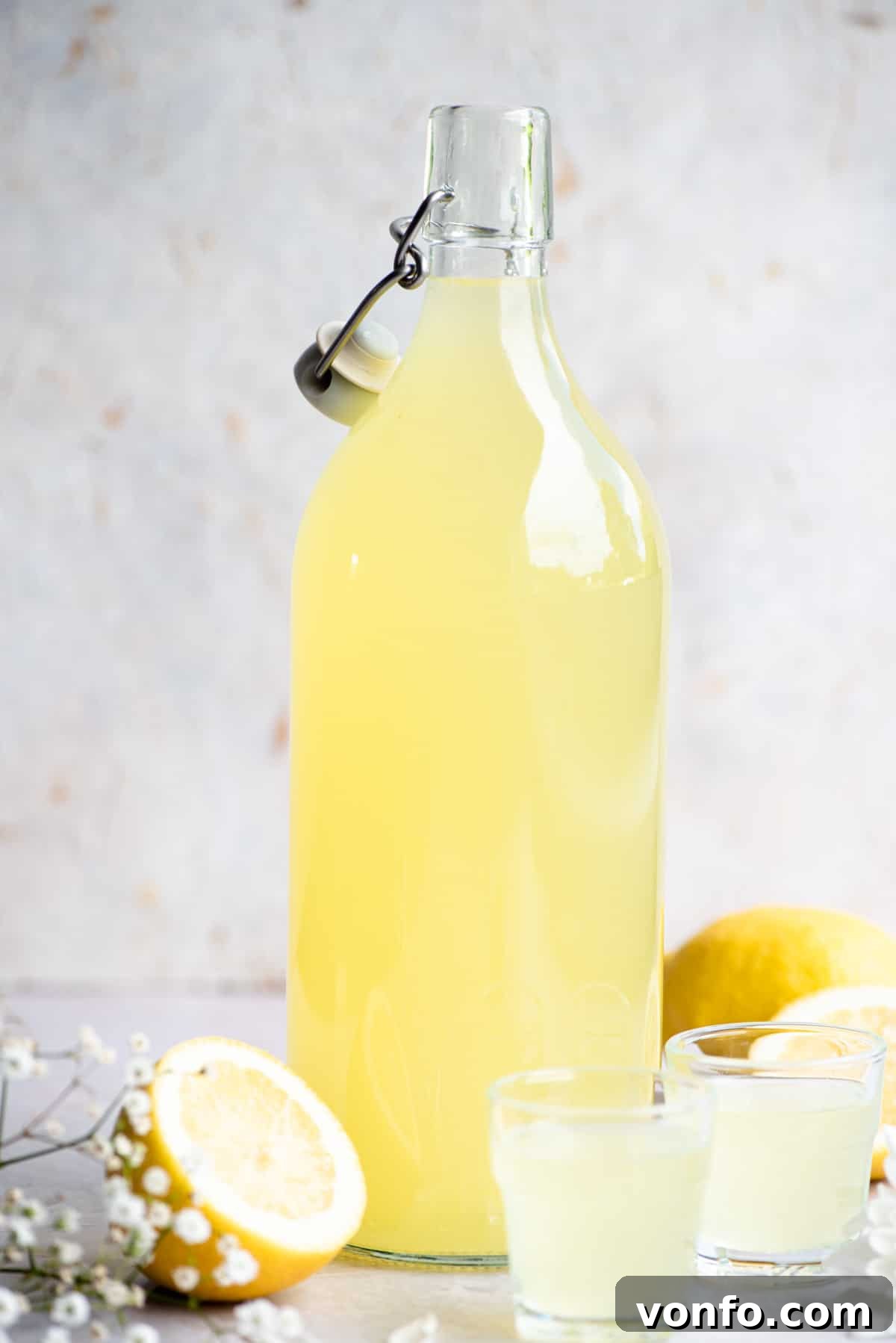
Imagine the sun-drenched Amalfi Coast, the scent of fresh lemons in the air, and a chilled glass of bright, refreshing Limoncello. This iconic Italian liqueur is the taste of Mediterranean summers, and now you can bring that vibrant experience right to your home. Our recipe shows you how to make homemade Limoncello that’s so simple, it’s practically drinkable instantly! Bursting with fresh lemon flavor, it’s the perfect after-dinner digestivo, a delightful addition to summer cocktails, or a zingy secret ingredient for desserts.
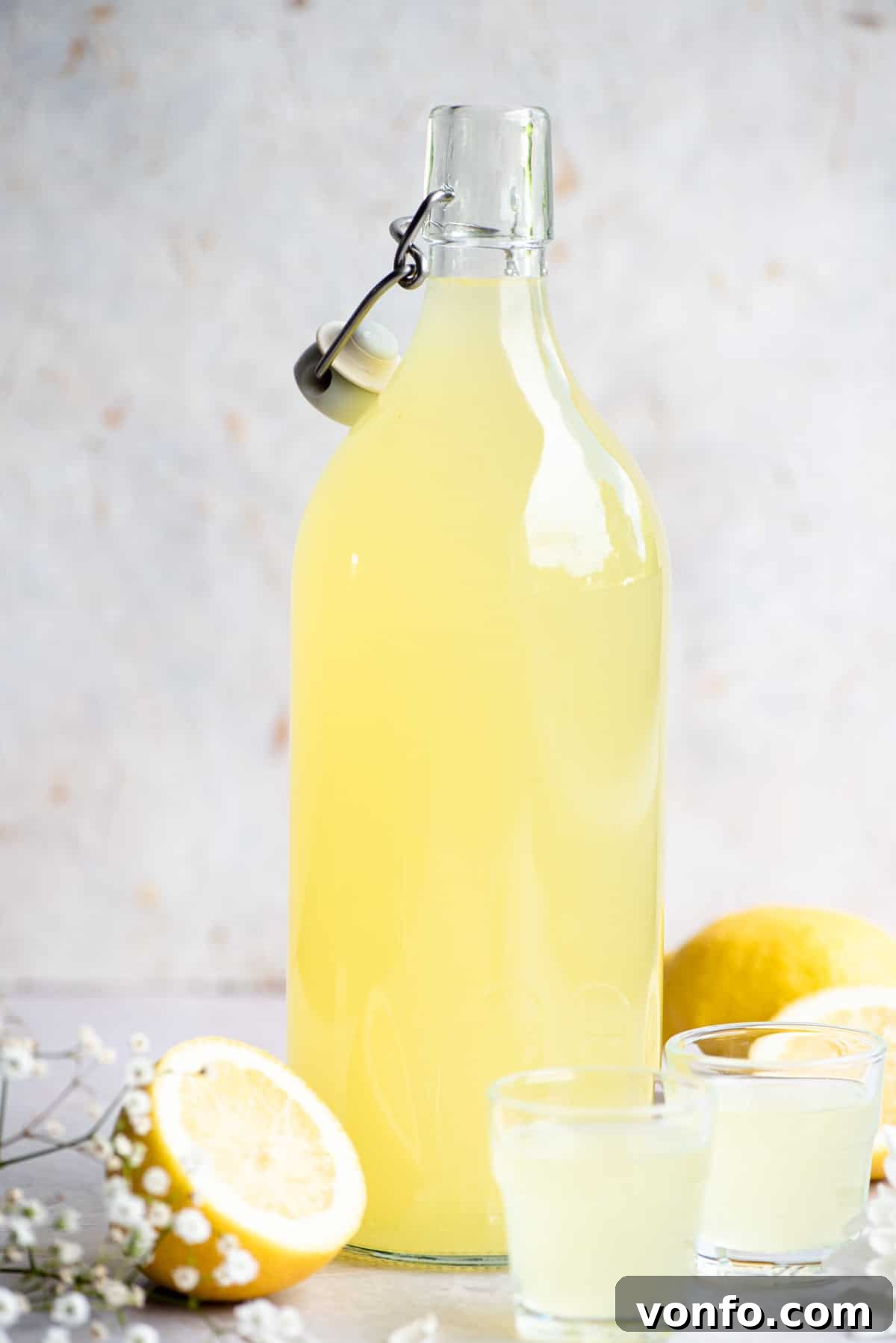
Limoncello, a beloved Italian lemon liqueur, embodies the very essence of Italian summers. Its sweet, tart, and intensely lemony profile makes it incredibly versatile. Whether you prefer to sip it neat in a small, chilled glass after a satisfying meal, or incorporate it into refreshing cocktails on a scorching summer’s day, Limoncello always hits the spot. It even shines in various culinary applications, from infusing desserts to crafting exquisite homemade gelato.
While traditional Limoncello often requires a lengthy steeping period with high-proof pure grain alcohol, our recipe offers a fantastic shortcut without compromising on flavor. We’ve optimized this recipe to be “instantly drinkable” by incorporating fresh lemon juice and utilizing readily available good quality vodka instead of the harder-to-find 190-proof pure grain alcohol, which is often difficult to source outside of Italy. This approach delivers a wonderfully fresh, zingy, and absolutely delicious Limoncello that you can enjoy much sooner.
The beauty of this recipe lies in its simplicity. You only need three core ingredients and a clean bottle for storage. We’ve meticulously crafted this guide to ensure your success, providing step-by-step photos, essential tips, and even a video tutorial to walk you through the process. Get ready to embark on a delightful journey of flavor and bring a taste of Italy into your home!
Why Make Limoncello at Home? The Joy of DIY Liqueur
Crafting your own Limoncello isn’t just a culinary task; it’s an experience that offers several distinct advantages over store-bought versions. Firstly, homemade Limoncello allows for complete control over the quality of ingredients. You get to select the freshest, most aromatic lemons and your preferred brand of vodka, ensuring a superior base flavor. This level of ingredient transparency is often unmatched by commercial liqueurs.
Secondly, it’s incredibly cost-effective. High-quality Limoncello can be quite expensive, especially if you enjoy it frequently. By making it yourself, you can produce a generous batch for a fraction of the cost. Moreover, the sense of accomplishment from serving a homemade liqueur to friends and family is truly rewarding. You can also customize the sweetness and strength precisely to your liking, something you can’t do with a pre-made bottle.
Finally, the process itself is surprisingly straightforward and enjoyable. It’s a wonderful way to connect with traditional Italian culinary practices and impress guests with a unique, handcrafted treat. The vibrant yellow hue and refreshing aroma of your homemade Limoncello will undoubtedly become a conversation starter at any gathering.
Essential Ingredients for Your Homemade Limoncello
The secret to an outstanding Limoncello lies in selecting the right ingredients. Below, you’ll find a breakdown of what you need, along with important notes to ensure the best possible outcome. Full quantities are conveniently listed in the printable recipe card further down this page.
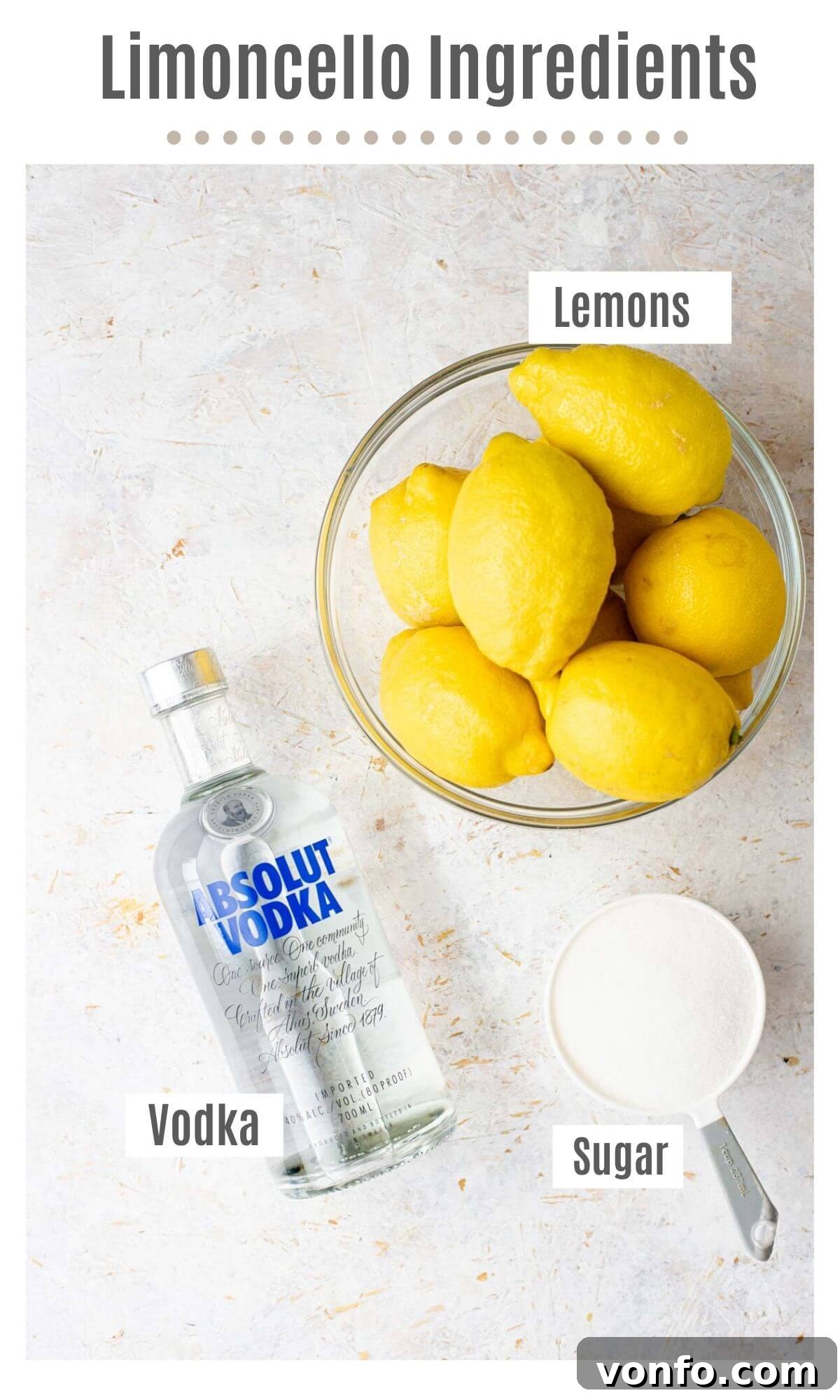
- Lemons: The Star of the Show
Choosing the right lemons is paramount for an exceptional Limoncello. Opt for the best quality, large, unwaxed lemons you can find. Unwaxed is crucial because you’ll be using the zest, and you don’t want any chemical residues. Look for lemons that are very firm and bright yellow, with thick, unblemished skin. Avoid any with dark yellow patches or signs of bruising. Varieties like Sorrento lemons from the Amalfi Coast are traditionally favored for their intense aroma and thick peels, but any good quality, organic, unwaxed lemons will yield fantastic results.
- Vodka: The Spirit Base
While traditional Limoncello often calls for 95% pure grain alcohol (like Everclear), which can be challenging to find outside of Italy, a good quality vodka serves as an excellent and accessible alternative. The better the vodka, the smoother and more refined your Limoncello will taste. We recommend using a reputable brand such as Absolute vodka, or any premium vodka that you enjoy drinking on its own. The alcohol acts as a solvent, extracting the aromatic oils from the lemon zest, so its quality directly impacts the final product.
- Sugar: The Sweet Balancer
White granulated sugar or caster sugar (superfine sugar) is all you need for this recipe. These dissolve easily to create a clear simple syrup. Do not use brown sugar or other types of sugar, as they will alter the color and flavor profile of the Limoncello, moving away from its traditional bright character.
- Water: For the Simple Syrup
Plain tap water is perfectly fine for making the simple syrup. Ensure it’s clean and filtered if your tap water has a strong taste, as this can subtly affect the final flavor.
Step-by-Step Guide: Crafting Your Own Limoncello
Follow these detailed steps to create your own luscious Limoncello. Pay close attention to the lemon peeling process, as it’s the most critical part for ensuring a beautiful, bitter-free liqueur.
Step 1: Prepare the Simple Syrup
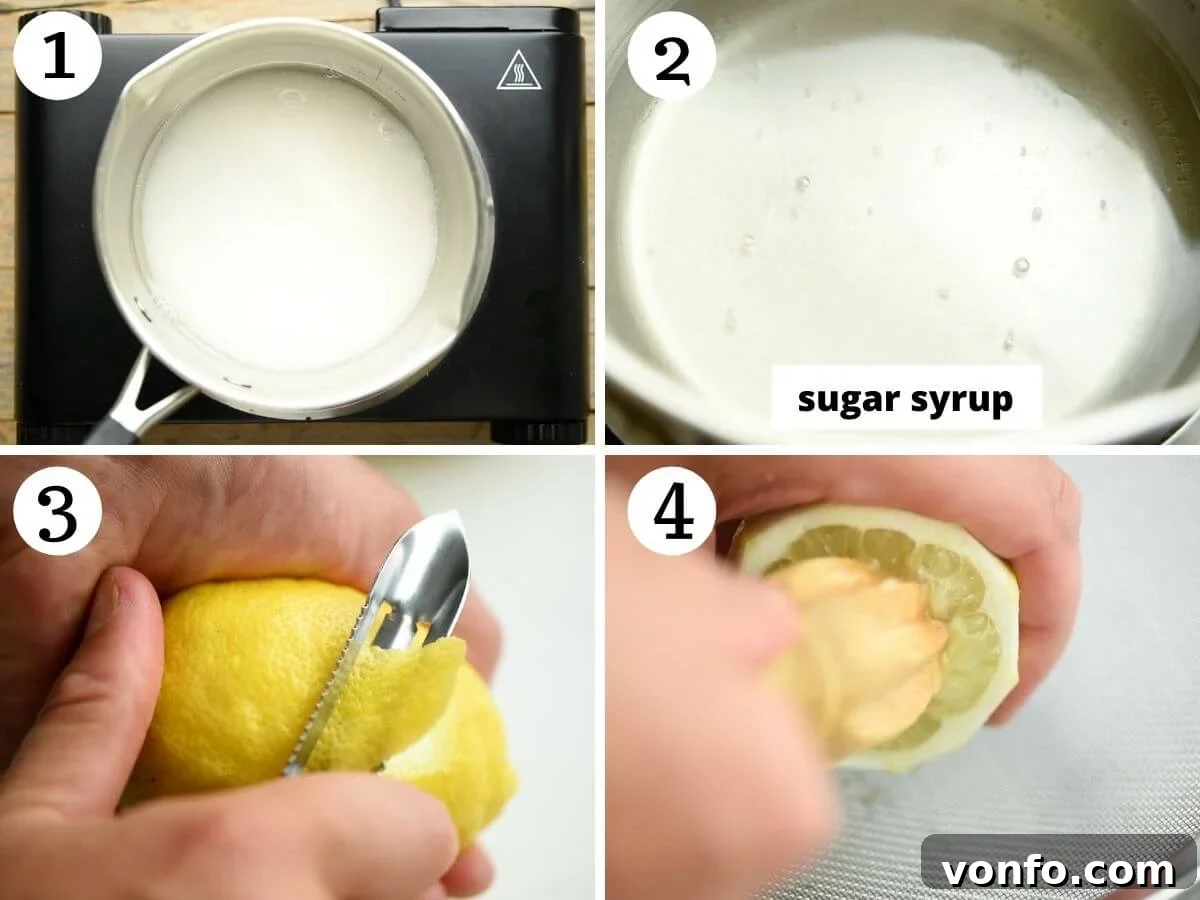
In a medium saucepan, combine the granulated sugar and water. Bring the mixture to a gentle boil over medium heat, stirring continuously until the sugar has completely dissolved and the syrup is clear. This process typically takes only a couple of minutes. Once the sugar has fully dissolved, immediately remove the saucepan from the heat and set it aside to cool completely. This cooled simple syrup will later be the sweet base of your Limoncello (see photos 1 & 2 for visual guidance).
Step 2: Prepare the Lemons
Thoroughly wash and scrub your unwaxed lemons under cold running water to remove any dirt or impurities. Using a vegetable peeler or a sharp paring knife, carefully peel the bright yellow skin from the lemons. It is absolutely crucial to avoid removing any of the white pith directly underneath the skin. The pith contains bitter compounds that will impart an unpleasant taste to your Limoncello. Aim for thin strips of pure yellow zest. Once you’ve peeled all 8 lemons, cut them in half and juice them. Strain the fresh lemon juice through a fine-mesh sieve to remove any pulp or seeds. The strained juice will be added to the mixture, contributing to the “instantly drinkable” aspect of this recipe (refer to photos 3 & 4 for the correct peeling technique).
Step 3: Combine Ingredients for Infusion
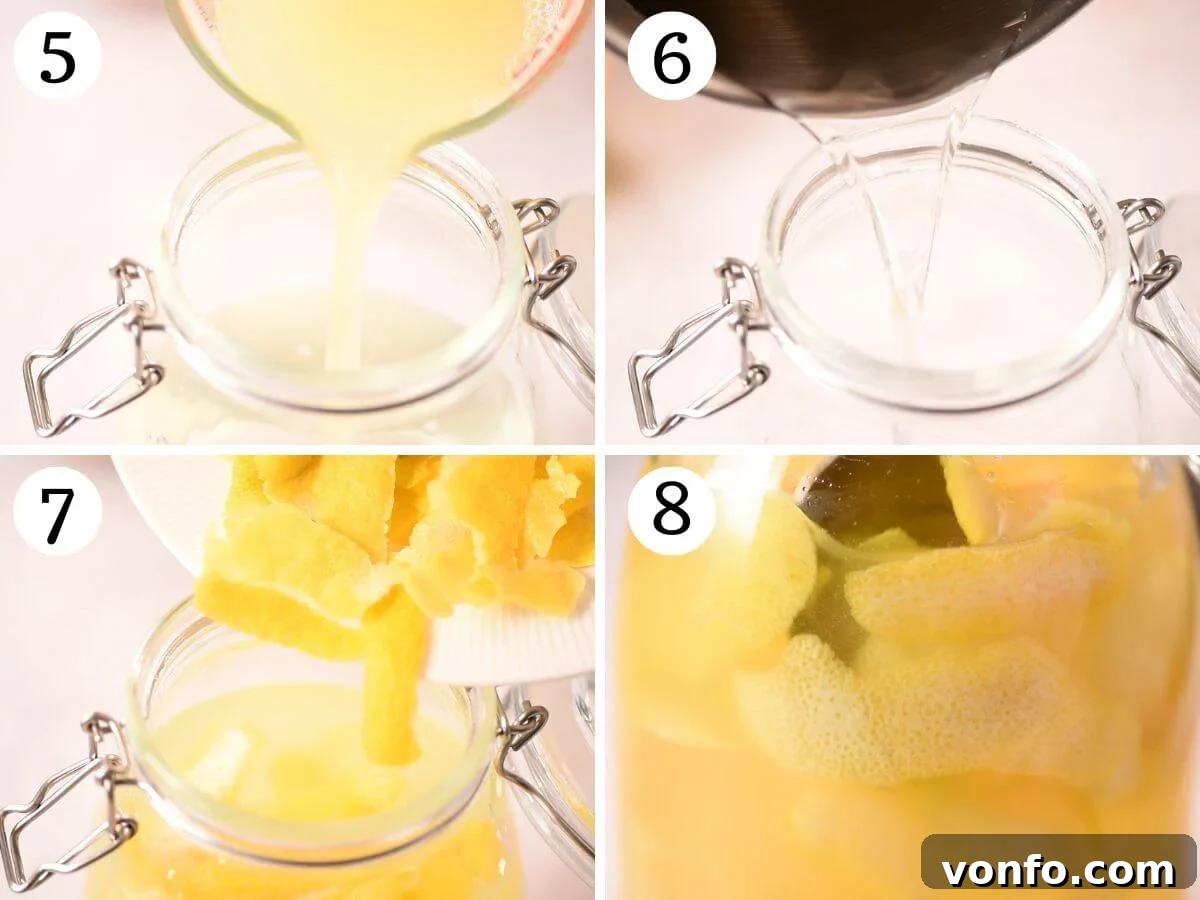
Once your simple syrup has cooled to room temperature, pour it into a large, clean 1.5-liter glass jar or bottle with a tight-fitting lid. Add the strained fresh lemon juice and the good quality vodka to the jar. Finally, add the meticulously peeled lemon zest. Stir all the ingredients together thoroughly to combine everything evenly. Ensure the lemon peels are fully submerged in the liquid to allow for optimal flavor extraction (as demonstrated in photos 5-7).
Step 4: Steep and Develop Flavor
While this recipe is designed for instant gratification thanks to the fresh lemon juice, Limoncello truly benefits from a steeping period. For the best flavor development, seal the jar and store it in a cool, dark place (like a pantry or cupboard) for at least one week, and ideally up to one month. The longer the lemon peels steep in the alcohol and syrup mixture, the more intense and complex the lemon flavor will become. There is no need to refrigerate it during this steeping phase.
Step 5: Strain and Bottle
Once your Limoncello has steeped to your desired intensity, it’s time to strain and bottle it. Carefully strain the entire mixture through a fine-mesh sieve, or a sieve lined with cheesecloth, into a clean pitcher. This will remove all the lemon peels, ensuring a perfectly clear and smooth liqueur. Discard the spent lemon peels. Now, transfer the beautifully golden Limoncello into clean, airtight bottles. You can use decorative bottles or simple swing-top bottles for storage. Limoncello can be stored at room temperature, in the refrigerator, or even in the freezer, depending on how you prefer to serve it.
Recipe Tips, Serving Suggestions, and Frequently Asked Questions
To help you get the most out of your homemade Limoncello, here are some invaluable tips and answers to common questions:
- Bottling Best Practices: When selecting a bottle for steeping, choose one with a wide enough opening to easily add and remove the lemon peels. For the final storage, any clean, airtight glass bottle will work well. Recycling old spirit bottles or decorative glass bottles can add a charming touch.
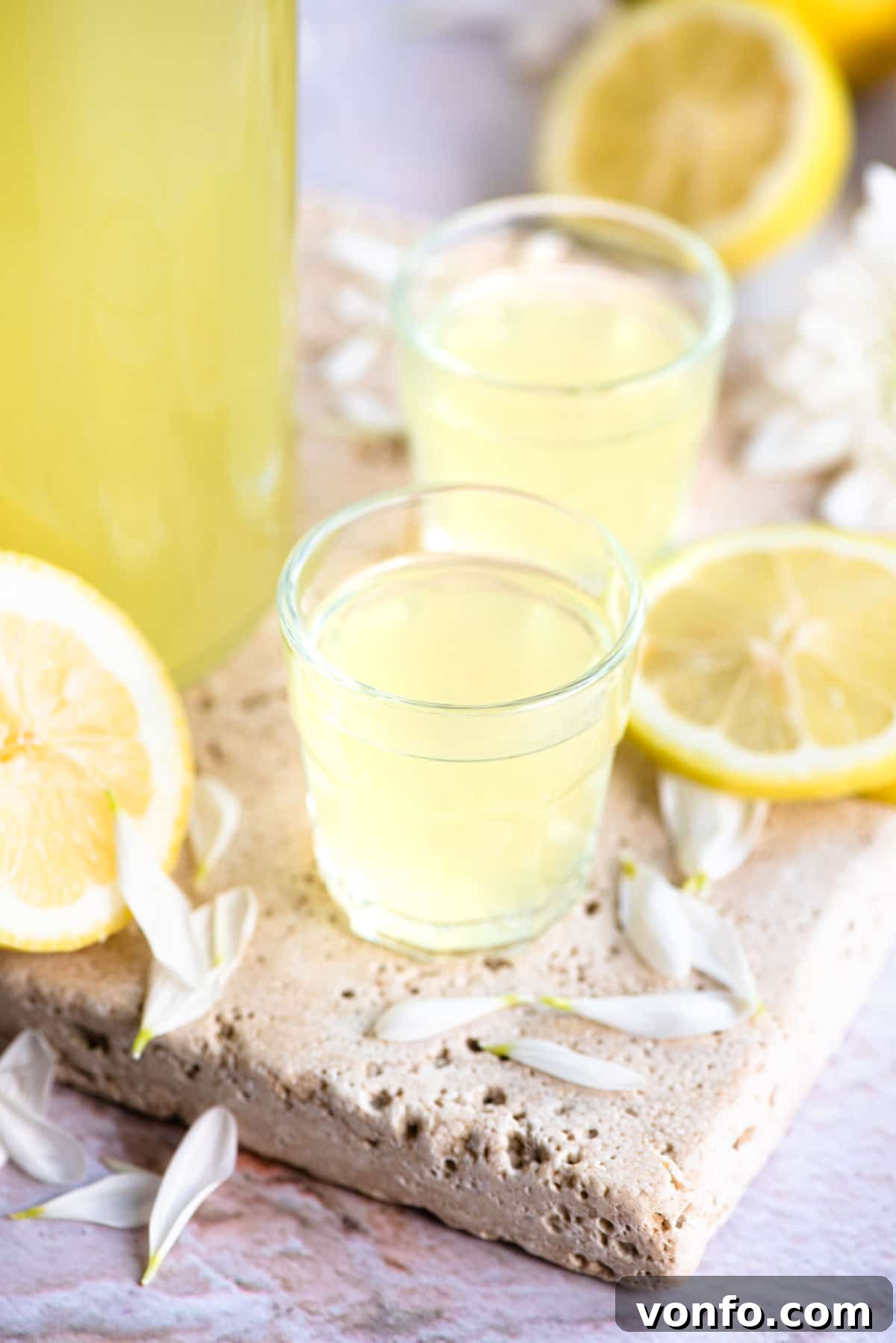
- Serving Perfection: Limoncello is traditionally served ice-cold. Keep your bottle in the refrigerator or even the freezer (our vodka-based version will freeze solid, but defrosts quickly to a slushy consistency, which is delightful). Serve it in small, chilled shot glasses (called “cicchetti” in Italy) to sip on after a meal. Its refreshing zest makes it a fantastic digestivo, aiding digestion and cleansing the palate.
- Beyond the Sip: Creative Ways to Use Limoncello:
- Desserts: Elevate your sweet treats! Add Limoncello to cake frostings, glazes, or incorporate it into a refreshing homemade Limoncello gelato or sorbet. It’s also fantastic drizzled over fresh berries or fruit salads.
- Amalfi-Style Spritz: Combine Limoncello with Prosecco and a splash of soda water for a light, bubbly, and incredibly refreshing summer spritz – reminiscent of a classic Aperol Spritz but with a lemon twist. Garnish with a lemon slice and fresh mint.
- Culinary Applications: Don’t limit Limoncello to drinks and desserts. A touch of Limoncello can brighten marinades for chicken or fish, or be used to deglaze a pan for a vibrant sauce.
- Limoncello Cocktails: Your Summer Bar Companion: Limoncello is a fantastic base for a variety of cocktails. Explore some delicious summer concoctions using your homemade batch:
- Limoncello Martini (Lemon Drop Martini)
- Limoncello Mojito Cocktail
- Sparkling Limoncello Cocktail
- Limoncello & Tonic: A simple yet sophisticated drink. Mix Limoncello with tonic water and a lemon wedge.
Frequently Asked Questions About Homemade Limoncello
While lemons from the Amalfi coast (like Sorrento lemons) are traditionally considered the gold standard for their thick, aromatic peels, any fresh, ripe, and unwaxed lemons will yield a delicious Limoncello. The key is unwaxed, as you’ll be using the zest directly. Organic lemons are always a great choice.
Traditionally, Limoncello is made with 95% (190 proof) pure grain alcohol, which extracts lemon oils very efficiently and results in a very potent liqueur. However, this type of alcohol is often difficult to find or even illegal in many countries. Good quality vodka (typically 80 proof or 40% ABV) works exceptionally well as a substitute, producing a smoother, slightly less potent, but equally flavorful Limoncello that’s more accessible to home cooks.
If you find your Limoncello too strong or not sweet enough for your taste, you can easily adjust it. Prepare an additional batch of simple syrup (equal parts sugar and water, boiled until dissolved and cooled) and gradually add it to your Limoncello until you reach your desired sweetness. Always taste as you go!
Cloudiness in Limoncello, often referred to as the “louche effect,” is usually a sign of a successful infusion! It occurs when the concentration of essential oils from the lemon zest decreases (diluted by water/syrup), making the oils less soluble and causing them to precipitate into tiny droplets. This is completely normal and often desired. However, if your Limoncello is excessively cloudy or has particles, it might be due to not straining adequately or including too much pith during peeling, which can impart bitterness.
Stored in airtight bottles in the refrigerator, homemade Limoncello will keep well for up to 3 months, or even longer if the alcohol content is high enough. If stored in the freezer, it can last indefinitely, though for best flavor, consuming it within 6-12 months is recommended.
Yes, you can absolutely freeze Limoncello! Because this version is made with vodka and fresh lemon juice, it will freeze solid. However, it defrosts very quickly to a desirable slushy consistency, which is a fantastic way to enjoy it as an extra-chilled treat on a hot day. The freezing temperature will not harm the flavor.
We hope you thoroughly enjoy making and savoring your very own homemade Limoncello! If you’ve tried this Homemade Limoncello recipe or any other delightful concoction from our blog, please don’t hesitate to rate the recipe and share your experience in the comments section below. We absolutely love hearing from you! You can also FOLLOW US on FACEBOOK, INSTAGRAM, and PINTEREST, or subscribe to our NEWSLETTER to discover more of our delicious recipes and culinary adventures.
Step By Step Photos Above
Most of our recipes come with step by step photos, helpful tips and tricks to make it perfectly first time and even video!
Homemade Limoncello – Quick and Easy Recipe
By Emily
20 minutes
2 minutes
22 minutes
1.5
litres
Saved
Pin
Ingredients
- 8 large unwaxed lemons
- 1 cup granulated sugar, (225g)
- 1 cup water, (240ml)
- 3 cups good quality vodka, (700ml/23.6 fl oz)
Instructions
-
In a saucepan, combine the sugar and water. Bring the mixture to a boil, stirring until the sugar has completely dissolved. Remove from heat and set aside to cool completely.
-
Carefully peel the yellow skin from the 8 lemons using a vegetable peeler, ensuring you avoid the bitter white pith. Then, juice the peeled lemons and strain the juice through a sieve to remove any pulp or seeds.
-
Pour the cooled sugar syrup, strained lemon juice, and vodka into a large 1.5-liter jar. Add the lemon peels to the jar and stir gently to combine all ingredients thoroughly.
-
While the Limoncello is drinkable immediately, for optimal flavor development, it’s best to allow it to steep for a minimum of 1 week, and ideally up to 1 month. Store the jar in a cool, dark place during this period; refrigeration is not necessary.
-
Once steeped, strain out all the lemon peels from the Limoncello using a fine-mesh sieve. Transfer the clear Limoncello into clean, airtight bottles. You can store your Limoncello at room temperature, in the fridge, or for an extra chilled experience, in the freezer.
Video
Watch our video tutorial for a visual guide on making this delightful Limoncello.
Notes
- Bottling: Choose a bottle for steeping that allows for easy removal of the lemon peels. For final storage, clean, airtight glass bottles are ideal, and you can even repurpose and sterilize old spirit bottles.
- Serving Suggestions: Always serve Limoncello thoroughly chilled. It’s traditionally enjoyed in small shot glasses after a meal as a digestive.
- Other Ways to Use Limoncello: Elevate desserts by adding Limoncello to cake frosting, glazes, or even making homemade Limoncello gelato. For a refreshing summer drink, mix it with Prosecco and a splash of soda water to create an Amalfi-style spritz.
- Limoncello Cocktails: Explore our selection of delicious summer cocktails featuring Limoncello, including the Limoncello Martini (Lemon Drop Martini), Limoncello Mojito Cocktail, and the Sparkling Limoncello Cocktail.
Helpful Info for All Recipes
- I always use extra virgin olive oil in all of my recipes unless stated otherwise.
- When I use canned or jarred tomatoes of any kind, I always recommend Cirio or Mutti brands for the best results and flavor.
- All vegetables are medium sized unless stated otherwise.
- All recipes are tested and developed using a fan (convection) oven.
- Find out more about how nutrition is calculated.
- Check out our must-have Italian Pantry Staples.
- You can also find all our Essential Kitchen Tools for Italian Cooking.
Nutrition
Serving:
30
ml
|
Calories:
54
kcal
|
Carbohydrates:
6
g
|
Protein:
1
g
|
Fat:
1
g
|
Saturated Fat:
1
g
|
Polyunsaturated Fat:
1
g
|
Monounsaturated Fat:
1
g
|
Sodium:
1
mg
|
Potassium:
24
mg
|
Fiber:
1
g
|
Sugar:
4
g
|
Vitamin A:
4
IU
|
Vitamin C:
9
mg
|
Calcium:
5
mg
|
Iron:
1
mg
Nutrition information is automatically calculated, so should only be used as an approximation.
Did you try this recipe?
Leave a comment below!