

Imagine biting into a perfectly cooked, succulent sausage, rich with the vibrant flavors of Italy – savory fennel, pungent garlic, and a hint of red wine. What if we told you that you could create this culinary masterpiece right in your own kitchen, effortlessly, and without the need for finicky casings or specialized machinery? This comprehensive guide will walk you through crafting the most delicious homemade Italian sausage, ensuring a juicy, flavorful experience that rivals any store-bought variety. Whether served alongside creamy polenta, a robust tomato sauce, or wholesome lentils, these sausages promise an authentic taste of Italy.

Authentic Homemade Italian Sausage: A Caseless Delight
Italian sausages are truly in a league of their own. Renowned for their incredible juiciness, perfectly balanced saltiness, and a symphony of seasonings, they elevate any dish they grace. From fresh aromatic herbs to potent garlic and the subtle depth of red wine, each ingredient plays a crucial role in creating their signature flavor profile. These versatile links can transform a simple tomato sauce into a rich ragu, add substance and spice to pasta bakes, crown a homemade pizza, or enrich a hearty stew. The culinary possibilities are endless, and the assurance of absolutely delicious flavor is guaranteed with every bite of your homemade creation.
Crafting the Perfect Italian Sausage Seasoning Blend
The magic of Italian sausage lies in its distinct seasoning. While fennel, rosemary, and oregano are the most iconic, the beauty of making sausage at home is the freedom to customize and experiment with various herbs and spices. Here’s a deeper look into the core ingredients and other fantastic additions you can use to personalize your homemade Italian sausage:
- Fennel Seeds: This is arguably the most crucial ingredient, delivering that unmistakable sweet, anise-like flavor that defines Italian sausage. You can use whole seeds or crush them slightly in a mortar and pestle for a more intense burst of flavor.
- Fresh Rosemary: Its piney, slightly peppery notes add a wonderful aromatic depth. Ensure it’s finely chopped to distribute evenly throughout the meat.
- Dried Oregano: A classic Italian herb that brings earthy, slightly bitter notes, complementing the richness of the pork.
- Fresh Garlic: Minced garlic is essential for its pungent, savory kick, which mellows beautifully during cooking.
- Red Wine: Not just for drinking! A splash of red wine adds a deep, complex richness and helps to tenderize the meat, contributing to that desirable juicy texture. Choose a dry red wine for the best results.
- Chili Flakes (Dried or Jarred): For those who love a bit of heat, chili flakes are a fantastic addition. Adjust the quantity to your preferred spice level.
- Nduja: This spicy, spreadable Calabrian salami offers an incredible depth of flavor and a fiery kick. If you can find it, a small amount mixed into your sausage meat will deliver an authentic Southern Italian twist.
- Dried Marjoram: Similar to oregano but with a sweeter, milder flavor, marjoram can add another layer of herbaceousness.
- Fresh Finely Chopped Sage: Sage pairs wonderfully with pork, bringing a warm, earthy, slightly peppery aroma.
- Fresh Finely Chopped Parsley: Adds a fresh, bright note that balances the richness of the other ingredients.
Selecting the Ideal Meat for Superior Homemade Sausage
The foundation of any great sausage is high-quality meat, and for authentic Italian sausages, pork is the undisputed champion. The key to achieving that signature juicy, flavorful result lies in the fat content. Italian sausages are traditionally made with pork that contains a significant percentage of fat, as fat equals flavor and moisture.
For this reason, we highly recommend using **minced pork shoulder**. Pork shoulder offers the perfect balance of lean meat and fat, ensuring your sausages are both tender and succulent.
Crucial Tip for Optimal Texture: Do not be tempted to use regular pre-ground pork mince from your supermarket. Even the “fattiest” varieties often lack the sufficient fat content required for truly juicy Italian sausages. Furthermore, supermarket ground pork tends to be too finely processed, resulting in a texture that more closely resembles a burger patty rather than the robust, rustic consistency of a traditional Italian sausage.
The secret to achieving the ideal texture for these homemade sausages is to **purchase diced pork shoulder and process it yourself in a food processor at home.** This method allows you complete control over the texture. You’re aiming for a consistency that is finely ground but still retains small, distinct chunks of fat. This ensures a hearty mouthfeel and locks in maximum flavor and moisture.
Step-By-Step Guide: How to Make Homemade Italian Sausage (No Casings or Machine)
Creating your own delicious Italian sausages is simpler than you think. Follow these easy steps to prepare a batch of flavorful, caseless links:
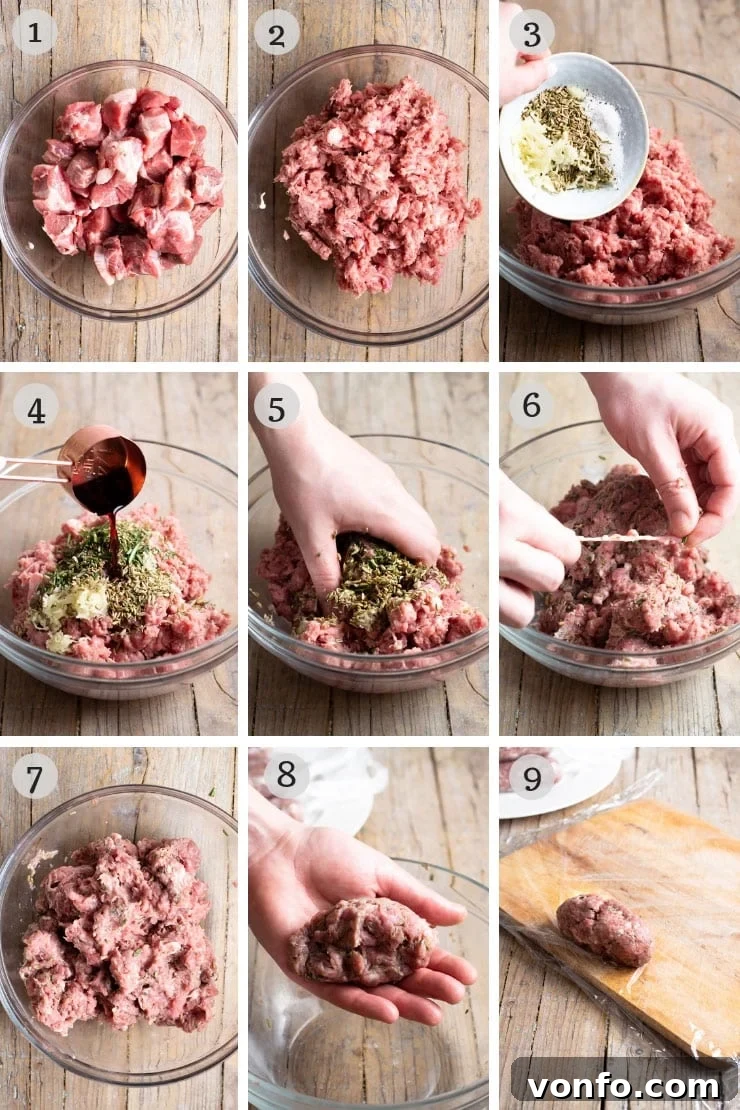
- Process the Pork Shoulder: Begin by placing the diced pork shoulder into a food processor. Pulse for 30-60 seconds, or until the meat is finely ground but still has discernible chunks of fat. Depending on the power of your food processor, you may need to do this in two batches to ensure even processing. This step is crucial for achieving the desired rustic texture (see reference photos 1 & 2 in the original article).
- Add the Aromatics and Seasoning: Transfer the processed pork to a large mixing bowl. Now, add the minced garlic, your chosen fresh herbs (such as finely chopped rosemary), sea salt, and freshly ground black pepper. Remember, fresh rosemary offers a much stronger and more vibrant flavor than dried, so chop it very fine for optimal distribution (see reference photo 3 in the original article).
- Incorporate Red Wine and Mix: Pour the red wine over the seasoned pork. It’s time to get your hands dirty! Use your hands to thoroughly mix all the ingredients together. This ensures the flavors are evenly distributed throughout the meat. As you mix, keep an eye out for any tough sinew or long, stretchy pieces of fat; remove these if you find them, though there shouldn’t be much at all (see reference photos 4-7 in the original article).
- Marinate for Flavor Development: Once thoroughly mixed, cover the bowl tightly with cling film (plastic wrap) and let the meat marinate in the refrigerator for at least 30 minutes. If time allows, marinating for a few hours or even overnight will significantly enhance the flavor depth of your sausages.
- Shape the Sausages: Divide the seasoned pork mixture into 8 equal portions. Gently shape each portion into a rough sausage form. Don’t worry about perfection; a rustic shape is part of their charm (see reference photo 8 in the original article).
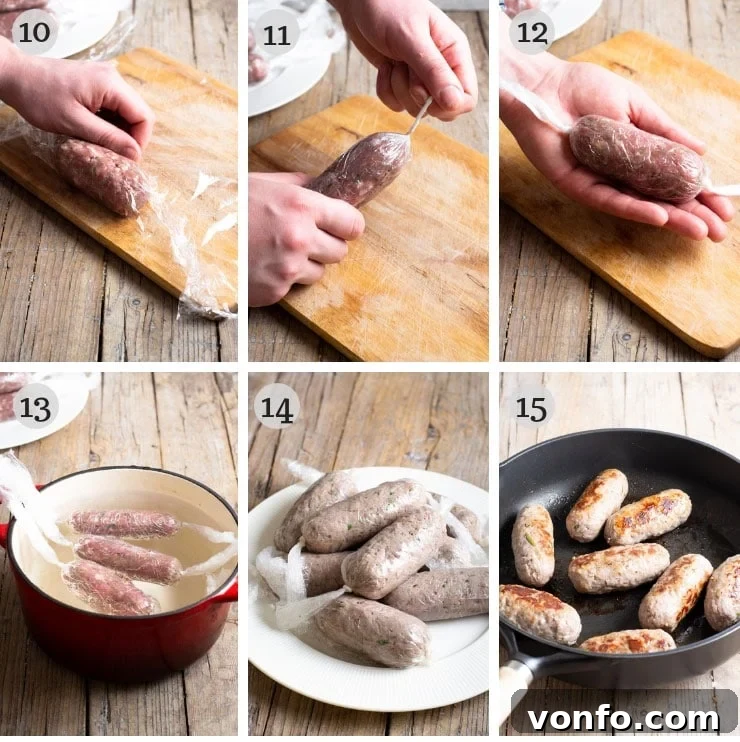
- Wrap for Firmness: Lay out a small sheet of cling film. Place one sausage portion at one of the widest edges of the film. Roll it tightly, but without excessive force, ensuring no air pockets. Twist and tie the ends of the cling film to secure the sausage shape. Repeat for the remaining portions (see reference photos 10-12 in the original article).
- Par-Boil for Shape Retention: Bring a pot of water to a rolling boil, then immediately turn off the heat. Carefully add the wrapped sausages to the hot water. Let them sit for approximately 30 seconds. This brief immersion helps the sausages firm up and retain their shape when the cling film is removed.
- Unwrap and Prepare for Cooking: Remove the sausages from the hot water and place them on a plate. Carefully cut the twisted ends of the cling film and unwrap them (see reference photos 13 & 14 in the original article).
- Cook or Store: At this point, your homemade Italian sausages are ready for cooking or storage. You can let them cool completely and store them in the fridge for later use, or proceed to cook them immediately. To cook, heat a little olive oil in a large pan over medium heat. Fry the sausages until they are beautifully browned on all sides and cooked through, which usually takes about 10 minutes (see reference photo 15 in the original article).
The Casing Conundrum: Why Go Caseless?
Traditional sausages are indeed made with casings for a good reason: they play a vital role in keeping the sausage moist, juicy, and compact, sealing in all those wonderful flavors during cooking. However, working with casings can be a rather intricate and time-consuming task, often requiring specialized equipment like meat grinders and sausage stuffers.
This recipe offers a fantastic alternative: homemade Italian sausage without casings or a machine. By foregoing the casings, you significantly simplify the process, making authentic Italian flavors accessible to every home cook. While it’s true that caseless sausages might be *slightly* less juicy than their cased counterparts due to the lack of a protective outer layer, the trade-off in ease and convenience is well worth it. You still achieve an incredible depth of flavor that is undeniably delicious, making this method perfect for those who want the taste of homemade without the fuss.
Delicious Ways to Serve Your Homemade Italian Sausages
These versatile homemade Italian sausages are a delightful addition to countless meals. Here are some classic and creative serving suggestions to inspire your next culinary creation:
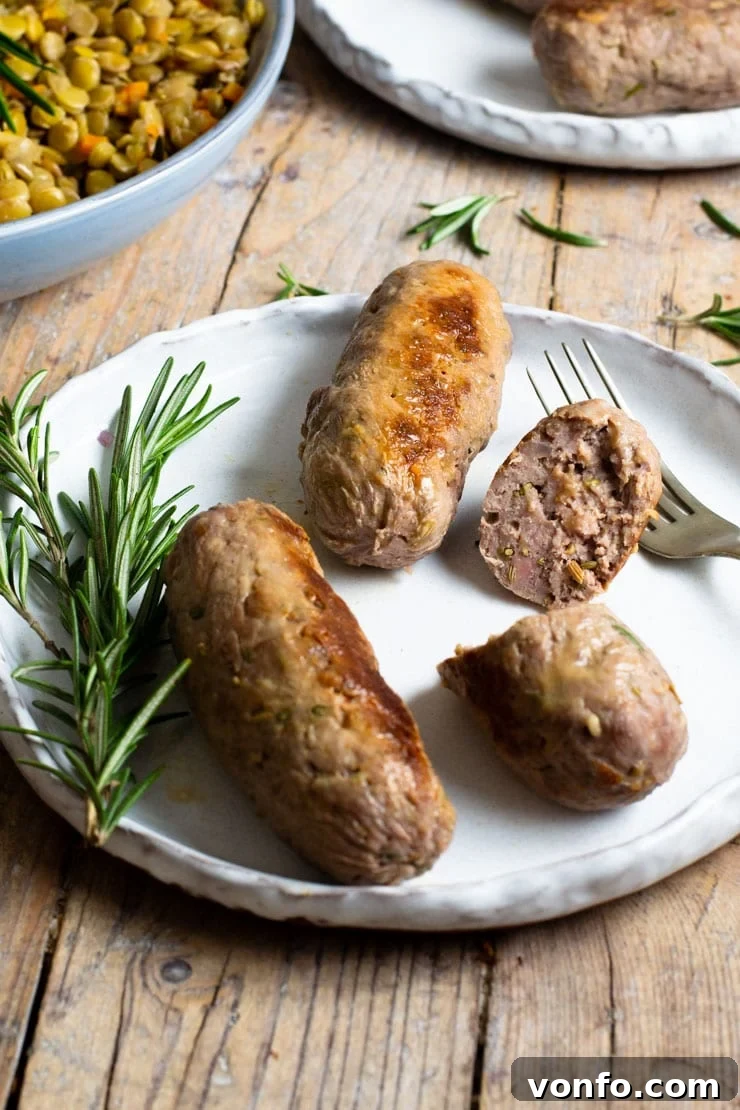
- With Lentils: A time-honored Italian tradition, especially for bringing in the New Year. Serving Italian sausages with lentils symbolizes good luck and wealth. It’s a healthy, hearty, and incredibly satisfying meal that’s both simple to prepare and rich in flavor.
- Creamy Polenta: Pair your sausages with a bowl of warm, silky-soft polenta for a truly comforting and classic Italian experience. The rich flavors of the sausage perfectly complement the subtle sweetness and creamy texture of the cornmeal.
- Rich Tomato Sauce or Red Pepper Sauce: Whether simmered in a vibrant red pepper sauce or a classic slow-cooked tomato sauce, the sausages infuse the sauce with their aromatic essence, creating a deeply flavorful dish that’s perfect for pasta or dipping crusty bread.
- Roasted Potatoes: For a rustic and satisfying side, roast your homemade sausages alongside Italian roast potatoes. The flavors meld beautifully as they cook together, creating a harmonious and comforting meal.
- Pasta Dishes: Crumble the cooked sausage into your favorite pasta sauce for an instant flavor boost, or add them to baked pasta dishes for extra texture and heartiness.
- Pizza Topping: Slice or crumble the cooked sausages and scatter them over your homemade pizza before baking for a savory, satisfying topping.
- Hearty Stews and Soups: Incorporate these sausages into your favorite stews or robust soups for a depth of flavor that will warm you from the inside out.
- Sandwiches: Serve hot in a crusty roll with some sautéed peppers and onions for an irresistible Italian sausage sandwich.
Creative Recipes Featuring Your Homemade Sausage Meat:
Beyond shaping them into links, the seasoned sausage meat itself is a fantastic ingredient. Here are some additional recipes where you can utilize your homemade sausage mixture:
- Easy Sausage Ragu with Ricotta Gnocchi – Simply use the seasoned sausage meat, no need to roll into individual links.
- Stracchino and Sausage Crostini – This recipe calls for the raw, seasoned meat, making it perfect for your homemade mixture.
- Sausage Stuffing Balls – Instead of forming links, roll the mixture into small balls for delicious stuffing or appetizers.
Essential Tips for Italian Homemade Sausage Success
To ensure your homemade Italian sausages are nothing short of spectacular, keep these crucial tips in mind:
- Quality Meat is Key: Always use high-quality pork with a good fat-to-lean ratio. Pork shoulder is highly recommended for its flavor and juiciness.
- Don’t Skimp on Fat: Fat is where a significant portion of the flavor and moisture comes from. Resisting the urge to trim too much fat will result in juicier, more flavorful sausages.
- Wrap Tightly: When shaping the sausages with cling film, ensure they are wrapped tightly. This prevents water from seeping in during the par-boiling step and helps them maintain their shape.
- Prep Ahead: These sausages are excellent for meal prep. You can prepare them up to the point of removing them from the cling film (step 8), store them in an airtight container in the refrigerator for up to 2-3 days, and then fry them when ready to eat.
- Freezing Instructions: To freeze, follow all steps up to and including par-boiling and unwrapping. Once cooled, place the sausages on a baking sheet lined with parchment paper and freeze until solid. Then transfer them to a freezer-safe bag or container for up to 3 months. Thaw in the refrigerator overnight before cooking.
- Versatile Meat Mixture: If you plan to use the seasoned meat in dishes like ragu, sauces, or as a pizza topping, there’s no need to form it into sausage shapes. Simply use the marinated meat as is for incredible flavor.
- Taste and Adjust Seasoning: Before forming all the sausages, you can fry a small patty of the meat mixture to taste and adjust the seasoning (salt, pepper, chili flakes) to your preference.
If you’ve tried this recipe for Authentic Homemade Italian Sausage or any other recipe on the blog, please share your experience and comments below. I love hearing from you! You can also FOLLOW ME on FACEBOOK, TWITTER, INSTAGRAM, and PINTEREST to discover more delicious food and kitchen adventures.
Step By Step Photos Above
Most of our recipes come with step by step photos, helpful tips and tricks to make it perfectly first time and even video!
Homemade Italian Sausages
By Emily
30
10
30
40
8
fat sausages (serves 4)

Ingredients
- 1.7 lbs (800g) pork shoulder, diced
- 2 tbsp fennel seeds
- 4 large cloves garlic, minced
- 1/4 cup (60ml) red wine
- 4 sprigs fresh rosemary, finely chopped
- 2 tsp sea salt
- 1 tsp freshly ground pepper
Special equipment
- Cling film (plastic wrap)
- Food Processor
Instructions
- Blitz the diced pork shoulder in a food processor for 30-60 seconds until finely ground but with chunks of fat. You might need to do this in two batches.
- Add the minced garlic, finely chopped fresh rosemary, sea salt, and freshly ground pepper to the processed pork.
- Pour over the red wine and mix everything together thoroughly using your hands. Remove any tough sinew or stretchy fat pieces if found.
- Cover the mixture with cling film and let the meat marinate for at least 30 minutes in the fridge.
- Separate the pork sausage meat into 8 even portions and shape each into a rough sausage form.
- Lay out a small sheet of cling film, place a sausage portion at one edge, roll it tightly without too much force, and twist and tie the edges to secure. Repeat for all sausages.
- Bring a pot of water to a boil, then turn off the heat. Add the wrapped sausages to the hot water for about 30 seconds to firm up and retain their shape.
- Remove sausages, place on a plate, cut the cling film edges, and unwrap.
- Let them cool and store in the fridge until needed, or fry immediately in a little olive oil in a large pan until browned on all sides and cooked through (about 10 minutes).
Notes
Top Tips for Making Italian Homemade Sausage
- Make sure to use high-quality pork meat with a good ratio of fat; pork shoulder is highly recommended.
- Wrap the sausage meat tightly in cling film so no water gets inside during par-boiling.
- You can prep the sausages in advance up to step 8 (after unwrapping) and store them in the fridge to fry later.
- If you are adding the meat to ragu, sauces, or pizzas, use the marinated meat as it is; there’s no need to form it into a sausage shape.
Homemade Sausage Seasoning Variations
While rosemary, oregano, and fennel are common, feel free to customize your seasoning blend:
- Chili flakes: Add dried or jarred for a spicy kick.
- Nduja: Mix in this spicy Calabrian salami for unique depth.
- Marjoram: Use dried marjoram for a milder, sweeter herbaceous note.
- Sage: Incorporate fresh, finely chopped sage for an earthy aroma.
- Parsley: Add fresh, finely chopped parsley for brightness.
- Red wine: Essential for a delicious rich flavor and tender texture.
Helpful Info for All Recipes
- I always use extra virgin olive oil in all of my recipes unless stated otherwise.
- When I use canned or jarred tomatoes of any kind, I always use Cirio or Mutti brands for the best results and flavor.
- All vegetables are medium sized unless stated otherwise.
- All recipes are tested and developed using a fan (convection) oven.
- Find out more about how nutrition is calculated.
- Check out our must-have Italian Pantry Staples.
- You can also find all our Essential Kitchen Tools for Italian Cooking.
Nutrition
Calories:
101
kcal
|
Carbohydrates:
1
g
|
Protein:
11
g
|
Fat:
4
g
|
Saturated Fat:
1
g
|
Cholesterol:
39
mg
|
Sodium:
627
mg
|
Potassium:
240
mg
|
Vitamin C:
1.2
mg
|
Calcium:
28
mg
|
Iron:
1.1
mg
Nutrition information is automatically calculated, so should only be used as an approximation.
Did you try this recipe?
Leave a comment below!