
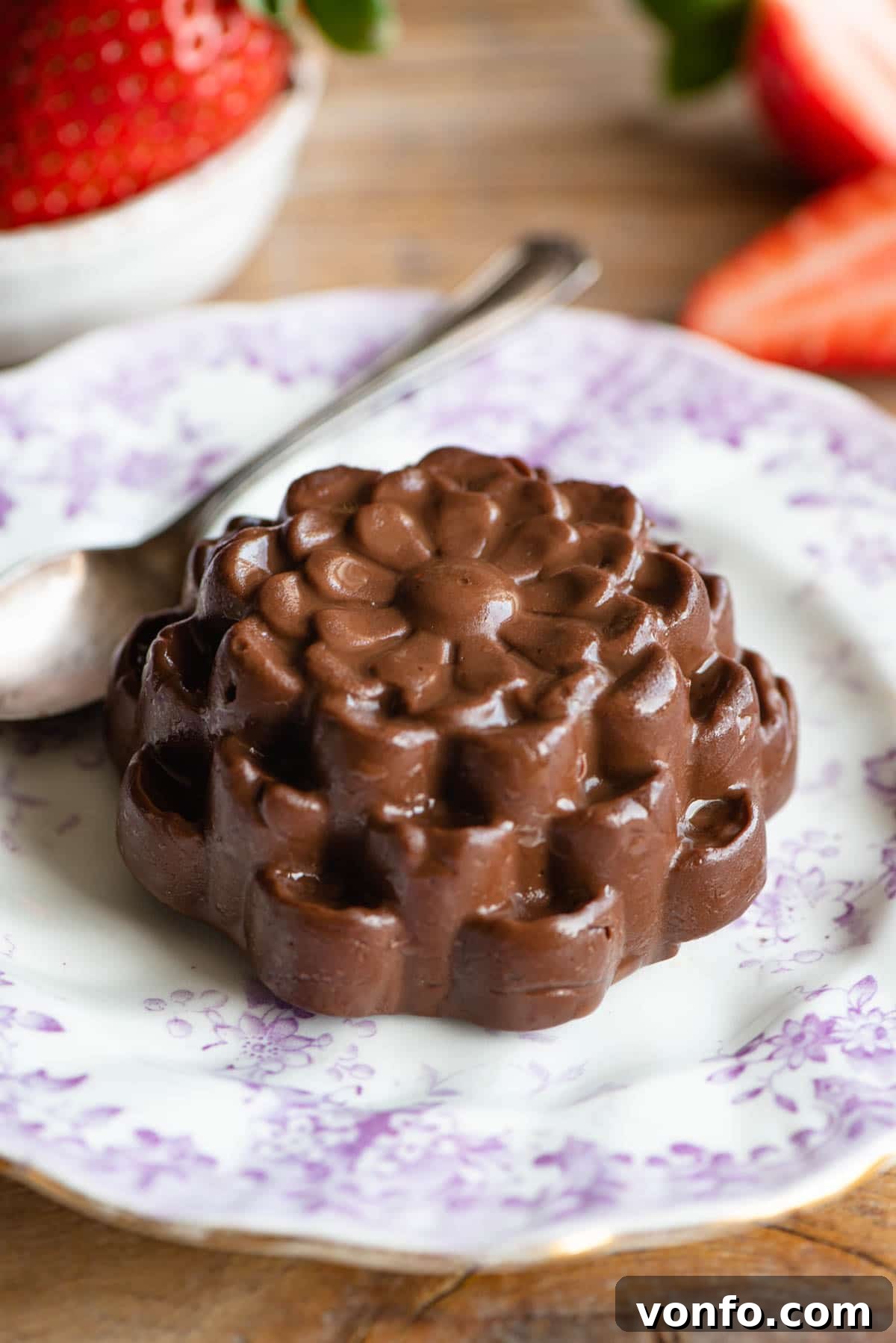
Chocolate Budino is far more than just a dessert; it’s a rich, exquisitely smooth, and intensely decadent Italian chocolate treat that promises to delight every chocolate lover. Crafted from a handful of simple pantry ingredients, this classic Italian pudding offers an indulgent experience with minimal effort. Imagine just 10 minutes of active preparation before it chills to perfection in your refrigerator. The result is a luxurious, melt-in-your-mouth delight, perfect for any occasion that calls for a truly special treat, whether it’s a cozy family dinner or an elegant gathering.
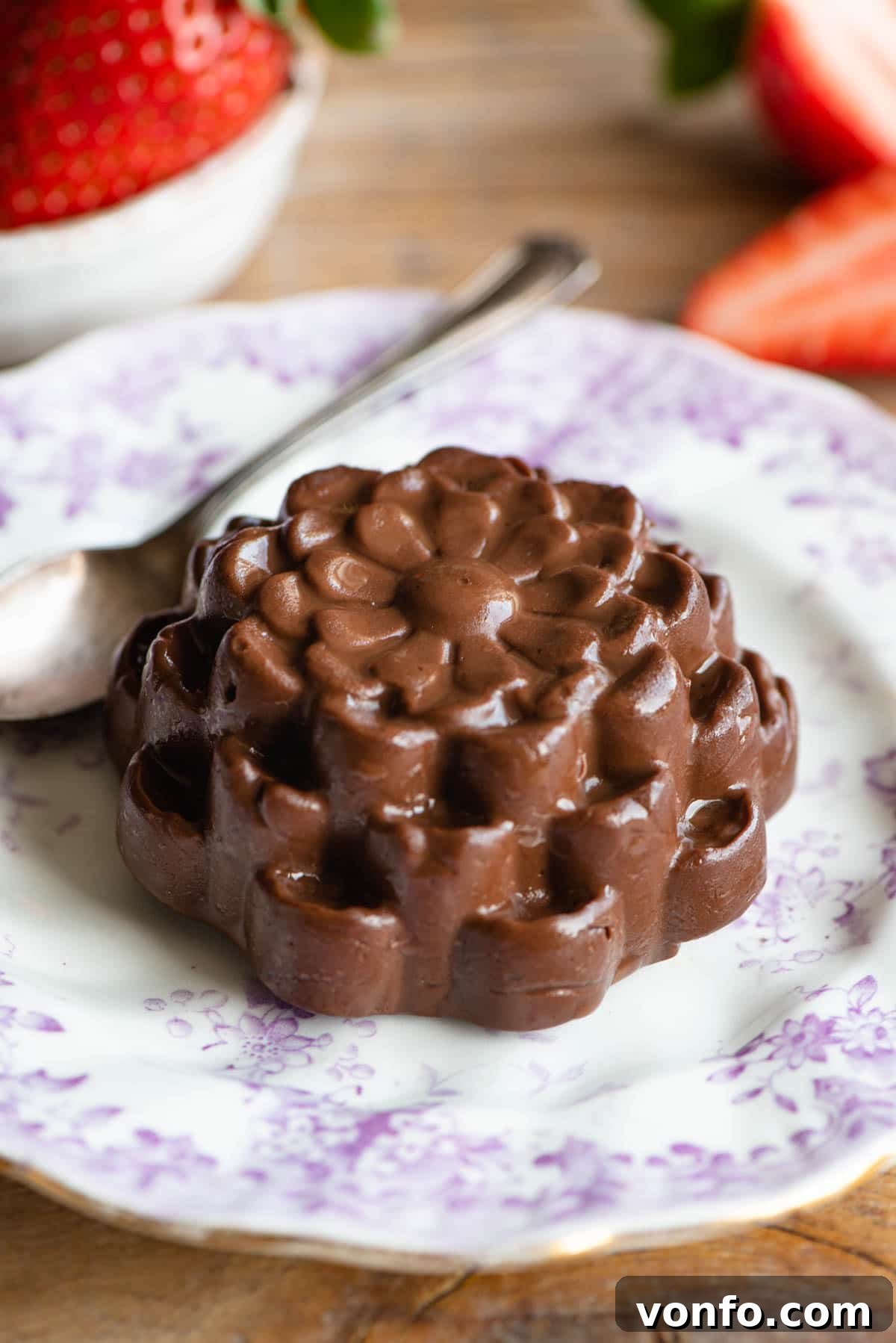
What is Chocolate Budino? A Glimpse into Italian Dessert Culture
Have you ever encountered the magic of Chocolate Budino? This beloved dessert is a staple across Italy, often gracing tables in charming individual molds or as a grand centerpiece. While it’s frequently referred to as Italian chocolate pudding, Budino possesses a distinct character that sets it apart. It boasts a wonderfully thick, dense, and velvety texture, more akin to a rich custard than a light, airy pudding.
The key difference lies in its preparation: traditional American chocolate puddings often rely on an egg-based custard, similar to Italy’s
Crema al Cioccolato (a thick chocolate pastry cream). Italian Chocolate Budino, however, is beautifully egg-free. It achieves its luscious consistency through simpler, yet equally effective, thickening agents like cornstarch, combined with whole milk, high-quality dark chocolate, and butter. This not only makes it quicker to prepare but also gives it a unique, pure chocolate flavor and a denser, more satisfying mouthfeel that is truly unforgettable.
When we say this recipe is easy, we mean it. Your active involvement in the kitchen is a mere 10 minutes, after which the Budino patiently sets in the fridge for a minimum of 3 hours. This hands-off chilling time transforms simple ingredients into the ultimate chocolate indulgence – a dessert so irresistibly rich and smooth, it’s incredibly hard to resist a second helping. It’s a testament to Italian culinary philosophy: simple ingredients, expertly combined, yield extraordinary results.
Delve into the full recipe below, where you’ll find detailed notes on ingredients, step-by-step instructions with accompanying photos, essential tips, delightful variations, and expert advice to ensure your Budino is perfect every time.
Mastering the Ingredients: What You Need for Perfect Chocolate Budino
Crafting an authentic Italian Chocolate Budino starts with understanding the role of each ingredient. Below is a comprehensive look at what you’ll need, along with crucial tips for selecting the best quality to achieve that signature smooth, rich texture and deep chocolate flavor. Choosing the right components is half the battle won in creating a truly exceptional dessert.
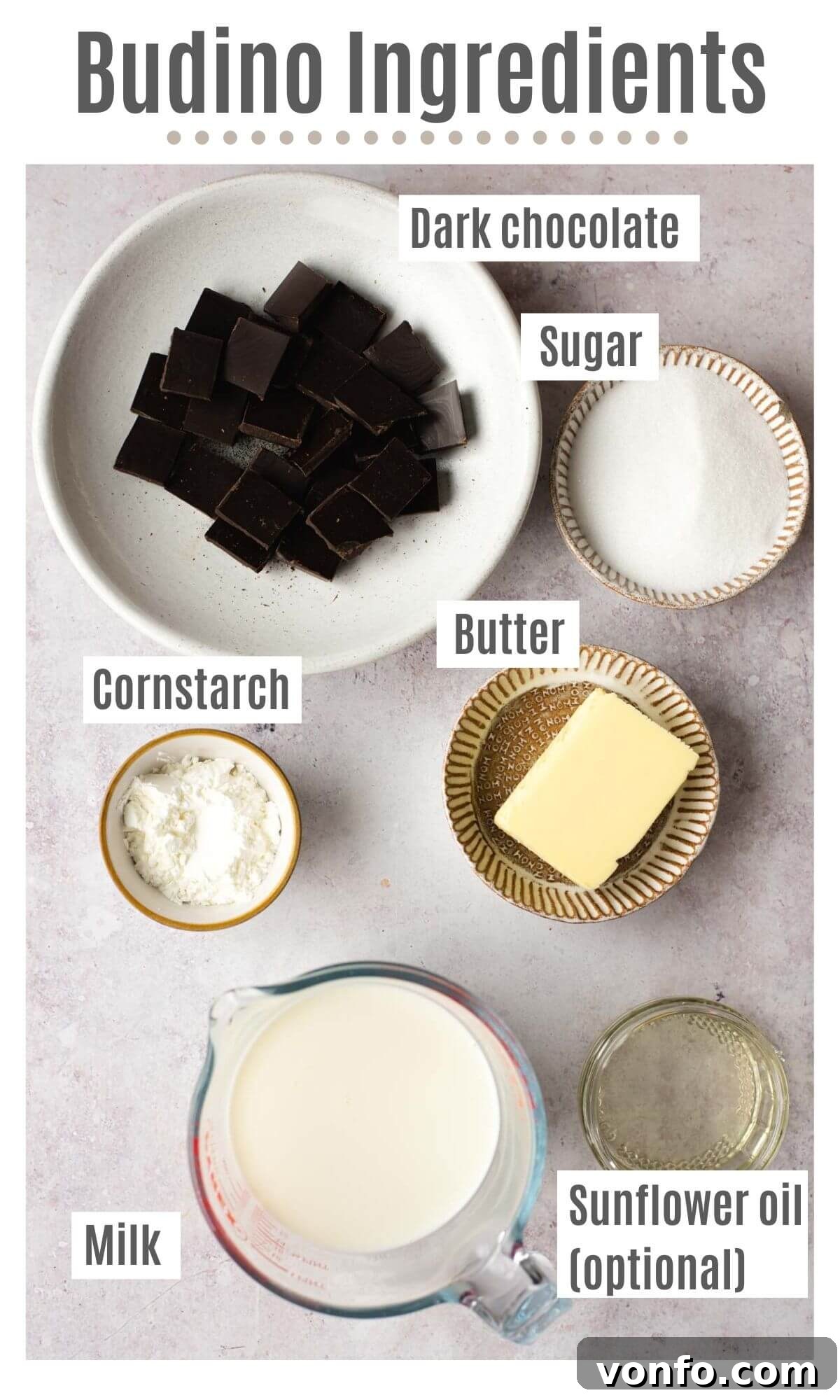
- Butter (Unsalted): Always opt for unsalted butter in baking and dessert making. This allows you to control the exact amount of salt in your recipe, preventing an overly salty or unbalanced flavor. Good quality butter contributes significantly to the richness, creamy texture, and overall decadence of the Budino. It’s an emulsifier and flavor enhancer that is key to the dessert’s luxurious feel.
- Sugar (Caster or Granulated): Fine caster sugar is often preferred for desserts as its smaller crystals dissolve more quickly and evenly, ensuring a perfectly smooth consistency without any graininess. However, regular granulated sugar will also work perfectly well; just ensure you whisk thoroughly to dissolve it. The sugar balances the inherent bitterness of dark chocolate, creating a harmonious sweet profile that is rich without being cloying.
- Chocolate (High-Quality Cooking Chocolate, 70%+ Cacao): This is arguably the most critical ingredient. The quality of your chocolate directly impacts the final taste, texture, and intensity of your Budino. Always use high-quality cooking or baking chocolate with a cacao percentage of 70% or higher. Lower quality or regular eating chocolate bars often contain more sugar, various stabilizers, and less cocoa butter, which can lead to a grainy, chalky, or less flavorful texture when melted. A higher cacao content ensures a deep, complex, and robust chocolate flavor that truly shines through, making every spoonful a pure delight.
- Cornstarch (Cornflour in the UK): This is your primary thickening agent, indispensable for achieving the Budino’s characteristic dense yet creamy consistency. Unlike flour, cornstarch provides a translucent, smooth finish without imparting any starchy flavor. It helps the Budino set beautifully and firmly without the need for eggs, which is a key characteristic of this traditional Italian recipe. It also contributes to the glossy finish.
- Milk (Whole/Full-Fat): For the ultimate richness and creaminess, whole milk (full-fat) is highly recommended. The higher fat content of whole milk contributes significantly to the luxurious mouthfeel and helps to carry and distribute the chocolate flavor more effectively throughout the dessert. While you could technically use lower-fat milk, it might result in a slightly less decadent, thinner, and less satisfying Budino. The creaminess from whole milk is part of what makes Budino so special.
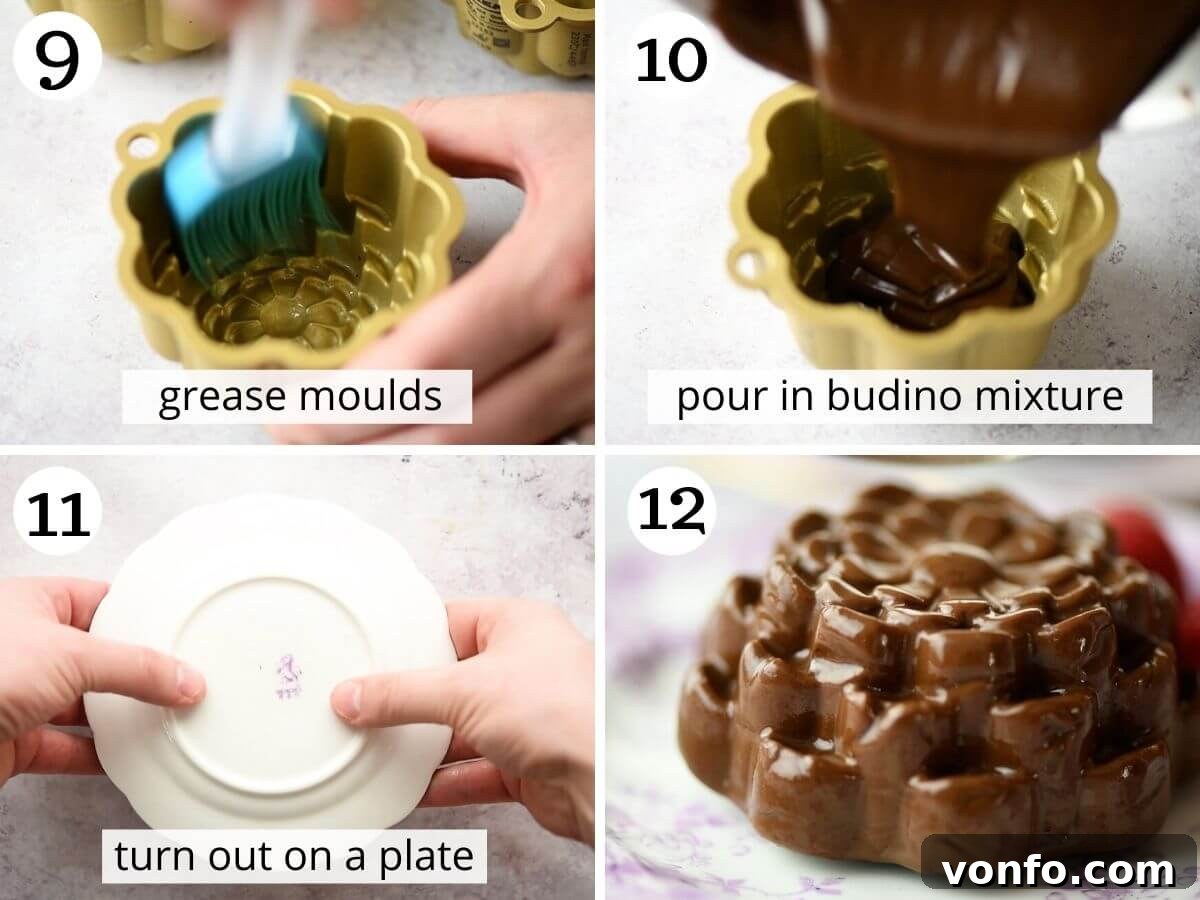
- Sunflower Oil (Optional, for greasing moulds): If you plan to serve your Budino unmolded – which is both traditional and incredibly impressive – a light, even greasing of your molds with a neutral oil like sunflower oil is absolutely vital. We cannot stress this enough: even with silicone or other “non-stick” molds, a thin, even layer of oil ensures a clean, effortless release. We’ve tested this extensively, and without it, you risk your Budino sticking, potentially ruining its beautiful shape and presentation. Choose a flavorless oil to avoid affecting the delicate chocolate taste.
Step-by-Step Guide to Crafting Your Decadent Chocolate Budino
Follow these detailed steps, complete with visual cues from the photos below, to create a perfectly smooth, rich, and impeccably set Chocolate Budino. Remember, precision and patience are your best friends here, ensuring each stage contributes to the final masterpiece.
Step 1: Gently Heat the Milk. Begin by pouring the specified amount of whole milk into a medium-sized saucepan. Place it over medium heat and warm it gently, stirring occasionally to prevent scorching, until it just reaches a boil. Look for small bubbles forming around the edges of the pan and steam rising. As soon as it boils, immediately remove the saucepan from the heat. It is crucial for the milk to be hot when incorporated later, so set it aside while you prepare the chocolate base.
Step 2: Prepare the Butter and Sugar Base. In a separate, heavy-bottomed saucepan (preferably non-stick to prevent sticking), melt the unsalted butter over medium-low heat. Once the butter is completely liquefied, add the caster sugar. Whisk the butter and sugar mixture continuously for approximately 2-3 minutes. This consistent whisking is vital; you’ll observe the mixture transforming into a thick, smooth, and pale yellow paste, much like a classic roux. This step ensures the sugar is well dissolved and integrated, creating a stable foundation for the chocolate.
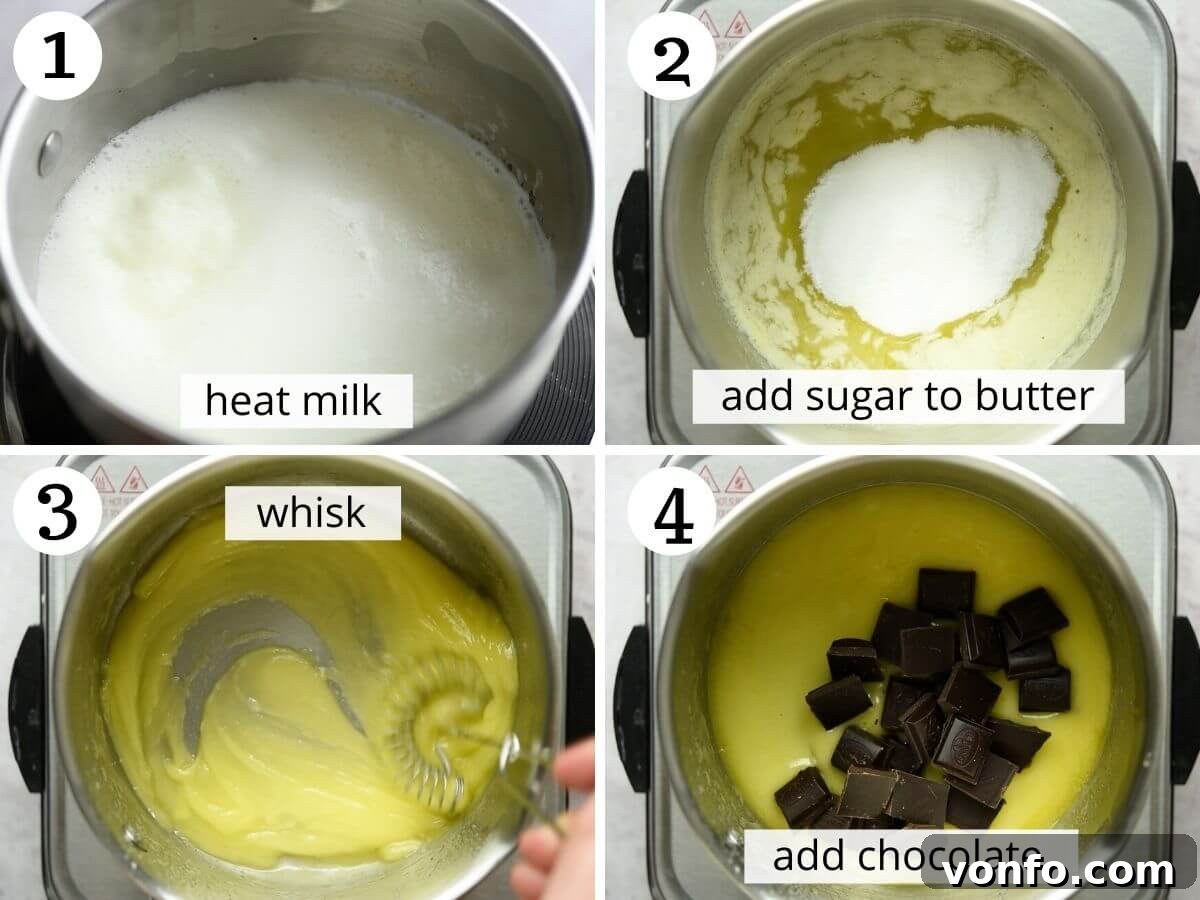
Step 3: Introduce the Chocolate and Cornstarch. Now, reduce the heat under the butter-sugar saucepan to its absolute lowest setting. Carefully add your chopped good-quality dark chocolate (70%+ cacao) to the paste. Stir continuously and gently with a spatula or whisk until the chocolate is completely melted and smoothly incorporated into the butter mixture, forming a luscious, homogenous chocolate paste. Do not rush this process with high heat, as it can cause the chocolate to seize. Immediately after the chocolate has fully melted, sift the cornstarch directly into the saucepan. Sifting is important here to prevent lumps and ensure an incredibly smooth and silky Budino. Whisk vigorously until the cornstarch is fully dissolved and there are no visible powdery bits or lumps remaining in the chocolate mixture.
Step 4: Incorporate the Hot Milk and Thicken. With your whisk still in hand, begin adding the hot milk (from Step 1) to the chocolate mixture, a little at a time, while continuously whisking. This gradual incorporation is crucial; adding cold or lukewarm milk or adding hot milk too quickly can cause the chocolate to seize or split, resulting in a grainy texture. Once all the hot milk is smoothly combined and the mixture is uniform, increase the heat to medium. Continue to whisk or stir constantly for about 3-5 minutes. During this active cooking time, the mixture will visibly thicken, transforming into a rich, glossy pudding that beautifully coats the back of a spoon. It should reach a consistency similar to thick custard.
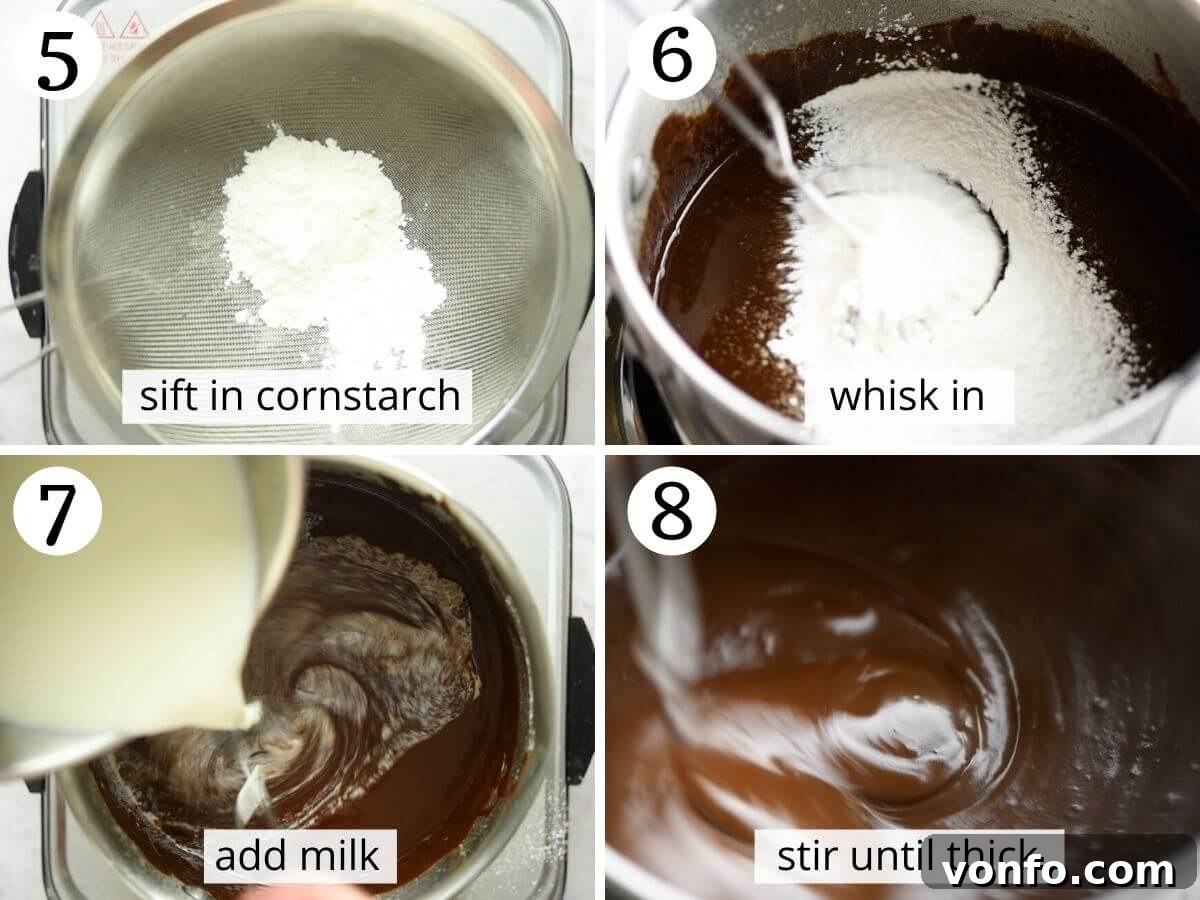
Step 5: Pour into Moulds and Chill. Once your Budino mixture has achieved its desired thick and glossy consistency, it’s ready for its final transformation. Carefully pour the hot Budino into your prepared moulds or ramekins. If you’re using decorative moulds with the intention of unmolding, remember the critical instruction from the ingredients section: ensure they were lightly and evenly greased with a neutral oil like sunflower oil. If you plan to serve the Budino directly in ramekins or glass dishes, you can pour the mixture straight in without greasing. Allow the filled dishes to cool down to room temperature on your countertop for about 30-60 minutes. Once cooled, transfer them to the refrigerator and chill for a minimum of 3 hours, or ideally overnight, to allow them to set completely and achieve their perfect dense, firm, yet creamy texture. For optimal enjoyment, remove the Budino from the fridge about 5 minutes before serving to allow it to soften slightly and release its full flavor.
Tips for Perfectly Unmolding Your Budino
Unmolding Budino can be a delicate art, especially if you want to achieve that beautifully presented, picture-perfect look. With a few simple techniques, you can ensure a flawless release every time, preserving the elegant shape of your dessert.
- Loosen the Edges Gently: Once your Budino is thoroughly chilled and you’re ready to serve, gently shake the mould from side to side. This subtle motion helps to loosen the Budino from the inner edges of the mould. You might even hear a slight “give” or feel a tiny shift as it begins to detach. Avoid using knives or sharp objects around the edges, as this can damage the Budino’s surface and potentially scratch your moulds.
- The Invert and Release Method: Place your chosen serving plate inverted directly over the top of the Budino mould. Holding both the plate and the mould firmly together, swiftly and confidently flip them over so the mould is now inverted on the plate. Give the mould one or two firm but gentle shakes. The Budino should dislodge with a satisfying “plop” onto the plate. If it doesn’t immediately release, try giving the bottom of the mould a very gentle tap with the palm of your hand. Patience is key; it will release.
- The Importance of Greasing: As emphasized in our ingredient notes, greasing your moulds with a neutral oil like sunflower oil is absolutely paramount, even for silicone or ceramic moulds advertised as “non-stick.” This thin, almost imperceptible film of oil creates a vital barrier between the Budino and the mould, allowing for an effortless slide out. Skipping this step is the most common reason for Budino sticking and breaking upon unmolding. Always grease thoroughly if you intend to unmold your Budino.
Expert Tips & Frequently Asked Questions for Budino Perfection
Achieving a flawless Chocolate Budino is simple when you follow a few key guidelines. Here are some essential tips and answers to common questions to help you master this Italian classic and ensure it turns out perfectly every single time.
- Always Use Quality Cooking Chocolate: This tip bears repeating due to its critical importance! Baking or cooking chocolate is specifically formulated to melt smoothly and evenly, resulting in a rich, velvety texture in your desserts. Standard eating chocolate bars, like those found in the candy aisle, often contain different fat compositions and stabilizers that can cause them to become grainy, chalky, or seize when melted into a pudding. For the best, most intense chocolate flavor and luxurious texture, ensure your cooking chocolate has at least 70% cocoa solids. This higher percentage delivers a deeper, more sophisticated chocolate taste.
- Handle Chocolate with Care – Avoid Overheating: Chocolate is a delicate ingredient that is highly sensitive to high heat. When adding it to your butter and sugar base, it is imperative to turn the heat down to its lowest setting. Overheating chocolate can cause it to “split” or seize, which means the cocoa solids separate from the cocoa butter, resulting in a separated, oily, or crumbly texture rather than a smooth one. Similarly, when incorporating the hot milk, add it very gradually, a little at a time, while continuously whisking. This gradual incorporation helps to temper the chocolate mixture, preventing a sudden temperature shock that can also lead to splitting. Slow and steady wins the race for a silky-smooth Budino.
Common Questions About Chocolate Budino
The primary distinction lies in their base and thickening agents, and consequently, their texture and origin. American chocolate pudding is typically made with a custard base, incorporating eggs for richness and thickening. In Italy, the closest equivalent to this would be Crema al Cioccolato, which is a thick chocolate pastry cream. Italian Chocolate Budino, however, is a wonderfully egg-free dessert. It relies on a combination of whole milk, sugar, butter, and cornstarch to achieve its distinctive dense, smooth, and incredibly decadent texture. Traditionally, Budino is often set in elegant molds before serving, offering a more refined and visually appealing presentation compared to the spoonable consistency of most American puddings.
Absolutely! Adding a touch of your favorite liqueur can elevate the flavor profile of your Budino beautifully, introducing a sophisticated, adult twist. We highly recommend incorporating 1-2 tablespoons of spirits such as Frangelico (a delightful hazelnut liqueur), dark rum for warmth and depth, or Cointreau (an orange liqueur) for a zesty, bright counterpoint to the chocolate. To ensure the alcohol flavor is preserved and to prevent it from evaporating during cooking, stir the chosen liqueur in at the very end of the cooking process, just before pouring the Budino into its molds. This simple addition can transform your Budino into an even more complex and enjoyable dessert.
For optimal taste, texture, and freshness, Chocolate Budino is best enjoyed within 2 days of preparation. Its creamy consistency and vibrant chocolate flavor are at their peak during this time. However, when stored properly in an airtight container in the refrigerator, it will maintain its quality and remain perfectly safe to eat for up to 4-5 days. To prevent it from absorbing refrigerator odors, always ensure it’s well-covered. Beyond this timeframe, while still edible, its delicate texture and fresh flavor may begin to diminish slightly.
We generally do not recommend freezing Budino. The delicate, creamy texture that makes Budino so enjoyable can be significantly altered by the freezing and thawing process. Freezing often causes the liquid to separate from the solids, potentially making the Budino watery, grainy, or icy upon thawing. Budino is designed to be enjoyed fresh and chilled, allowing its smooth, luxurious consistency to truly shine. For the best experience, plan to make and consume it within the recommended refrigeration period.
Serving & Garnish Ideas for Your Chocolate Budino
While Chocolate Budino is magnificent and intensely satisfying on its own, a few thoughtful garnishes can elevate it to an even more impressive dessert experience. These additions can provide delightful contrasts in texture, temperature, and flavor, making each spoonful a multi-sensory delight.
- Freshly Whipped Cream: A generous dollop of freshly whipped cream, lightly sweetened with a touch of vanilla extract, provides a lovely airy contrast to the dense richness of the Budino. It adds a cloud-like texture that truly complements the dessert.
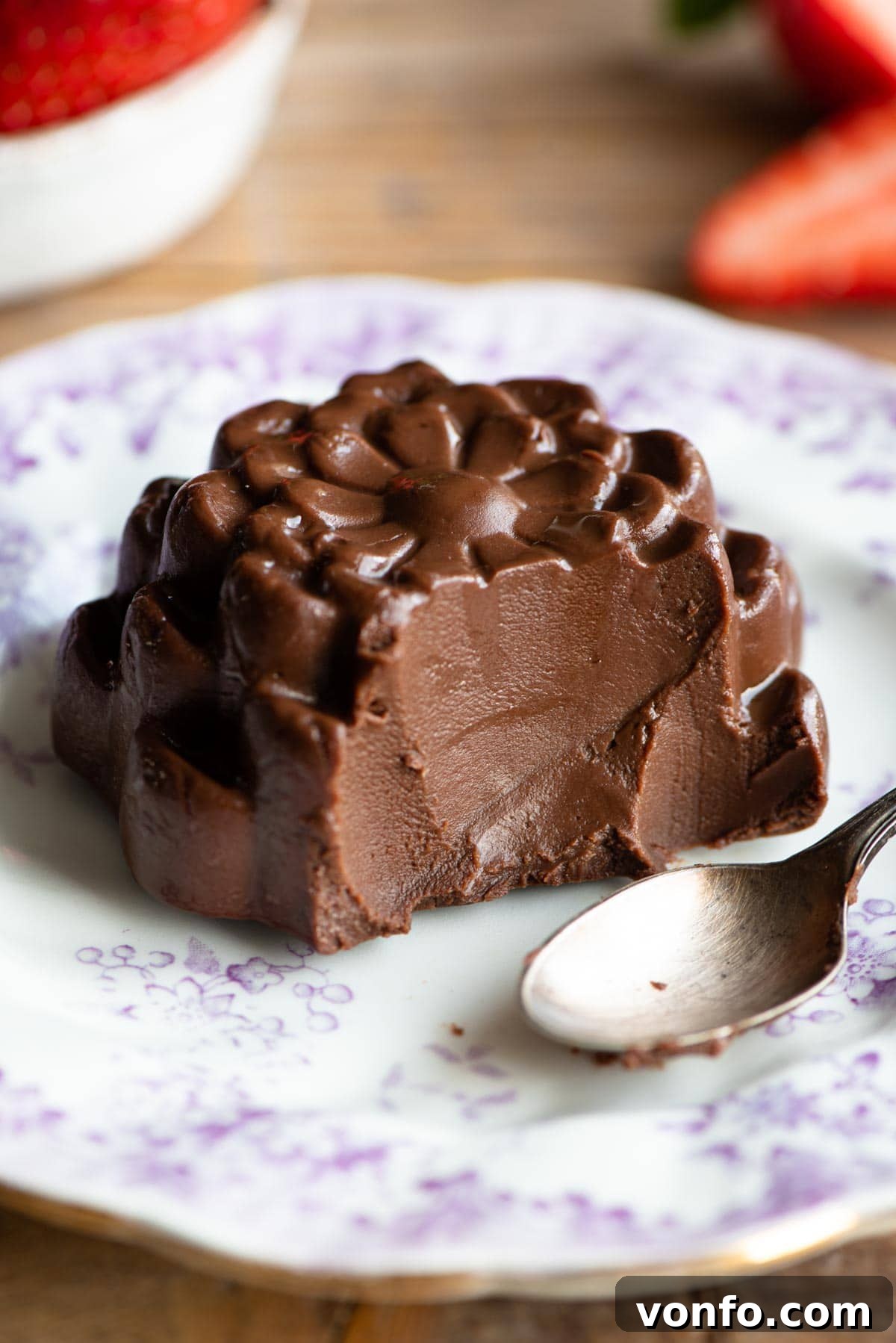
- Bright Fresh Berries: The vibrant tartness of fresh berries like raspberries, strawberries, or blueberries beautifully cuts through the richness of the chocolate. They add a burst of refreshing flavor, a pleasant textural counterpoint, and a striking pop of color that enhances presentation.
- Elegant Chocolate Shavings or Cocoa Dusting: For an extra touch of sophistication and an intensified chocolate experience, sprinkle a fine layer of high-quality cocoa powder or garnish with delicate chocolate curls. This adds both visual appeal and a slight textural variation.
- A Shot of Espresso: For the ultimate adult indulgence, consider serving Chocolate Budino alongside a small shot of strong, hot espresso. The robust bitterness of the coffee creates a classic Italian pairing that perfectly complements and balances the sweet decadence of the Budino, cleansing the palate between bites.
- Refreshing Mint Leaves: A few fresh mint leaves, strategically placed, can add a surprisingly refreshing aromatic touch and a beautiful pop of bright green color, making the dessert visually more appealing.
- Candied Orange Peel: A classic Italian flavor combination, finely diced or thinly sliced candied orange peel brings a wonderful citrusy counterpoint and a slight chewy texture that harmonizes exquisitely with the deep chocolate flavor.
Variations & Customizations: Making Budino Your Own
This classic Chocolate Budino recipe is a fantastic starting point for any dessert enthusiast, but don’t hesitate to experiment and infuse it with your personal touch. The simplicity of the base makes it incredibly versatile for creative customizations. Here are a few ideas to inspire you to make your Budino uniquely yours:
- Spiced Chocolate Budino: For a warm and complex flavor profile, infuse your milk with whole spices as it heats. A cinnamon stick, a few green cardamom pods, or even a tiny pinch of cayenne pepper (for a subtle chili-chocolate kick) can be simmered in the milk. Remember to strain out the whole spices before adding the milk to the chocolate mixture.
- Zesty Orange Infusion: Add the finely grated zest of one organic orange to the milk as it heats. The bright, fragrant citrus aroma will beautifully complement and elevate the dark chocolate flavor, a truly classic Italian pairing reminiscent of many traditional pastries.
- Bold Coffee Kick: For those who love the mocha flavor combination, dissolve 1-2 teaspoons of high-quality instant espresso powder or fine instant coffee granules directly into the hot milk. This will deepen the chocolate flavor and add a wonderful coffee undertone without overpowering the dessert.
- Nutty Budino: Introduce a delightful textural contrast and a subtle nutty flavor by stirring in a tablespoon of very finely ground hazelnuts, almonds, or pistachios into the finished Budino mixture just before pouring it into the molds. This adds another layer of complexity.
- Caramel Swirl: After pouring the warm Budino mixture into your molds, gently swirl in a teaspoon of homemade or high-quality store-bought caramel sauce using a skewer or the tip of a spoon. This creates a beautiful marbled effect and introduces a lovely sweet-salty caramel note.
More Classic Italian Desserts to Explore
If you’ve fallen in love with the simplicity, elegance, and sheer decadence of Chocolate Budino, you’ll surely appreciate other timeless Italian sweets. The world of Italian desserts is rich and varied, offering something for every palate. Dive into these traditional recipes and expand your culinary repertoire:
- Torta Caprese (Flourless Italian Chocolate Cake)
- Tiramisu – Authentic Recipe!
- Zuppa Inglese (Italian Trifle)
- Chocolate Hazelnut Torrone (Torrone dei Morti)
- Homemade Sicilian Cannoli (shells and filling)
If you’ve tried this delightful Chocolate Budino recipe or any other delicious creation from our blog, please don’t hesitate to share your experience! We encourage you to rate the recipe and leave a comment below to let us know how your culinary adventure went. Your feedback is invaluable and we absolutely love hearing from you! For more authentic Italian recipes, culinary inspiration, and expert cooking tips, be sure to FOLLOW US on FACEBOOK, INSTAGRAM, and PINTEREST. You can also sign up for our exclusive NEWSLETTER to receive new, mouth-watering recipes directly in your inbox every week, ensuring you never miss a delicious update!
Chocolate Budino Recipe
Yields: 4 servings
Prep time: 10 minutes
Chill time: Minimum 3 hours
Total time: 10 minutes active preparation + chilling time
Equipment
- 4 small ramekins, decorative moulds, or glass serving dishes
- 2 medium-sized saucepans
- Whisk
- Fine-mesh sieve (for cornstarch)
- Spatula
Ingredients
- 4.2 oz (120g) dark chocolate, 70%+ cocoa solids (ensure it’s baking or cooking chocolate for best results)
- ⅓ cup (70g) caster sugar (or fine granulated sugar)
- 5 tablespoons (70g) unsalted butter
- 2 tablespoons (20g) cornstarch (known as cornflour in the UK)
- 1 ½ cups (360ml) whole milk (full-fat is essential for creaminess)
- Sunflower oil, a small amount for greasing moulds (see notes for importance)
Instructions
- Requires a minimum of 3 hours chilling time. Please plan accordingly to allow your Budino to set beautifully.
- Gently heat the whole milk in a saucepan over medium heat. Bring it just to a boil, watching carefully for bubbles to form around the edges and surface. Immediately turn off the heat and set the hot milk aside.
- In a separate, heavy-bottomed saucepan, melt the unsalted butter over medium-low heat. Once the butter is fully melted, add the caster sugar. Whisk the mixture continuously for 2-3 minutes until it thickens slightly and transforms into a pale yellow, smooth paste, similar to a roux.
- Reduce the heat to its lowest setting. Add the chopped dark chocolate to the butter and sugar mixture. Stir gently and continuously with a whisk or spatula until the chocolate is completely melted and smoothly incorporated. Immediately sift in the cornstarch, whisking vigorously until it is fully dissolved and there are absolutely no lumps.
- Begin to gradually add the hot milk to the chocolate mixture, a small amount at a time, whisking constantly to ensure complete incorporation and prevent the chocolate from seizing. Once all the milk is smoothly combined, increase the heat to medium. Continue stirring or whisking for about 3-5 minutes until the mixture visibly thickens to a rich, glossy consistency that heavily coats the back of your spoon.
- The Chocolate Budino is now ready to be portioned. Carefully pour the hot Budino mixture into your prepared moulds or ramekins. If you are using decorative moulds from which you intend to unmold the Budino, remember it is critically important to lightly and evenly grease each one with a thin layer of sunflower oil beforehand. If you are serving the Budino directly in ramekins or glass serving dishes, this greasing step is not necessary.
- Allow the filled dishes to cool down to room temperature on your countertop (this usually takes 30-60 minutes). Once cooled, transfer them to the refrigerator and chill for a minimum of 3 hours, or ideally overnight, for the best possible setting and texture. For optimal flavor and a slightly softer consistency, remove from the fridge about 5 minutes before serving.
How to remove Budino from moulds (if applicable)
- Remove the thoroughly chilled Budino from the fridge approximately 5 minutes before you plan to serve it. Gently shake the mould from side to side; this action helps to loosen the Budino from the inner edges of the mould.
- Place your serving plate over the top of the Budino mould. Holding both the plate and the mould firmly together, swiftly and confidently invert them. Give the mould one or two firm, but gentle, shakes to dislodge the Budino onto the plate. Serve immediately with your desired garnishes.
Video Tutorial
For a visual guide on how to prepare and perfectly unmold your Chocolate Budino, watch our detailed video tutorial:
(You may also find this video available on our social media channels or a linked YouTube/Vimeo player for a direct embed experience.)
Recipe Notes
- Note on Chocolate – To reiterate for perfect results: always use high-quality baking or cooking chocolate (minimum 70% cocoa solids). This type of chocolate is engineered to melt beautifully, yielding a smooth, luscious texture. Regular eating chocolate can behave unpredictably when melted into a pudding base, often resulting in a grainy or chalky consistency due to varying fat and additive compositions.
- If Using Moulds – This step is absolutely vital for successful unmolding. Even if your moulds are made of silicone or are advertised as “non-stick,” you MUST lightly and evenly grease them with a neutral oil, such as sunflower oil. This creates a necessary barrier that allows the Budino to release cleanly and effortlessly, preserving its intricate shape. This crucial step is not required if you intend to serve the Budino directly in the ramekins or glass dishes it sets in. The decorative moulds seen in our photos were sourced from Ikea; panna cotta moulds or various silicone dessert moulds also work wonderfully, but always remember to grease them first!
- Storage – Your freshly made Chocolate Budino is at its absolute peak of freshness, flavor, and optimal texture within 2 days of preparation. It should be stored in an airtight container in the refrigerator to protect its delicate consistency and prevent it from absorbing other odors. While it will last for up to 4-5 days in the fridge, its quality may gradually diminish after the initial 2-day period. Freezing is strongly discouraged, as the delicate emulsion and creamy texture will likely be compromised, leading to an undesirable grainy or watery consistency upon thawing.
Helpful Information for All Our Recipes
- Unless otherwise specified, we consistently use high-quality extra virgin olive oil in all our recipes for its superior flavor profile, aromatic qualities, and numerous health benefits.
- When our recipes call for canned or jarred tomatoes of any kind, we exclusively use trusted brands like Cirio or Mutti. Their consistent quality ensures the best possible flavor and results in all our Italian dishes, making a noticeable difference in the final taste.
- All vegetables mentioned in our recipes are typically assumed to be medium-sized unless a specific size or weight is clearly indicated. This helps ensure consistent results.
- All recipes featured and developed on our site are rigorously tested and refined using a fan (convection) oven. This standardized testing environment helps ensure reliable and repeatable results for home cooks.
- Curious about the nutritional breakdown of our dishes? Find out more about how our nutrition information is calculated for transparency.
- Stock your kitchen like a true Italian chef! Check out our comprehensive guide to must-have Italian Pantry Staples to always be prepared.
- Discover the essential tools that make Italian cooking a joy and accessible to everyone with our list of Essential Kitchen Tools for Italian Cooking.
Nutrition Information (Per Serving)
Calories: 447 kcal
Carbohydrates: 40g
Protein: 5g
Fat: 30g
Saturated Fat: 18g
Polyunsaturated Fat: 1g
Monounsaturated Fat: 8g
Trans Fat: 1g
Cholesterol: 48mg
Sodium: 47mg
Potassium: 338mg
Fiber: 3g
Sugar: 29g
Vitamin A: 595 IU
Calcium: 128mg
Iron: 4mg
Please note: Nutrition information is automatically calculated and should be used as an approximation. Actual values may vary based on specific brands of ingredients, preparation methods, and serving sizes. It is provided for informational purposes only.
Did you try this delicious Chocolate Budino recipe?
We’d love to hear from you! Leave a comment below and share your experience and any creative twists!