
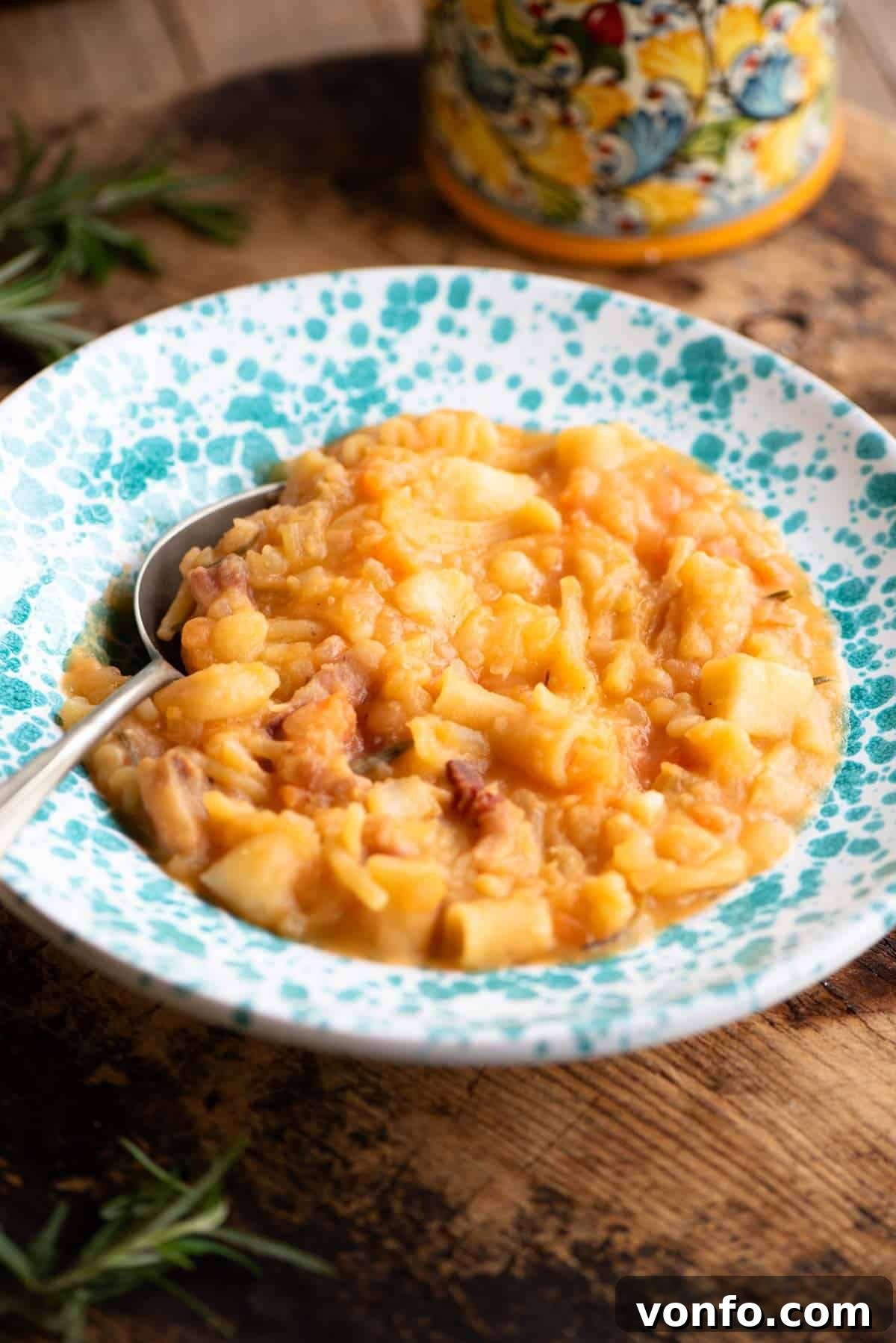
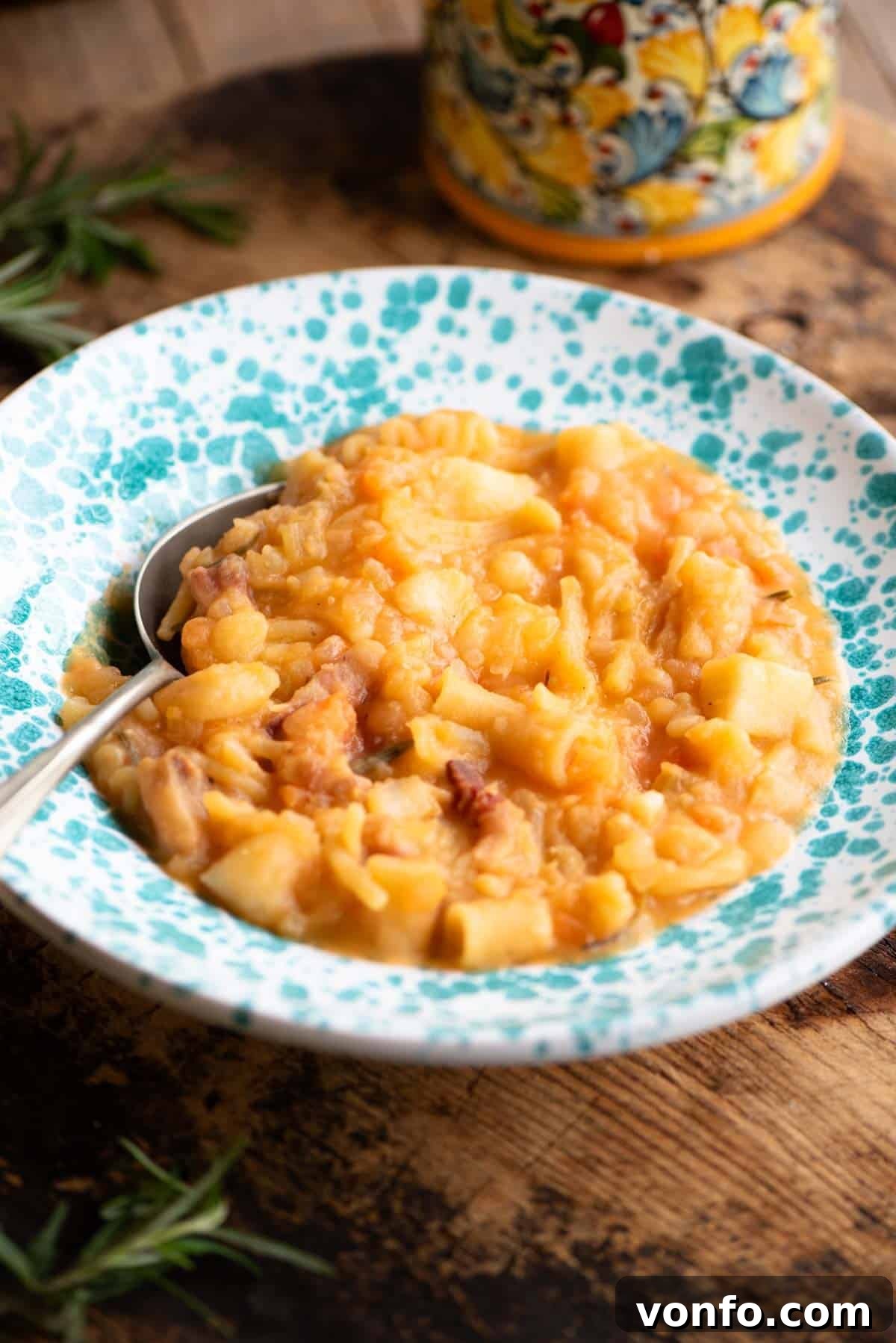
Pasta e Patate alla Napoletana stands as a testament to the rich culinary heritage of Naples, Italy. This glorious and profoundly comforting dish brings together humble ingredients into a symphony of flavors and textures. Imagine tender potatoes, savory guanciale, aromatic rosemary, and a mix of small pasta shapes, all simmered together in a deeply flavorful broth. It’s a hearty meal that’s surprisingly easy to prepare and guarantees to warm your soul with every single bite.
The Neapolitan Soul: Why Pasta and Potatoes?
While the combination of pasta and potatoes might seem unusual to some, it is a time-honored tradition in Neapolitan cuisine, born from the philosophy of “cucina povera” or “poor man’s cooking.” This culinary approach prioritizes making the most of readily available, inexpensive ingredients to create incredibly flavorful and satisfying dishes. Pasta e Patate perfectly embodies this spirit, transforming simple starches into an unbelievably delicious and deeply satisfying meal. It’s not the first time we’ve celebrated this delightful pairing; our Trofie al Pesto Genovese with Potatoes and Green Beans is another beloved example of potatoes and pasta uniting in delicious harmony.
Traditional Roots: Lardo vs. Guanciale
Traditionally, Pasta e Patate alla Napoletana is often prepared with ‘lardo,’ a cured pig fat known for its incredibly rich flavor and melt-in-your-mouth texture. Lardo renders beautifully, infusing the entire dish with a profound depth. However, for this recipe, we opt for guanciale – a cured pork jowl – which offers a similarly exquisite richness and a slightly more pronounced savory punch. The choice between lardo, guanciale, or even high-quality pancetta is yours; each will lend its unique character to the dish, promising an authentic Italian experience.
The Art of Pasta Mista
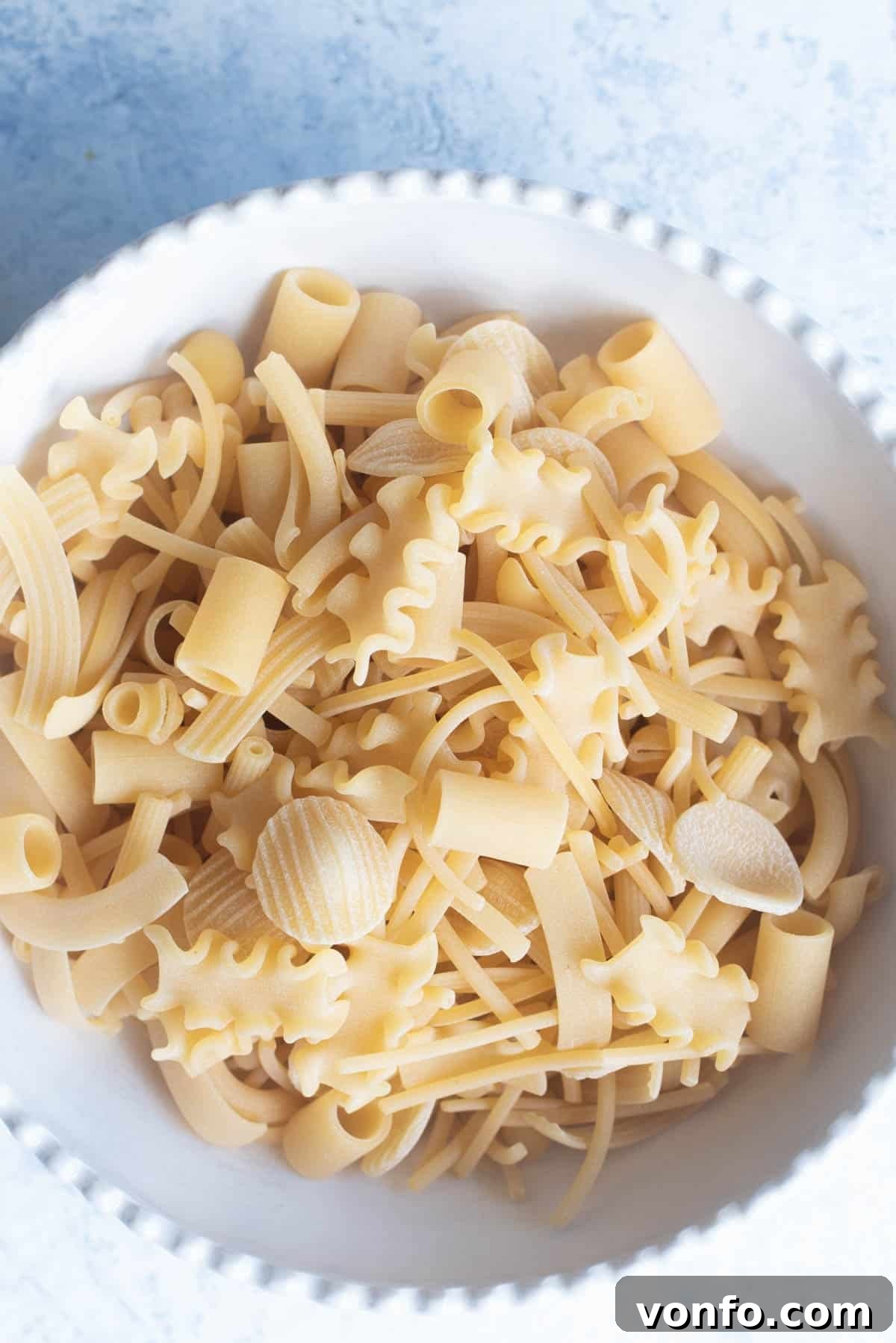
Another hallmark of traditional Pasta e Patate is the use of ‘pasta mista,’ literally meaning “mixed pasta.” This charming tradition originated from using leftover small pasta shapes, ensuring nothing went to waste. Imagine a delightful assortment of small orecchiette, broken pieces of linguine or spaghetti, or malfalda corta, all mingling together in one pot. This mix isn’t just about resourcefulness; it adds a wonderful variety of textures to the final dish. If you can’t find pre-packaged pasta mista, feel free to gather any small pasta shapes you have on hand – Ditali pasta, which we used for our beloved Pasta e Fagioli Soup, works exceptionally well here. The key is to use small shapes that cook evenly with the potatoes and absorb the rich broth.
For a comprehensive guide, including detailed notes on ingredients, step-by-step photographs, essential tips, and exciting variations, continue scrolling. The full printable recipe card is located at the bottom of the page.
Essential Ingredients for Pasta e Patate
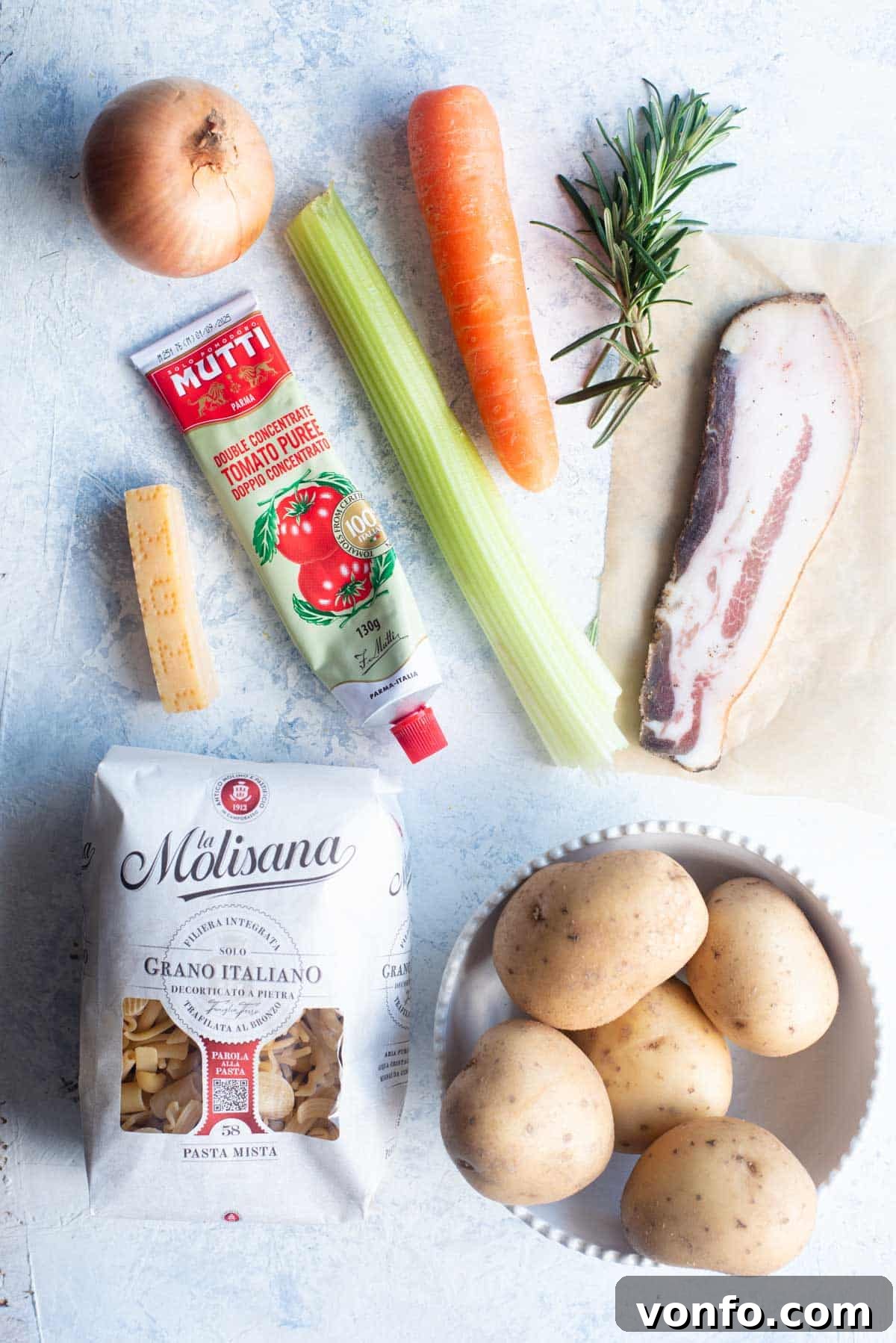
Crafting the perfect Pasta e Patate begins with selecting high-quality ingredients. Each component plays a vital role in building the dish’s signature deep, comforting flavor. Below, you’ll find an overhead shot of the fresh ingredients you’ll need to embark on this culinary journey.
Ingredient Spotlight: Tips for Best Results
- Guanciale: As previously mentioned, traditional lardo (cured pork fat) is an excellent choice if available. Otherwise, high-quality pancetta can be used as a readily accessible and delicious substitute, offering a similar savory depth to the dish.
- Soffritto (Carrot, Celery, Onion): This aromatic base is the soul of many Italian dishes. Finely chopping equal amounts of carrot, celery, and onion is crucial for a smooth, sweet, and fragrant foundation. The slower you cook your soffritto, the more flavor it will impart. Discover more about creating the perfect soffritto here.
- Potatoes: For Pasta e Patate, starchy potatoes (like Russet or Idaho) are highly recommended. When peeled and cut into medium cubes, they break down slightly during simmering, releasing starch that naturally thickens the sauce and creates that irresistible creamy texture.
- Rosemary: Fresh rosemary is absolutely essential for this recipe. Its pungent, piney notes are a signature flavor of the dish and cannot be replicated with dried rosemary. A single sprig adds incredible depth.
- Tomato Paste: A small amount of tomato paste contributes a subtle tang and a beautiful rich color to the broth. If you prefer a lighter profile, you can omit it or use a splash of passata (strained tomato puree) for a delicate tomato essence.
- Pasta: Embrace the spirit of ‘pasta mista’ by using a mix of small pasta shapes. Look for packages labeled “pasta mista” or gather any odds and ends from your pantry. Alternatively, choose a single small shape like ditali, tubetti, or even broken spaghetti for a consistent texture.
- Parmigiano Reggiano Rind: Don’t discard those Parmesan rinds! Adding one to the simmering liquid infuses the dish with an incredible umami depth and a subtle saltiness. Remember to remove it before serving.
Crafting Your Pasta e Patate: A Step-by-Step Visual Guide
Follow these detailed steps to create a truly authentic and delicious Pasta e Patate alla Napoletana in your own kitchen. Each stage is crucial for building the complex flavors of this classic dish.
Step 1: Prepare the Guanciale and Soffritto. Begin by carefully removing the tough rind (skin) from the guanciale and trimming off any dark, black seasoning. Cut the guanciale into small, even strips. Set aside. Next, finely chop the carrot, celery, and onion – this aromatic trio forms your soffritto, the flavor foundation for the dish.
Step 2: Render the Guanciale and Build the Soffritto. Place a large, heavy-bottomed pot or Dutch oven over a medium-low heat. Add the prepared guanciale strips and slowly render them until they are lightly golden and crispy, and a good amount of fat has been released. This slow rendering is key to extracting maximum flavor without burning the meat. Once rendered, add the finely chopped soffritto (carrot, celery, and onion) to the pot, stirring it into the fragrant guanciale fat. Continue to sauté the vegetables gently until they are very soft and translucent, which should take approximately 5-10 minutes. This slow cooking allows their natural sugars to caramelize, adding sweetness and depth.
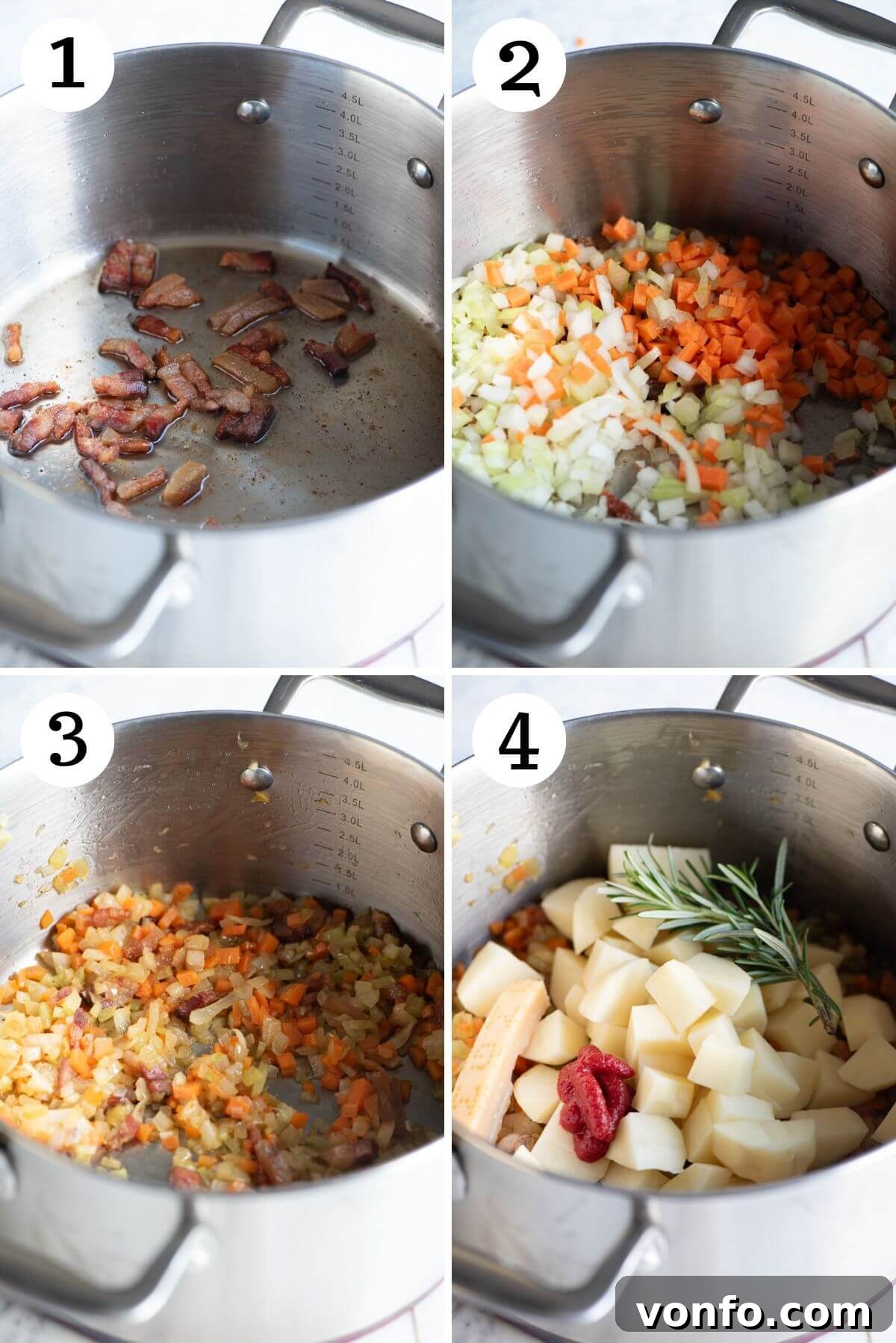
Step 3: Simmer the Potatoes to Perfection. Now, add the cubed potatoes, the fresh sprig of rosemary, the Parmigiano Reggiano rind (for an extra layer of umami), and the tablespoon of tomato paste to the pot. Stir all the ingredients well to combine, ensuring the potatoes are coated with the aromatic soffritto and guanciale fat. Season with a good pinch of salt and freshly ground black pepper. Pour in 600ml (about 2.5 cups) of water. Stir again, bring the mixture to a gentle simmer, then reduce the heat to low, cover the pot, and allow the potatoes to cook undisturbed for 30 minutes. This slow simmer allows the potatoes to soften and release their starches, thickening the broth.
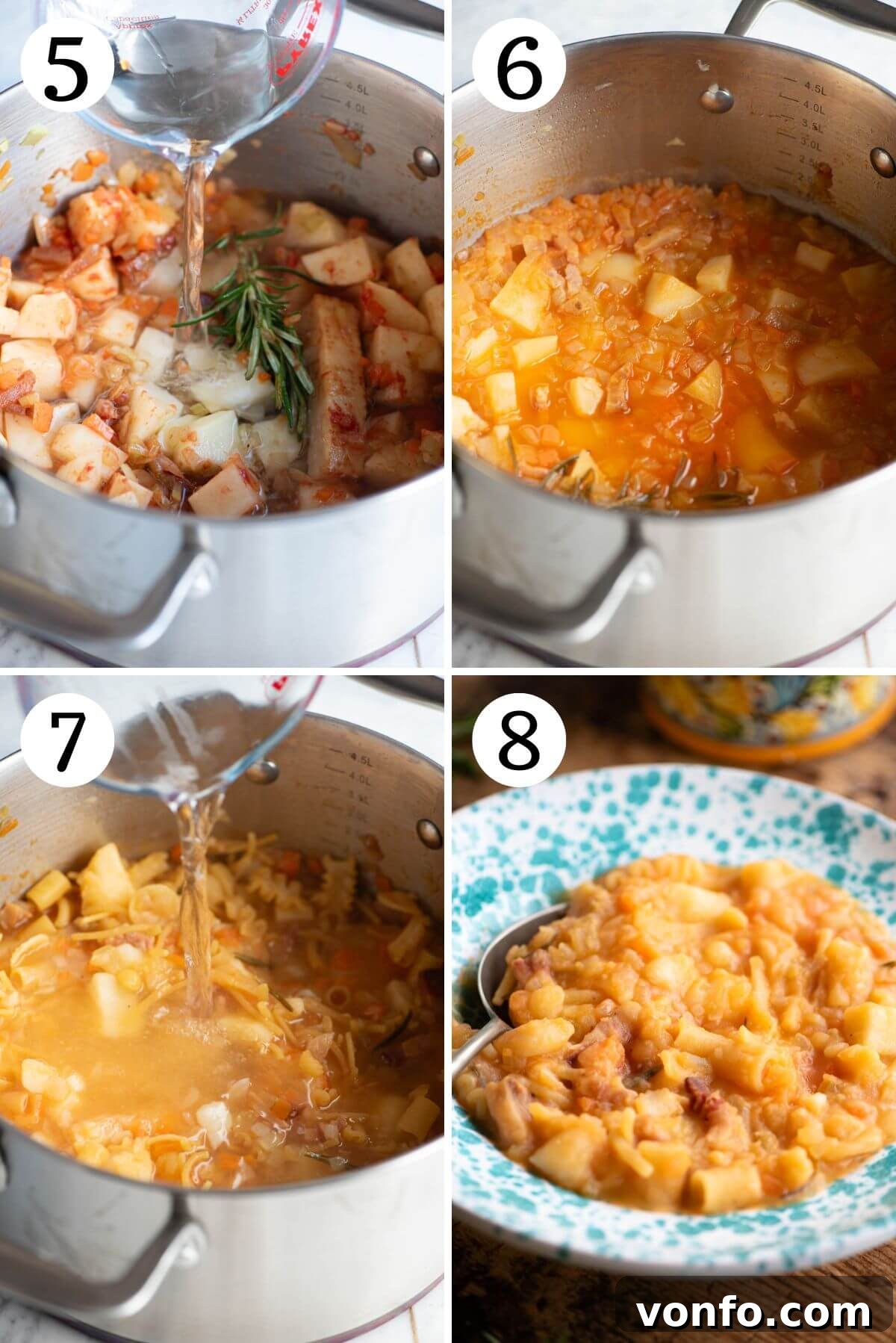
Step 4: Incorporate the Pasta. After the 30-minute potato simmer, uncover the pot. The potatoes should be tender and the liquid slightly thickened. Add the pasta mista (or your chosen small pasta shape) along with an additional 200ml (about 1 cup) of water. Stir everything thoroughly to prevent the pasta from sticking. Bring the mixture back to a simmer and cook, uncovered, until the largest pieces of pasta are cooked al dente – still firm to the bite. It is crucial to stir the pot occasionally during this stage, as the pasta and starches from the potatoes can easily stick to the bottom of the pot. Keep an eye on the consistency; if it becomes too thick, a little more hot water can be added to reach your desired consistency.
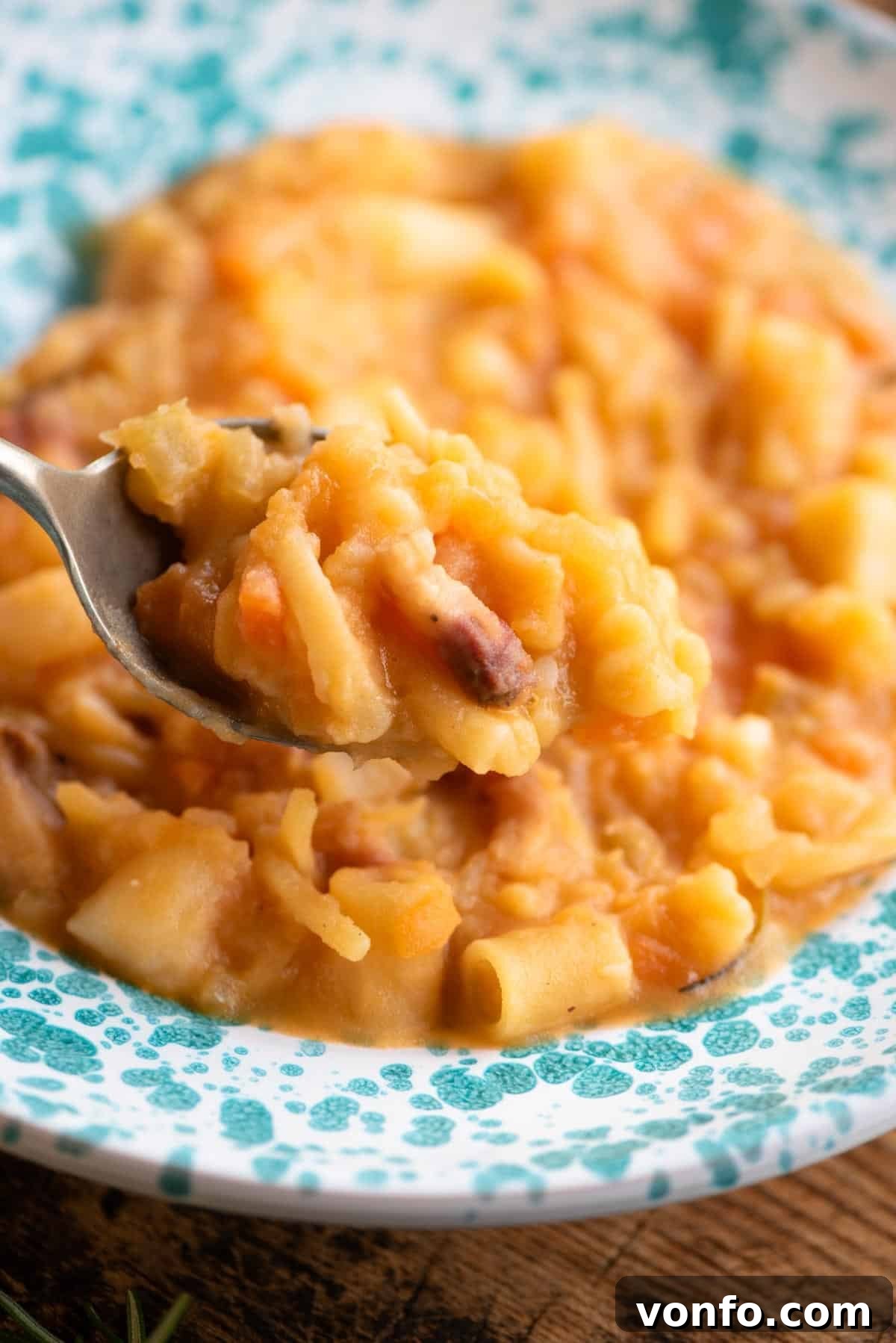
Step 5: Final Touches and Serving. Once the pasta is al dente and the dish has reached your preferred creamy consistency, remove it from the heat. Carefully remove and discard the rosemary sprig and the Parmesan rind. Taste and adjust seasoning as needed, keeping in mind that the guanciale and Parmesan contribute saltiness. Serve immediately in warm bowls, garnished with an extra sprinkle of freshly ground black pepper and, if desired, a generous grating of Parmigiano Reggiano or Pecorino Romano cheese. Enjoy this quintessential Neapolitan comfort food!
Expert Recipe Tips and Frequently Asked Questions
Achieving the perfect Pasta e Patate alla Napoletana is simple with these additional insights and answers to common queries.
- Mastering the Guanciale: The key to incredible flavor lies in patiently rendering the guanciale. Always cook it on a medium-low heat. High heat will cause it to burn quickly, resulting in a bitter taste and tough texture. You want the fat to slowly melt and the guanciale to turn a delicate golden brown, releasing all its savory essence into the pot.
- Achieving the Ideal Consistency: Pasta e Patate is uniquely positioned somewhere between a robust, saucy pasta dish and a hearty, thick soup. Both the potatoes and pasta are rich in starch, which they release as they cook, naturally thickening the broth to a luxuriant creaminess. The final consistency is a matter of personal preference; if you find it too thick, simply stir in a little more hot water until it reaches your desired texture.
- Seasoning with Precision: Cured meats like guanciale and pancetta can vary significantly in their saltiness. Always start with a modest pinch of salt and pepper, then taste the dish and adjust the seasoning at the very end. The Parmigiano Reggiano rind also contributes salt, so it’s always better to add less initially and refine later.
- Storage and Reheating Leftovers: Leftover Pasta e Patate will keep beautifully in an airtight container in the refrigerator for up to 2 days. When reheating on the stovetop, you’ll likely need to add a splash of water or broth to loosen the dish, as the pasta and potatoes will continue to absorb liquid and thicken. For a delicious twist, you can also bake leftovers in an oven-safe dish, topped with a layer of mozzarella or provolone cheese, until bubbly and golden.
- Can I Make It Vegetarian? Absolutely! To make a vegetarian version, simply omit the guanciale. Instead, start by sautéing the soffritto in a good quality extra virgin olive oil until deeply softened and fragrant. You might miss some of the savory depth from the guanciale, but the dish will still be incredibly flavorful and comforting.
- Which Potatoes are Best? As mentioned in the ingredient notes, starchy potatoes like Russets or Yukon Golds are ideal. Their higher starch content helps create that signature creamy, velvety sauce as they break down during cooking. Waxy potatoes tend to hold their shape more, which isn’t what we’re aiming for in this dish.
- What is the Best Pasta to Use if I Don’t Have Pasta Mista? If pasta mista isn’t available, small, short pasta shapes work best. Ditali, tubetti, elbow macaroni, or even small shells are excellent choices. You can also break longer pasta like spaghetti or bucatini into shorter pieces (about 1-2 inches) to mimic the “mixed” effect.
- Why is Rosemary So Important? Fresh rosemary provides a distinct, earthy, and slightly peppery aroma that is crucial to the authentic Neapolitan flavor profile of Pasta e Patate. It complements the richness of the guanciale and the earthiness of the potatoes beautifully.
Once prepared, Pasta e Patate can be stored in an airtight container in the fridge for up to 2 days. When reheating, it’s best to do so on the stove, adding a little water or broth to restore its original consistency as it will have thickened considerably.
More Delicious Italian Comfort Food Recipes to Try
If you’ve fallen in love with the comforting flavors of Pasta e Patate alla Napoletana, you’ll surely enjoy exploring other rustic Italian dishes that celebrate simple ingredients and robust tastes. Here are some of our favorite pasta and soup recipes:
Our Favorite Italian Pasta and Soup Recipes
Pasta
Pasta e Piselli (Pasta with Peas)
Pasta
Pasta e Ceci (Pasta with Chickpeas)
Pasta
Genovese Sauce – La Genovese Napoletana
Soups
Pasta Fagioli Soup – Pasta & Beans
If you’ve had the pleasure of trying this Pasta e Patate alla Napoletana recipe or any other delightful recipe from our blog, please don’t hesitate to rate the recipe and share your experience in the comments section below. We truly cherish hearing from you! You can also connect with us and discover more of our delicious food creations by following us on Facebook, Instagram, and Pinterest. For weekly updates and new recipes straight to your inbox, don’t forget to sign up for our Newsletter.
Step-by-Step Photos and Instructions Provided Above
Many of our recipes include detailed step-by-step photos, helpful tips, and tricks to ensure perfect results on your first attempt, and often a video!
Pasta e Patate alla Napoletana (Pasta and Potatoes)
⭐⭐⭐⭐⭐
By Emily
15
50
1 5
4 – 6 servings
Pin Recipe
Print Recipe
Pasta e Patate alla Napoletana is a truly glorious and comforting dish straight from the heart of Naples. Crafted with savory guanciale, a vibrant medley of vegetables, aromatic rosemary, tender potatoes, and, of course, a delightful mix of pasta, this hearty and deeply flavorful meal is incredibly easy to prepare and promises a taste of authentic Italian tradition.
Ingredients
Instructions
-
Carefully cut the tough rind (skin) off the guanciale and trim away any black seasoning. Slice the guanciale into small strips and set them aside. Finely chop the carrot, celery, and onion – this blend creates your foundational soffritto.
-
In a large, heavy-bottomed pot, add the guanciale over medium-low heat. Slowly sauté until it becomes lightly golden and crispy, and its flavorful fat has rendered. Stir in the finely chopped soffritto (carrot, celery, and onion) with the guanciale fat. Continue to sauté the vegetables until they are very soft and translucent, which typically takes 5-10 minutes. Avoid rushing this step, as proper softening builds deep flavor.
-
Add the peeled and cubed potatoes, the fresh rosemary sprig, the Parmigiano Reggiano rind, and the tomato paste to the pot. Stir to thoroughly combine all ingredients. Season with a good pinch of salt and freshly ground black pepper. Pour in 600ml (approximately 2.5 cups) of water. Stir again, bring to a gentle simmer, then reduce the heat to low, cover the pot, and let the potatoes simmer for 30 minutes.
-
After 30 minutes, remove the lid from the pot. Add the pasta mista (or your chosen small pasta shape) along with the remaining 200ml (about 1 cup) of water. Stir well to prevent the pasta from sticking to the bottom. Bring the mixture back to a simmer and cook until the largest pieces of pasta are al dente. Stir occasionally to ensure even cooking and to prevent sticking.
-
Remove the rosemary sprig and Parmesan rind before serving. Serve the Pasta e Patate hot in bowls, garnished with more freshly ground black pepper and an optional grating of Pecorino Romano or Parmigiano Reggiano cheese.
Notes
- Cooking the Guanciale: Always cook guanciale on a medium-low heat. This ensures the fat renders slowly and crisps the meat beautifully without burning, which would make it bitter.
- Achieving the Right Consistency: Pasta e Patate naturally thickens due to the starch released by both the potatoes and pasta. It should be creamy and rich, not watery. If it becomes too thick, simply add a splash of hot water or broth to loosen it to your preference.
- Season Well: Cured meats like guanciale and pancetta are often salty. Start with a light seasoning of salt and pepper, and then adjust to taste at the end, considering the saltiness from the guanciale and Parmesan rind.
- Leftovers: Leftovers can be stored in an airtight container in the fridge for up to 2 days. Reheat gently on the stove, adding a little water to loosen the thick sauce. It can also be baked with a topping of mozzarella for a delightful second meal.
- Water Measurement: The water measurement of 800ml total (divided into 600ml and 200ml) has been thoroughly tested. While the cup measurements (2.5 cups and 1 cup) may add a tiny bit more water, it will not negatively impact the recipe.
Helpful Information for All Our Recipes
- We consistently use high-quality extra virgin olive oil in all our recipes, unless explicitly stated otherwise.
- For superior flavor and results, we recommend using Cirio or Mutti brands for any canned or jarred tomatoes.
- Unless specified, all vegetables mentioned are assumed to be of medium size.
- All our recipes are meticulously tested and developed using a fan (convection) oven.
- Find out more about how our nutrition information is calculated.
- Explore our essential list of Italian Pantry Staples for your kitchen.
- Discover all the Essential Kitchen Tools for Italian Cooking you’ll need.
Nutrition Information
Carbohydrates: 69g |
Protein: 13g |
Fat: 20g |
Saturated Fat: 7g |
Polyunsaturated Fat: 0.4g |
Monounsaturated Fat: 0.1g |
Cholesterol: 27mg |
Sodium: 293mg |
Potassium: 926mg |
Fiber: 6g |
Sugar: 6g |
Vitamin A: 3144IU |
Vitamin C: 34mg |
Calcium: 57mg |
Iron: 2mg
Nutrition information is automatically calculated and should only be used as an approximation.
Did you try this recipe?
Leave a comment below!