
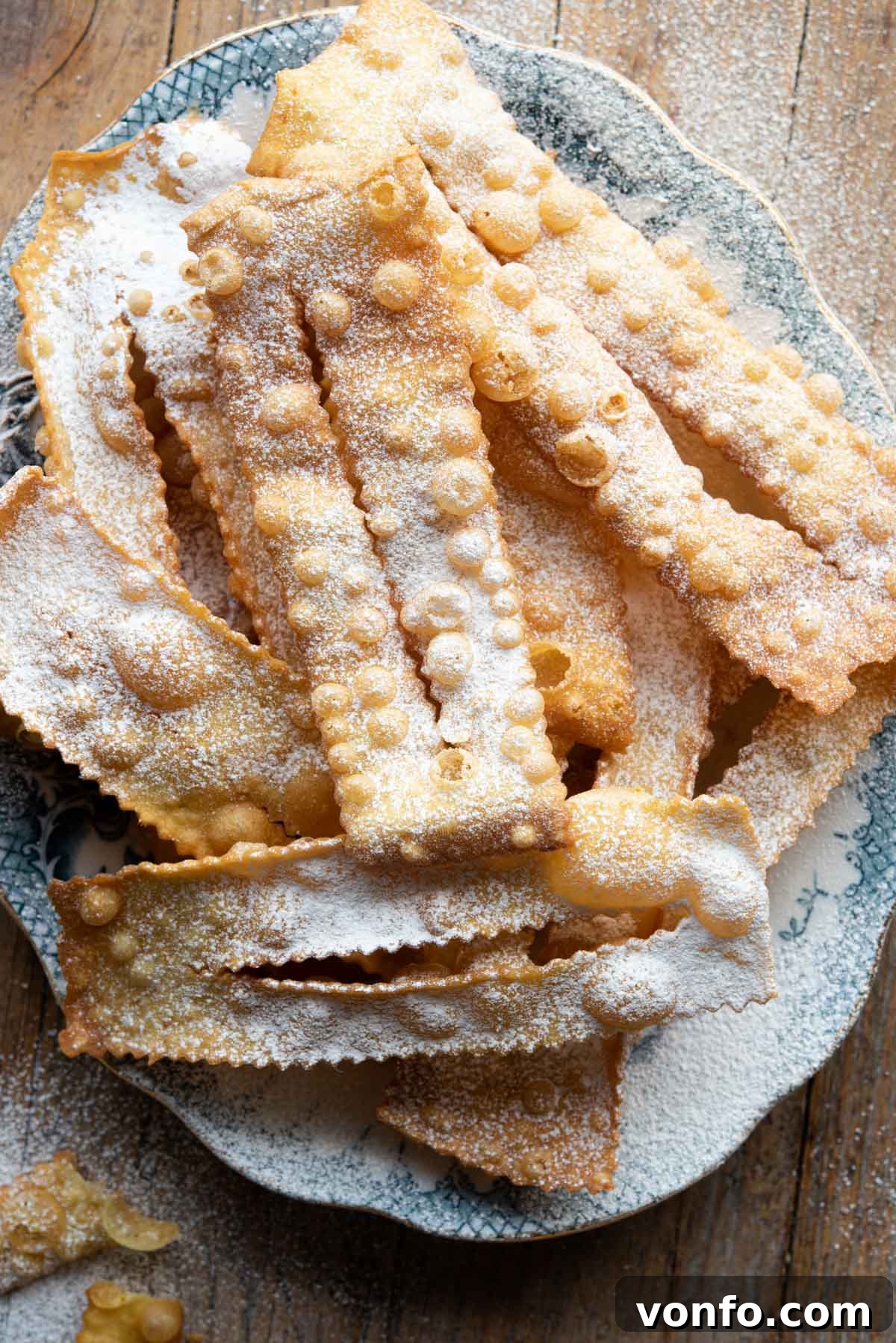
Cenci di Carnevale are an iconic symbol of Italy’s vibrant Carnival celebrations – sweet, crispy, and utterly addictive Italian fried pastries. Infused with a beautiful citrus and vanilla aroma, these delicate treats boast a remarkably crunchy, bubbly, and super light texture. Dusted generously with powdered sugar before serving, they are an essential part of the festive season. Follow our comprehensive, easy-to-follow guide to recreate these traditional and deliciously authentic sweets right in your own kitchen!
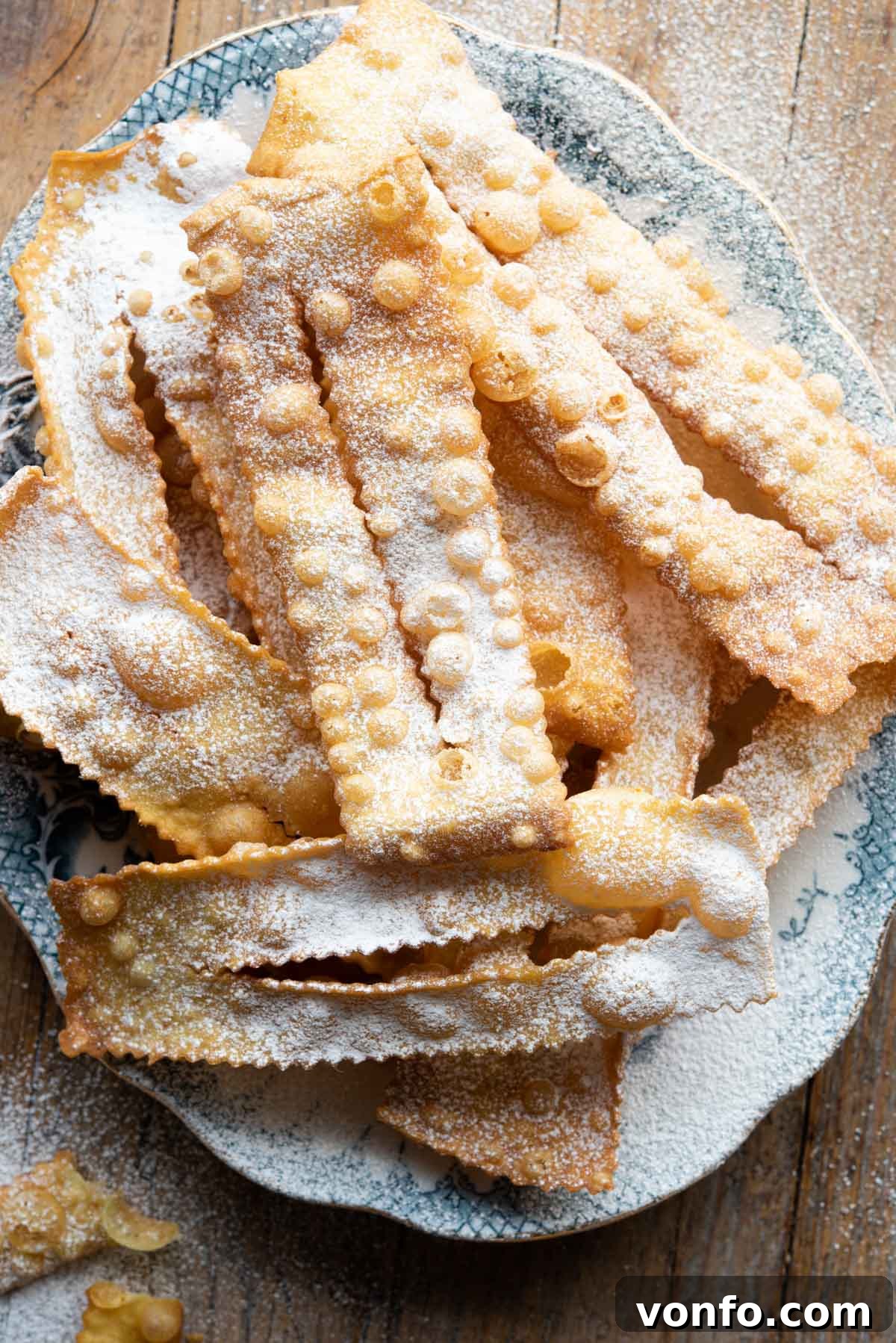
Cenci di Carnevale: A Taste of Italian Carnival Tradition
Carnevale, the festive period leading up to Lent, is one of Italy’s most enchanting and joyous traditions. Weeks before Ash Wednesday, towns and cities across the peninsula burst into life with elaborate costumes, intricate masks, lively parades, showers of confetti, captivating music, and, of course, an abundance of mouth-watering food. Among the most cherished culinary delights of this season are these delightful fried pastries, known by many names but universally adored for their irresistible charm.
These thin, fried dough strips are a staple across Italy during Carnevale, reflecting the rich tapestry of regional culinary traditions. Depending on where you travel, you’ll encounter them under a variety of charming names, each with its own local flavor:
- Chiacchiere: Meaning “gossip” or “chat,” this name is popular in Lombardy and Emilia-Romagna, perhaps alluding to the lively conversations enjoyed over these pastries.
- Bugie: Translating to “lies,” this term is common in Piedmont and Liguria, playfully suggesting how quickly these light pastries disappear.
- Crostoli: Primarily used in Veneto and Friuli-Venezia Giulia, this name perfectly describes their wonderfully crunchy and crusty texture.
- Frappe: In regions like Lazio, they are known as “fritters,” a straightforward description of their fried nature.
- Cenci: This is the Tuscan word for “rags,” a poetic description of their rustic, irregular, and delightfully crisp appearance once fried. It’s the name we’ll be using for our recipe today, celebrating the Tuscan tradition.
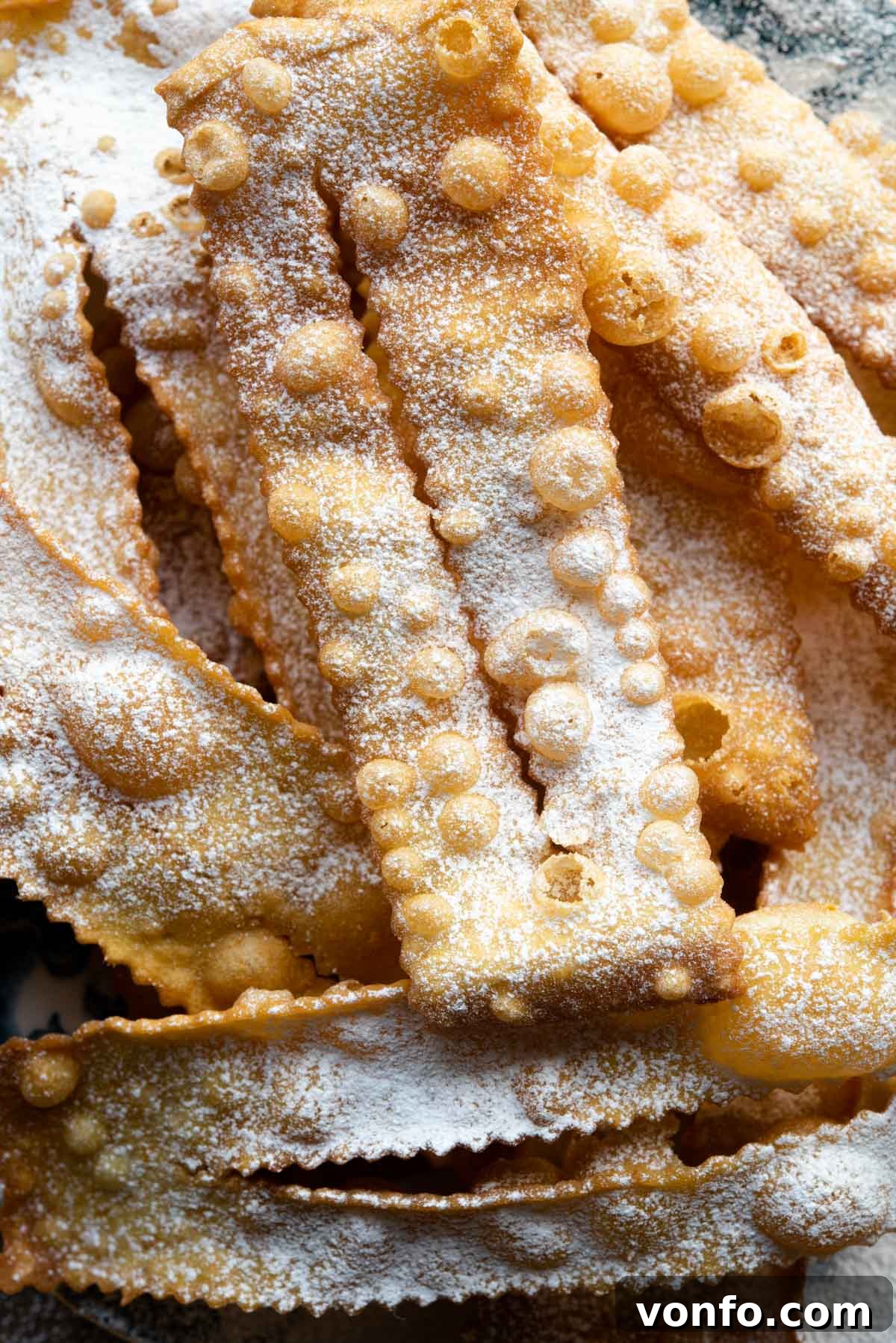
Regardless of their moniker, these pastries are crafted from a sweet, delicate dough that is meticulously rolled paper-thin, cut into rustic “rag-like” shapes, and then deep-fried to golden perfection. The result is an incredibly light, airy, and utterly delicious treat, generously dusted in powdered sugar just before serving. Their crispness and sweet aroma make them an unforgettable Carnival experience.
Essential Ingredients for Perfect Cenci
Crafting authentic Cenci di Carnevale relies on a few key ingredients. While the recipe is simple, understanding the role of each component can elevate your pastries from good to truly exceptional. Here’s what you’ll need, along with some helpful notes and substitution tips:
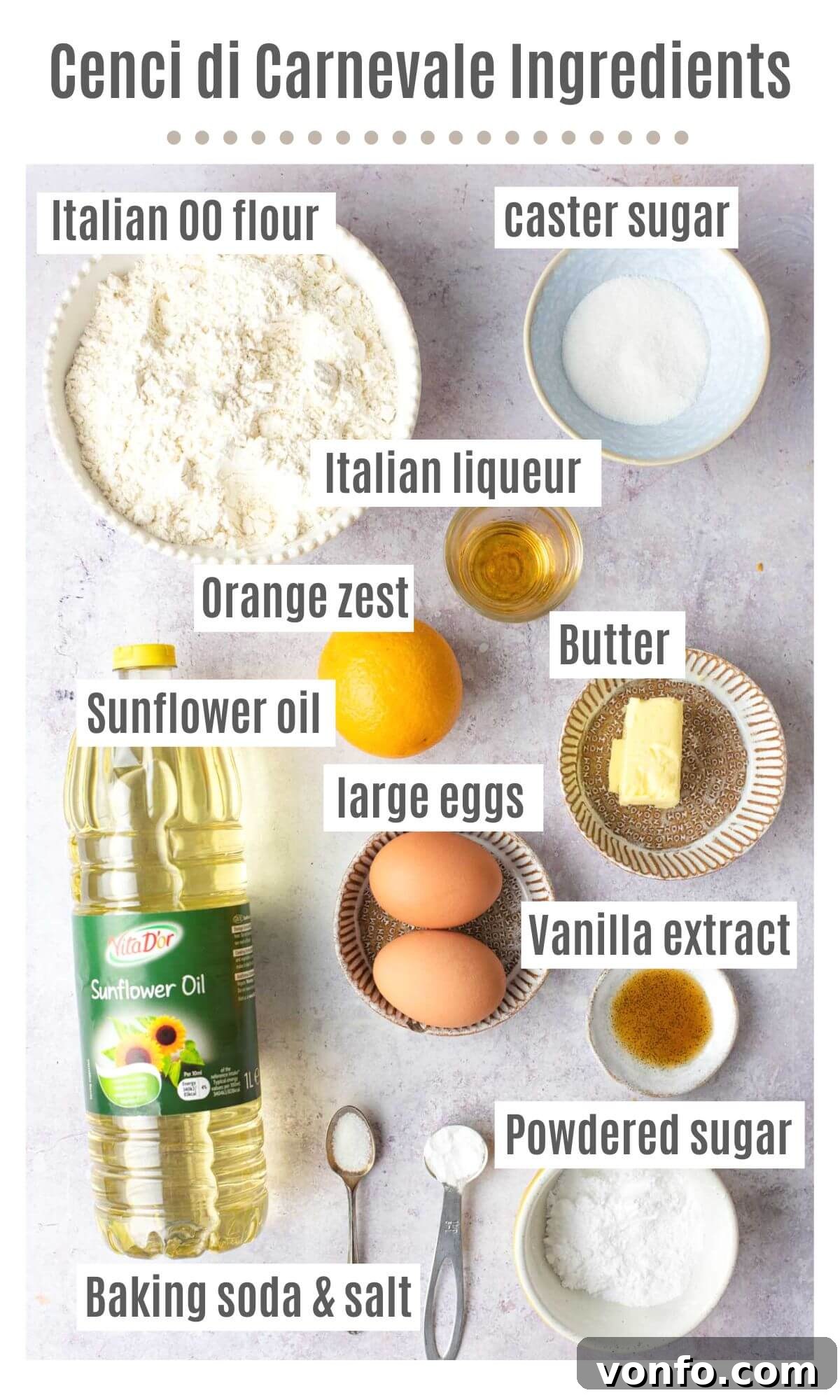
- Flour: Traditionally, Italian 00 flour is used, known for its fine texture and low protein content, which results in a very tender dough. However, standard all-purpose flour will also yield excellent results. When measuring with cups, always spoon and level the flour to ensure accuracy, or ideally, use a kitchen scale for the most precise measurement.
- Butter: Ensure your butter is at room temperature – not too cold, which will make it difficult to incorporate, and not melted, which can alter the dough’s consistency. Room temperature butter creams easily and creates a smoother, more pliable dough.
- Sugar: Caster sugar (also known as superfine sugar) is preferred over granulated sugar. Its finer crystals dissolve more readily into the dough, contributing to a smoother texture and preventing a grainy mouthfeel.
- Eggs: Use large eggs. If your eggs are too small, the dough might be overly dry, making it difficult to knead and roll out thinly. Eggs provide structure, richness, and moisture.
- Baking Soda (Bicarbonate of Soda UK): A small amount of baking soda helps to create that characteristic light and bubbly texture when the Cenci are fried. It interacts with the acidic components (like citrus zest or liqueur) to produce gas.
- Liqueur: This is a crucial ingredient for authentic flavor. Italian liqueurs like Tuaca (a vanilla-citrus brandy), Marsala, Strega, Vin Santo, or Grappa all impart a wonderful, subtle aroma and crispness to the pastries. The alcohol also helps to prevent the dough from absorbing too much oil during frying. For a non-alcoholic option, you can use orange juice or a touch more vanilla extract, though the flavor profile will differ slightly.
- Orange Zest: The fresh zest of an orange or lemon adds a bright, fragrant citrus note that is characteristic of these pastries. Choose organic citrus if possible, and zest only the colorful outer layer, avoiding the bitter white pith.
- Sunflower Oil: For frying, a flavorless oil with a high smoke point, such as sunflower oil, canola oil, or vegetable oil, is essential. This ensures the pastries taste clean and crisp, without any unwanted oily flavors.
- Powdered Sugar (Icing Sugar UK): A generous dusting of powdered sugar is the traditional finishing touch. It adds a final layer of sweetness and a beautiful, snowy appearance. Vanilla-flavored powdered sugar, if available, can enhance the aroma even further.
- Fine Salt: A pinch of salt balances the sweetness and enhances all the other flavors in the dough.
Step-by-Step Guide to Making Cenci di Carnevale
Making Cenci is a rewarding process that combines simple ingredients with a touch of patience. Follow these detailed steps to achieve perfectly light and crispy Italian fried pastries.
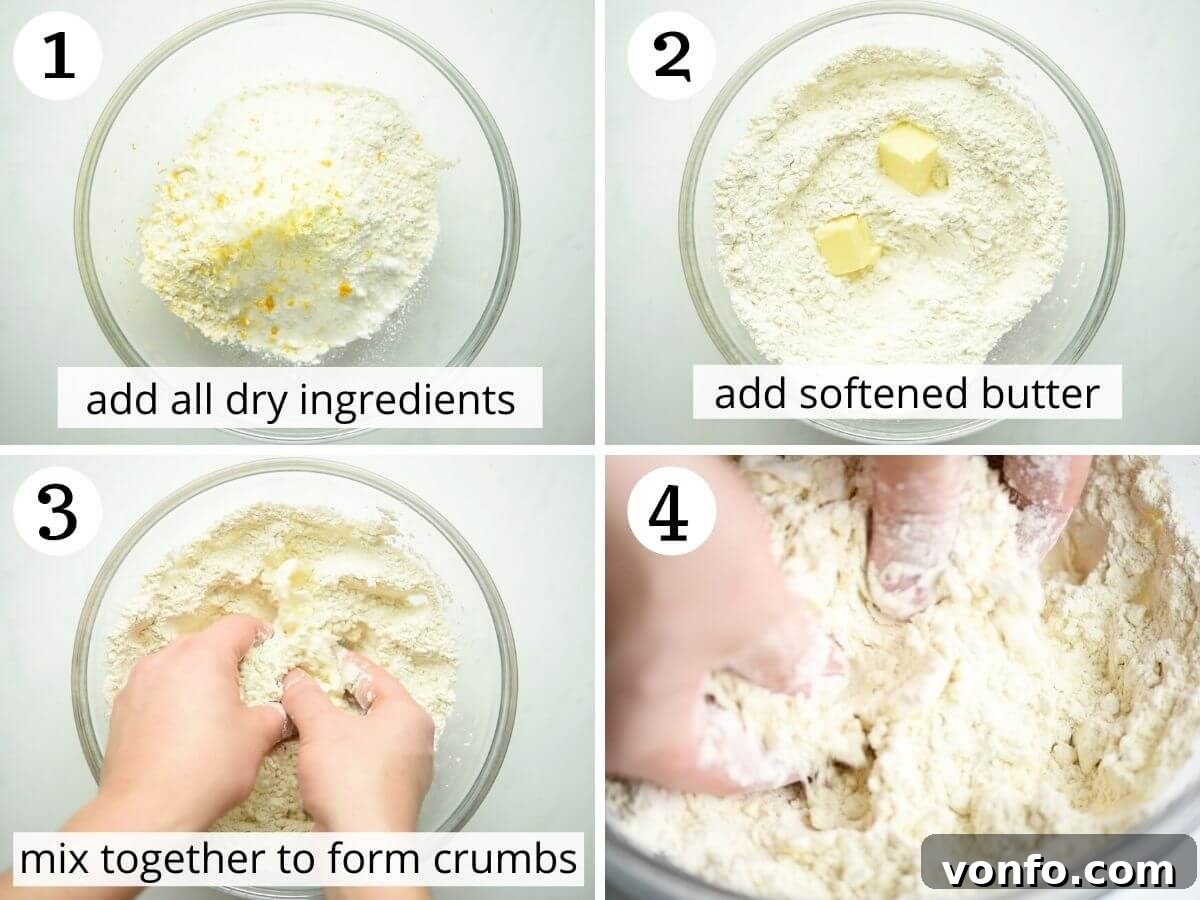
- Step 1 – Prepare the Dry Ingredients: In a large mixing bowl, combine the flour, caster sugar, baking soda, salt, and orange zest. Stir them together until everything is well integrated. Add the room temperature butter, then use your fingertips to rub the butter into the flour mixture. Continue until the mixture resembles coarse breadcrumbs, ensuring no large lumps of butter remain. This ‘crumbing’ technique helps create a tender pastry. (Refer to photos 1-4 for visual guidance).
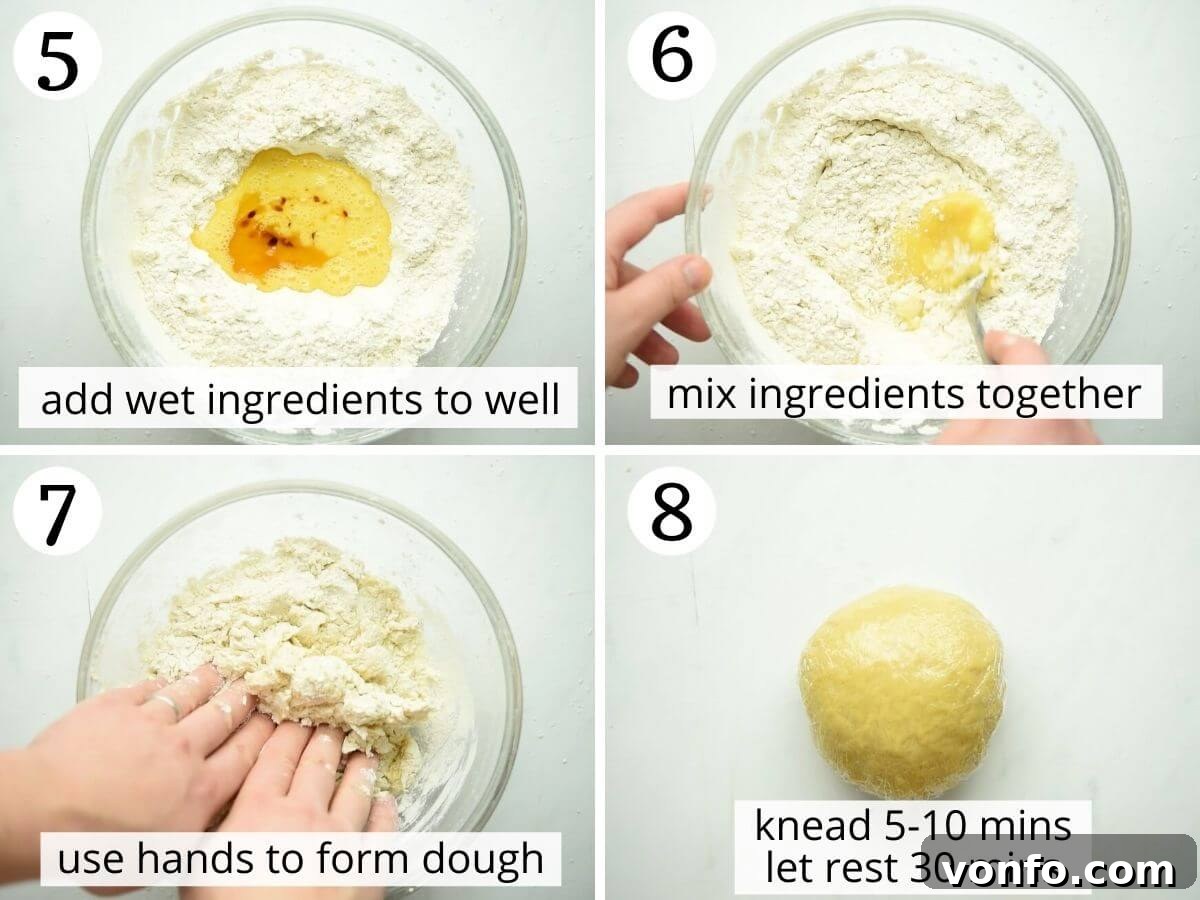
- Step 2 – Form and Knead the Dough: Create a well in the center of your dry ingredients. In a separate small bowl, whisk together the large eggs, vanilla extract, and Italian liqueur. Pour this wet mixture into the well. Using a fork, gradually incorporate the wet ingredients into the dry, working from the center outwards, until a rough, shaggy dough begins to form. Tip the dough onto a clean, lightly floured work surface. Knead the dough for 5-10 minutes. The goal is a smooth, elastic, and non-sticky dough. If it feels too dry, add a tiny bit of water; if too sticky, a small sprinkle of flour. Once smooth, wrap the dough tightly in plastic wrap and let it rest at room temperature for at least 30 minutes. This resting period is crucial as it allows the gluten to relax, making the dough much easier to roll out thinly. (Refer to photos 5-8 for visual guidance).
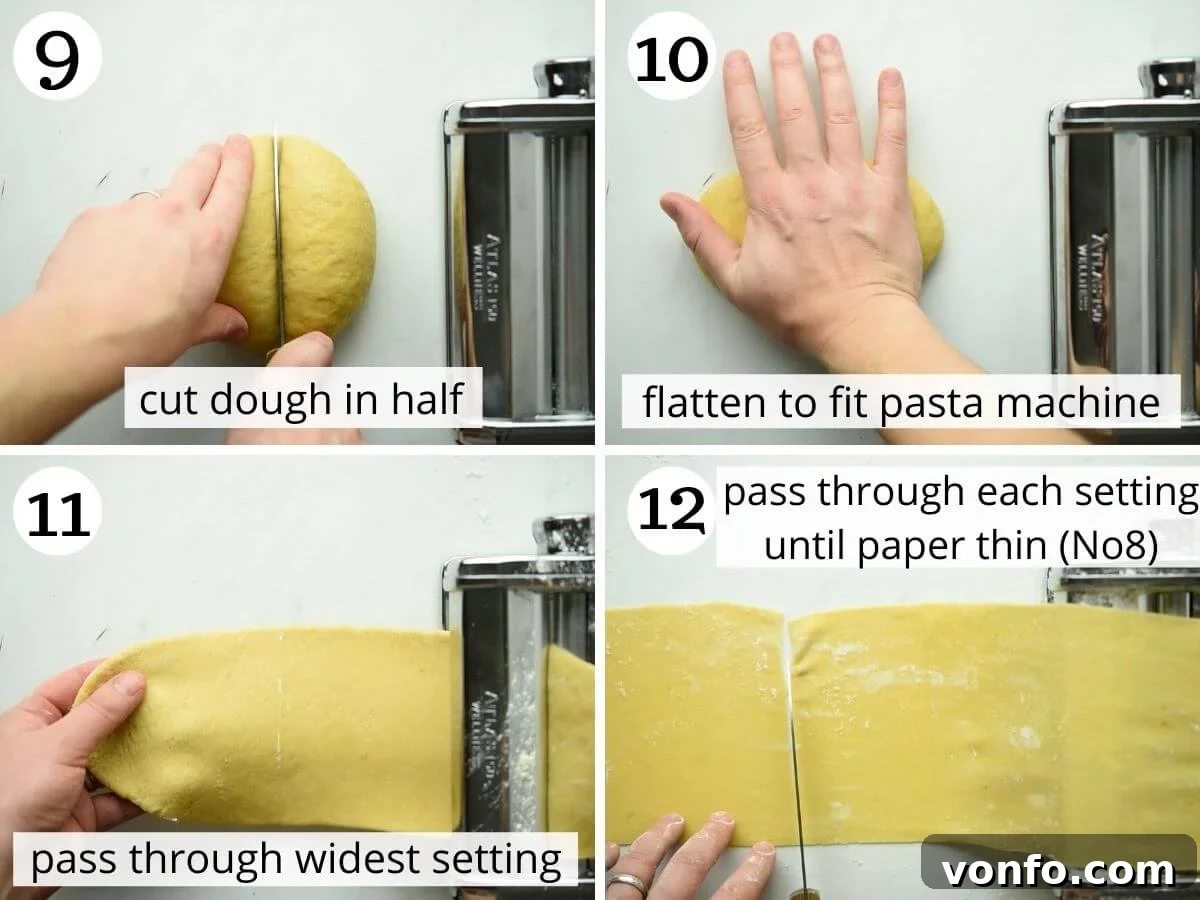
- Step 3 – Roll Out the Dough: Divide the rested dough into two halves, keeping one half wrapped in plastic wrap to prevent it from drying out. Flatten the working half into a rough rectangle so it can easily fit through the widest setting of your pasta machine (usually number 0). Lightly dust your work surface and pasta machine with a minimal amount of flour. Pass the dough through the widest setting. Fold the dough in thirds, turn it 90 degrees, and pass it through the widest setting again. Repeat this folding and rolling 2-3 times to create a smooth, even sheet. Then, without folding, progressively pass the dough through each subsequent setting, decreasing the thickness one number at a time, until it is almost paper-thin (typically the second to last setting, like number 8 on most machines). The thinner the dough, the crispier and bubblier your Cenci will be. If the dough strip becomes too long to manage, cut it in half. (Refer to photos 9-12 for visual guidance).
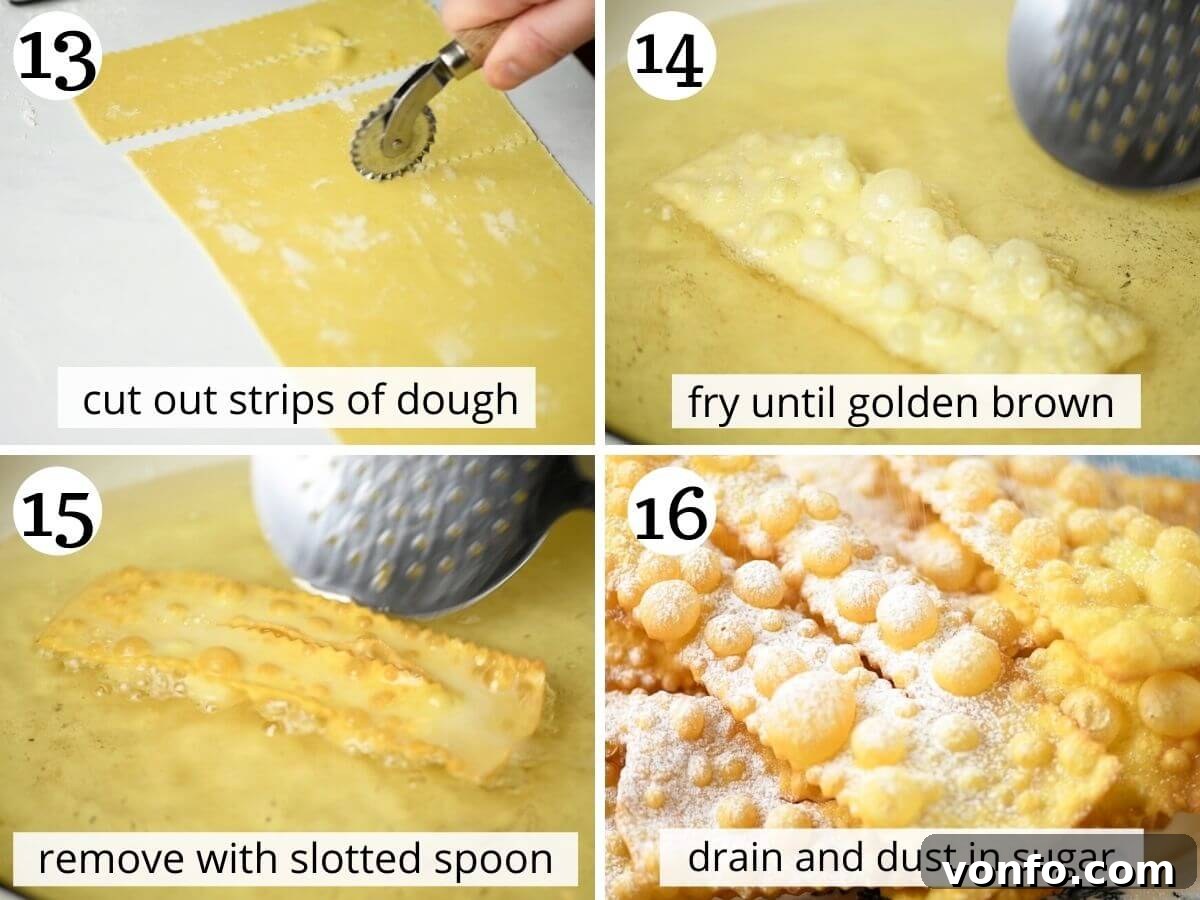
- Step 4 – Cut and Fry the Cenci: Once the dough is rolled thin, lay it flat on your lightly floured surface. Using a knife or a fluted pasta wheel, cut the dough into ribbons approximately 2 inches wide and 4-6 inches long. For the traditional “rag” effect, make a small slit or two in the center of each ribbon, ensuring you don’t cut all the way to the edges. Alternatively, feel free to cut them into any rustic shapes you desire. Heat about 2 inches of flavorless oil (like sunflower oil) in a large, heavy-bottomed pot to 180-190°C (350-375°F). If you don’t have a thermometer, test a small piece of dough: if it floats immediately, forms numerous small bubbles around it, and turns golden within a few seconds, the oil is ready. Fry the Cenci in small batches, being careful not to overcrowd the pot. They fry very quickly – just a few seconds on each side until they puff up, turn golden brown, and become bubbly. As they are cooked, remove them with a slotted spoon and drain thoroughly on a plate lined with kitchen paper to remove excess oil. This ensures they remain crisp and light. Once cooled, arrange them on a serving plate and dust generously with powdered sugar. (Refer to photos 13-16 for visual guidance).
Creative Flavor Variations & Serving Ideas for Cenci
While traditional Cenci are delightful in their classic form, there’s ample room for culinary creativity when it comes to flavor and presentation. Feel free to experiment with different liqueurs, citrus zests, and extracts to suit your taste or what you have on hand.
- Alcohol Options: The choice of Italian liqueur profoundly influences the Cenci’s aroma. Beyond Tuaca, Marsala, Strega, Grappa, or Vin Santo, you could explore other options like Limoncello for a brighter lemon kick, or even a good quality dry white wine, which can be a more budget-friendly alternative if you don’t keep a stocked liqueur cabinet. The alcohol not only adds flavor but also contributes to the pastry’s crispness by evaporating quickly during frying.
- Citrus Zest: The classic orange or lemon zest provides a wonderful, fresh counterpoint to the sweetness. For a subtle twist, try a blend of both, or even lime zest for a more exotic note. Ensure you only grate the outermost colored layer to avoid any bitterness from the white pith.
- Beyond Vanilla: Vanilla extract offers a comforting, familiar warmth. However, for those looking to experiment, consider substituting it with almond extract for a delicate marzipan-like flavor, rum extract for a deeper, caramelized note, or even orange extract to amplify the citrus profile. A hint of anise extract can also evoke a traditional Italian bakery feel.
Traditional and Modern Serving Suggestions
The beauty of Cenci lies in their versatility. While they are simply exquisite dusted with powdered sugar, many regions and modern palates enjoy them with additional toppings.
- Classic Powdered Sugar: The most traditional way to serve Cenci is with a generous dusting of powdered sugar. In Italy, vanilla-flavored powdered sugar is often used, which imparts an extra layer of fragrant sweetness. If unavailable, regular powdered sugar works perfectly.
- Alchermes Liqueur Drizzle: In Emilia-Romagna, Cenci are frequently drizzled with Alchermes liqueur before serving. This vibrant, ruby-red herbal liqueur not only adds a unique aromatic sweetness but also stains the pastries a beautiful, festive pink color, making them even more appealing. Alchermes is also famously used in another beloved Italian dessert, Zuppa Inglese.
- Chocolate Indulgence: For chocolate lovers, a drizzle of melted dark, milk, or white chocolate can transform Cenci into a decadent treat. Alternatively, a spoonful of rich, melted chocolate hazelnut spread (like Nutella) makes for an irresistible combination.
- Fruit Compotes & Honey: A dollop of warm berry compote, a spoonful of apricot jam, or a drizzle of local honey can add a fruity or earthy sweetness that beautifully complements the crispy fried dough.
- Espresso Pairing: Like many Italian sweets, Cenci are a perfect accompaniment to a strong espresso or cappuccino, especially during a leisurely afternoon coffee break.
Top Tips and Frequently Asked Questions for Perfect Cenci
Achieving perfectly light and crispy Cenci is easier than you think with a few insider tips. Here are some key pointers and answers to common questions to help you master this classic Italian pastry.
- Watch for Quick Frying: These delicate pastries cook incredibly fast, often in a matter of seconds. Once dropped into the hot oil, they will immediately begin to puff up and turn golden. Be ready to flip them over after just a few seconds and remove them from the oil as soon as both sides are lightly golden and bubbly. Over-frying will make them brittle and potentially burnt.
- Crucial Drainage: After frying, it’s essential to immediately transfer the Cenci to a plate generously lined with kitchen towels. This allows excess oil to drain away, which is vital for maintaining their signature crispness and preventing them from tasting greasy. Replace the paper towels as they become saturated.
- Keep Dough Covered: When working with the dough, always roll out one half at a time. Keep the other half tightly wrapped in plastic film (cling film in the UK) to prevent it from drying out. Dry dough is difficult to roll thinly and can lead to a less tender final product. Similarly, use minimal flour when rolling – just enough to prevent sticking. Too much flour can make the dough tough.
- Fry with Utmost Caution: Frying with hot oil requires careful attention and safety. Always use a large, heavy-bottomed pot or Dutch oven, which is less likely to tip over. Never leave hot oil unattended, even for a moment. Keep a lid nearby in case of a grease fire (do NOT use water). Ensure adequate ventilation.
- Resting Time is Key: Don’t skip the 30-minute resting period for the dough. This allows the gluten to relax, making the dough much more pliable and easier to roll out to that desired paper-thin consistency, which is crucial for the Cenci’s light and bubbly texture.
- Consistent Oil Temperature: Maintaining a consistent oil temperature is critical. If the oil is too cold, the Cenci will absorb too much oil and become greasy. If it’s too hot, they will brown too quickly on the outside while remaining undercooked on the inside. Adjust your heat as needed, especially when adding new batches, as this can temporarily lower the oil temperature.
Yes, absolutely! You can easily prepare the dough in a stand mixer fitted with a dough hook attachment. Mix on low speed until the dough comes together and then knead for 5-7 minutes until smooth and elastic.
While a pasta machine makes achieving paper-thin dough much easier and more consistent, you can certainly roll out the dough by hand using a rolling pin. The key is to roll it as thinly as possible – thinness is paramount for the characteristic light, crispy, and bubbly texture of Cenci.
The ideal oil temperature is around 180-190°C (350-375°F). If you have a deep-fry thermometer, this is the most accurate method. If not, test by dropping a small piece of dough into the oil. If it immediately floats, is surrounded by many small bubbles, and turns golden within a few seconds, your oil is ready. Adjust the heat as you fry to maintain this temperature.
Cenci keep remarkably well due to their crispy nature. Store them in an airtight container at room temperature in a cool, dry place for up to 5-7 days, possibly even longer. Always dust with fresh powdered sugar just before serving for the best presentation and taste.
Yes, Cenci can be made a few days in advance. Store them as described above. While best freshly made, they retain their crispness for several days, making them an ideal treat to prepare for Carnival celebrations.
Understanding Italian Carnevale: A Festive Tradition
Italian Carnevale is a vibrant and ancient festival deeply rooted in Christian tradition, signaling a period of joyous revelry and indulgence before the solemn season of Lent. Its official culmination is typically on Fat Tuesday (Martedì Grasso), the day before Ash Wednesday, which marks the beginning of Lent – a forty-day period of fasting and reflection where historically, rich foods were given up.
However, the celebrations for Carnevale in Italy are far from confined to a single day. Festivities often commence a couple of weeks before Fat Tuesday, transforming towns and cities into colorful spectacles. Picture streets filled with elaborate parades featuring oversized floats, masked balls with attendees in intricate historical costumes, lively music echoing through piazzas, and the air thick with confetti and streamers. Children and adults alike participate in the joyous atmosphere, embracing a sense of playful anarchy before the more somber Lenten period begins. Food plays a central role, with a focus on rich, often fried, sweet treats and desserts like Cenci, Frittelle, and Castagnole, all designed to be enjoyed before the lean days of Lent.
Explore More Traditional Italian Desserts
- Italian Easter Bread (Pane di Pasqua)
- Apple Crostata with Apricot Jam
- Struffoli – Italian Honey Balls
- Homemade Sicilian Cannoli (shells and filling)
- Bomboloni – Italian Doughnuts
We hope you enjoy making these traditional Cenci di Carnevale! If you’ve tried this delightful recipe or any other recipe from our collection, please don’t forget to rate it and share your experiences in the comments section below. We absolutely love hearing from you! You can also connect with us and discover more of our delicious food creations by following us on FACEBOOK, INSTAGRAM, and PINTEREST.
Cenci di Carnevale (Authentic Italian Fried Pastries)
By Emily
30 mins
15 mins
30 mins
1 hr 15 mins
48 – 50 pastries
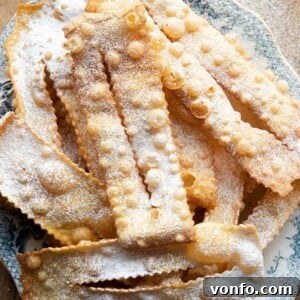
Cenci di Carnevale are classic sweet and crispy Italian fried pastries, traditionally made for Carnival. They are renowned for their delightful citrus and vanilla aroma, light texture, and a generous dusting of powdered sugar before serving. Also known by regional names such as Chiacchiere, Crostoli, Frappe, and Bugie, these treats are a must-try for any Italian dessert enthusiast.
Equipment
-
Pasta machine or rolling pin
-
Plastic wrap (cling film UK)
-
Large heavy-bottomed pot for frying
-
Slotted spoon or spider strainer
-
Kitchen towels
Ingredients
- 2 cups* Italian 00 flour, *spooned and leveled (280g)
- 2 tablespoons caster sugar (superfine), (30g)
- 1 teaspoon baking soda, (bicarbonate of soda UK)
- Zest of 1 orange or lemon
- 2 tablespoons butter, at room temperature (30g)
- 2 large eggs
- 1 teaspoon vanilla extract
- 1 tablespoon Italian liqueur (such as Marsala, Tuaca, Strega, Grappa, or Vin Santo)
- ½ teaspoon fine salt
- 1-2 tablespoons powdered sugar, for dusting (icing sugar UK)
- Sunflower oil, for frying (approximately 2 inches deep in your pot)
Instructions
To Make the Dough:
- Put the flour, sugar, baking soda, salt, and orange zest in a bowl and stir until fully combined. Add the room temperature butter and crumb it into the flour using your hands until the mixture resembles fine breadcrumbs. Make a well in the center of the flour for the liquids.
- In a small bowl, whisk the eggs, vanilla extract, and Italian liqueur together until well combined. Pour this wet mixture into the well in the flour mixture. Use a fork to gradually incorporate the wet into the dry ingredients until a rough, shaggy dough begins to form.
- Once the rough dough is formed, turn it out onto a clean work surface. Knead the dough vigorously for 5-10 minutes until it becomes smooth, elastic, and no longer sticky. Wrap the kneaded dough tightly in plastic wrap and allow it to rest at room temperature for at least 30 minutes. This resting period is crucial for a tender, easily rolled dough.
Rolling Out the Dough:
- After the dough has rested, cut it in half. Keep one half wrapped in plastic wrap to prevent it from drying out while you work with the other. Flatten the working piece of dough into a rectangle thin enough to fit through the widest setting on your pasta machine.
- Lightly sprinkle your work surface and pasta machine with a minimal amount of flour. Pass the dough through the widest setting. Fold the dough in thirds, turn it 90 degrees, and pass it through the widest setting again. Repeat this folding and rolling 2-3 times to create a smooth, even sheet. Then, without folding, continue to pass the dough through your machine, moving up one setting at a time, until the dough is almost paper-thin. On most pasta machines, this is typically setting number 8 (number 0 being the widest, and 9 the thinnest). If the dough sheet becomes too long to handle, cut it in half. Remember: the thinner the dough, the crispier your Cenci will be.
- Using a knife or a fluted pasta cutter wheel, cut the thin dough sheets into strips approximately 2 inches wide and 4-6 inches long. For a traditional look, make a small slit or two in the middle of each strip, ensuring you don’t cut all the way to the edges. While this is the traditional method, feel free to cut them into any rustic shapes you like.
Frying and Serving:
- Heat about 2 inches of sunflower oil (or other neutral frying oil) in a large, heavy-bottomed pot. The ideal oil temperature is around 180-190°C (350-375°F). If you have a sugar thermometer, use it. Otherwise, test with a small piece of dough: if it floats immediately, bubbles vigorously, and turns golden within a few seconds, the oil is ready.
- Carefully fry the Cenci in small batches to avoid overcrowding the pot, which can lower the oil temperature. They cook very quickly, usually within a few seconds per side, until they puff up, become golden brown, and are bubbly.
- As they finish frying, remove the Cenci with a slotted spoon or spider strainer and transfer them to a plate generously lined with kitchen paper to drain excess oil. This step is crucial for maintaining their crisp texture. Continue frying in batches until all the dough is used.
- Once the Cenci have cooled completely, arrange them artfully on a serving plate. Just before serving, dust them generously with powdered sugar. Enjoy immediately for the best crispness!
Video Tutorial
For a visual guide to making Cenci di Carnevale, watch our step-by-step video tutorial. It covers everything from preparing the dough to achieving the perfect fry, ensuring you can replicate this traditional Italian pastry with confidence. Search for “Cenci di Carnevale (Italian Fried Pastries)” on YouTube or your preferred video platform to find it!
Notes
- Measuring Flour: When using measuring cups, always spoon the flour into the cup and level it off with a straight edge (like a knife). Scooping directly from the bag can compact the flour, leading to over-measurement and a dry dough. For consistent results, a kitchen scale is always recommended.
- Drain on Kitchen Towels: This step is critical for perfectly crisp, non-greasy Cenci. Don’t skip it, and replace saturated paper towels as needed.
- Keep Dough Covered: Always work with half the dough at a time, keeping the other half tightly wrapped in plastic film to prevent it from drying out. Use minimal flour during rolling to avoid a tough pastry.
- Fry with Caution: Hot oil can be dangerous. Use a heavy-bottomed pot, never leave it unattended, and keep a lid nearby (not water) to smother any potential grease fires.
- Storage: Cenci are best stored in an airtight container in a cool, dry place. They will maintain their quality and crispness for 5-7 days. Dust with powdered sugar just before serving.
Helpful Information for All Our Recipes
- We always use extra virgin olive oil in all of our savory recipes unless otherwise specified.
- For canned or jarred tomatoes, we consistently recommend using high-quality brands like Cirio or Mutti for the best flavor and results in your dishes.
- Unless otherwise stated, all vegetables mentioned in our recipes are assumed to be medium-sized.
- All our recipes are carefully tested and developed using a fan (convection) oven.
- Find out more about how nutrition is calculated for our recipes.
- Explore our comprehensive list of must-have Italian Pantry Staples to elevate your cooking.
- Discover all the Essential Kitchen Tools for Italian Cooking that we recommend.
Nutrition Information (per pastry)
Carbohydrates: 8g |
Protein: 1g |
Fat: 7g |
Saturated Fat: 1g |
Polyunsaturated Fat: 1g |
Monounsaturated Fat: 5g |
Trans Fat: 1g |
Cholesterol: 8mg |
Sodium: 54mg |
Potassium: 14mg |
Fiber: 1g |
Sugar: 1g |
Vitamin A: 24IU |
Calcium: 3mg |
Iron: 1mg
Nutrition information is automatically calculated and should only be used as an approximation.