
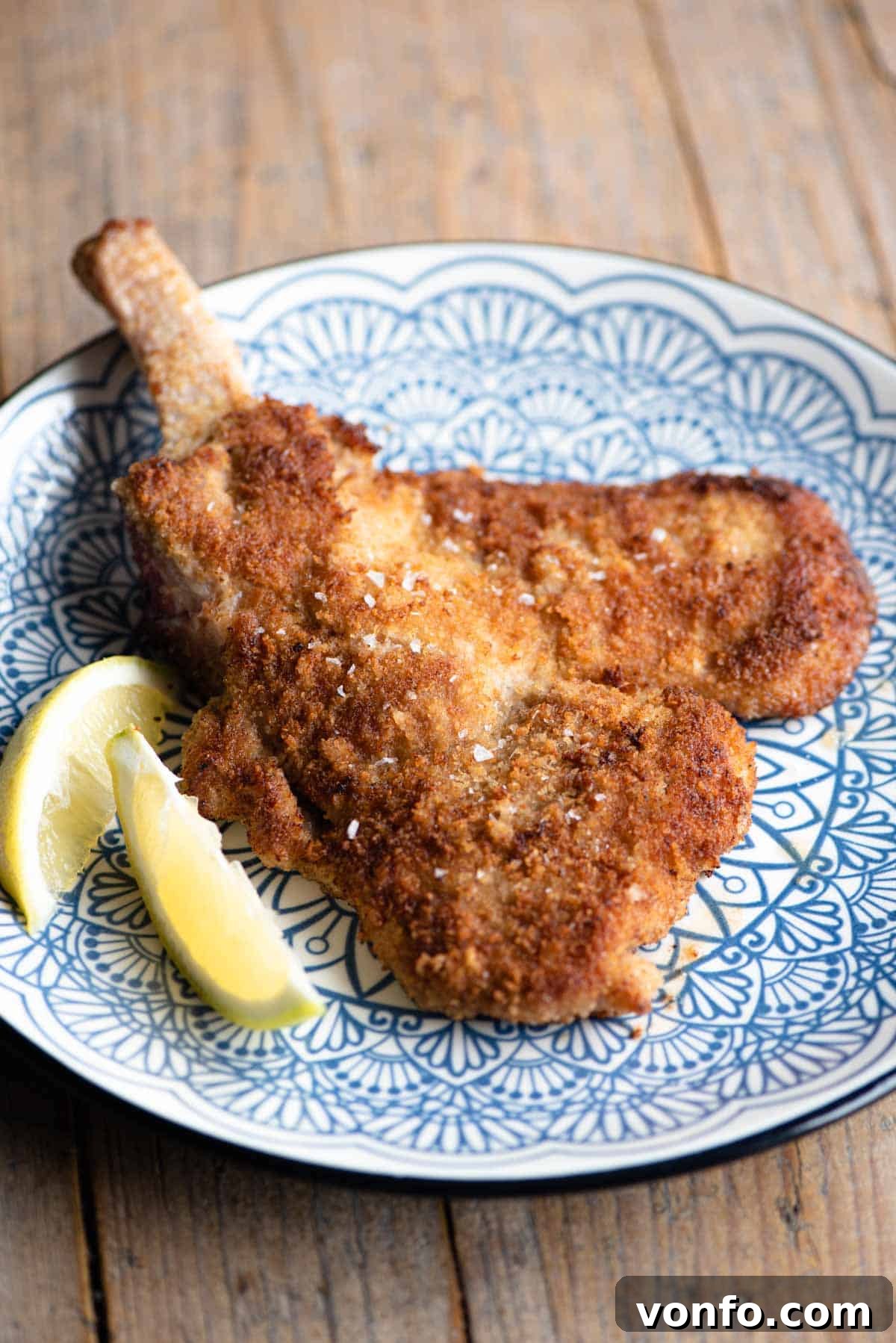
Veal Milanese, known in Italy as Cotoletta alla Milanese, is a quintessential dish hailing from Milan, the vibrant capital of Lombardy. This traditional recipe features tender veal chops, meticulously pounded thin, coated in a delicate layer of fine breadcrumbs, and then pan-fried to a glorious golden crisp in fragrant butter. A final flourish of fresh lemon juice elevates its rich flavors, making it an utterly delicious and satisfying meal. While incredibly simple in its preparation, Veal Milanese embodies the elegance and rustic charm of classic Italian cooking. It pairs beautifully with a fresh arugula salad, offering a peppery contrast, and hearty roast potatoes for a complete and comforting culinary experience.
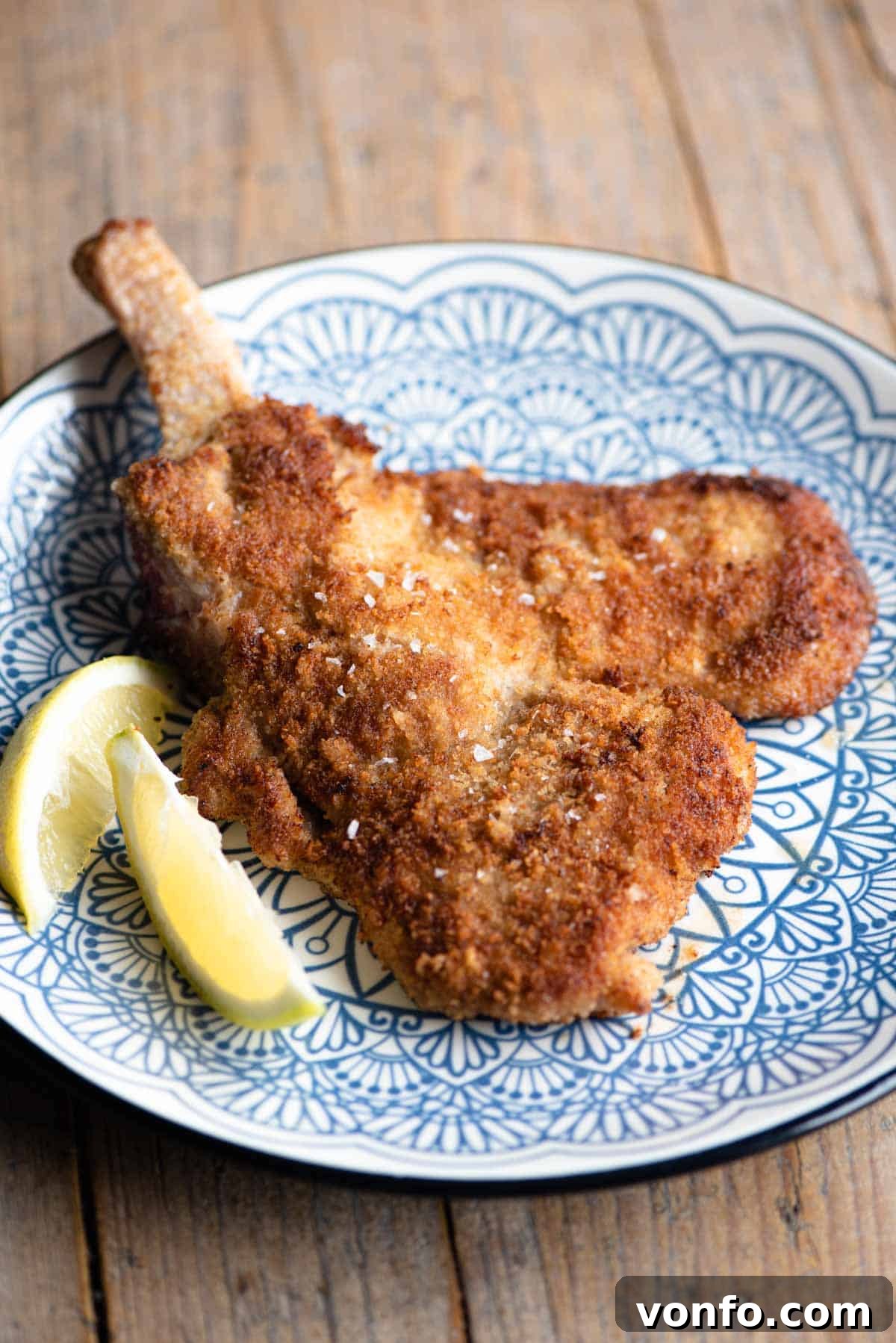
Milan, a city renowned for its fashion, finance, and rich culinary heritage, is the birthplace of many iconic Italian dishes. Alongside its famous Saffron Risotto and the rich, slow-cooked Ossobuco, Cotoletta alla Milanese stands as a testament to the region’s dedication to simple yet profoundly flavorful cuisine. This celebrated dish is crafted from a bone-in veal rib, delicately flattened, then enveloped in a light, crispy coating, pan-fried in butter until it achieves a perfect golden-brown exterior and remains exquisitely juicy and tender within.
What truly sets authentic Veal Milanese apart is its distinctive breading technique. Traditionally, many breaded cutlets utilize a three-step process involving flour, egg, and breadcrumbs. However, the true Milanese method often skips the flour and sometimes even the egg, opting for just finely ground breadcrumbs pressed directly onto the meat. This simpler approach yields a remarkably lighter, yet incredibly crispy and flavorful crust that allows the delicate taste of the veal to shine through. The preparation is surprisingly straightforward, resulting in a dish that is both elegant and approachable for home cooks.
Ready to master this classic? Below, you’ll find our comprehensive recipe, complete with detailed notes on selecting ingredients, step-by-step instructions with photos, essential cooking tips, delightful variations, and answers to frequently asked questions. For a full printable recipe, scroll to the bottom.
Ingredients for Authentic Veal Milanese
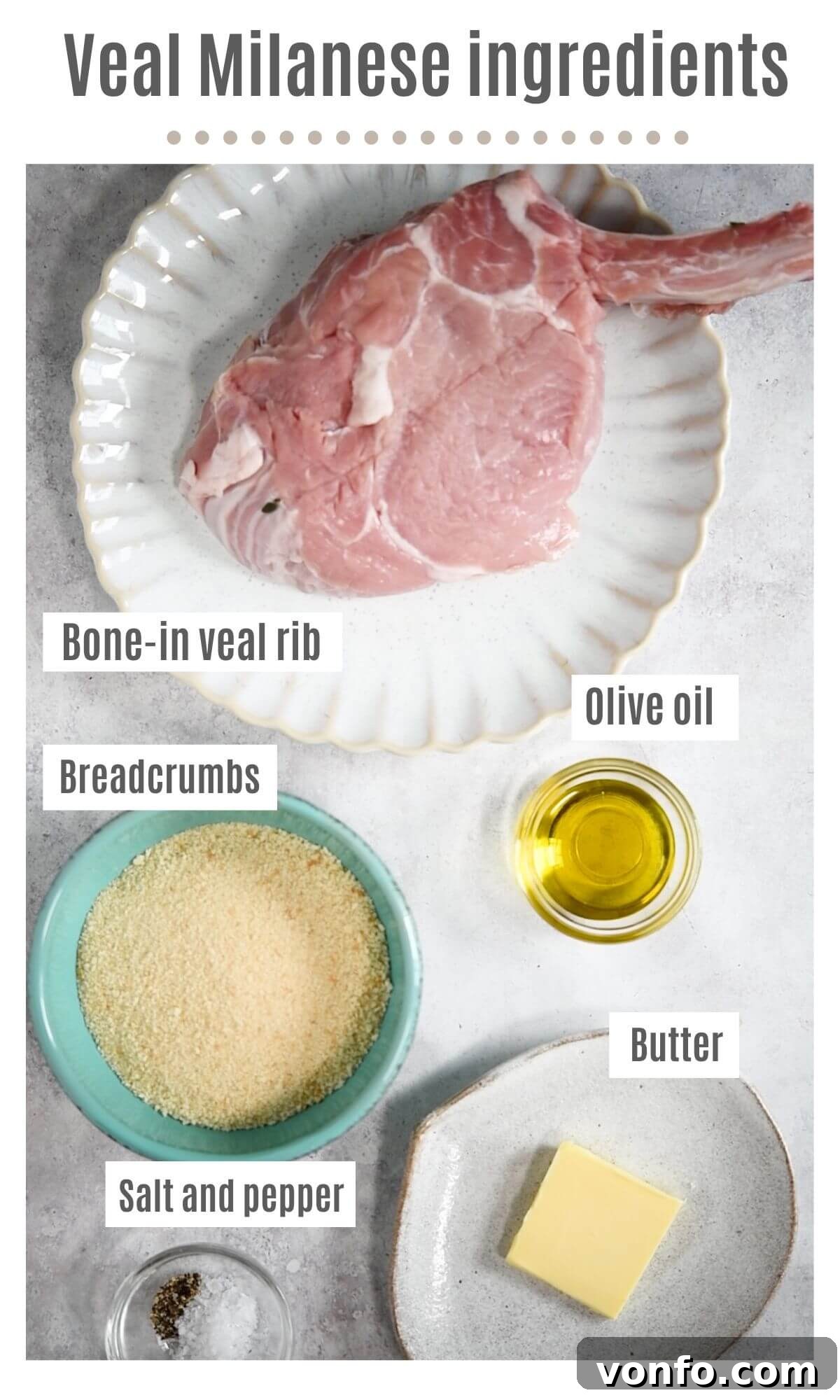
Ingredient Notes and Expert Tips for Selection
- Veal: Choosing the Right Cut
For an authentic Cotoletta alla Milanese, the preferred cut is a bone-in veal rib (veal chop). The bone not only adds incredible flavor as the chop cooks but also helps the meat retain moisture, contributing to its tender texture. When selecting your veal, look for chops that are about 1 inch (2.5 cm) thick before pounding. The quality of veal is paramount; opt for reputable butchers or stores known for fresh, tender cuts. If bone-in veal rib is unavailable, a boneless veal chop or veal cutlets (escalopes) can be used. Keep in mind that thinner cutlets will require significantly reduced cooking times to prevent them from drying out. Ensure your veal is light pink and has minimal marbling, indicative of young, tender meat.
- Breadcrumbs: The Milanese Secret
The type of breadcrumbs used is crucial for the characteristic crispy yet light coating of Veal Milanese. Traditional recipes call for fine breadcrumbs, not the coarser, flaky Panko variety. Fine breadcrumbs adhere better to the veal, especially when using the no-egg method, creating a thin, uniform crust that becomes exquisitely golden and crisp upon frying. You can often find fine breadcrumbs in Italian specialty stores or by processing stale white bread (crusts removed) in a food processor until very finely ground. Avoid “Italian breadcrumbs” that often come pre-seasoned with dried herbs and garlic powder, as this can detract from the authentic, simple flavor profile of the dish. For an elevated taste, you can enrich your fine breadcrumbs with freshly grated Parmigiano Reggiano.
- Frying Fat: Butter for Richness, Oil for Stability
Traditionally, Veal Milanese is fried in clarified butter (ghee). Clarified butter has a higher smoke point than regular butter because the milk solids and water have been removed, preventing it from burning easily and giving the veal a beautiful golden color and rich, nutty flavor. While authentic, clarifying butter can be an extra step. Our recipe simplifies this by using a blend of butter and olive oil. The olive oil raises the overall smoke point of the fat mixture, allowing the butter to contribute its signature flavor without scorching. Use a good quality extra virgin olive oil for the best results. The combination ensures a perfectly golden, crispy crust every time.
- Lemon & Seasoning: The Essential Finish
Fresh lemon juice is not just a garnish; it’s an integral part of the Veal Milanese experience. Its bright acidity cuts through the richness of the fried veal and butter, awakening the palate and enhancing all the flavors. Always use fresh lemons. A sprinkle of good quality sea salt flakes after frying is also vital, providing a delicate crunch and seasoning that complements the dish perfectly.
Step-by-Step Guide to Perfect Veal Milanese
Achieving the perfect Veal Milanese involves a few simple yet crucial steps. Follow these instructions carefully to ensure a tender, juicy interior with an irresistibly crispy exterior.
Preparation is Key
1. Prepare the Veal Chops: Start by inspecting your veal chops. Around the edges, especially near the bone, you might find some silvery sinew. This tough membrane can cause the chop to curl up during frying. Use a sharp knife to carefully remove any prominent sinew. If it’s too difficult to remove entirely, make small incisions or snips at intervals around the sinew. This will help prevent curling and ensure even cooking. (See photo 1 in the collage below).
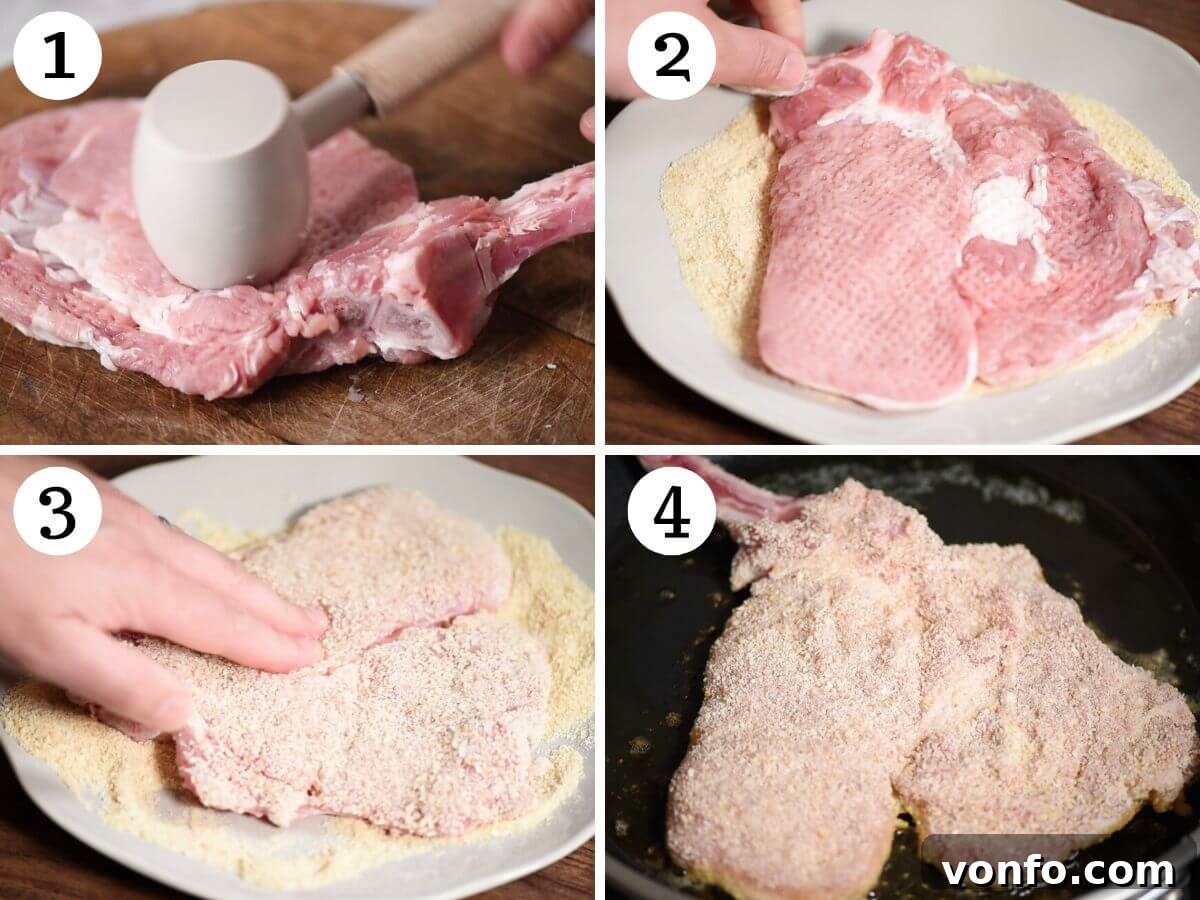
2. Pound the Veal Thin: Lay each veal chop between two sheets of parchment paper or plastic wrap. Using a meat mallet (the flat side) or a rolling pin, pound the veal firmly and evenly until it reaches approximately 1cm (about 1/4 inch) thickness. The goal is to achieve a uniform thickness across the entire chop, ensuring it cooks evenly and quickly. Pounding also tenderizes the meat, making it incredibly succulent. (Refer to photo 1 in the collage above).
The Authentic Breading Technique
3. Bread the Veal with Precision: This is where our simplified yet authentic method comes into play – no egg, no flour, no mess! Spread your fine breadcrumbs generously on a large plate or shallow dish. Take one pounded veal chop and place it onto the breadcrumbs. Press down firmly with your hand to ensure maximum adhesion. Flip the chop over and repeat the pressing on the other side. Repeat this process a couple of times for each side, ensuring the entire surface of the veal is completely coated with a dense, even layer of breadcrumbs. This technique creates a lighter, crispier crust compared to traditional egg washes and is surprisingly effective. This method is also successfully employed in our Breaded Chicken Cutlets recipe. (See photos 2 & 3 in the collage above for visual guidance).
Frying to Golden Perfection
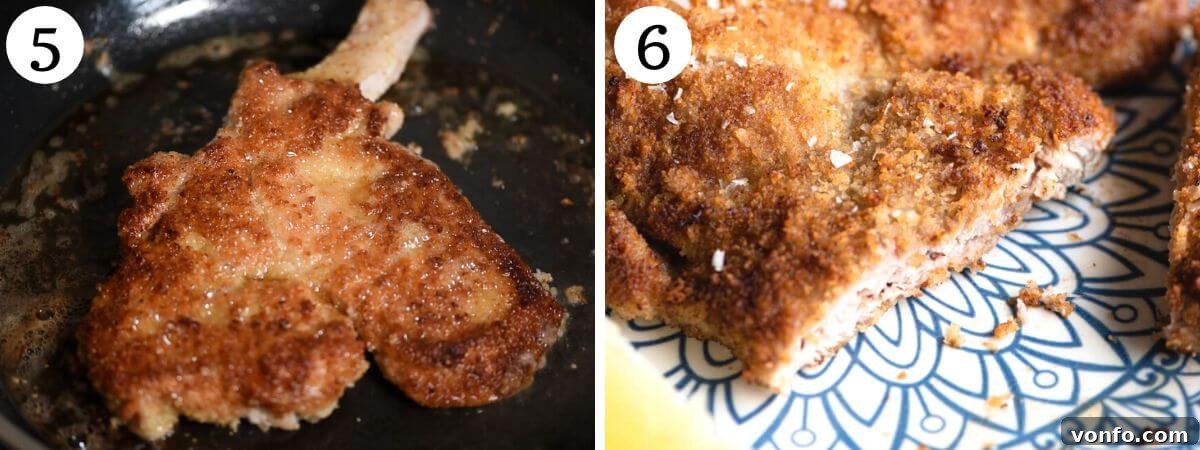
4. Pan-Fry the Veal: Choose a large, heavy-bottomed pan or skillet that can comfortably accommodate one or two veal chops without crowding. If your pan isn’t large enough for both, you’ll need to fry them one at a time. In this case, you can keep the first cooked chop warm in a pre-heated oven set to a low temperature (around 100°C / 210°F) while the second cooks. Heat the olive oil and butter in the pan over medium-high heat. Wait until the butter is melted and sizzling, but not browned or smoking. This indicates the fat is hot enough. Carefully place the breaded veal chop(s) into the hot pan. Fry for approximately 4 minutes on each side. You’re looking for a beautiful golden-brown and crispy crust. The veal should be cooked through, tender, and juicy. Avoid overcrowding the pan, as this can lower the oil temperature and lead to soggy veal. (Observe photos 4 & 5 in the collage above).
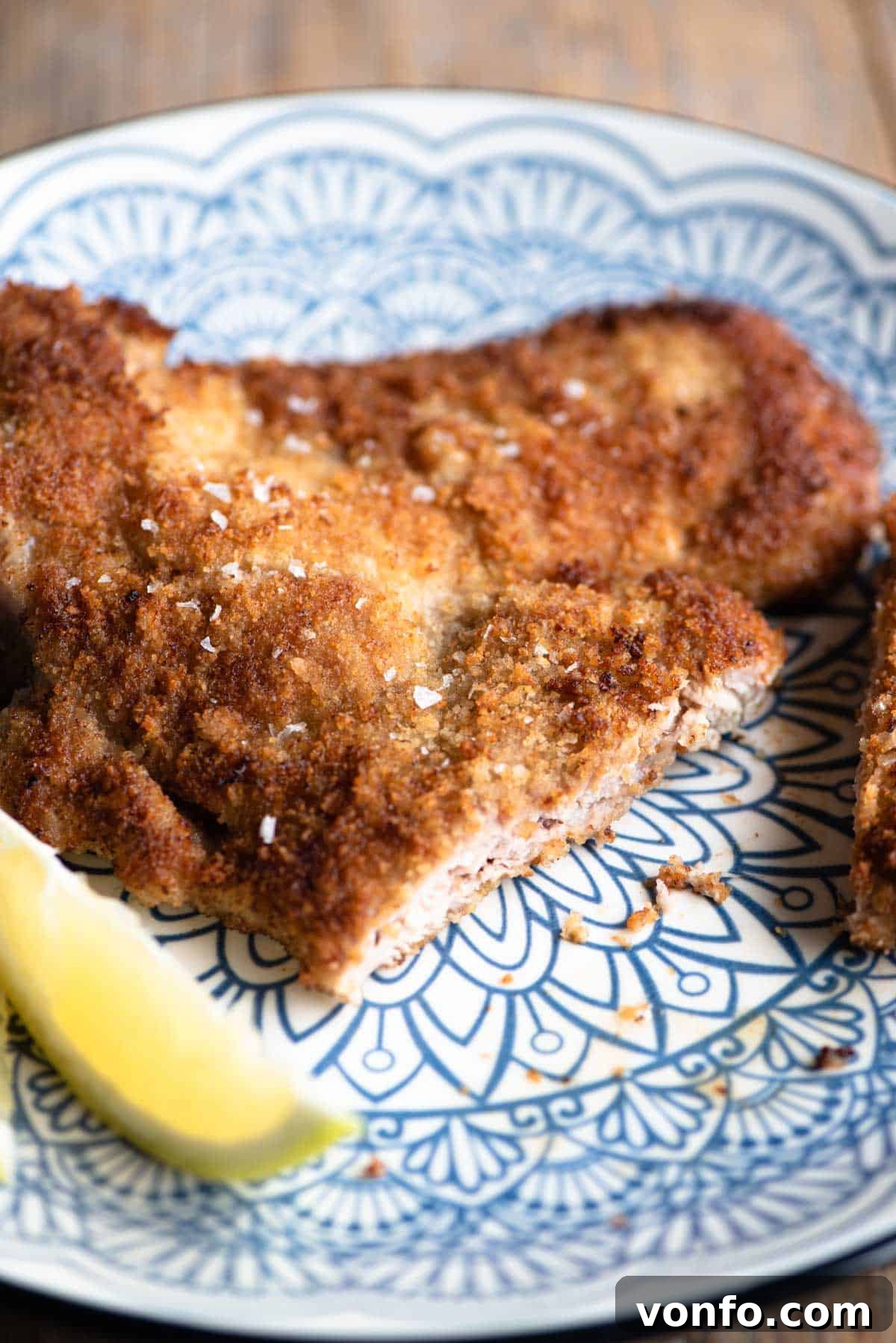
5. Serve Immediately: Once cooked, transfer the Veal Milanese to a serving plate. Sprinkle generously with sea salt flakes immediately after removing it from the pan to ensure the salt adheres and enhances the flavor. A generous squeeze of fresh lemon juice over the hot veal is absolutely essential – it brightens the dish and balances its richness. Serve piping hot for the best experience. (See photo 6 in the main image for serving inspiration).
Elevating Your Veal Milanese: Serving Suggestions
Veal Milanese is a star on its own, but the right accompaniments can transform it into an unforgettable meal. Traditionally, it’s often served simply with golden fries or classic roast potatoes. However, there are many ways to enhance this delightful dish:
- Classic Italian Sides: We love serving our Veal Milanese with crushed potatoes, lightly seasoned with lemon juice and a drizzle of high-quality olive oil. This adds a delightful textural contrast and complements the lemony veal. A fresh arugula salad, tossed with a simple vinaigrette and shavings of Parmigiano Reggiano, offers a wonderfully peppery and fresh counterpoint to the richness of the fried veal.
- Lighter Alternatives: If you find potatoes too heavy, consider lighter vegetable options. Steamed or sautéed Italian green beans with a hint of garlic, sautéed spinach, or a crisp, light mixed green salad with a lemon-herb dressing are excellent choices. These options provide freshness and essential nutrients without overwhelming the palate.
- Pasta or Risotto: While less traditional as a direct side, a small portion of a light pasta dish or a simple risotto (like a classic Risotto alla Milanese for a true Milanese experience) could also complement the veal for a more substantial meal.
- Wine Pairings: For a complete Italian dining experience, pair your Veal Milanese with a crisp, dry white wine. A Vermentino, Pinot Grigio, or a light Bardolino from the Lombardy region would be perfect choices to balance the rich flavors.
Mastering Veal Milanese: Expert Tips for Success
- Choosing the Right Veal Cut: While bone-in veal rib (chop) is traditional, veal escalopes (thin cutlets) are also excellent alternatives. Remember to adjust cooking times for thinner cuts to avoid overcooking. Always opt for fresh, high-quality veal from a trusted butcher.
- Alternatives to Veal: If veal is not readily available or you prefer other meats, this breading and frying method works wonderfully with other proteins. Try it with chicken breast cutlets (our breaded chicken cutlets recipe provides a great guide) or thin pork loin chops for a similar crispy texture and delicious flavor profile.
- Silverskin Removal is Crucial: Don’t skip removing the tough silverskin or sinew from around the edges of the chop. This prevents the meat from curling up dramatically during frying, ensuring it stays flat for even cooking and a consistent crispy crust. If it’s too difficult to remove entirely, making small snips along the membrane will achieve a similar effect.
- The Right Breadcrumbs Make a Difference: For our no-egg breading method, fine breadcrumbs are essential. They create a tighter, lighter, and crisper coating. Coarse Panko breadcrumbs, while great for other applications, tend to fall off more easily with this technique unless an egg wash is used. If you do prefer Panko, incorporating a light egg wash would be advisable.
- Seasoning for Authentic Flavor: Be wary of pre-seasoned “Italian breadcrumbs” often found in US supermarkets, as they typically contain dried herbs and garlic powder which can overpower the delicate veal flavor. For an authentic taste, use plain fine breadcrumbs and season them yourself with just salt and pepper before coating. If you desire a touch more flavor, mixing in some freshly grated Parmigiano Reggiano cheese into the breadcrumbs is a fantastic way to add savory depth without masking the veal.
- Optimal Frying Temperature: Maintain a consistent medium-high heat. If the pan isn’t hot enough, the veal will absorb too much oil and become greasy. If it’s too hot, the breading will burn before the veal cooks through. A good indicator is when the butter and oil mixture sizzles gently without smoking.
- Don’t Overcrowd the Pan: Fry chops in batches if necessary. Overcrowding lowers the pan temperature and prevents proper browning, leading to a soggy crust.
- Serve Immediately: Veal Milanese is best enjoyed fresh off the pan when the crust is at its crispiest. While leftovers are tasty, the breading will soften over time.
Veal Milanese: Frequently Asked Questions
What does ‘Milanese’ mean in cooking?
In Italian cuisine, ‘Milanese’ (or alla Milanese) simply means ‘from Milan’. It denotes dishes originating from the city of Milan in Lombardy. This term doesn’t imply a specific cooking technique or ingredient across all Milanese dishes. For example, Risotto alla Milanese (saffron risotto) and Ossobuco alla Milanese (braised veal shanks) are both from Milan but are entirely different preparations from Veal Milanese. It’s a geographical designation, highlighting the dish’s roots.
Can I prepare Veal Milanese in advance?
You can certainly prepare parts of the dish in advance to save time. The veal chops can be pounded to the correct thickness a few hours before cooking and kept refrigerated. However, we strongly advise against breading them in advance. The breadcrumbs will absorb moisture from the meat and become soggy, losing their signature crispiness when fried. The beauty of our simple breading method (just breadcrumbs) is that it’s incredibly quick to do right before frying, ensuring the freshest and crispiest result.
How do I store leftovers and reheat Veal Milanese?
Once cooked, Veal Milanese can be stored in an airtight container in the refrigerator for about 2 days. While still delicious, the breadcrumb coating will naturally soften. For the best reheating results and to regain some crispness, avoid the microwave. Instead, preheat your oven to 180°C (350°F) and place the veal on a wire rack over a baking sheet. Reheat for approximately 10-15 minutes, or until it’s piping hot throughout and the coating has crisped up again.
What kind of pan is best for frying Veal Milanese?
A large, heavy-bottomed skillet or frying pan is ideal. Cast iron, stainless steel, or even a non-stick pan can work. The key is a pan that distributes heat evenly and retains it well, ensuring consistent cooking and browning. Make sure it’s large enough to comfortably fit one or two chops without overcrowding.
Can I bake or air fry Veal Milanese instead of pan-frying?
While traditional Veal Milanese is pan-fried in butter for its distinct richness and crispness, you can explore baking or air frying for a lighter alternative.
Baking: Preheat your oven to 200°C (400°F). Lightly spray the breaded chops with olive oil and bake for 15-20 minutes, flipping halfway, until golden and cooked through. The crust will be less intensely crispy than pan-fried.
Air Frying: Preheat your air fryer to 190°C (375°F). Lightly spray the breaded chops with olive oil and air fry for 10-14 minutes, flipping halfway, until golden and cooked through. This method can yield a surprisingly crispy result with less oil.
More Delicious Italian-Inspired Recipes to Explore
If you enjoyed this classic Veal Milanese, you might love these other authentic Italian dishes:
Mains
Veal Saltimbocca with Prosciutto and Sage
Mains
Breaded Veal Cutlets with Parmesan Cream
Mains
Ossobuco Milanese (Braised Veal Shanks)
Mains
Simple Saffron Risotto
Veal Milanese Recipe Card
Step By Step Photos Above
Most of our recipes come with step-by-step photos, helpful tips and tricks to make it perfectly first time!
Veal Milanese Recipe
By Emily
10 mins
10 mins
20 mins
2 servings
Veal Milanese (Cotoletta alla Milanese) is a traditional recipe from Milan, Lombardy. Made with tender veal chops and a crispy breadcrumb coating fried in butter and drizzled with lemon, so delicious! Serve with an arugula salad and roast potatoes.
Ingredients
- 2 veal bone-in veal chops (veal rib)
- 1 cup fine breadcrumbs (130g)
- 3 tablespoons butter (40g)
- 1-2 tablespoons olive oil
- Lemon wedges for serving
- Sea salt flakes, to taste
Instructions
Prepare the veal for cooking
- Remove any sinew (silver skin) from around the chop to stop it from curling when frying. If you find it difficult to remove, you can make incisions around the sinew which will also help.
- Bash the veal with a meat mallet or rolling pin until they are about 1cm (1/4 inch thick).
To bread and cook the veal
- Put the breadcrumbs on a large plate and press the veal chops into the crumbs on either side a couple of times until fully coated (you don’t need flour or egg).
- Note: your veal chops may be too big to fit both of them in a pan so you can cook them one at a time and put one in a pre-heated oven at 100°C (210°F) to keep warm whilst the other is cooking. If doing it this way use half of the butter and oil for one chop and the rest for the other.
- Heat oil and butter in a large pan. Once hot, fry the veal for 4 minutes on each side until golden, crispy and cooked through.
- Serve the veal sprinkled with sea salt flakes and a squeeze of lemon juice.
Notes from the Kitchen
- What cut of veal to use – For authentic results, use a bone-in veal rib (chop). Veal escalopes (thin cutlets) are also suitable, but remember to adjust cooking times accordingly.
- If you don’t have veal – This recipe’s method adapts well to other proteins. Consider using chicken breast cutlets (refer to our breaded chicken cutlets recipe) or thin pork chops for a similar crispy breaded experience.
- Remove silverskin or sinew – Always take a moment to remove any tough silverskin or sinew from around the chop. This step prevents the meat from curling up during cooking and ensures even tenderness. If removal is difficult, snip it in several sections.
- Breadcrumbs are key – Stick to fine breadcrumbs for this particular no-egg breading method. Panko breadcrumbs, while crispy, don’t adhere as well without an egg wash.
- Seasoning the breadcrumbs – Avoid pre-mixed ‘Italian breadcrumbs’ from the US, as their added dried herbs and garlic can mask the veal’s flavor. Instead, for a subtle flavor enhancement, mix freshly grated Parmigiano Reggiano into plain fine breadcrumbs.
- Leftovers – Best served immediately for maximum crispiness. Cooked veal will keep in the fridge for about 2 days. Reheat in an oven at 180°C (350°F) for approximately 10 minutes until hot throughout to help restore some crispness.
Helpful Info for All Our Recipes
- I always use extra virgin olive oil in all of my recipes unless stated otherwise.
- When I use canned or jarred tomatoes of any kind I always use Cirio or Mutti brands for the best results and flavour.
- All vegetables are medium sized unless stated otherwise.
- All recipes are tested and developed using a fan (convection) oven.
- Find out more about how nutrition is calculated.
- Check out our must-have Italian Pantry Staples.
- You can also find all our Essential Kitchen Tools for Italian Cooking.
Nutrition Information
Calories: 630 kcal | Carbohydrates: 23g | Protein: 47g | Fat: 37g | Saturated Fat: 15g | Polyunsaturated Fat: 3g | Monounsaturated Fat: 16g | Trans Fat: 0.3g | Cholesterol: 200mg | Sodium: 494mg | Potassium: 753mg | Fiber: 1g | Sugar: 2g | Vitamin A: 250IU | Calcium: 98mg | Iron: 3mg
Nutrition information is automatically calculated, so should only be used as an approximation.
Did you try this recipe?
Share your thoughts in the comments below!
If you’ve tried this Veal Milanese recipe or any other recipe on the blog, we’d love to hear from you! Don’t forget to rate the recipe and leave a comment below to let us know how it turned out. Your feedback is incredibly valuable! You can also follow us on Facebook, Instagram, and Pinterest for more delicious Italian food inspiration, or sign up to our Newsletter to get new recipes delivered straight to your inbox every week.