
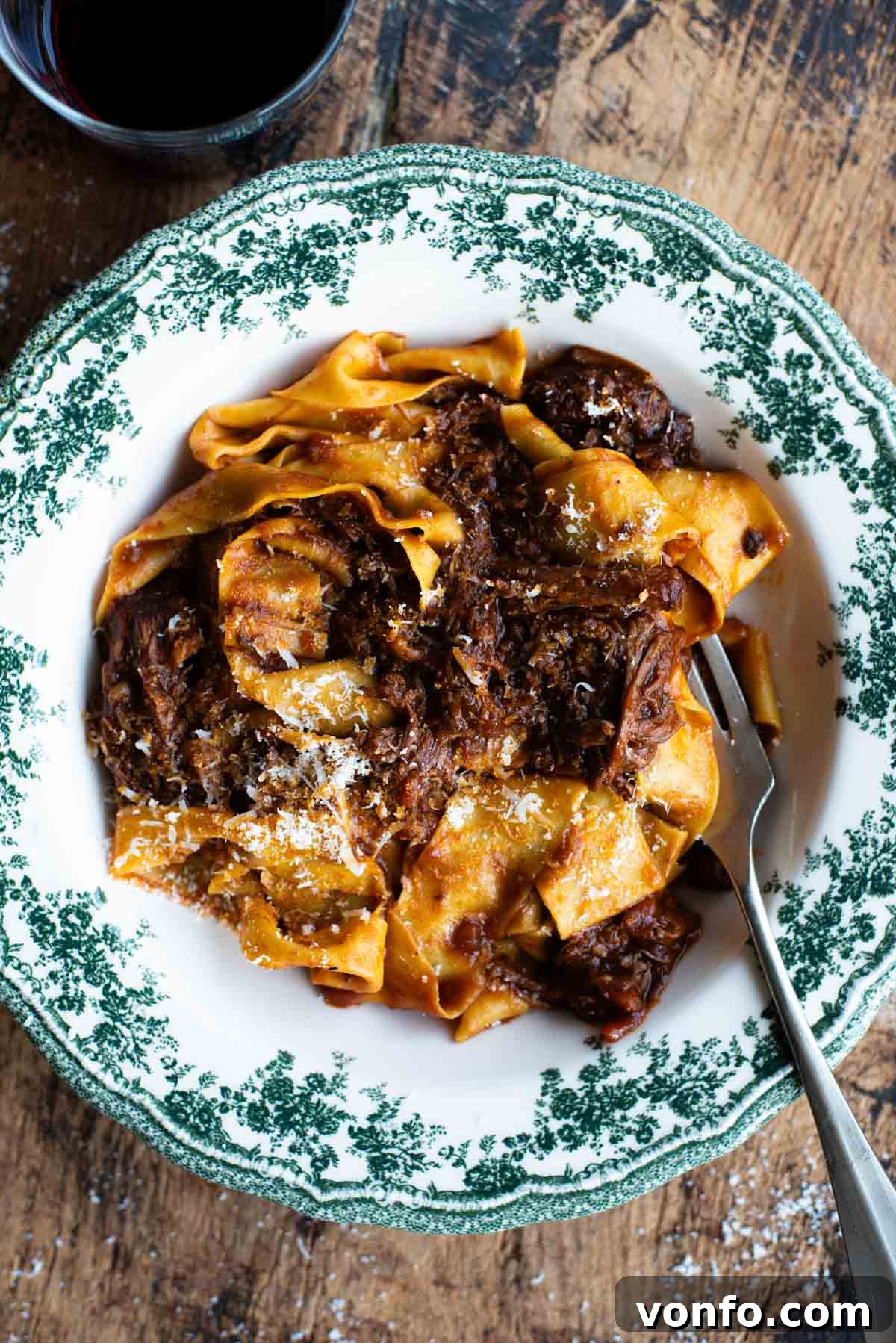
Ultimate Beef Short Rib Ragu: A Symphony of Italian Flavors with Porcini Mushrooms
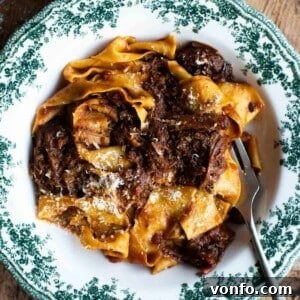
Prepare to embark on a culinary journey to the heart of Italian comfort food with our signature Beef Short Rib Ragu. This recipe promises a deep, exceptionally rich, and profoundly hearty flavor profile, achieved through hours of slow braising. Imagine tender, fall-off-the-bone beef short ribs bathed in a luscious sauce crafted from ripe tomatoes, robust red wine, and the game-changing secret ingredient: earthy porcini mushrooms. This magical addition elevates the ragu to an unparalleled level of umami and complexity, transforming a simple meal into an unforgettable feast.
There’s truly nothing quite like the experience of a slow-cooked ragu gently simmering on a cozy Sunday afternoon. The aroma alone is enough to transport you, filling your home with an incredible, nostalgic scent that whispers tales of cherished family gatherings and leisurely moments. Picture soft music playing in the background, perhaps the satisfying rhythm of kneading dough for homemade pappardelle pasta, creating memories with loved ones. These are the precious moments we live for—slowing down, being present, and sharing exceptional food that nourishes both body and soul.
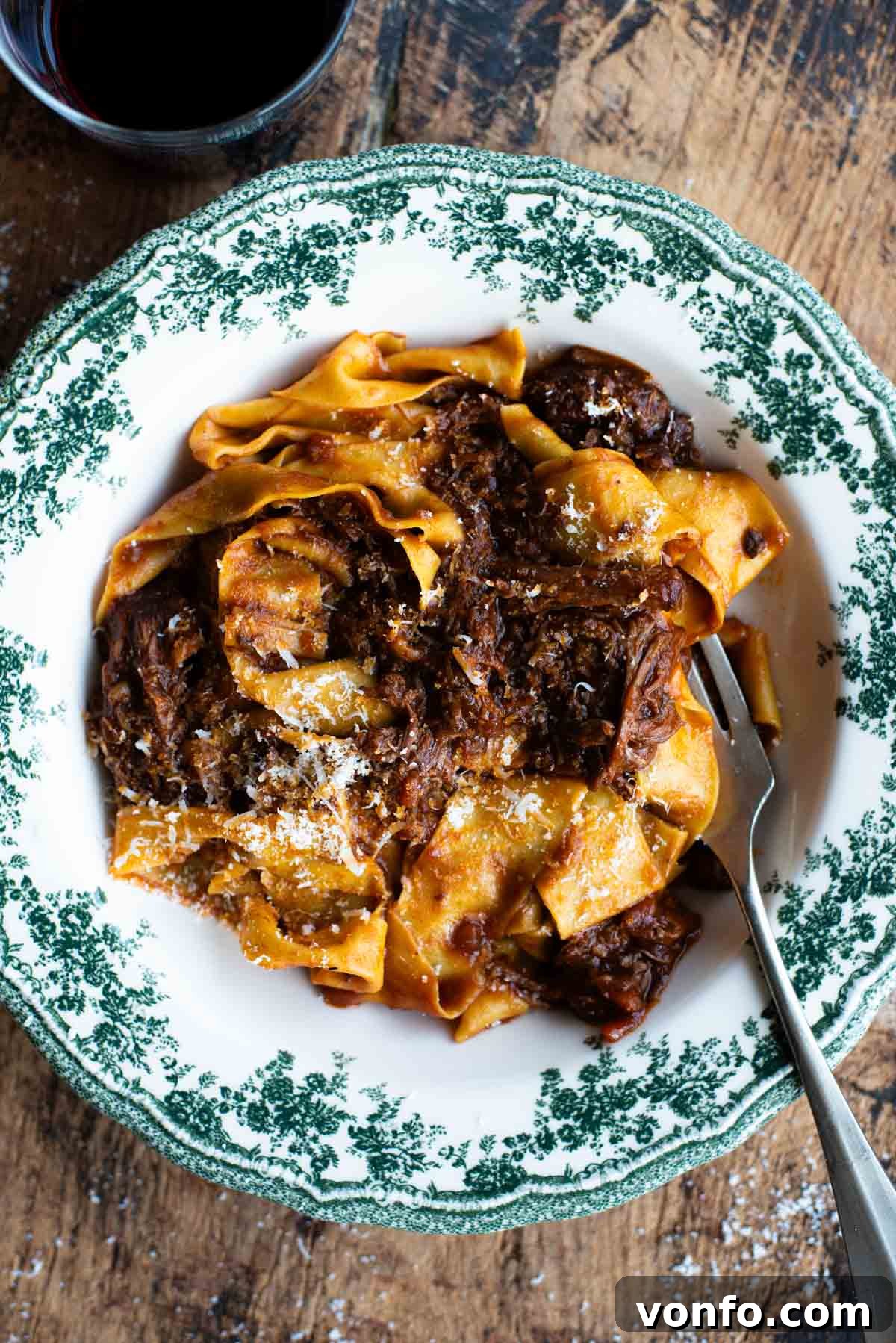
If you’re already a fan of our classic beef ragu (a long-standing reader favorite made with ground beef), then prepare to fall even more deeply in love with this short rib rendition. While both boast incredible richness and depth, this recipe takes it a step further with the unparalleled tenderness of short ribs, which literally melt in your mouth after hours of patient cooking. The addition of dried porcini mushrooms isn’t just an ingredient; it’s a revelation. These potent fungi infuse the sauce with an intense, earthy, and profound umami savoriness that will leave you craving more, setting this ragu apart from any other.
We genuinely hope this recipe brings you as much joy and culinary satisfaction as it does us. It is, without a doubt, the ultimate comfort food – perfect for sharing, celebrating, or simply indulging in a moment of pure bliss. Don’t forget the generous dusting of freshly grated Parmigiano Reggiano on top, and always keep some crusty bread nearby to soak up every last drop of that magnificent sauce!
Table of Contents
- Ingredient Notes: Building a Flavor Foundation
- Mastering the Braise: A Visual Guide to Your Short Rib Ragu
- Elevate Your Meal: Creative Variations & Serving Suggestions
- Expert Tips for a Flawless Beef Short Rib Ragu
- More Italian Sunday Dinner Recipes
- Full Recipe Card
Ingredient Notes: Building a Flavor Foundation
Crafting an exceptional Beef Short Rib Ragu begins with selecting the right ingredients. Each component plays a vital role in developing the deep, layered flavors that define this beloved Italian dish. Here’s a closer look at what you’ll need and why:
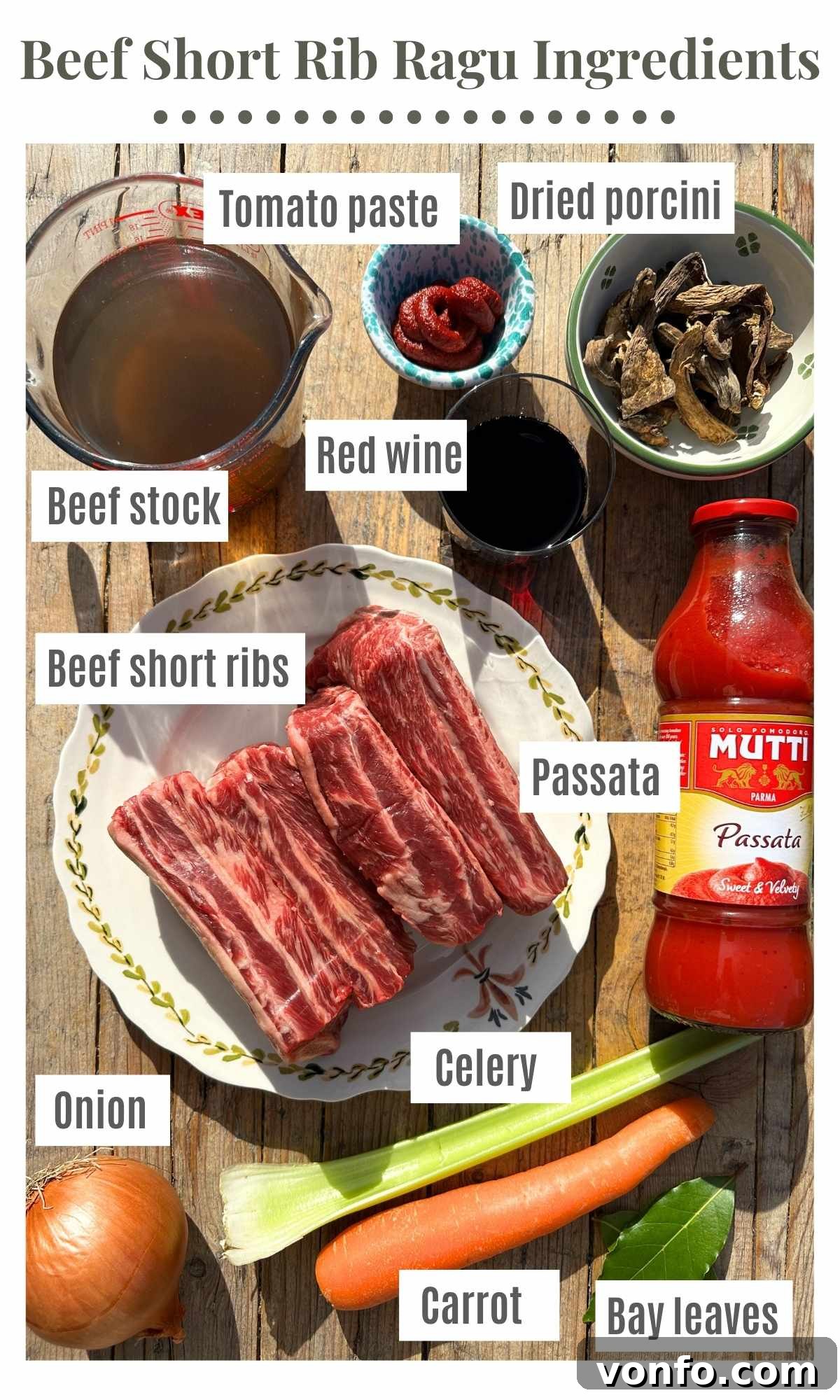
- Beef Short Ribs: The Star of the Show
Look for short ribs with beautiful marbling – those streaks of fat are where much of the flavor resides, ensuring your ragu is incredibly moist and tender. We typically use around 1.2-1.3 kg (2.5-3 lbs) of short ribs. Depending on the cut, this might be 2-4 large ribs or several smaller ones. Always go by weight, not just the number of ribs, as their size can vary significantly. - Passata (Tomato Puree in the US): The Sweet & Tangy Base
Passata forms the smooth, rich tomato foundation of our ragu. Opt for a high-quality brand you trust, like Mutti, which offers excellent value and consistent flavor. Its pure, strained consistency ensures a silky-smooth sauce without any skins or seeds. - Dried Porcini Mushrooms: The Umami Powerhouse
These are the “secret ingredient” that truly elevates this ragu. Dried porcini mushrooms impart an intense, earthy, and savory umami flavor that fresh mushrooms simply can’t match. You should be able to find them in larger supermarkets, specialty Italian food stores, or online. Don’t skip them if you can help it! If absolutely unavailable, the ragu will still be delicious, but it will lack that signature depth. - Beef Stock (Low-Sodium): For Controlled Seasoning
Using low-sodium beef stock is highly recommended. This allows you complete control over the salt content of your ragu, ensuring it’s perfectly seasoned to your taste without becoming overly salty, a common issue with regular beef stocks.
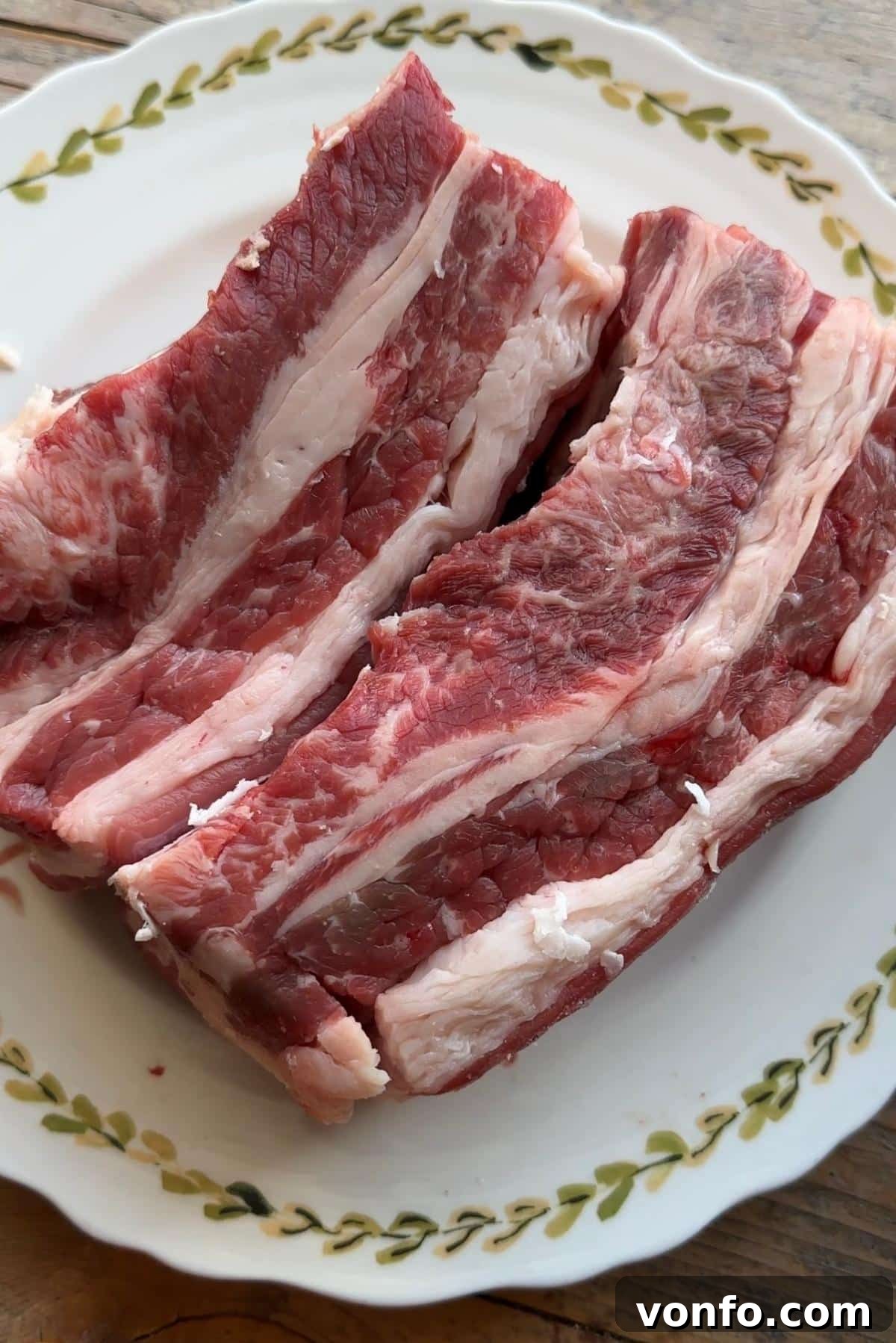
Understanding Beef Short Rib Cuts
In many regions, especially the UK, it’s common to find beef short ribs with the lifter muscle (latissimus dorsi) still attached. This means the ribs will appear significantly thicker, and you might only need two or three for the total weight specified. The lifter muscle, while leaner than the rib meat itself, still possesses a decent amount of marbling. This ensures that after a long, slow braise, it becomes incredibly soft and tender, just like the rest of the rib.
Don’t hesitate to use these types of short ribs; we often do, and the results are consistently delicious. The key is to always adhere to the total weight of beef ribs required for the recipe, rather than relying solely on the number of individual ribs.
Mastering the Braise: A Visual Guide to Your Short Rib Ragu
Below, you’ll find a visual, step-by-step walk-through of the entire cooking process, designed to give you a clear representation of each stage. For the complete written recipe, including precise measurements and our expert tips, please refer to the detailed recipe card at the end of this article.
Step 1: Browning the Beef Short Ribs
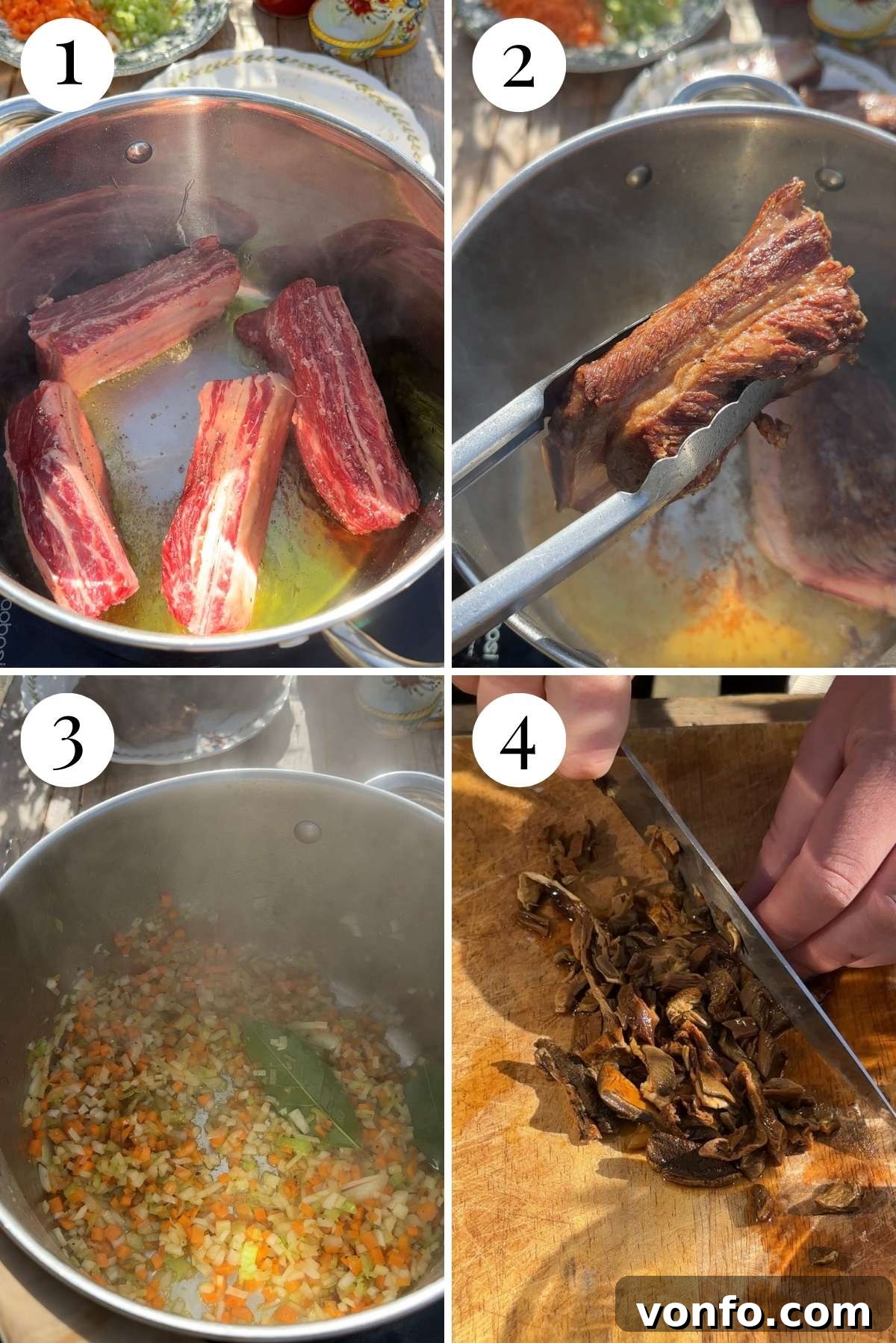
Begin by patting your beef short ribs dry and seasoning them generously with salt and pepper. Heat a few tablespoons of olive oil in a large, heavy-bottomed pot or Dutch oven over medium-high heat. Once the oil is shimmering, carefully add the short ribs, ensuring not to overcrowd the pot. Brown the beef on all sides until a beautiful golden crust forms – this crucial step, known as the Maillard reaction, creates incredible depth of flavor that will be the foundation of your ragu. Once thoroughly browned, remove the ribs from the pot and set them aside on a plate, reserving any accumulated juices. (See **photos 1 and 2** below for visual guidance).
Step 2: Building the Soffritto Foundation
Reduce the heat to medium-low. In the same pot, add the finely chopped carrots, celery, and onion (your soffritto), along with the bay leaves. Sauté the vegetables slowly and patiently for about 8-10 minutes, or until they have softened and become translucent. The key here is not to rush; slow sautéing allows the natural sugars in the vegetables to caramelize gently, releasing a wealth of incredible flavor that will infuse the entire sauce. If the vegetables start to brown too quickly, simply lower the heat further. This careful development of the soffritto is vital for a truly deep and complex ragu. (Refer to **photo 3** above).
Step 3: Infusing with Porcini and Red Wine
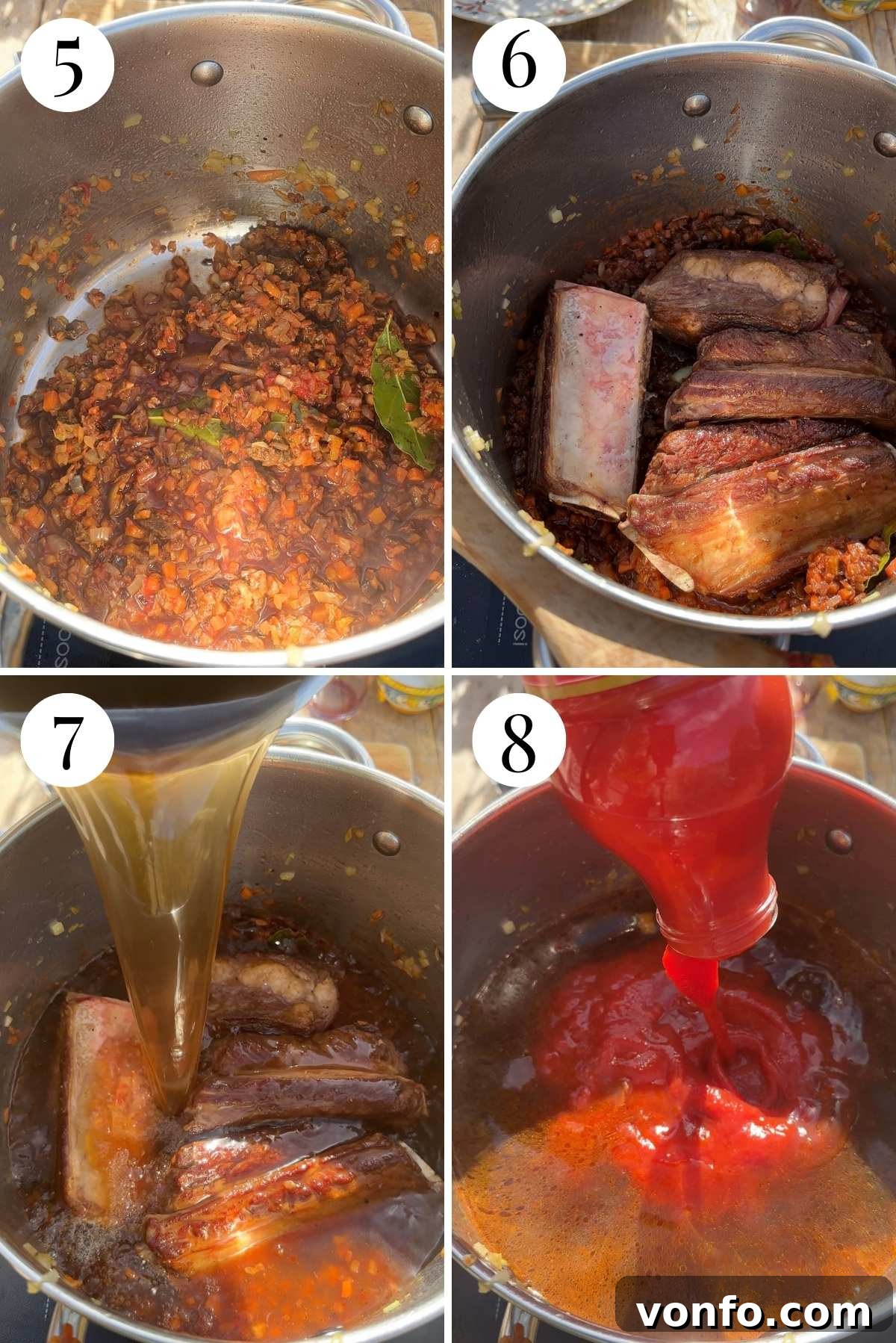
While your soffritto is cooking, finely chop the rehydrated porcini mushrooms. Add the chopped porcini to the softened vegetables in the pot, along with the tomato paste and red wine. Stir well to combine, ensuring the tomato paste is thoroughly incorporated and lightly cooked. Allow the mixture to simmer for 1-2 minutes. This step helps to reduce the alcohol content in the wine, leaving behind its concentrated, fruity notes and allowing the flavors to meld beautifully. (See **photos 4 and 5** below).
Step 4: The Slow Braise
Return the browned beef short ribs and any accumulated juices to the pot. Pour in the beef stock, passata, and approximately 250ml (1 cup) of the porcini mushroom soaking liquid (be very careful to leave any grit or sediment at the bottom of the jug). Season with a good pinch of salt and pepper. Give everything a gentle stir to ensure the ribs are mostly submerged in the liquid. Cover the pot with a tight-fitting lid, bring the ragu to a gentle simmer, then reduce the heat to low. Allow it to cook slowly for approximately 3.5 hours. During this long braise, the tough connective tissues in the short ribs will break down, resulting in incredibly tender, fall-off-the-bone meat. If your ribs are particularly large, they might need an additional half hour of cooking time. Remember to stir occasionally to prevent sticking. (Observe **photos 6-8** below for context).
Step 5: Preparing the Meat for the Sauce
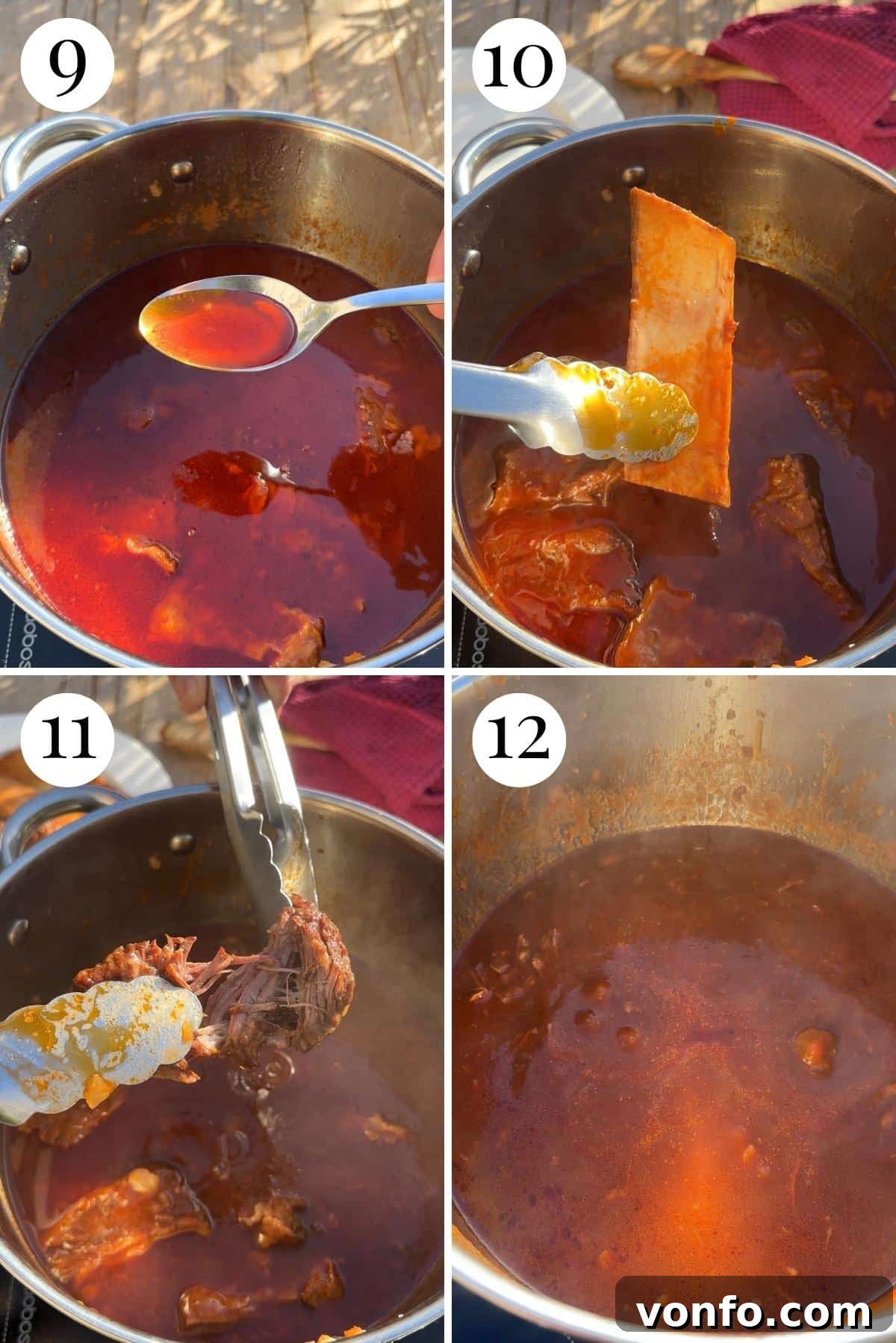
Once the braising time is complete, turn off the heat. Carefully skim off any excess fat that has risen to the surface of the ragu (this is easier to do while warm, but even easier when chilled if preparing ahead). Using tongs or a fork, remove the rib bones and discard them, along with any overly fatty tissue or tough sinew. The meat should be so tender at this point that it practically falls apart with minimal effort. Break up the succulent beef into bite-sized pieces directly in the pot, allowing it to become one with the rich sauce. (See **photos 9-11** below).
Step 6: Reducing and Finishing the Ragu
Turn the heat back to medium-low. Leave the pot uncovered and allow the ragu to simmer for a further 30 minutes. This final reduction step concentrates the flavors, thickens the sauce slightly, and perfects its consistency. The ragu is now ready to be served! The flavors will have deepened beautifully, creating a truly harmonious and satisfying sauce. (Refer to **photo 12** above).
Elevate Your Meal: Creative Variations & Serving Suggestions for Beef Short Rib Ragu
This magnificent beef short rib ragu is incredibly versatile and pairs beautifully with a variety of accompaniments. While traditional pappardelle is a favorite, don’t hesitate to explore other options to suit your taste or occasion. Here are some ideas to inspire you:
- Infuse with Aromatic Herbs: For an additional layer of flavor, consider adding woody herbs during the braising process. Fresh sprigs of rosemary, thyme, or sage (or a combination) can dramatically alter the flavor profile, adding fragrant, herbaceous notes that complement the rich beef. Add them with the bay leaves and remove before serving.
- Alcohol-Free Option: If you prefer to omit the red wine, or if serving to children, the ragu remains incredibly delicious. Simply replace the red wine with an equal amount of additional beef stock or even a little extra porcini soaking liquid. You’ll still achieve a rich, deep flavor profile.
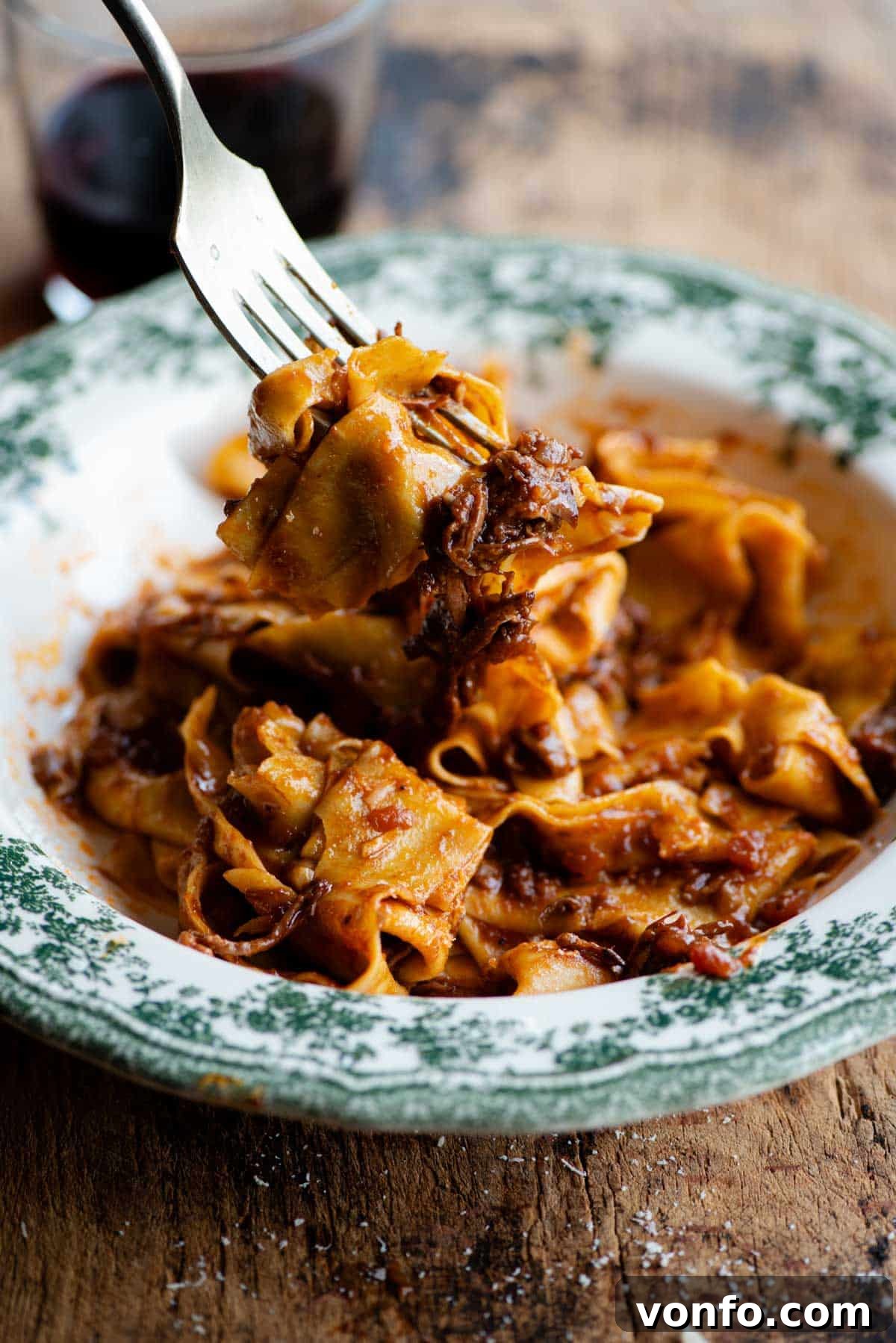
- Perfect Pasta Pairings: Our absolute favorite way to serve this ragu is with wide, flat homemade pappardelle pasta. Its broad surface area is ideal for capturing every morsel of the rich, chunky sauce. If pappardelle isn’t available, other excellent choices include large, tubular pastas like Paccheri or Rigatoni, which are perfect for scooping up the hearty ragu. Tagliatelle or even fettuccine would also be delightful.
- Transform into an Incredible Lasagna: This ragu is not just for pasta bowls! It forms the perfect, rich base for an extraordinary lasagna. Follow the assembly instructions for our lasagne al forno, simply substituting the ground beef ragu with this luxuriously tender short rib version. It promises a show-stopping, deeply flavorful lasagna that will impress any guest.
- Serve with Creamy Polenta: For a delightful change from pasta, serve your beef short rib ragu over a bed of soft, creamy polenta. The velvety texture of the polenta provides a comforting contrast to the robust ragu, making for a truly satisfying and elegant meal.
- Hearty Side Dish: Beyond pasta or polenta, consider serving the ragu as a main course alongside a simple green salad dressed with a vinaigrette, or with mashed potatoes to soak up all the delicious sauce.
Expert Tips for a Flawless Beef Short Rib Ragu
Achieving a truly exceptional ragu comes down to a few key techniques. Pay attention to these expert tips to ensure your beef short rib ragu is bursting with flavor and perfectly tender every time:
Cook the Soffritto Low and Slow!
The soffritto—a finely chopped mixture of carrot, celery, and onion—is the aromatic heart of any great Italian ragu. Precision in preparation and patience in cooking are paramount here. Finely chop all three vegetables to roughly the same size; this consistency ensures they cook evenly and release their flavors simultaneously. When sautéing, resist the urge to crank up the heat. Maintain a medium-low flame and allow the vegetables to soften gently without browning. This slow, gentle sautéing process coaxes out their natural sugars, caramelizing them subtly without introducing any bitterness from scorching. This meticulous step takes time, typically around 8-10 minutes, but it contributes immense depth and sweetness to your sauce, making it incredibly worthwhile.
Don’t Skip Skimming the Fat
Beef short ribs, while incredibly flavorful, can release a fair amount of fat during the long braising process. While some fat adds richness, an excessive amount can make the ragu greasy. Skimming off the fat is important for achieving a clean, balanced flavor and a more pleasant texture. The easiest way to do this is after the ragu has cooled. If you’re preparing the ragu a day in advance (which we highly recommend, as the flavors deepen overnight!), simply let it cool completely after cooking, then refrigerate it. Once cold, the fat will solidify into a distinct layer on top, making it incredibly easy to scrape off with a spoon before reheating. If serving immediately, use a ladle or spoon to skim as much fat as possible from the surface after removing the bones.
The Power of Porcini Soaking Liquid
When rehydrating your dried porcini mushrooms, don’t discard the soaking liquid! This flavorful broth is liquid gold. It’s packed with concentrated mushroom essence and adds an incredible layer of umami to your ragu. Simply strain it carefully through a fine-mesh sieve or a coffee filter to remove any grit or sediment that may have settled at the bottom. This ensures you get all the flavor without any unwanted texture.
Frequently Asked Questions About Beef Short Rib Ragu
What red wine should I use for beef short rib ragu?
For an authentic Italian experience, I always recommend using a good quality Italian red wine that you would also enjoy drinking with your meal. Excellent choices include Chianti, Morellino di Scanzano, Montepulciano, or a Sangiovese. These wines offer the right balance of acidity and fruitiness to complement the rich beef without overpowering the sauce. Avoid using cooking wines, as their quality can be inconsistent.
Can I use boneless beef short ribs instead?
Yes, absolutely! Boneless beef short ribs will work perfectly well in this recipe. The cooking time might be slightly reduced, as bones can slightly prolong the braising process, but the general principles remain the same. The key is to ensure the meat is incredibly tender and easily shredded with a fork.
How can I make this ragu spicier?
If you enjoy a bit of heat, you can easily add a pinch of red pepper flakes (peperoncino) along with the soffritto vegetables. Start with a small amount (1/4 to 1/2 teaspoon) and adjust to your preference. The slow cooking will allow the spice to mellow and infuse beautifully.
Can I prepare this ragu in a slow cooker or instant pot?
While this recipe is designed for stovetop braising, it can be adapted for a slow cooker or instant pot. For a slow cooker, follow the browning and soffritto steps in a separate pan, then transfer everything to the slow cooker and cook on low for 6-8 hours or high for 3-4 hours, until tender. For an instant pot, use the sauté function for browning and soffritto, then pressure cook for about 60-75 minutes with natural release, adjusting liquid as needed. Always ensure the meat is fall-apart tender.
More Italian Sunday Dinner Recipes to Savor
Mains
Italian Beef Ragu – A Classic Recipe
Sauces & Dressings
Authentic Bolognese Sauce (Ragu alla Bolognese)
Italian Sunday Dinner
Ragu alla Napoletana (Neapolitan Ragu)
Mains
Italian Lamb Ragu (Ragu di Agnello)
We absolutely love hearing from you! If you’ve tried this beef short rib ragu recipe or any other recipe on our blog, please don’t hesitate to rate it and share your experience in the comments below. Your feedback and stories are what inspire us!
You can also **follow us** on Facebook, Instagram, and Pinterest for daily dose of delicious Italian food. Or, sign up for our Newsletter to receive new recipes directly in your inbox every week.
Step-by-step photos above guide you through the process.
Most of our recipes include detailed step-by-step photos, helpful tips, and tricks to ensure perfect results on your first attempt, and often a video!
Beef Short Rib Ragu with Porcini Mushrooms
By Emily
Pin
Recipe video below! Slowly braised beef short rib ragu with a deep, rich and hearty flavour made with tomato, red wine and porcini mushrooms (the secret ingredient for next-level flavour). Serve it with homemade pappardelle pasta and lots of Parmigiano Reggiano on top for the ultimate Italian comfort food.
Ingredients
- 1.2 – 1.3 kg (2.5-3lbs) beef short ribs
- 20 g (1/3 cup) dried porcini mushrooms
- 1 Carrot
- 1 Celery stalk
- 1 Onion
- 700 g (24oz/3 cups) Passata (tomato puree US)
- 2 tablespoons Tomato concentrate (paste)
- 1 litre (4 cups) beef stock, low sodium
- 2 Bay leaves
- 125 ml (1/2 cup) red wine
- Olive oil
- Salt and pepper, to taste
For serving
- 1 lb (500g) Pappardelle pasta or other pasta of choice (use half the ragu for this much pasta)
- Parmigiano Reggiano, for topping
Instructions
- Add the dried porcini mushrooms to a dish or jug and pour over 500ml (2 cups) of boiling water. Set aside to steep for at least 15-20 minutes.
- Finely chop the carrot, celery, and onion (your soffritto). Sprinkle salt generously over both sides of the beef ribs.
- Add around 2 tablespoons of olive oil to a deep pot or Dutch oven over medium heat. Brown the beef ribs on all sides until nicely golden (about 1-2 minutes per side). Remove the ribs to a plate and set aside.
- Add the soffritto (carrot, celery, and onion) to the pot with the bay leaves and sauté on a medium-low heat until softened (about 8-10 minutes). Do not let them brown.
- Remove the rehydrated porcini mushrooms from their liquid (reserving the liquid). Finely chop the mushrooms. Add them to the vegetables alongside the red wine and tomato paste. Stir well and let it simmer for 1-2 minutes to reduce the alcohol.
- Add the browned ribs back to the pot, along with any juices that accumulated on the plate. Add the beef stock, passata, 250ml (1 cup) of the strained porcini soaking liquid (being careful not to add any grit from the bottom), and a good pinch of salt and pepper. Cover with a lid, bring to a simmer, then reduce the heat to low and cook with the lid on for 3.5 hours. Stir occasionally to prevent sticking.
- Turn off the heat and skim off any fat from the top of the ragu. Carefully remove the bones, any sinew, or overly fatty parts. Break up the tender meat using tongs or a fork directly into the sauce.
- Turn the heat back to medium-low and simmer the ragu uncovered for another 30 minutes to allow it to reduce and thicken slightly, concentrating the flavors.
- The ragu is now ready to be served with pasta. Alternatively, you can let it cool completely and store it in the fridge until needed. A layer of fat may solidify on top when cold; simply scrape this off before reheating.
Serving with pasta
- Add just enough ragu for your serving size to a separate pan, then add the cooked pasta. Toss everything together over low heat until the pasta is well coated and heated through. Remember, this recipe makes a large batch of ragu, so half of it is usually more than enough to serve 4 people with pasta.
- Serve immediately with a generous grating of Parmigiano Reggiano.
Video
Notes
- Serving size: The suggested amount of pasta per ragu batch is a guide. Adjust according to your preference for a saucier or meatier dish.
- Prep ahead: This ragu tastes even better the next day! Prepare it a day in advance, let it cool completely, then store it in the fridge. As mentioned, a solid layer of fat may form on top; simply scrape this off before reheating.
- Storage instructions: Once cooled, store the ragu in an airtight container in the fridge for up to 3 days. Reheat gently on the stovetop until piping hot.
- Freezing instructions: This recipe yields a large batch, perfect for freezing. We recommend dividing the cooled ragu into 3 portions (each serving 3-4 people with pasta). Freeze for up to 3 months. To use, defrost completely in the fridge or at room temperature, then reheat on the stovetop until thoroughly hot.
Helpful Info for All Our Recipes
- We always use extra virgin olive oil in all of our recipes unless stated otherwise.
- For canned or jarred tomatoes of any kind, we consistently use Cirio or Mutti brands for the best results and flavor.
- All vegetables are medium-sized unless specified differently.
- All recipes are tested and developed using a fan (convection) oven.
- Find out more about how nutrition is calculated.
- Check out our must-have Italian Pantry Staples.
- You can also find all our Essential Kitchen Tools for Italian Cooking.
Nutrition
Carbohydrates: 55g |
Protein: 36g |
Fat: 16g |
Saturated Fat: 6g |
Polyunsaturated Fat: 1g |
Monounsaturated Fat: 6g |
Trans Fat: 0.04g |
Cholesterol: 121mg |
Sodium: 407mg |
Potassium: 1353mg |
Fiber: 5g |
Sugar: 8g |
Vitamin A: 1841IU |
Vitamin C: 12mg |
Calcium: 66mg |
Iron: 6mg
Nutrition information is automatically calculated, so should only be used as an approximation.
Leave a comment below!