
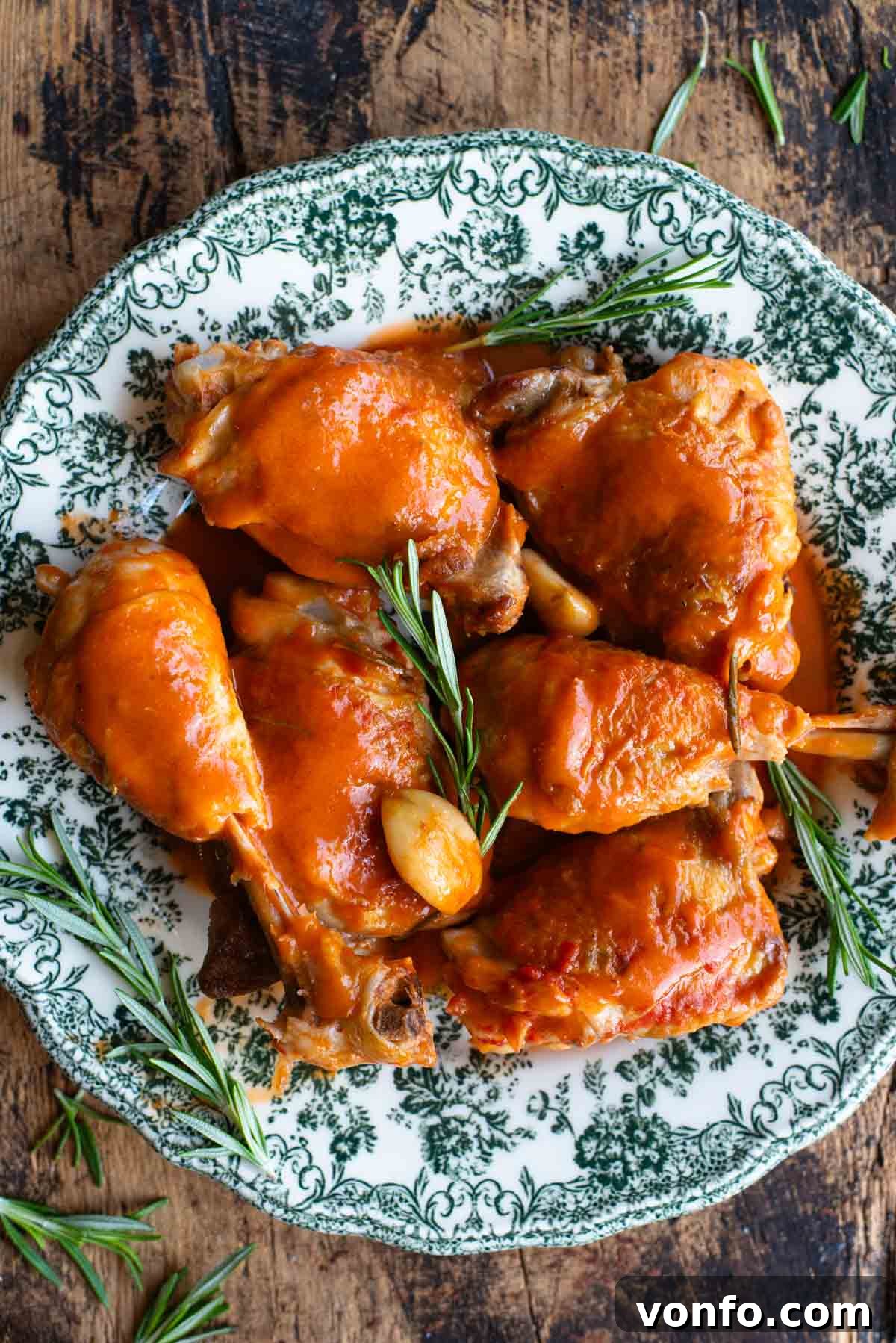
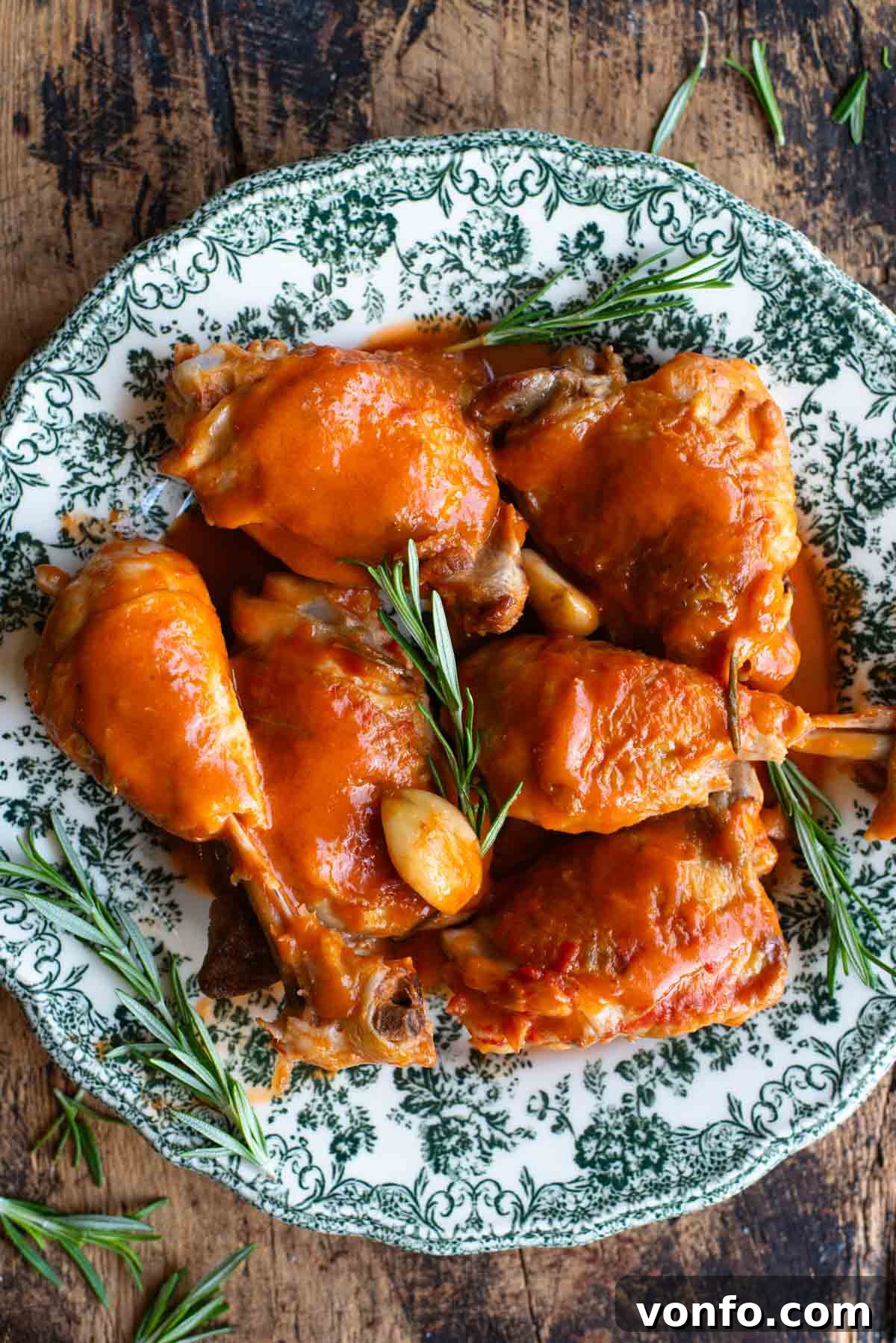
Pollo in Potacchio is more than just a dish; it’s a culinary journey into the heart of Italy’s Le Marche region. This exquisite braised chicken recipe exemplifies rustic Italian cooking at its finest: simple ingredients, minimal fuss, and an explosion of deep, comforting flavors. Chicken pieces are slowly simmered in a luscious sauce of white wine, ripe tomatoes, aromatic garlic, and fragrant fresh rosemary. The result is unbelievably tender chicken enveloped in a rich, savory broth that will transport your taste buds straight to the Italian countryside. It’s an effortlessly elegant meal, perfect for serving alongside creamy polenta or crispy roast potatoes.
Embracing the Rustic Charm of Le Marche
Many years ago, my partner Nathan and I had the incredible opportunity to spend several months volunteering on farms throughout Le Marche. This period, spanning summer and autumn, allowed us to traverse the region from its sun-drenched coastlines to its rolling, mountainous interiors. Our experience was deeply rooted in the rural towns, where life moved at a slower pace and food was the undisputed centerpiece of daily existence. The meals we shared were, without exception, rustic, hearty, and imbued with a profound sense of homeliness and comfort.
The culinary philosophy of Le Marche revolves around fresh, seasonal ingredients and straightforward preparation methods that allow the natural flavors to shine. It’s a cuisine that prioritizes substance and tradition over unnecessary complexity. I vividly recall a simple Zucchini Potato Soup from a tiny trattoria, a dish so humble yet so satisfying that it has since become a cherished staple in our own home, always served with generous slices of crusty bread. These are the kinds of authentic food memories that stay with you, shaping your understanding and appreciation of true Italian cooking.
Among these unforgettable dishes, Pollo in Potacchio holds a special place. It perfectly embodies the region’s culinary spirit: chicken braised slowly in white wine and tomato, infused with the pungent aroma of garlic and the earthy essence of fresh rosemary. The magic lies in this deliberate simplicity. The slow braising process renders the chicken beautifully soft and fork-tender, absorbing all the wonderful flavors of the sauce. It’s a testament to the fact that extraordinary meals don’t require an endless list of exotic ingredients or complicated techniques. This dish truly showcases how a few quality components can be transformed into something truly remarkable.
Despite its profound flavor, this recipe is remarkably simple to prepare, requiring minimal active prep time. It’s one of those delightful surprises in the kitchen – a dish that, based on its straightforward ingredients, you might not expect much from, but which quickly becomes a beloved favorite you’ll want to recreate time and again. It’s the kind of comforting meal that warms the soul and satisfies the deepest cravings for authentic, homemade Italian goodness.
Essential Ingredients for Pollo in Potacchio
Crafting the perfect Pollo in Potacchio begins with selecting the right ingredients. Below, you’ll find a visual guide to all the components needed, along with crucial notes and potential substitutions to ensure your dish is as authentic and flavorful as possible.
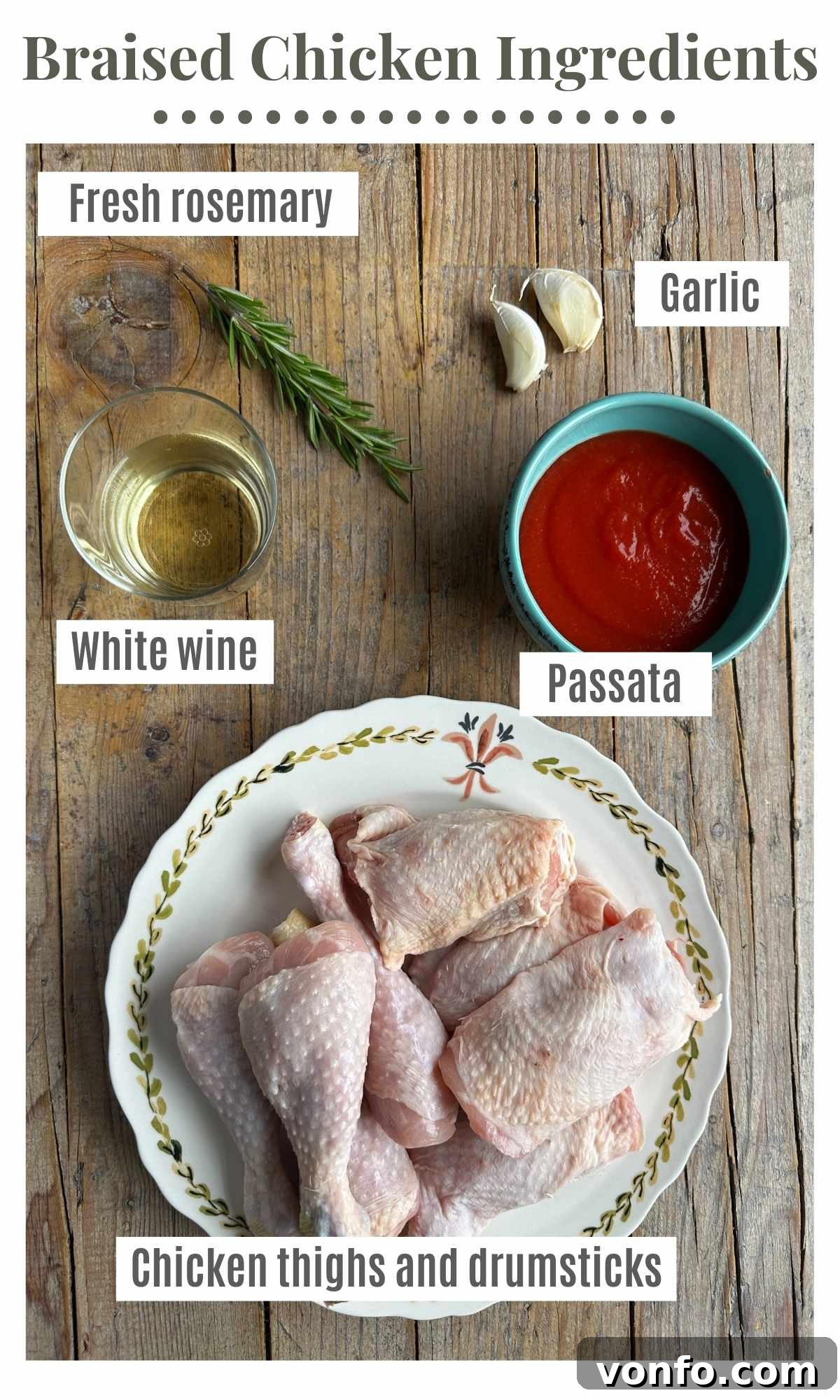
- Chicken Thighs and Drumsticks: For this recipe, we highly recommend using a mix of bone-in, skin-on chicken thighs and drumsticks. The bone adds incredible depth of flavor to the sauce during braising, while the skin helps protect the meat and contributes to a richer texture and taste when browned. If you prefer, you can use exclusively thighs or drumsticks. Always pat the chicken pieces thoroughly dry with paper towels before seasoning; this crucial step ensures a crisp, golden-brown sear.
- Garlic: You’ll need 2 large cloves of garlic. Keep them whole and peeled. The beauty of whole garlic cloves in braising is that they mellow and sweeten as they cook, imparting a subtle, nuanced garlic flavor without being overpowering. They become incredibly soft and spreadable, a delightful bonus.
- Rosemary: A single sprig of fresh rosemary is essential. This herb is a star in Mediterranean cuisine, and its woody, aromatic notes are paramount to the authentic flavor profile of Pollo in Potacchio. Do not substitute with dried rosemary, as the fresh herb provides a vibrancy and depth that dried simply cannot replicate.
- White Wine: Choose a dry Italian white wine for the best results. A good quality, unoaked white such as a Verdicchio (from Le Marche itself!), Pinot Grigio, or Sauvignon Blanc works wonderfully. The wine deglazes the pan, adding acidity and complexity that brightens the rich tomato sauce and tenderizes the chicken.
- Passata (Tomato Puree): High-quality passata makes a significant difference. We consistently use brands like Mutti or Cirio, known for their intensely flavored, ripe tomatoes. Passata provides a smooth, vibrant tomato base without seeds or skins, allowing the other flavors to shine through beautifully. In the US, this is often labeled as tomato puree.
- Olive Oil: Use good quality extra virgin olive oil. It’s the foundational fat for sautéing and browning, and its fruity notes complement the other ingredients perfectly.
- Salt: Essential for seasoning the chicken and bringing out all the flavors in the sauce. Adjust to your taste.
Step-by-Step Guide to Crafting Pollo in Potacchio
Follow these detailed instructions, accompanied by illustrative photos, to create a perfect Pollo in Potacchio that’s rich in flavor and wonderfully tender.
- Prepare the Chicken and Garlic: Begin by seasoning your chicken pieces generously with salt on both sides. Pat them dry before seasoning to encourage optimal browning. Meanwhile, in a large, heavy-bottomed pan or Dutch oven, add a generous two tablespoons of olive oil. Add the two whole, peeled garlic cloves to the warm oil. Gently sauté the garlic over medium-low heat for about a minute, or until you can distinctly smell its fragrant aroma and the cloves just begin to turn a very light golden color. Be careful not to burn the garlic, as this will result in a bitter taste. Once fragrant, remove the garlic cloves from the pan and set them aside. They will return later to lend their mellow flavor to the braising liquid (photo 1).
- Brown the Chicken to Perfection: Increase the heat slightly to medium. Carefully place the seasoned chicken pieces into the hot pan, skin-side down first. Ensure you don’t overcrowd the pan; cook in batches if necessary to allow for proper browning. Brown the chicken for approximately 6-7 minutes on this side, until the skin is beautifully golden-brown and crispy. Then, flip the chicken pieces and brown the other side for another 5-6 minutes. This browning step is crucial as it develops deep, rich flavors (the ‘fond’) at the bottom of the pan, which will become the foundation of your delicious sauce. Once browned on both sides, temporarily remove the chicken from the pan and set it aside with the garlic (photos 2 and 3).
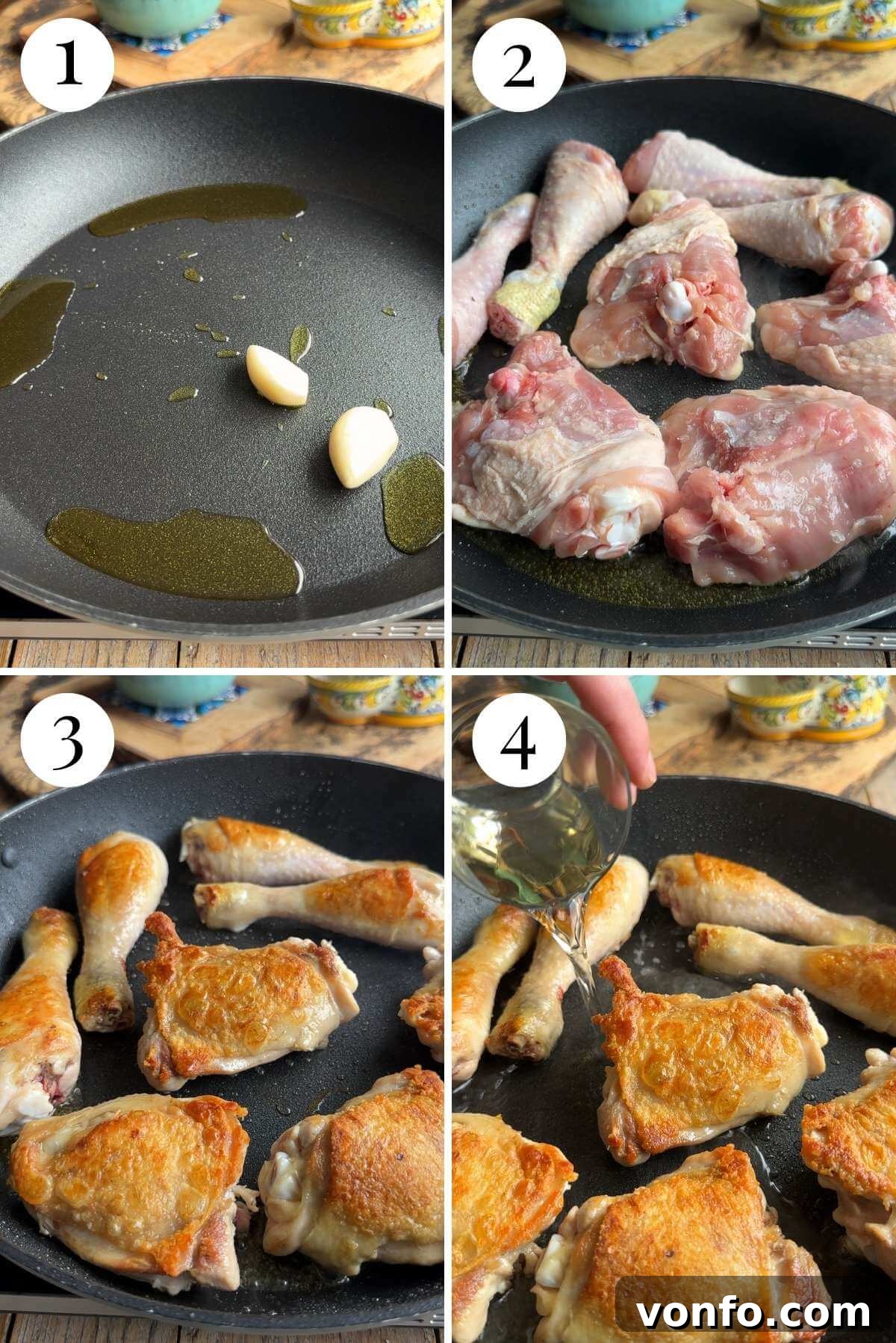
- Build the Flavorful Braising Liquid: With the chicken temporarily removed, pour in the white wine into the hot pan. Immediately use a wooden spoon or spatula to scrape up all the delicious browned bits (the ‘fond’) from the bottom of the pan. This deglazing process is vital for incorporating all the caramelized flavors into your sauce. Let the wine simmer and reduce for about 2-3 minutes, allowing some of the alcohol to evaporate and its flavors to concentrate. Next, add the passata (tomato puree) to the pan and stir it well to combine with the wine. Return the sautéed whole garlic cloves to the pan, along with the fresh sprig of rosemary. Bring the sauce to a gentle simmer. Once simmering, return all the browned chicken pieces to the pan, nestling them into the sauce. Ensure the chicken is mostly submerged. Cover the pan tightly with a lid and reduce the heat to low. Allow the chicken to braise gently for a full 50 minutes. This slow cooking will make the chicken incredibly tender and infuse it with the rich flavors of the sauce (photos 4-7).
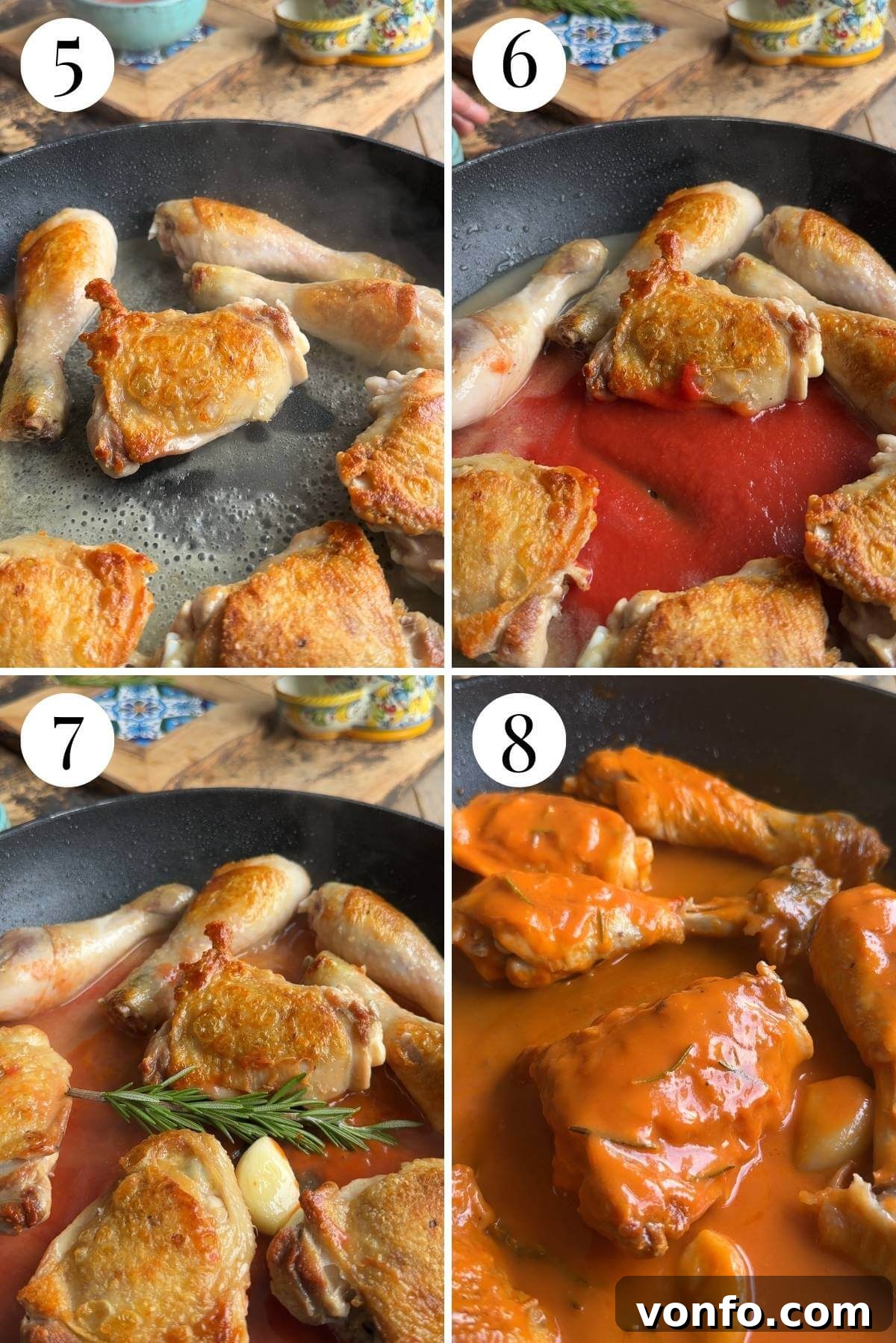
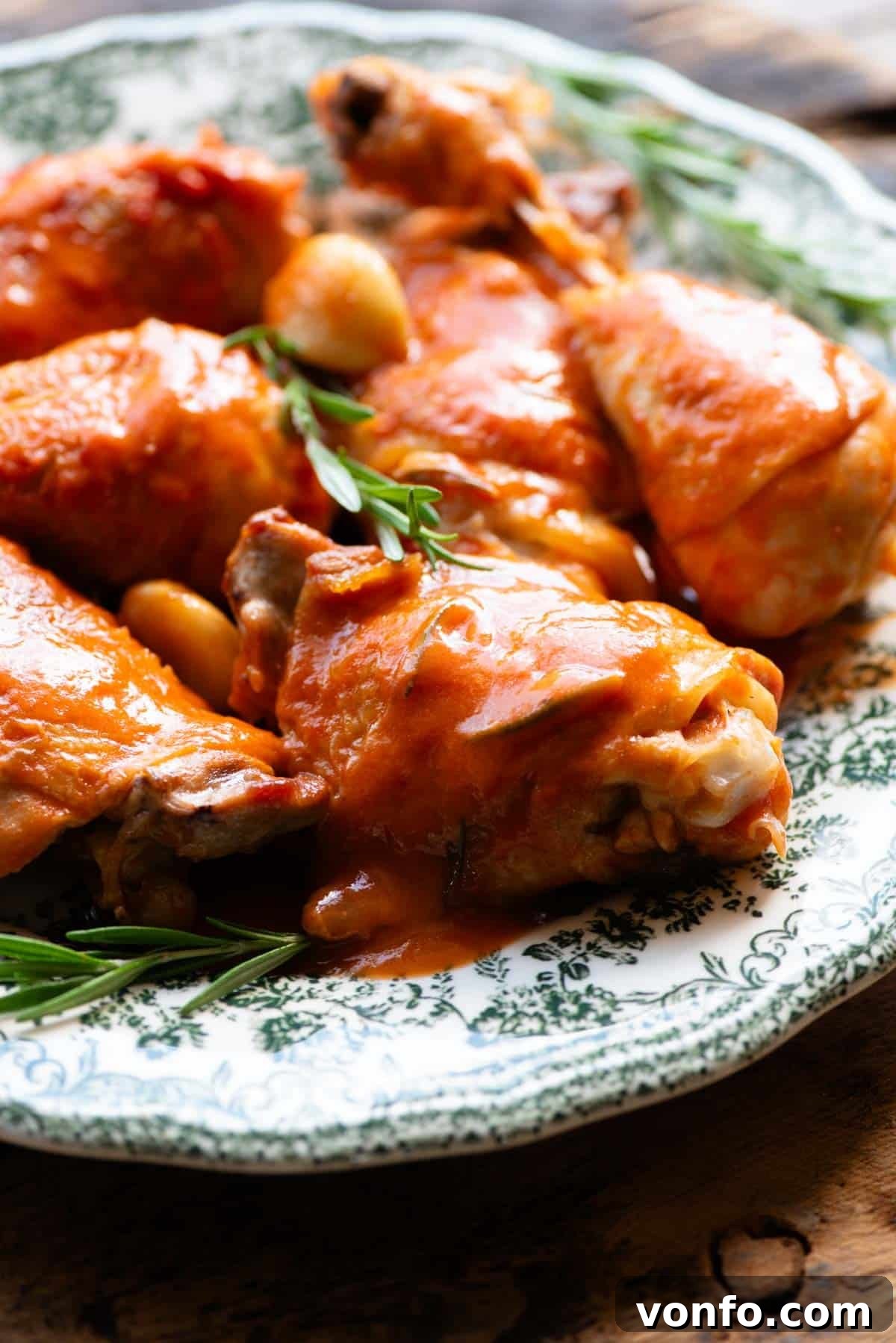
- Finish and Serve: After 50 minutes of gentle braising, carefully remove the lid from the pan. At this point, the chicken should be fall-off-the-bone tender. Allow the sauce to simmer uncovered for an additional 5 minutes. This final simmering step helps the sauce to reduce slightly and thicken to a desirable consistency, intensifying its flavors. Taste and adjust seasoning if needed. Remove the rosemary sprig before serving. Ladle the rich Pollo in Potacchio generously onto plates, ensuring each serving gets plenty of the savory sauce. Serve immediately with your preferred side dishes (photo 8).
Expert Tips for a Flawless Pollo in Potacchio
- Maintain a Gentle Simmer During Braising: The key to incredibly tender chicken and a well-developed sauce is to braise on a very low heat. Once the lid is on, ensure the liquid is just barely bubbling, a gentle simmer, not a vigorous boil. This prevents the chicken from becoming tough and allows the flavors to meld beautifully. The sauce should not reduce too much during this covered cooking period. If you notice it getting too thick, or if your pan doesn’t have a perfectly tight seal, don’t hesitate to add a splash of water or chicken broth to maintain the liquid level.
- Handling Leftovers and Reheating: Pollo in Potacchio is often even more flavorful the next day! To reheat leftovers, transfer the chicken and sauce to a saucepan. Add a splash of water or broth to loosen the sauce, as it may have thickened considerably in the refrigerator. Cover the pan with a lid and gently reheat on a medium-low heat, stirring occasionally, until the chicken is piping hot all the way through. If the sauce becomes too thin during reheating, simply remove the lid for the last minute or two and let it simmer uncovered to reduce to your desired consistency.
- The Power of Fresh Rosemary: As mentioned in the ingredients, fresh rosemary is non-negotiable for this dish. Its pungent, piney notes are a hallmark of authentic Italian flavor and truly elevate the Pollo in Potacchio. Avoid dried rosemary; its flavor is far less vibrant and can often be dusty or bitter when compared to fresh.
- Don’t Rush the Browning: Achieving a good golden-brown crust on your chicken pieces might seem like an extra step, but it’s vital for building flavor. The caramelization created during this stage (the “fond” at the bottom of the pan) is what gives the final sauce its incredible depth. Be patient and allow the chicken to brown properly.
- High-Quality Tomatoes Make a Difference: Since tomatoes are a primary component of the sauce, using excellent quality passata (tomato puree) will significantly impact the final taste. Look for brands that pride themselves on using ripe, flavorful Italian tomatoes.
Our Recipe: A Homage to Tradition with Modern Refinements
While we strive for authenticity, some traditional recipes can be adapted slightly to enhance the home cooking experience and achieve optimal results with modern ingredients and preferences. Here are the minor adjustments we’ve made to the classic Pollo in Potacchio, and why we believe they make this recipe even better:
- Optimizing Chicken Cuts for Tenderness: Traditionally, Pollo in Potacchio often uses a whole chicken, cut into pieces. However, we’ve found that chicken breast, even when bone-in, can dry out slightly by the time the darker meat cuts (thighs and legs) reach their perfect, meltingly tender state. To ensure consistently juicy and tender results throughout the dish, our recipe calls for a mix of bone-in, skin-on chicken thighs and drumsticks. These cuts are richer in flavor and fat, making them ideally suited for the slow braising method and guaranteeing a succulent outcome every time.
- Achieving the Perfect Sauce Consistency: The traditional preparation of Pollo in Potacchio often features a thinner, more brothy sauce, perfect for soaking up with crusty bread. While delicious, we personally prefer a sauce with a slightly richer body and intensified flavor. Therefore, in our adaptation, we recommend removing the lid for the final 5 minutes of cooking. This allows the sauce to gently reduce and thicken just a touch, creating a more cohesive and luxurious texture that clings beautifully to the chicken and side dishes. This is purely a matter of personal preference, and if you prefer a thinner sauce, you can skip this reduction step.
- Simplifying with Soffritto (or Omitting): Many Italian braised dishes begin with a soffritto – a fragrant base of finely diced carrots, celery, and onion sautéed in olive oil. You will certainly find versions of Italian braised chicken that include soffritto. While soffritto undoubtedly adds another layer of complexity, for Pollo in Potacchio, we prefer to keep the ingredient list exceptionally simple to let the core flavors of chicken, white wine, tomato, garlic, and rosemary truly shine. This minimalist approach allows the rustic essence of the dish to come through unadulterated. However, if you’re a fan of soffritto and wish to add it, feel free to sauté a small amount of finely diced carrot, celery, and onion along with the garlic in the initial step. Just ensure the vegetables soften before proceeding with browning the chicken.
- Considerations for Spice: While not traditional, a small pinch of red pepper flakes can be added with the passata if you enjoy a hint of warmth. This is a purely optional addition for those who like a subtle kick.
Perfect Pairings: Serving Pollo in Potacchio
Pollo in Potacchio is a versatile main course that pairs beautifully with a variety of side dishes. We generally lean towards a comforting carb, such as potatoes, polenta, or beans, complemented by some fresh green vegetables or a crisp, light salad. Here are some of our favorite suggestions:
Sides
Creamy Polenta (Italian Cornmeal)
Sides
Italian Roast Potatoes – Rosemary And Garlic
Sides
Peas and Pancetta – Easy Italian Side Dish
Salads
Arugula Salad with Lemon and Parmesan
We hope you enjoy preparing and savoring this authentic Italian braised chicken from the heart of Le Marche. If you’ve tried this Pollo in Potacchio recipe or any other delightful dish from our collection, please consider sharing your experience! Don’t forget to rate the recipe and leave your comments below – we absolutely love hearing from you and learning about your culinary adventures. You can also stay connected with us and discover more delicious food by following us on Facebook, Instagram, and Pinterest, or by subscribing to our Newsletter for weekly recipe inspiration.
Step-by-step photos and detailed instructions are provided above in the main article.
Our recipes aim to guide you perfectly the first time.
Pollo in Potacchio (Italian Braised Chicken)
By Emily
5 mins
1 hr 5 mins
1 hr 10 mins
4 servings

Print Recipe
Ingredients
- 4 chicken thighs, bone in and skin on
- 4 chicken drumsticks, bone in and skin on
- 2 large garlic cloves, peeled but kept whole
- 1 sprig fresh rosemary
- 1/2 cup (125ml) dry white wine
- 1/2 cup (130g) passata (tomato puree US)
- 2 tablespoons extra virgin olive oil
- Salt, to taste
Instructions
- Season the chicken generously on both sides with salt, then pat dry and set aside.
- Add the olive oil to a large, heavy-bottomed pan or Dutch oven over medium-low heat. Add the 2 whole, peeled garlic cloves. Sauté for about 1 minute until fragrant and lightly golden. Remove the garlic and set aside.
- Increase the heat to medium. Place the seasoned chicken pieces skin-side down in the pan. Brown the chicken for 6-7 minutes until golden, then flip and brown the other side for 5-6 minutes. Remove the chicken and set aside with the garlic.
- Pour the white wine into the hot pan, scraping up any browned bits (fond) from the bottom. Let it reduce for 2-3 minutes. Add the passata and stir to combine. Return the garlic cloves and the sprig of fresh rosemary to the pan.
- Nestle the browned chicken pieces back into the sauce. Cover the pan tightly with a lid and reduce the heat to low. Simmer gently for 50 minutes.
- After 50 minutes, remove the lid and allow the sauce to simmer uncovered for an additional 5 minutes to reduce and thicken slightly.
- Remove the rosemary sprig before serving. Serve the tender chicken generously with the rich sauce and your chosen side dishes. Enjoy!
Notes
- Braise the chicken on low: Always maintain a gentle simmer on low heat once the lid is on. If the sauce reduces too much, add a splash of water or broth.
- Leftovers and reheating: Store leftovers in an airtight container in the refrigerator for up to 3 days. To reheat, add a splash of water or broth to the sauce, cover, and warm gently over medium-low heat until piping hot. Remove the lid for a minute or two if the sauce needs to thicken.
- Fresh Rosemary is Key: For the best authentic flavor, do not substitute fresh rosemary with dried.
- Ingredient Quality: Opt for high-quality passata and dry white wine for the most flavorful results.
Helpful Information for All Our Recipes
- We consistently use extra virgin olive oil in all our recipes unless otherwise specified.
- For canned or jarred tomatoes, we always recommend Cirio or Mutti brands for superior flavor and results.
- Unless stated differently, assume all vegetables are medium-sized.
- All recipes are carefully tested and developed using a fan (convection) oven.
- Learn more about how nutrition is calculated on our site.
- Explore our essential Italian Pantry Staples.
- Discover our recommended Essential Kitchen Tools for Italian Cooking.
Nutrition Information (Approximate per Serving)
Calories: 468 kcal | Carbohydrates: 4g | Protein: 32g | Fat: 33g | Saturated Fat: 8g | Polyunsaturated Fat: 6g | Monounsaturated Fat: 16g | Trans Fat: 0.1g | Cholesterol: 180mg | Sodium: 176mg | Potassium: 558mg | Fiber: 1g | Sugar: 2g | Vitamin A: 275 IU | Vitamin C: 4mg | Calcium: 28mg | Iron: 2mg
Nutrition information is automatically calculated and should be used as an approximation only. Individual results may vary based on exact ingredients and preparation methods.
Did you try this recipe? We’d love to hear from you!
Leave a comment below!