
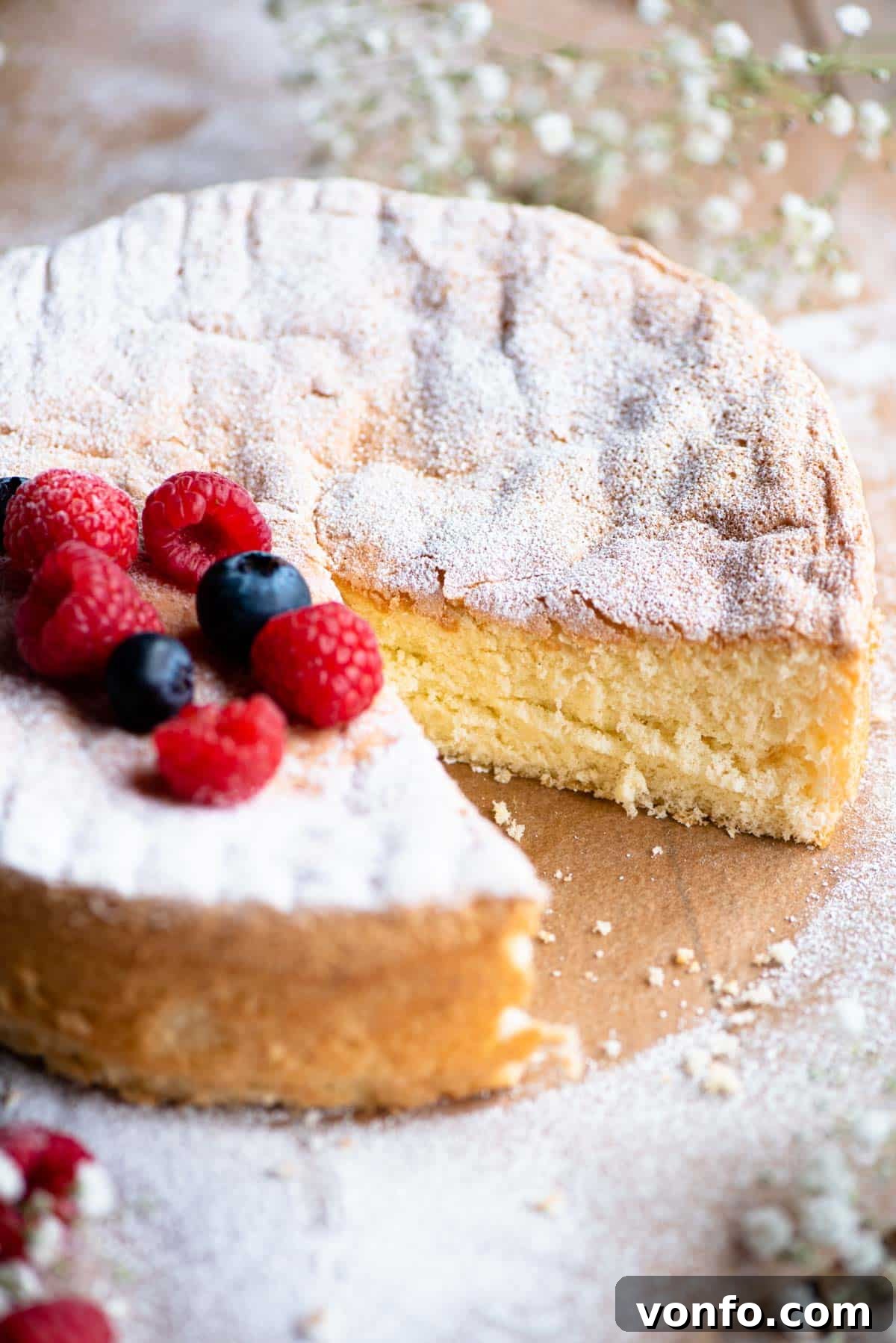
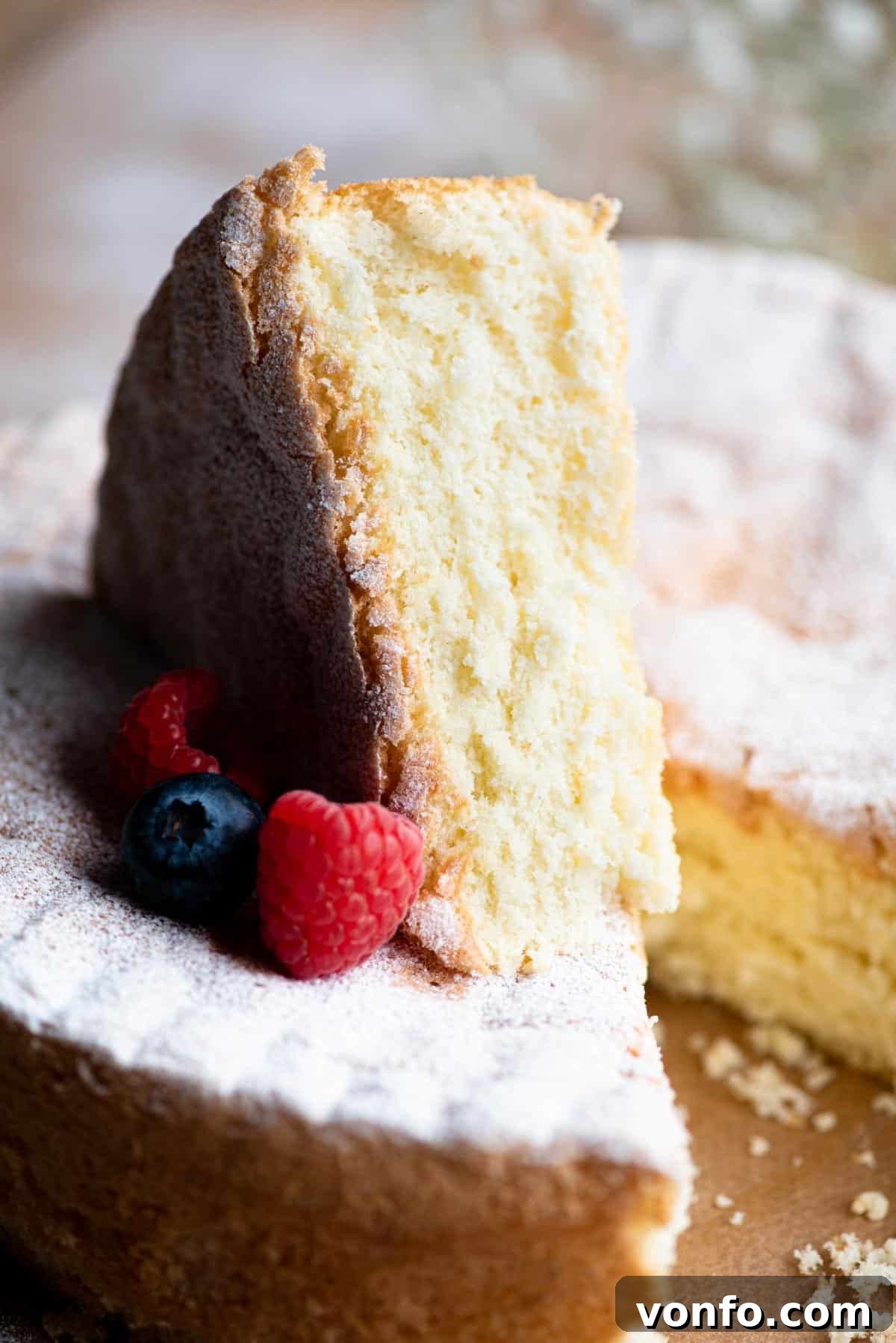
Pan di Spagna, affectionately known as Italian sponge cake, stands as a pillar of Italian patisserie. This exquisite cake is celebrated for its incredibly light, airy, and delicately soft texture, achieved with just four fundamental ingredients: flour, cornstarch, eggs, and sugar. Far from being just a simple cake, Pan di Spagna is a versatile foundation for a myriad of traditional Italian desserts, including the iconic Zuccotto, the rich Cassata, and even as a sublime replacement for Savoiardi (ladyfingers) in a decadent Tiramisu or a comforting Zuppa Inglese. Its simplicity in composition belies a depth of potential, making it a must-have recipe for any aspiring Italian baker.
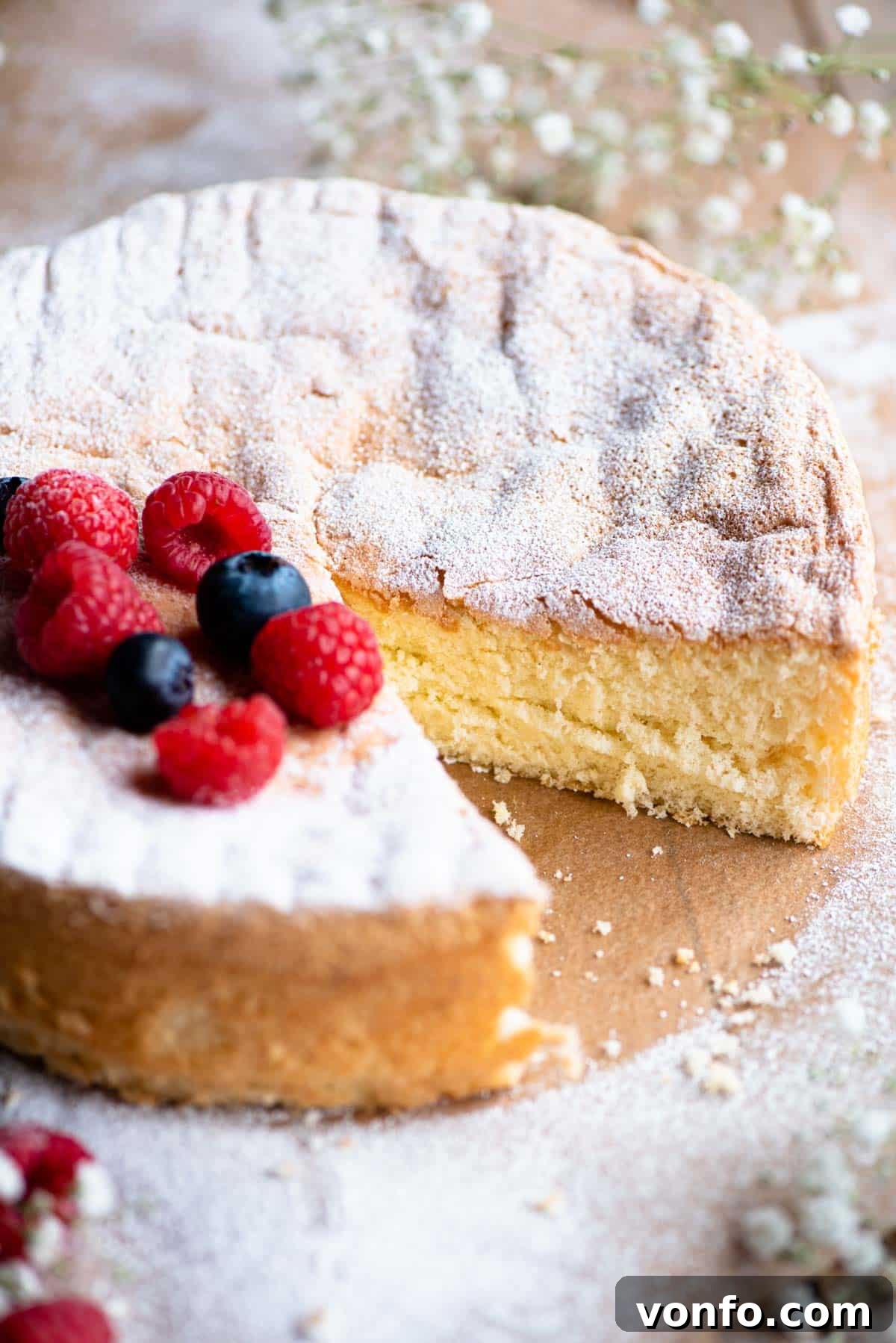
The allure of Pan di Spagna lies in its ethereal lightness and distinct chewiness, a characteristic achieved without the use of chemical leavening agents or added fats. This unique quality makes it supremely absorbent, ideal for soaking up syrups, liqueurs, and creams that define many Italian confections. Whether you’re aiming for an elegant dessert base or simply seeking a beautifully understated cake to dust with powdered sugar, mastering Pan di Spagna is a rewarding culinary journey. While the recipe is straightforward, a few crucial tips will guarantee a perfect rise and tender crumb every time. Dive into our comprehensive guide, where we share expert advice and step-by-step instructions to help you bake this Italian classic flawlessly.
Find the complete recipe below, along with detailed ingredient notes, step-by-step photos, invaluable tips, creative variations, and a video tutorial. For a printable version, scroll to the bottom.
Essential Ingredients for Pan di Spagna
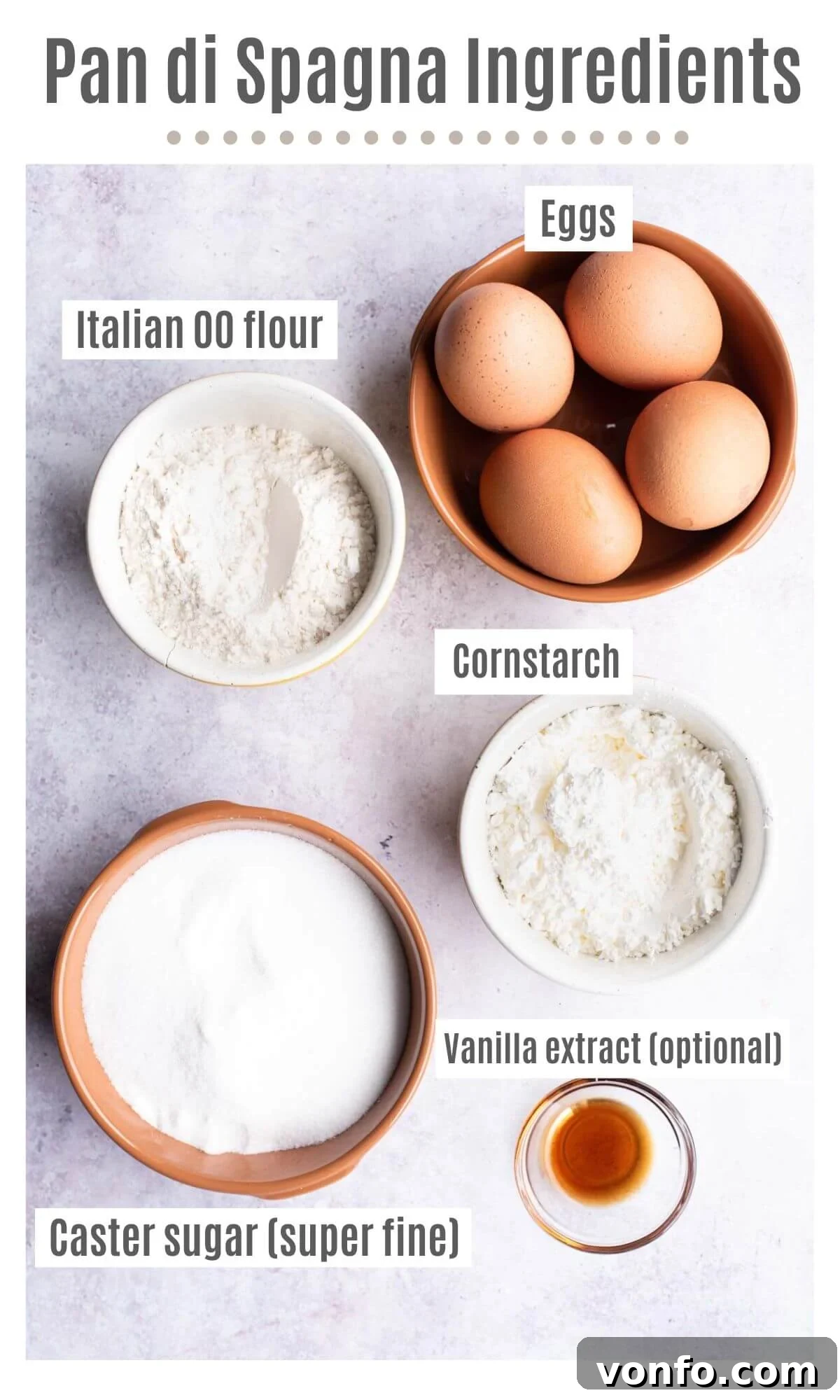
Crafting the perfect Pan di Spagna begins with understanding the role of each ingredient. This simple cake relies on the quality and preparation of its few components to achieve its signature texture. Here’s what you’ll need:
Ingredient Notes and Expert Tips
- Italian 00 Flour: This finely milled flour is traditional for Italian baking, yielding a lighter, more tender crumb. However, if 00 flour is unavailable, regular all-purpose flour (also known as plain flour in the UK) makes an excellent substitute. The key is its low protein content, which prevents excessive gluten development, ensuring the cake remains soft.
- Cornstarch (Cornflour UK): A secret weapon in Italian sponge cakes, cornstarch (or Fecola di Patate, potato starch, if you can find it) is crucial for creating that characteristic extra light and tender texture. It reduces the overall gluten formation, making the cake incredibly soft and delicate. Do not skip this ingredient!
- Eggs: Large, free-range eggs are highly recommended for their richer flavor and better structure. Most importantly, ensure your eggs are at **room temperature**. Cold eggs will not whip up as voluminous or stable as room temperature eggs, which is vital for the cake’s rise without leavening agents.
- Caster Sugar (Superfine Sugar): This fine-grained sugar dissolves quickly into the eggs, helping to create a stable, airy foam. Granulated sugar can be used, but caster sugar will yield a smoother batter and a finer crumb.
- Vanilla Extract: While optional, a teaspoon of good quality vanilla extract or the seeds scraped from a vanilla bean adds a beautiful aromatic depth to the cake. It complements the natural flavors of the eggs and sugar perfectly.
- Salt: A tiny pinch of salt acts as a flavor enhancer, balancing the sweetness and bringing out the subtle nuances of the other ingredients.
- Butter (for greasing): Essential for preparing your cake pan, ensuring a clean release and preventing sticking.
Step-by-Step Baking Guide: Achieving Pan di Spagna Perfection
Making Pan di Spagna is less about complex steps and more about precise technique. Follow these detailed instructions, complete with visual aids, to achieve a beautifully risen and tender sponge cake.
1. Prepare Your Pan and Oven: Preheat your oven to 320°F (160°C). A static oven (without a fan) is often preferred for Pan di Spagna as it provides a more even, gentle heat, minimizing the risk of the cake sinking. Grease your 9-inch (23cm) springform cake pan thoroughly with butter and line the bottom with a disk of baking parchment. This preparation is critical for an easy release later.
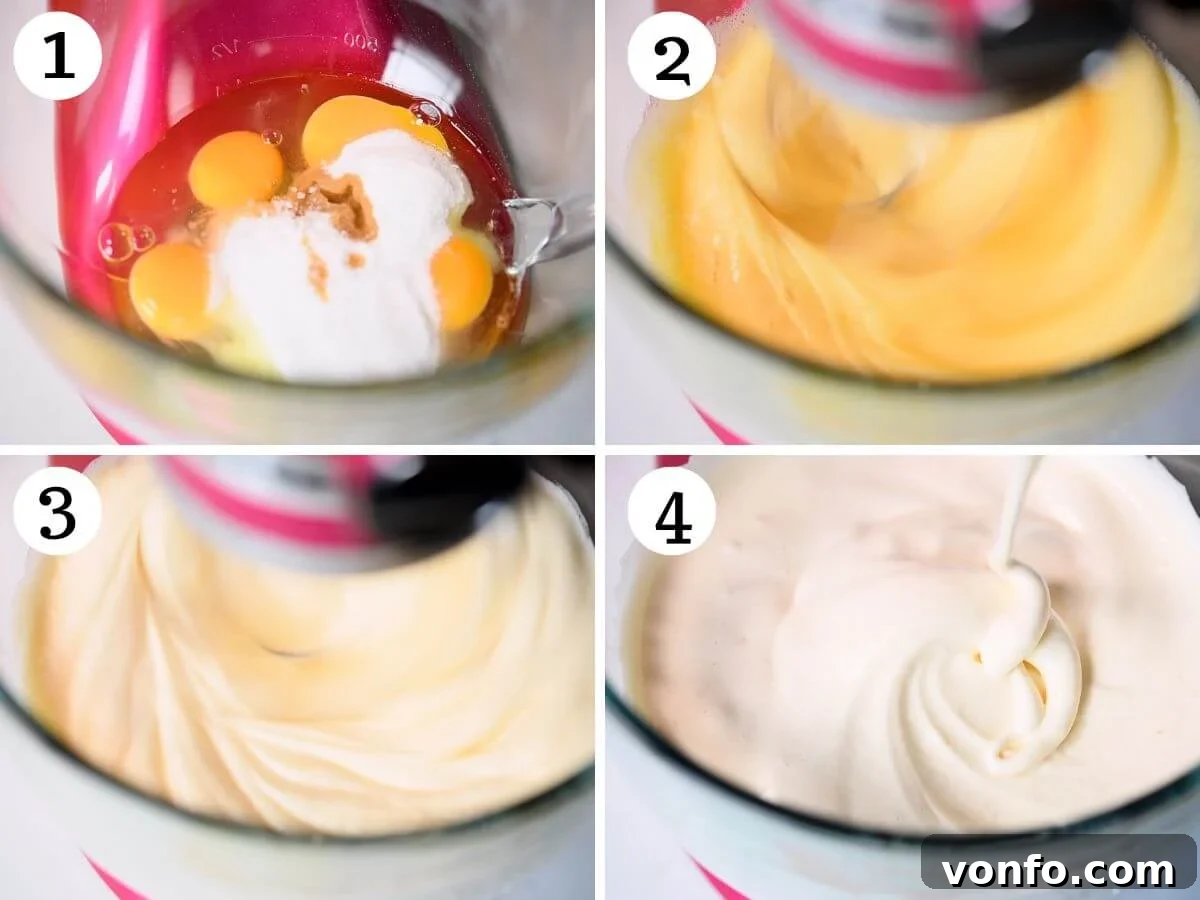
2. Beat Eggs and Sugar to Perfection: In a stand mixer fitted with a whisk attachment (or using an electric hand whisk), combine the room temperature eggs, vanilla extract (if using), and a pinch of salt. Begin whisking on medium speed. Gradually add the caster sugar in three stages, allowing each addition to incorporate before adding the next. Continue beating for an impressive 15-20 minutes. This extended beating time is the secret to Pan di Spagna’s lift and texture, as it incorporates a significant amount of air into the mixture. The mixture should become very thick, pale, and fluffy, almost like a light mousse. You’ll know it’s ready when you can lift the whisk and the batter forms a “ribbon” that slowly disappears back into the bowl, holding its shape for a few seconds (photos 1-4).
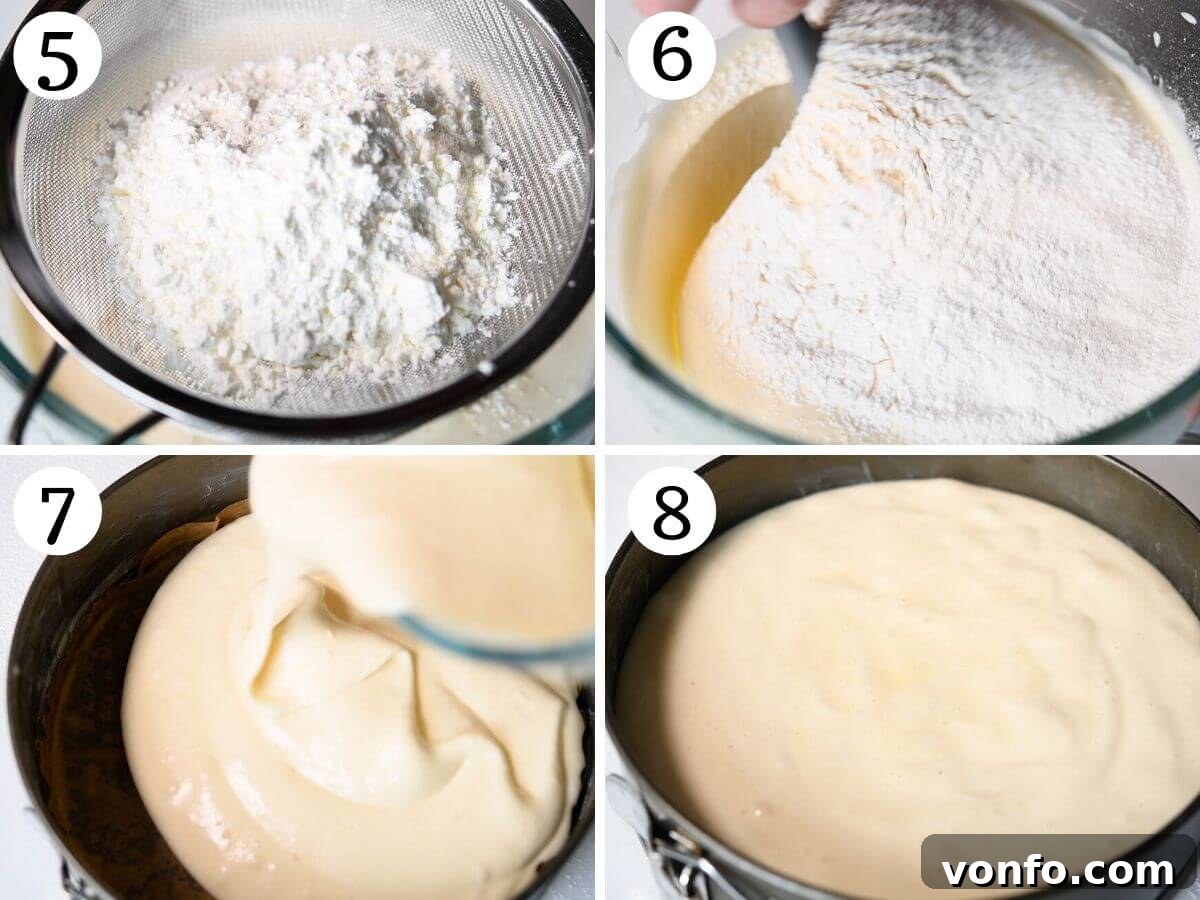
3. Gently Fold in the Flour Mixture: Sift together both the 00 flour and cornstarch into a separate bowl. This step is crucial for preventing lumps and ensuring even distribution. Next, gently fold the sifted flour mixture into the whipped egg mixture, adding it in thirds. Use a large spatula and a light, cutting, and folding motion, rotating the bowl as you go. The goal is to incorporate the flour without deflating the precious air you’ve built into the eggs. Work quickly and avoid overmixing, as this can lead to a dense cake (photos 5 & 6).
4. Transfer to Cake Pan: Carefully pour the batter into your prepared cake pan. Gently level the top with your spatula. Resist the urge to tap the pan on your work surface, as this can knock out too much air from the delicate batter, leading to a sunken cake (photos 7 & 8).
5. Bake to Golden Perfection: Place the cake pan on the lowest rack of your preheated oven. Bake for approximately 35-40 minutes. The cake is done when a wooden toothpick inserted into the center comes out clean. The top should be golden brown and spring back when gently pressed. Crucially, do not open the oven door during the first 30 minutes of baking, as sudden temperature changes can cause the cake to collapse (photos 9-12).
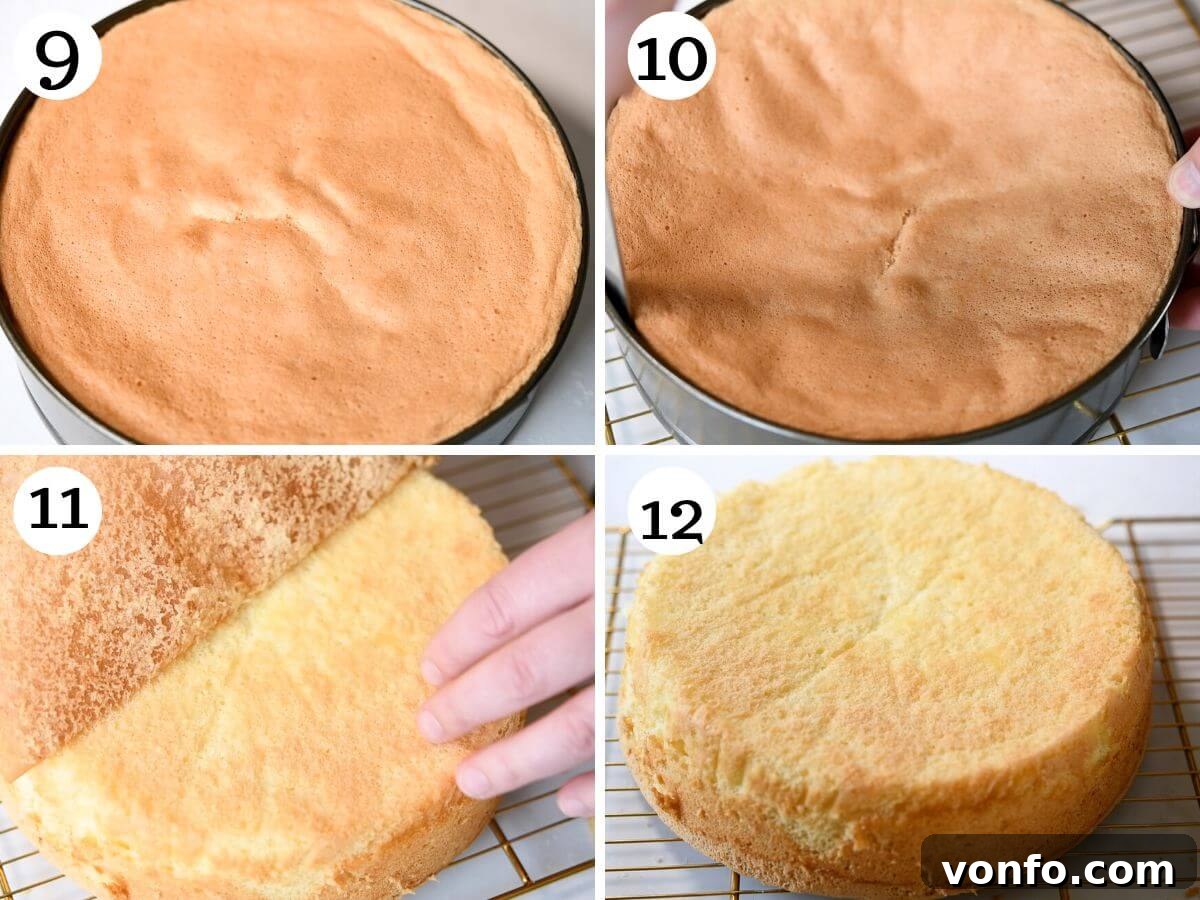
6. Cooling: Once baked, remove the cake from the oven and let it cool in its pan for 5-10 minutes. This short resting period allows the cake to stabilize. Then, carefully invert it onto a wire cooling rack, remove the parchment paper, and let it cool completely. Cooling completely on a rack prevents the bottom from becoming soggy due to trapped steam.
Top Tips for Pan di Spagna Success
Achieving the perfect Pan di Spagna is an exercise in precision and patience. These tips will help ensure your cake is light, airy, and exactly as it should be:
- Embrace a Kitchen Scale: For all baking, but especially for delicate sponges like Pan di Spagna, weighing your ingredients with a kitchen scale is paramount. Flour, in particular, can be easily over-measured when using volume cups, leading to a dense cake. Accurate measurements ensure consistent, perfect results every time.
- Room Temperature Eggs are Non-Negotiable: This is perhaps the most critical tip. Room temperature eggs whip up significantly better, faster, and to a greater volume than cold eggs. The air incorporated during this process is what gives Pan di Spagna its signature rise and lightness, as no baking powder or soda is used.
- Whip Eggs Until Ribbon Stage: The beating of eggs and sugar is not a shortcut. Dedicate the full 15-20 minutes until the mixture is thick, pale, and forms a stable “ribbon” when lifted. This foam provides the entire structure for your cake.
- Sift Dry Ingredients Thoroughly: Always sift your flour and cornstarch together. This aerates them, removes any lumps, and makes them easier to fold into the delicate egg mixture without deflating it. Adding them in three increments also helps maintain the airy texture.
- Fold Gently, Never Overmix: Once the dry ingredients are added, use a gentle cutting and folding motion with a spatula. Overmixing will develop the gluten in the flour, resulting in a tough, chewy cake, and will also deflate the air from the eggs.
- Resist Opening the Oven Door: Opening the oven door prematurely, especially during the first two-thirds of baking, can cause a sudden drop in temperature. This shock can lead to your beautiful sponge cake sinking in the middle. Trust the process and your oven.
- Cool Correctly: Allowing the cake to cool for 5-10 minutes in the pan is important for stabilization. However, removing it to a wire rack to cool completely prevents excess moisture from accumulating at the bottom, which could make the cake soggy or continue to cook it unnecessarily, potentially drying it out.
- Use a Static Oven if Possible: If you have the option, a static oven (without a fan) is often preferred for Pan di Spagna. Fan ovens can sometimes create a crust too quickly or bake unevenly, potentially causing cracks or a less uniform texture. If using a fan oven, reduce the temperature by 20-25°F (10-15°C).
Pan di Spagna: Your Questions Answered
Due to its low fat content, Pan di Spagna can dry out quickly. Once completely cooled, wrap it tightly in plastic wrap or store it in an airtight container. If you’ve used the sponge as a component in another dessert (like Zuccotto or a layer cake with cream filling), it will naturally stay moist for longer.
Stored correctly in an airtight container, the plain sponge will remain fresh for up to 3 days without becoming too dry. When incorporated into a dessert with a cream filling or frosting, its lifespan extends slightly, typically lasting around 5 days in the refrigerator.
The primary differences lie in fat content and leavening agents. A “regular” sponge cake (like a Victorian sponge) often incorporates butter or oil and typically uses baking powder as a rising agent. This results in a moister, denser texture. Pan di Spagna, however, contains no added fat or chemical leavening. Its entire rise and airy structure come from vigorously whipped eggs, making it significantly lighter, drier, and more absorbent – perfect for soaking.
A 9-inch (23cm) springform cake pan is highly recommended. Its removable sides make it incredibly easy to release the delicate sponge without damage. Always remember to grease the pan thoroughly with butter and line the bottom with baking parchment for a foolproof release.
Yes, Pan di Spagna freezes beautifully! Once completely cooled, wrap the entire cake (or individual slices) tightly in plastic wrap, then an additional layer of aluminum foil, to prevent freezer burn. It can be frozen for up to 2-3 months. Thaw overnight in the refrigerator or at room temperature before using.
Several factors can cause a sunken cake. The most common reasons include opening the oven door too early, under-beating the eggs (not reaching the full “ribbon stage”), overmixing the flour (which deflates the batter), or an incorrect oven temperature (too low won’t set the structure, too high will rise too fast and collapse).
The Intriguing History: Why “Spanish Bread”?
The name “Pan di Spagna,” literally translating to “Spanish Bread,” often sparks curiosity given its firm place in Italian culinary tradition. The most popular theory attributes its creation to a Genovese chef named Giabatta Cabona. Legend has it that in the mid-18th century, during a diplomatic visit to Spain, Cabona presented this magnificent cake to the King of Spain, who was so delighted that the cake was named in honor of the country. Whether this captivating tale is entirely accurate or merely a charming culinary myth, one thing remains undeniably true: this golden, light, and wonderfully airy sponge cake is cherished throughout Italy and continues to delight dessert lovers worldwide. Its history, much like its flavor, adds a touch of romantic mystique to every bite.
Creative Variations and Versatile Uses for Pan di Spagna
The beauty of Pan di Spagna extends beyond its simple form. Its neutral flavor and highly adaptable texture make it a perfect canvas for culinary creativity. Here are some ideas to customize and utilize this classic Italian sponge:
Flavorful Pan di Spagna Variations:
- Citrus Zest: For a bright, aromatic lift, finely grate the zest of a lemon or orange directly into the egg mixture as it whips. Lemon and vanilla together create an especially delightful combination.
- Almond Extract: A teaspoon of almond extract can introduce a warm, nutty undertone, offering a sophisticated twist.
- Cocoa Powder: Transform your Pan di Spagna into a chocolate version by substituting a small amount of flour with unsweetened cocoa powder (e.g., replace 15g of flour with 15g of cocoa powder and sift it with the remaining flour). This is fantastic for chocolate-based layered cakes.
- Spices: For seasonal variations, consider adding a pinch of cinnamon or a tiny amount of ground cardamom to the dry ingredients, especially if pairing with fruit fillings.
Wonderful Ways to Use Pan di Spagna:
Pan di Spagna is the ultimate foundational cake, forming the heart of countless Italian desserts:
- Tiramisu and Trifles: Its absorbent nature makes it an ideal substitute for Savoiardi biscuits (ladyfingers) in Tiramisu or any layered trifle. Soak slices in coffee, liqueur, or fruit juices for incredible flavor infusions.
- Zuccotto: This magnificent dome-shaped cake, typically filled with a rich ricotta, chocolate, and candied fruit mixture, traditionally uses Pan di Spagna as its outer shell.
- Zuppa Inglese: An Italian take on trifle, Zuppa Inglese layers sponge cake soaked in Alchermes liqueur with creamy custard and often chocolate. Pan di Spagna is the star component.
- Elegant Layer Cakes: Pan di Spagna is perfect for building show-stopping layer cakes. Its light texture allows the fillings to truly shine. Consider pairing it with classic Italian creams such as:
- Crema Pasticcera: A rich, velvety Italian pastry cream.
- Crema al Cioccolato: Our luscious chocolate version of pastry cream.
- Crema al Pistacchio: A delightful and vibrant pistachio cream, offering a unique flavor profile.
- Individual Portions: Cut into squares or rounds, soak lightly, and serve with fresh fruit and a dollop of whipped cream for a simple yet elegant dessert.
More Italian Dessert Inspiration
If you love Pan di Spagna, explore these other traditional Italian sweets that often feature similar delicate components or can be wonderfully complemented by a light sponge.
Italian Desserts
Zuppa Inglese (Italian Trifle)
Italian Desserts
Irresistible Chocolate Tiramisu
Italian Desserts
Italian Pastry Cream: Crema Pasticcera
Italian Desserts
Chocolate Pastry Cream (Crema al Cioccolato)
We hope you enjoy mastering this timeless Pan di Spagna recipe. If you try it, please don’t forget to rate the recipe and share your experience in the comments below – we absolutely love hearing from you! For more delicious Italian recipes and culinary inspiration, be sure to follow us on Facebook, Instagram, and Pinterest, or sign up for our Newsletter to get weekly updates delivered straight to your inbox.
Step-By-Step Photos Above
Most of our recipes come with step-by-step photos, helpful tips, and tricks to make it perfectly the first time, and even video!
Pan di Spagna (Italian Sponge Cake)
By Emily
25 mins
40 mins
1 hr 5 mins
12 servings
Equipment
- 8.5 inch springform cake tin
- Baking parchment
- Sieve
- Stand mixer with whisk attachment or electric whisk
Ingredients
- 4 large eggs, at room temperature (don’t use cold eggs)
- 65 g Italian 00 flour, (00 is recommended but all-purpose flour can also be used) (1/2 cup)
- 65 g corn starch, (cornflour) (1/2 cup)
- 130 g caster sugar, (superfine sugar) (3/4 cup)
- 1 teaspoon vanilla extract, (optional, see notes for other flavour options)
- 1 pinch salt
- Butter, for greasing
Instructions
- Pre-heat the oven to 320F (160C). A static oven (no fan) is best for this recipe.
- Grease the cake tin with butter and place a cut-out disk of baking parchment in the bottom of the tin so the cake doesn’t stick.
- Put the eggs, vanilla, and a pinch of salt in a bowl of a stand mixer. Start whisking the eggs on a medium speed and gradually add the sugar in 3 goes.
- Whisk the eggs for 15-20 minutes until thick, pale and fluffy. You’ll know the eggs are whisked enough when you can draw a ribbon in the mixture without it disappearing.
- Sieve both flours into the egg mixture a third at a time making sure to gently fold the flour into the egg so you don’t remove too much air. Doing this in three goes will also help avoid lumps in the batter.
- Once the flour is fully combined transfer the batter to the cake tin and bake on the lowest shelf of the oven for 35-40 minutes until an inserted toothpick comes out clean.
- Remove the cake from the oven and let it cool in the tin for 10 minutes, then remove to a cooling rack to cool completely.
Video Tutorial
Watch our video to see the Pan di Spagna baking process in action!
Notes
- Use a kitchen scale: As with any baking recipe, the only way to get accurate results every time is to weigh the flour with a kitchen scale. We always test our recipes using a scale, and while American cups are sometimes listed for convenience, it’s very easy to over-measure flour using cups, so we don’t recommend it for baking.
- Use room temperature eggs: Make sure that your eggs are at room temperature before you start making the cake for maximum volume.
- Don’t overmix: When folding the flour into the egg mixture, do it gently to avoid knocking the air out of the egg and overmixing the batter.
- Don’t open the oven door! It’s very important not to open the oven door until the end of baking, or the cake will sink.
- Letting it cool – Let the cake cool for 5-10 minutes in the cake pan but then remove it to a cooling rack. Don’t let it cool completely in the cake pan, or it risks overbaking and drying out due to residual heat.
- Storage – Wrap the Pan di Spagna tightly in plastic wrap or store in an air-tight container, otherwise it’ll dry out. It’ll keep well for up to 3 days.
Helpful Info for All Our Recipes
- We consistently use extra virgin olive oil in all our recipes unless otherwise specified.
- For canned or jarred tomatoes, we always opt for Cirio or Mutti brands to ensure the best results and flavor in our dishes.
- All vegetables used in our recipes are typically medium-sized unless noted differently.
- All our recipes are thoroughly tested and developed using a fan (convection) oven.
- Find out more about how nutrition is calculated.
- Check out our must-have Italian Pantry Staples.
- You can also find all our Essential Kitchen Tools for Italian Cooking.
Nutrition
Carbohydrates: 20g |
Protein: 2g |
Fat: 1g |
Saturated Fat: 0.5g |
Polyunsaturated Fat: 0.3g |
Monounsaturated Fat: 1g |
Trans Fat: 0.01g |
Cholesterol: 55mg |
Sodium: 25mg |
Potassium: 27mg |
Fiber: 0.2g |
Sugar: 11g |
Vitamin A: 79IU |
Calcium: 9mg |
Iron: 1mg
Nutrition information is automatically calculated, so should only be used as an approximation.