
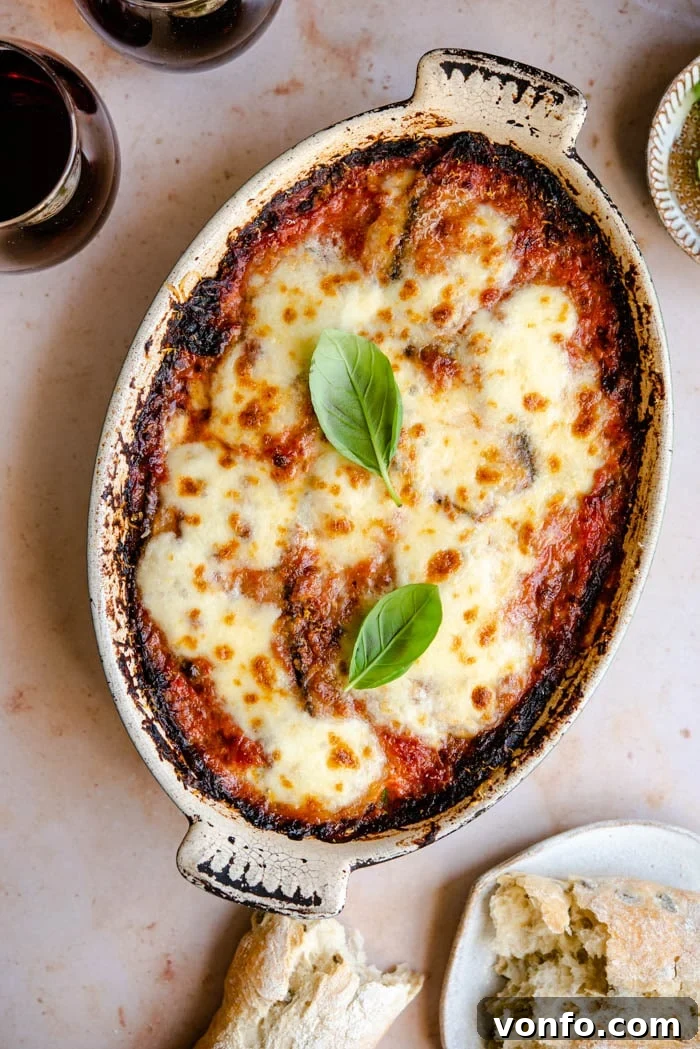
Authentic Eggplant Parmigiana: A Classic Italian Comfort Food
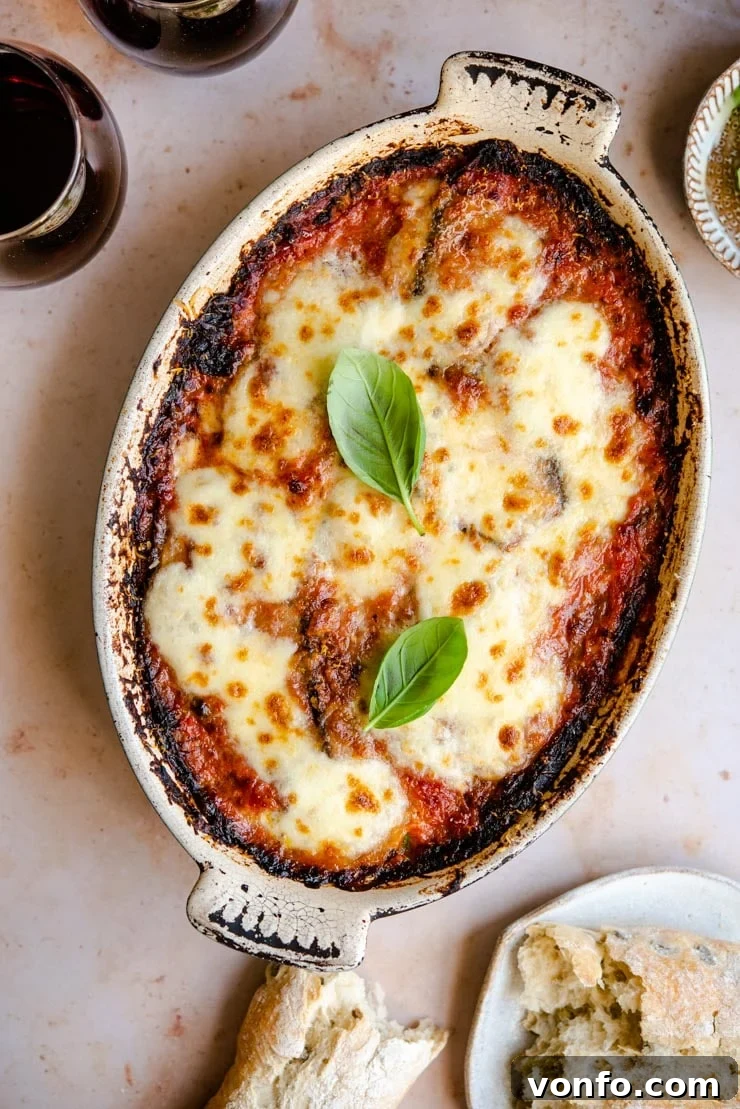
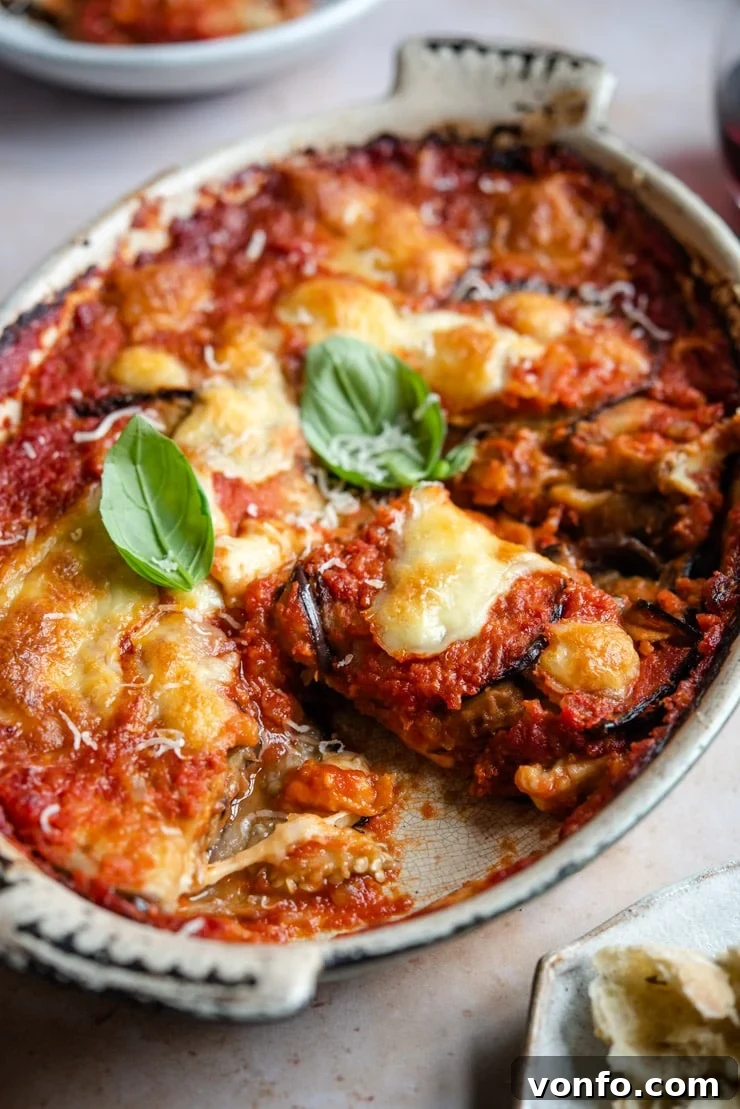
There are few dishes that evoke the heartwarming essence of Italian home cooking quite like Eggplant Parmigiana, also known as Parmigiana di Melanzane or simply Eggplant Parmesan. This iconic casserole is a symphony of flavors and textures, featuring tender, pan-fried eggplant slices layered with a vibrant homemade tomato sauce, fragrant basil, creamy mozzarella, and sharp Parmesan cheese, all baked until bubbly and golden brown. It’s the quintessential Italian comfort food, perfect for family dinners or entertaining guests.
Having perfected this recipe over many years, I can confidently say it never fails to impress. Each bite delivers a harmonious blend of savory, tangy, and rich notes that transport you straight to the heart of Italy. It stands proudly alongside other beloved Italian staples on my list of ultimate comfort foods, such as Tuscan sausage ragu, Italian Stuffed Cabbage Rolls, and a classic beef lasagne.
While preparing authentic Eggplant Parmigiana involves a few distinct stages, the process is straightforward and incredibly rewarding. With our detailed step-by-step guide, complete with photos and even a video tutorial, you’ll master this traditional Italian recipe on your first attempt. The tantalizing aroma of simmering tomato sauce and melting cheese as it bakes in your oven is truly incomparable – a promise of the deliciousness to come.
Eggplant, often described as a “vegetable sponge,” excels at absorbing and showcasing flavors, making it the ideal canvas for this classic dish. Its mild taste perfectly complements the robust tomato sauce and rich cheeses, resulting in a deeply satisfying meal that’s both rustic and refined.
Table of Contents
- The Essence of Eggplant Parmigiana
- Prepping the Eggplant for Perfection
- Crafting the Simple Tomato Sauce
- How to Make Authentic Eggplant Parmigiana – Step by Step
- Making Your Parmigiana Healthier
- Storage and Make-Ahead Tips
- More Italian Comfort Food Recipes to Try
- Full Recipe Card
The Essence of Eggplant Parmigiana: A Culinary Journey
Eggplant Parmigiana is more than just a dish; it’s a celebration of simple, quality ingredients transformed into something extraordinary. Originating from Southern Italy, particularly Sicily and Naples, its exact birthplace is debated, but its universal appeal is undeniable. The beauty of this recipe lies in its humble components: fresh eggplant, ripe tomatoes, fragrant basil, and a duo of classic Italian cheeses. When combined, these elements create a rich, savory, and intensely flavorful experience that has made Parmigiana a staple in Italian homes and restaurants worldwide.
What sets an authentic Eggplant Parmigiana apart is the meticulous preparation of each layer. From properly preparing the eggplant to simmering a luscious tomato sauce, every step contributes to the final masterpiece. This article will guide you through each crucial stage, ensuring your homemade Parmigiana is nothing short of spectacular.
Prepping the Eggplant for Perfection
One of the most frequently asked questions about Eggplant Parmigiana is whether to peel the eggplant. The good news is, you do not need to peel the eggplant. The skin is packed with nutrients and adds a beautiful color and slight textural contrast to the dish. However, if you find eggplant skin difficult to digest or prefer a very uniform texture, you can certainly peel it. The choice is entirely up to your personal preference.
A step I strongly advise against skipping, however, is salting the eggplant. This crucial technique helps to draw out excess moisture from the eggplant slices, which is vital for two reasons:
- Prevents Soggy Parmigiana: Eggplant contains a lot of water. If not removed, this moisture can release during baking, making your Parmigiana watery and mushy. Salting ensures a firmer, more desirable texture.
- Reduces Bitterness: While modern eggplants are less bitter than older varieties, salting can still help to draw out any residual bitterness, especially from larger or older eggplants.
By following this simple salting process, you’ll ensure your Eggplant Parmigiana bakes up beautifully, with perfectly tender yet not watery eggplant layers. This is a foundational step for achieving the best results and is visually demonstrated in the step-by-step photos (see photos 1-6 in the recipe instructions).
Crafting the Simple Tomato Sauce
The success of your Eggplant Parmigiana heavily relies on a delicious, simple tomato sauce. While many variations exist, an authentic sauce for Parmigiana typically features high-quality pureed tomatoes, a hint of onion, and fresh basil. The beauty is in its simplicity, allowing the natural sweetness of the tomatoes to shine through.
To prepare your sauce, you’ll start by sautéing finely chopped white onion in a touch of olive oil until it’s translucent and soft, but not browned. This gentle cooking extracts the onion’s sweetness without adding harsh flavors. Next, introduce the pureed tomatoes (passata). For the best flavor, always opt for high-quality brands like Cirio or Mutti, which are known for their rich taste and vibrant color. A small bunch of fresh basil, torn by hand to release its aromatic oils, is then stirred in. Season with a pinch of salt and pepper, and let it gently simmer for 10-15 minutes. This simmering time allows the flavors to meld beautifully, creating a rich and flavorful base for your Parmigiana. Set this exquisite sauce aside while you finish preparing the eggplant.
How to Make Authentic Eggplant Parmigiana – Step by Step
Below are the visual steps for preparing the eggplant and assembling this delicious dish. For the full printable recipe card with precise measurements, detailed notes on storage, freezing, and helpful tips, please refer to the Full Recipe Card below.
Step 1: Salt the Eggplant. Begin by thinly slicing the eggplants into approximately 1/4 inch (0.5 cm) thick rounds. Place the slices in a colander set over a bowl or in your sink. Sprinkle them lightly and evenly with salt. Allow them to rest for at least 1 hour. This crucial step draws out excess moisture and any potential bitterness, which is key for perfectly fried eggplant and prevents the final dish from becoming watery (see photos 1 & 2 in visual guide).
Step 2: Prepare the Tomato Sauce. While the eggplant is salting, prepare your simple yet flavorful tomato sauce. In a medium saucepan, gently sauté one finely chopped white onion in a tablespoon of olive oil until it becomes soft and translucent, typically 5-7 minutes. Add the pureed tomatoes (passata) and a small bunch of fresh basil, torn with your hands. Season with a pinch of salt and pepper. Stir everything together, then let the sauce simmer gently over low heat for 10-15 minutes, allowing the flavors to deepen (see photos 7 & 8 in visual guide). Once done, set it aside.
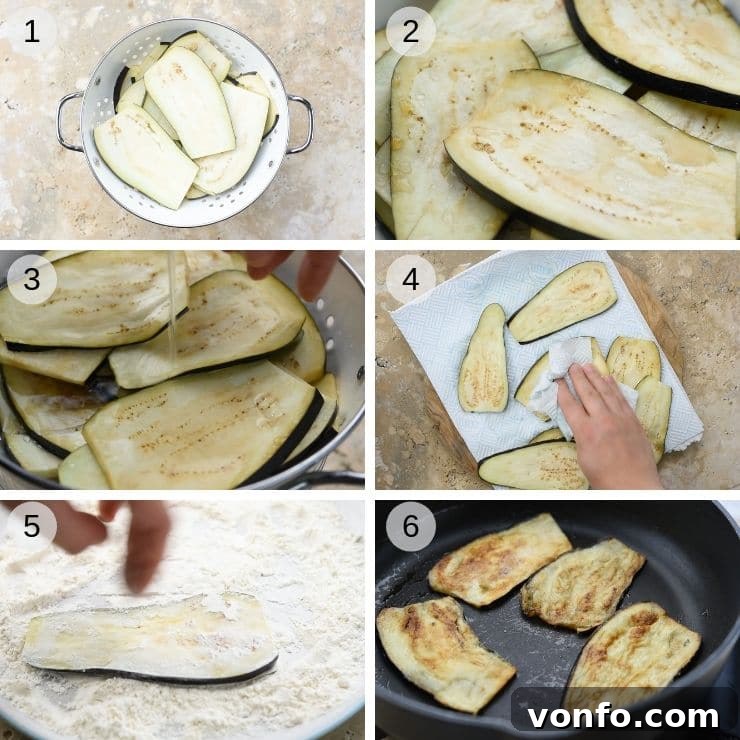
Step 3: Rinse, Dry, and Fry the Eggplant. After the eggplant has rested for an hour, rinse the slices thoroughly under cold running water to remove the excess salt. This is important to prevent the dish from becoming overly salty. Pat them very dry with a clean kitchen towel or paper towels. Excess water will cause oil to splatter and prevent even frying (see photos 3 & 4 in visual guide).
Lightly dust each eggplant slice with flour, shaking off any excess. This thin coating helps achieve a golden, crispy exterior when fried. Heat sunflower oil (or another neutral frying oil) in a large pan over medium-high heat. Fry the eggplant slices for just a few seconds on each side until golden. Avoid overcrowding the pan; work in batches if necessary. Once fried, transfer the eggplant to a plate lined with kitchen paper to drain off any excess oil (see photos 5 & 6 in visual guide).
Top Tip: It’s crucial to fry the eggplant immediately after dusting it with flour. If left to sit, the eggplant will absorb the flour, resulting in a mushy texture rather than a crisp one.
Step 4: Prepare for Assembly. Preheat your oven to 180°C/350°F/Gas Mark 4. Choose a baking dish of appropriate size – an 11×8 inch oval, rectangle, or square dish works well. Spoon a small amount of your prepared tomato sauce onto the bottom of the baking dish and spread it evenly. This layer serves two purposes: it prevents the first layer of eggplant from sticking and adds an initial burst of flavor.
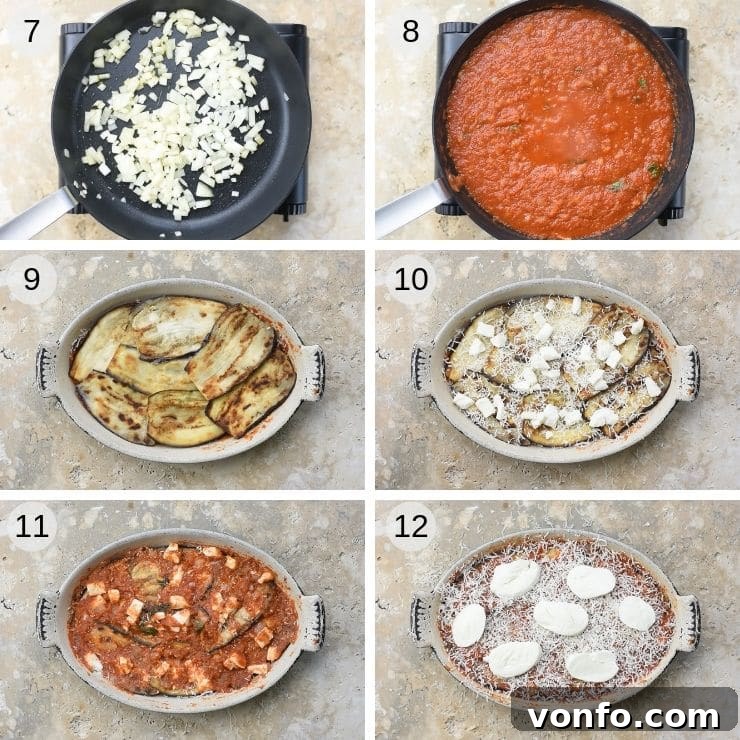
Step 5: Layering the Parmigiana. Now, it’s time to build your masterpiece! Arrange a single layer of fried eggplant slices over the base of tomato sauce. Follow this with a generous sprinkling of freshly grated Parmigiano Reggiano cheese, then distribute cubes of mozzarella evenly over the eggplant. Add a light sprinkling of black pepper and a couple of spoonfuls of the tomato sauce. Repeat this layering process until you have used most of the ingredients, leaving enough sauce, Parmesan, and mozzarella for the final top layer (see photos 9-11 in visual guide).
Step 6: The Grand Finale – Baking. For the very top layer, spoon over the remaining tomato sauce, ensuring it covers the eggplant well. Finish with a final generous layer of both Parmigiano Reggiano and mozzarella cheese. Cover the baking dish loosely with aluminum foil. Bake in the preheated oven for 20 minutes. This initial covered baking allows the flavors to meld and the eggplant to become perfectly tender without the cheese browning too quickly.
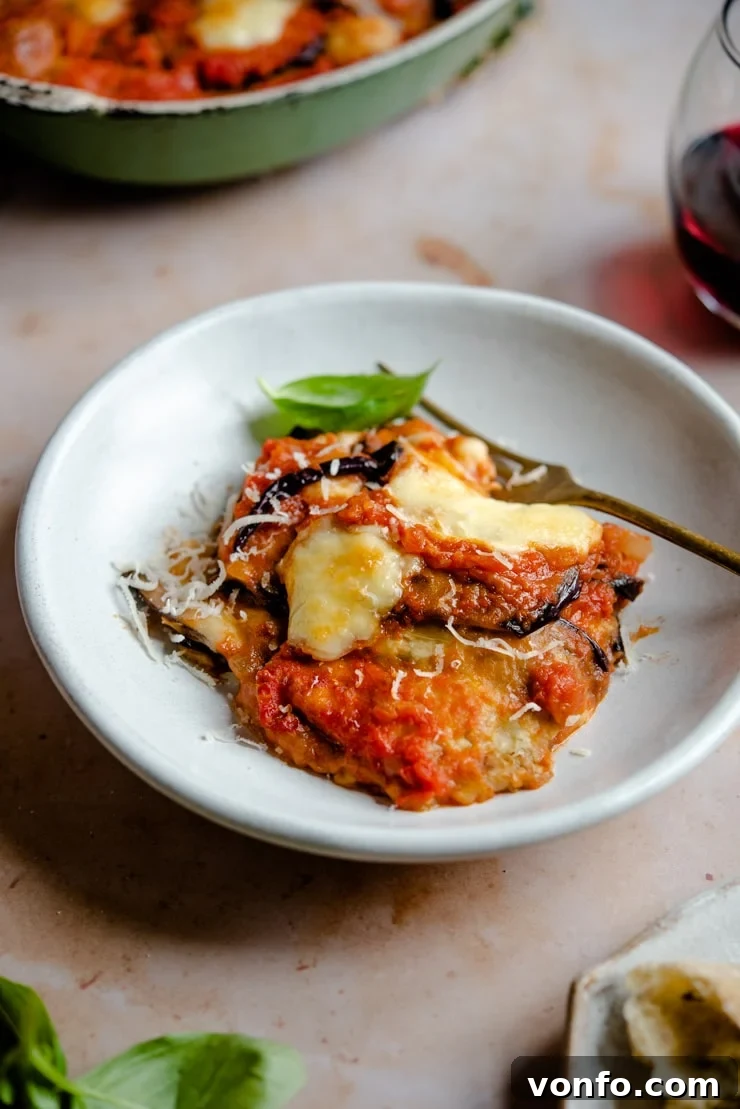
After 20 minutes, remove the foil and continue to bake for another 20 minutes, or until the top is beautifully golden brown, bubbly, and irresistible. The melted mozzarella should be stretched and the Parmigiano should form a lovely crust. Let the Eggplant Parmigiana rest for 5-10 minutes before serving. This allows the layers to set, making it easier to serve and enhancing the overall texture.
Making Your Parmigiana Healthier
While the traditional method of frying eggplant in flour and oil yields an undeniably rich and satisfying dish, there are simple ways to lighten up your Eggplant Parmigiana without sacrificing flavor. To make it a healthier option, consider grilling or baking the eggplant instead of frying:
- Grilling/Baking Eggplant: Instead of dusting with flour and frying, brush thinly sliced eggplant with a little olive oil and grill on a grill pan or bake in the oven until tender and lightly charred. This significantly reduces the fat content while still imparting a delicious flavor and texture.
For those who love a smoky twist, experiment with different cheeses. Replacing some or all of the mozzarella with smoked scamorza cheese or even smoked mozzarella can elevate the dish with a wonderful, intriguing smoky flavor that pairs beautifully with the sweet tomato sauce and eggplant. This small change adds a gourmet touch and a new dimension to this classic recipe.
Storage and Make-Ahead Tips
Eggplant Parmigiana is an excellent dish for meal prep, making it even more convenient for busy days. Here’s how to store it, reheat it, and even freeze it:
- Make Ahead: You can assemble the entire dish up to the baking stage and store it, covered, in the refrigerator for up to 24 hours. When ready to bake, let it come closer to room temperature for about 30 minutes before baking as directed.
- Leftovers Storage: Any leftover Eggplant Parmigiana can be stored in an airtight container in the refrigerator for 3-4 days. It tastes fantastic reheated in the oven (covered with foil to prevent drying out) until piping hot all the way through. It’s also surprisingly delicious served cold with a fresh side salad, making it a versatile option for lunch.
- Freezing Instructions: Eggplant Parmigiana freezes exceptionally well. You can either freeze the entire assembled dish before baking or freeze individual portions of leftovers.
- If freezing an unbaked dish, consider assembling it in a disposable aluminum foil tray. You can then bake it straight from frozen (covered with foil) at 180°C/350°F for approximately 1 hour, or until it’s thoroughly heated and bubbling.
- If freezing in a regular baking dish, ensure it’s completely defrosted in the refrigerator overnight before baking to avoid thermal shock to the dish and ensure even heating.
More Italian Comfort Food Recipes to Try
- Italian Stuffed Cabbage Rolls
- Eggplant Lasagna with Prosciutto and Mozzarella
- Eggplant Rollatini with Spinach and Ricotta
- Creamy Tuscan Chicken with Garlic & Pancetta
- Lasagna di Carnevale (Neapolitan Lasagna)
- Italian Beef Ragu – A Classic Recipe
If you’ve tried this Eggplant Parmigiana or any other delicious recipe from our blog, please share your experience in the comments section below! We love hearing from you. Don’t forget to Follow us on Facebook, Instagram, and Pinterest for more authentic Italian food inspiration and behind-the-scenes glimpses!
Parmigiana di Melanzane (Eggplant Parmigiana)
By Emily
1 hr
55 mins
1 hr 55 mins
6 people
Print Recipe
Parmigiana di Melanzane (Eggplant Parmigiana) is the ultimate Italian comfort food. This authentic recipe features layers of pan-fried eggplant, rich tomato sauce, fresh basil, creamy mozzarella, and sharp Parmesan cheese, all baked to golden perfection. Simple to make and utterly delicious!
Ingredients
- 2 large aubergines/eggplant, around (700g/ 1.5 lbs)
- 1.5 lbs pureed tomatoes (passata), chunky or smooth texture (700g) (Recommended Passata)
- 1 white onion, finely chopped
- Small bunch of fresh basil
- 8.8 oz mozzarella cheese, cut into cubes (250g)
- 3/4 cup Parmigiano Reggiano cheese, freshly grated (70g)
- 1/2 tbsp olive oil (Recommended Olive Oil)
- Flour, for dusting (Recommended Flour)
- Sunflower oil, for frying (around 1/2 cup/125ml)
- Salt and freshly ground black pepper, to season
Instructions
- Thinly slice the eggplant/aubergines (approx. 1/4 inch / 0.5 cm thick). Place them in a colander, sprinkle lightly with salt, and let them rest for 1 hour to draw out excess water.
- While the eggplant is salting, prepare the tomato sauce. Finely chop 1 onion and sauté it in a pan with 1/2 tbsp olive oil until translucent and soft (do not brown). Add the tomato passata (pureed tomatoes) and a small bunch of basil, torn by hand. Season with a pinch of salt and pepper. Stir, then let it simmer gently for 10-15 minutes. Set aside.
- After 1 hour, rinse the eggplant slices under cold water to remove the salt. Pat them thoroughly dry with a kitchen towel or paper towels. Lightly dust each slice with flour, shaking off any excess. Fry the floured eggplant slices in sunflower oil for a few seconds on each side until golden. Drain on kitchen paper to remove excess oil.
- Preheat your oven to 180°C (350°F / Gas Mark 4). Choose an 11×8 inch oval, rectangle, or square baking dish.
- Spoon a small amount of tomato sauce into the bottom of the baking dish and spread it around to prevent the eggplant from sticking.
- Begin layering: Add a single layer of fried eggplant to the dish. Follow with a sprinkling of grated Parmesan cheese, cubes of mozzarella, a light sprinkling of pepper, and a couple of spoonfuls of tomato sauce (reserve about 1/3 of the sauce for the final layer). Continue this layering process until you have one top layer remaining.
- For the top layer, spoon over the remaining tomato sauce and top generously with Parmesan and mozzarella cheese. Cover the dish loosely with aluminum foil and bake for 20 minutes. Then, remove the foil and bake for another 20 minutes, or until the top is golden brown and bubbling. Let it rest for 5-10 minutes before serving.
Video Tutorial
Watch our step-by-step video for a visual guide on making perfect Eggplant Parmigiana!
Recipe Notes & Tips
- Salt the eggplant: Always salt the eggplant before making this dish to draw out excess moisture and prevent sogginess.
- No breadcrumbs needed: Traditional Eggplant Parmigiana does not use breadcrumbs. A light dusting of flour is all you need for frying.
- Eggplant thickness: Aim to cut the eggplant slices around 1/4 inch (0.5 cm) thick for optimal texture.
- Dredge then fry: Once you’ve dusted a batch of eggplant in flour, fry them straight away. If left to sit, the eggplant will soak up the flour and can turn mushy.
- Use high-quality tomatoes: The quality of your pureed tomatoes (passata) greatly impacts the final flavor. Invest in good quality brands for the best results.
- Prepping in advance: This dish can be fully prepped and assembled in advance, then stored in the fridge until you’re ready to bake.
- Leftovers storage: Leftovers will keep well in the fridge for 3-4 days. Reheat covered in the oven until piping hot, or enjoy cold with a fresh salad.
- Freezing instructions: Eggplant Parmigiana freezes wonderfully! For convenience, you can assemble it in disposable aluminum foil trays and bake directly from frozen (at 180°C/350°F for about 1 hour). If using a regular baking dish, ensure it’s fully defrosted before baking.
Helpful Info for All Our Recipes
- We always recommend using extra virgin olive oil in all recipes unless specified otherwise.
- For canned or jarred tomatoes, we consistently use Cirio or Mutti brands to ensure the best flavor and quality.
- All vegetables mentioned are medium-sized unless their specific size is indicated.
- All recipes are meticulously tested and developed using a fan (convection) oven.
- Find out more about how nutrition information is calculated.
- Discover our essential Italian Pantry Staples for authentic cooking.
- Explore all our Essential Kitchen Tools for Italian Cooking.
Nutrition Information (per serving)
Calories: 442kcal | Carbohydrates: 24g | Protein: 18g | Fat: 32g | Saturated Fat: 10g | Cholesterol: 41mg | Sodium: 497mg | Potassium: 917mg | Fiber: 7g | Sugar: 12g | Vitamin A: 992IU | Vitamin C: 17mg | Calcium: 396mg | Iron: 3mg
Nutrition information is automatically calculated and should be used as an approximation.