
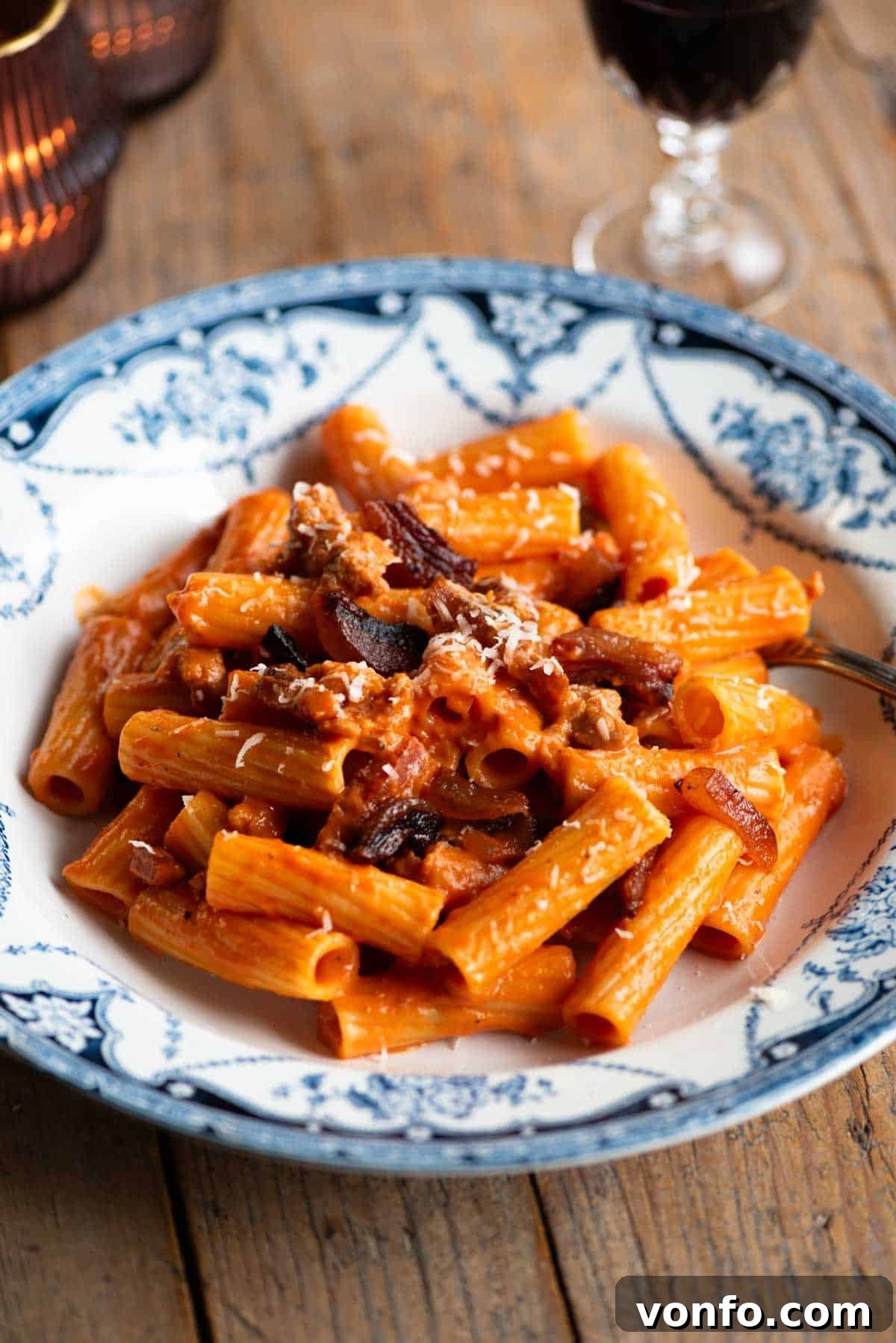
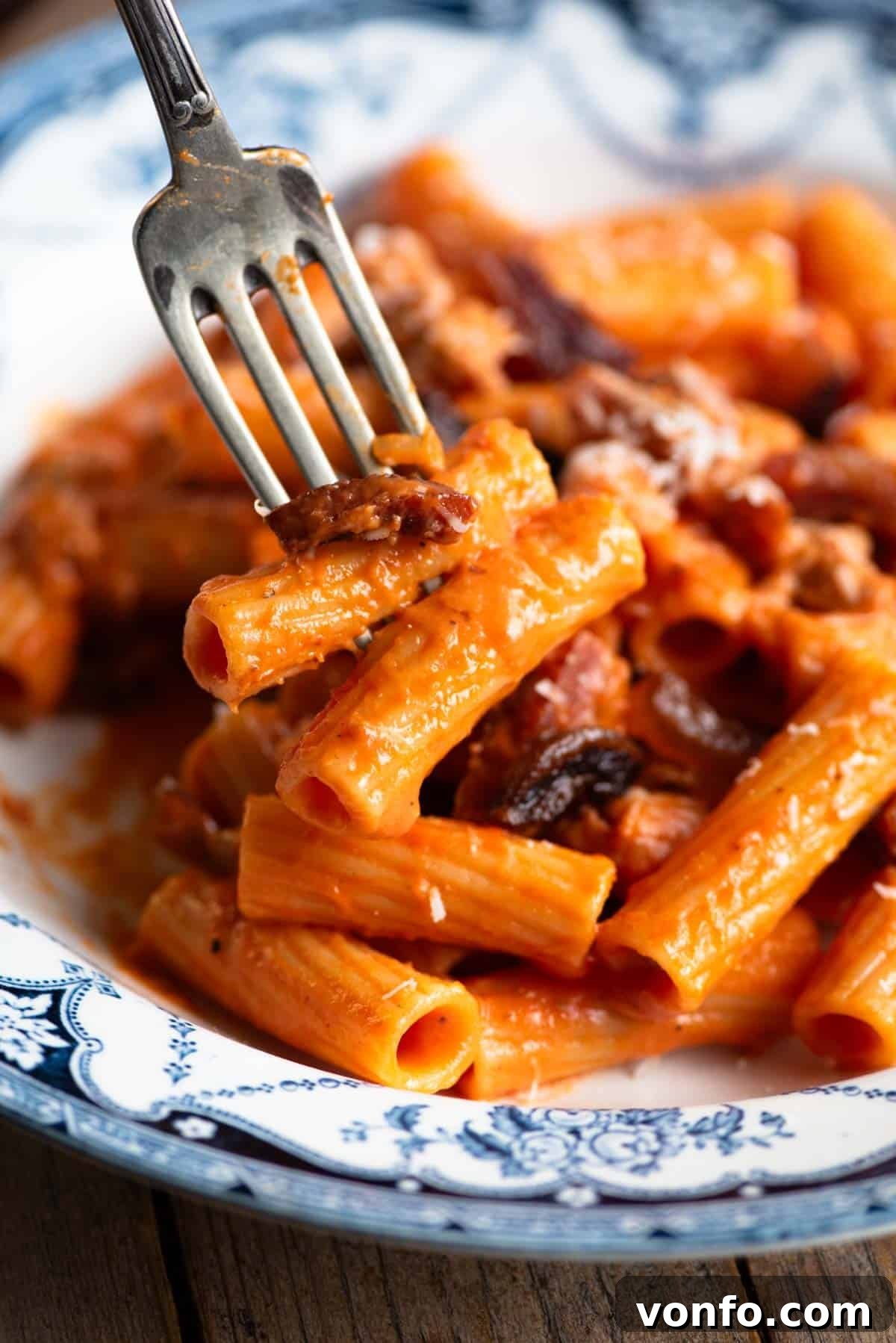
Pasta alla Zozzona is not just a dish; it’s a culinary revelation, a bold and glorious fusion that brings together three titans of Roman cuisine into one incredibly decadent experience. Imagine the smoky richness of Amatriciana, the creamy embrace of Carbonara, and the sharp, cheesy bite of Cacio e Pepe, all harmoniously united in a single, unforgettable plate of pasta. This truly is the ultimate Roman indulgence, a dish designed to tantalize every taste bud and leave you utterly satisfied.
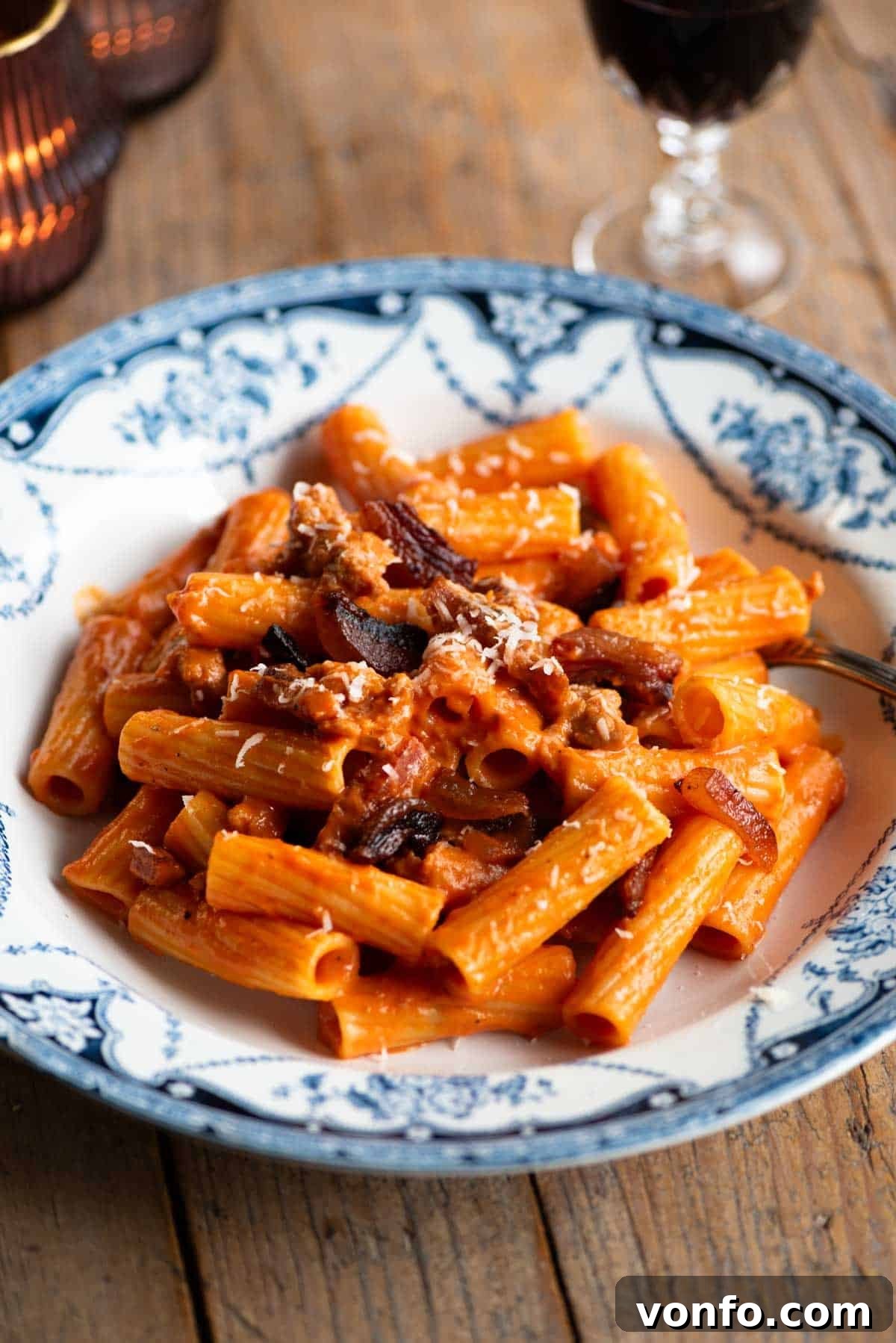
When the concept of Pasta alla Zozzona first surfaced, many, including myself, might have thought it a culinary myth, too audacious to be real. Yet, it very much is a cherished “thing” in Rome, and its deliciousness is beyond dispute. The name itself, “Zozzona,” translates evocatively to ‘filthy’ or ‘dirty,’ a playful nod to the dish’s incredibly rich, indulgent, and undeniably generous nature. It’s a combination of all things wonderful in Roman cooking, featuring a medley of intensely flavorful ingredients that build layers of complexity.
At its heart, you’ll find the robust flavor of cured guanciale, alongside savory Italian sausage, all simmered with aromatic white wine and sweet onion. But the true magic happens with the creamy emulsification of fresh egg yolks and copious amounts of Pecorino Romano cheese, binding everything into a sauce that is velvety, unctuous, and utterly irresistible. This isn’t a dish for the faint of heart or for everyday consumption; it’s a special treat, a celebration of flavor that’s perfect for a cozy evening in, perhaps paired with a fine glass of Italian wine. Prepare yourself for a pasta experience like no other – a true Roman classic that demands to be savored.
The Roman Legacy: A Culinary Fusion
To truly appreciate Pasta alla Zozzona, one must understand the iconic Roman dishes it draws inspiration from. Each component plays a crucial role, contributing its unique character to this harmonious blend. Amatriciana brings its vibrant tomato base and the savory depth of guanciale, often with a hint of chili. Carbonara provides the luscious creaminess from egg yolks and Pecorino, expertly emulsified with rendered guanciale fat, creating that signature silky texture. And Cacio e Pepe, the simplest yet most elegant of Roman pastas, lends its sharp, peppery, and intensely cheesy essence, relying solely on Pecorino Romano, black pepper, and pasta water to form a sublime sauce.
Pasta alla Zozzona ingeniously combines these elements, creating a symphony of flavors that is both familiar and excitingly new. It’s a testament to Roman culinary creativity, demonstrating how traditional ingredients can be reimagined to produce something truly extraordinary. This dish isn’t about throwing everything into a pot; it’s about understanding the delicate balance required to ensure each element shines while contributing to a cohesive, rich, and deeply satisfying whole.
Ingredients for Pasta alla Zozzona
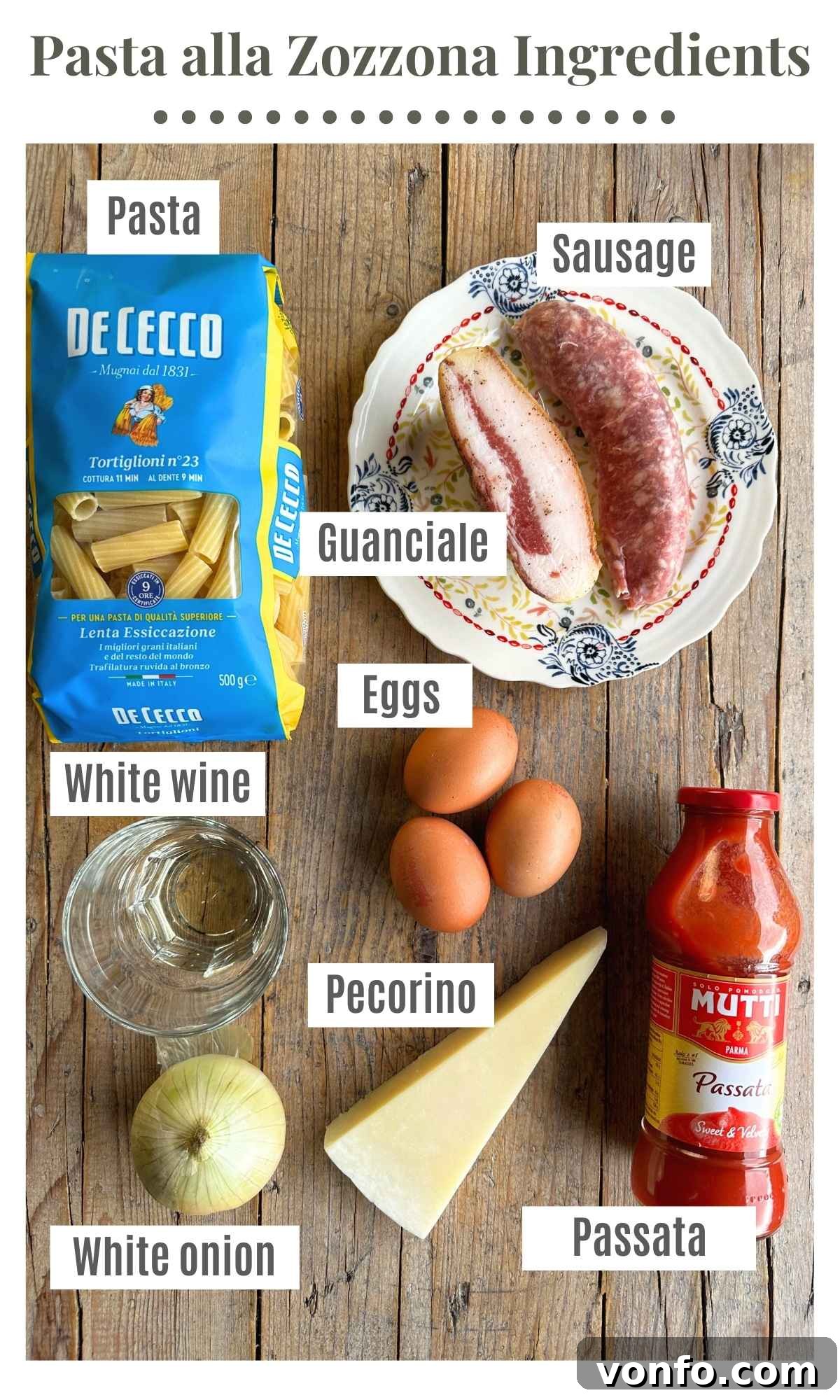
Crafting the perfect Pasta alla Zozzona starts with selecting the right ingredients. Quality is key, as each component contributes significantly to the final, rich flavor profile of this Roman masterpiece. Here’s a detailed look at what you’ll need to create this indulgent dish:
Ingredient Notes and Substitutions for Best Results
- Pasta – While we highly recommend rigatoni for its ability to beautifully capture the rich sauce within its ridges, any robust, short pasta shape like bucatini, paccheri, or even large penne will work wonderfully. The goal is a pasta that can stand up to and cradle the hearty sauce.
- Guanciale – This cured pork jowl is the authentic heart of Roman pasta dishes, offering a distinct, rich, and slightly sweet flavor that renders beautifully into a fragrant fat. If guanciale is unavailable, good quality pancetta (Italian cured pork belly) is the best substitute. However, note that guanciale’s unique flavor deepens the sauce in a way pancetta cannot fully replicate.
- Italian sausage – Opt for mild Italian sausages to avoid overpowering the other delicate flavors. If you prefer a little kick, a mild spicy Italian sausage can be used, but ensure it complements rather than dominates. Remove the casings before cooking for an evenly crumbled texture.
- Passata – This smooth, strained tomato puree provides the essential Amatriciana touch. For the best flavor, use a high-quality brand. If passata isn’t available, good quality crushed or finely chopped tomatoes (like Mutti Polpa) can be used, though they might require a longer simmer to break down and blend smoothly.
- Pecorino Romano – This sharp, salty, hard sheep’s milk cheese is non-negotiable for an authentic Roman flavor. Its pungent taste is crucial for balancing the richness of the guanciale and sausage. While Parmigiano Reggiano can be used in a pinch, it offers a milder, nuttier profile that will change the characteristic Roman taste of the dish.
- Egg Yolks – Fresh, large egg yolks are essential for the creamy, emulsified sauce. Ensure your eggs are at room temperature before mixing to prevent scrambling when introduced to the warm pasta.
- White Wine & Onion – These aromatics provide depth and complexity to the base sauce. A dry white wine is preferred.
Visual Walk-through: Crafting Pasta alla Zozzona Step-by-Step
Follow our step-by-step photos below for a visual guide to making this incredible pasta dish. Detailed written instructions and expert tips can be found in the complete recipe section further down.
- Fry the Guanciale – Begin by rendering the guanciale in a large pan over medium heat until it’s beautifully golden and crispy. Carefully remove the crispy guanciale bits with a slotted spoon and set them aside. Pour most of the rendered guanciale fat into a small ramekin and reserve it for later, leaving just a tablespoon or two in the pan for the next step (photo 1).
- Sauté Onion and Sausage – Add the finely chopped white onion to the pan with the remaining guanciale fat. Sauté until the onion becomes soft and translucent. Then, add the Italian sausage (removed from its casings) and break it up with a spoon as it browns. Cook until the sausage is evenly browned and cooked through (photo 2).
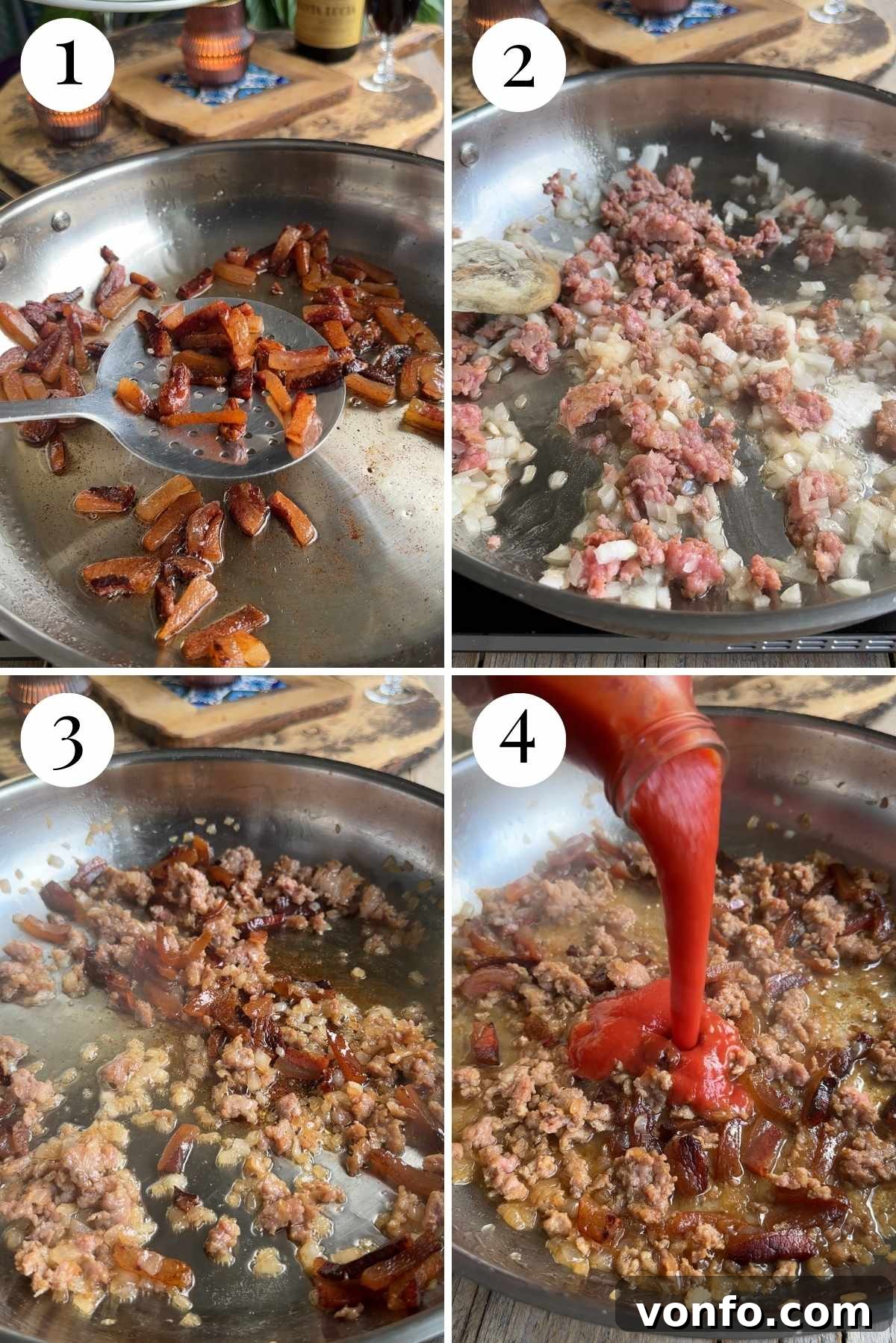
- Build the Tomato Sauce – Return about two-thirds of the crispy guanciale back into the pan with the sausage and onion mixture (reserve the rest for garnish). Pour in the white wine and allow it to reduce for approximately 2 minutes, scraping up any delicious browned bits from the bottom of the pan. Next, add the passata (tomato puree) and bring the sauce to a gentle simmer. Let it cook on low heat while your pasta boils to allow the flavors to meld beautifully (photos 3 and 4).
- Prepare the Egg Mixture – While the pasta and sauce are cooking, whisk the fresh egg yolks in a bowl with a generous amount of grated Pecorino Romano cheese and plenty of freshly ground black pepper. Continue whisking until you achieve a thick, smooth paste. To loosen this mixture slightly and infuse it with extra richness, slowly whisk in some of the reserved guanciale fat. Alternatively, if you prefer, a splash of hot pasta water can be used to achieve the desired consistency (photos 6 and 7).
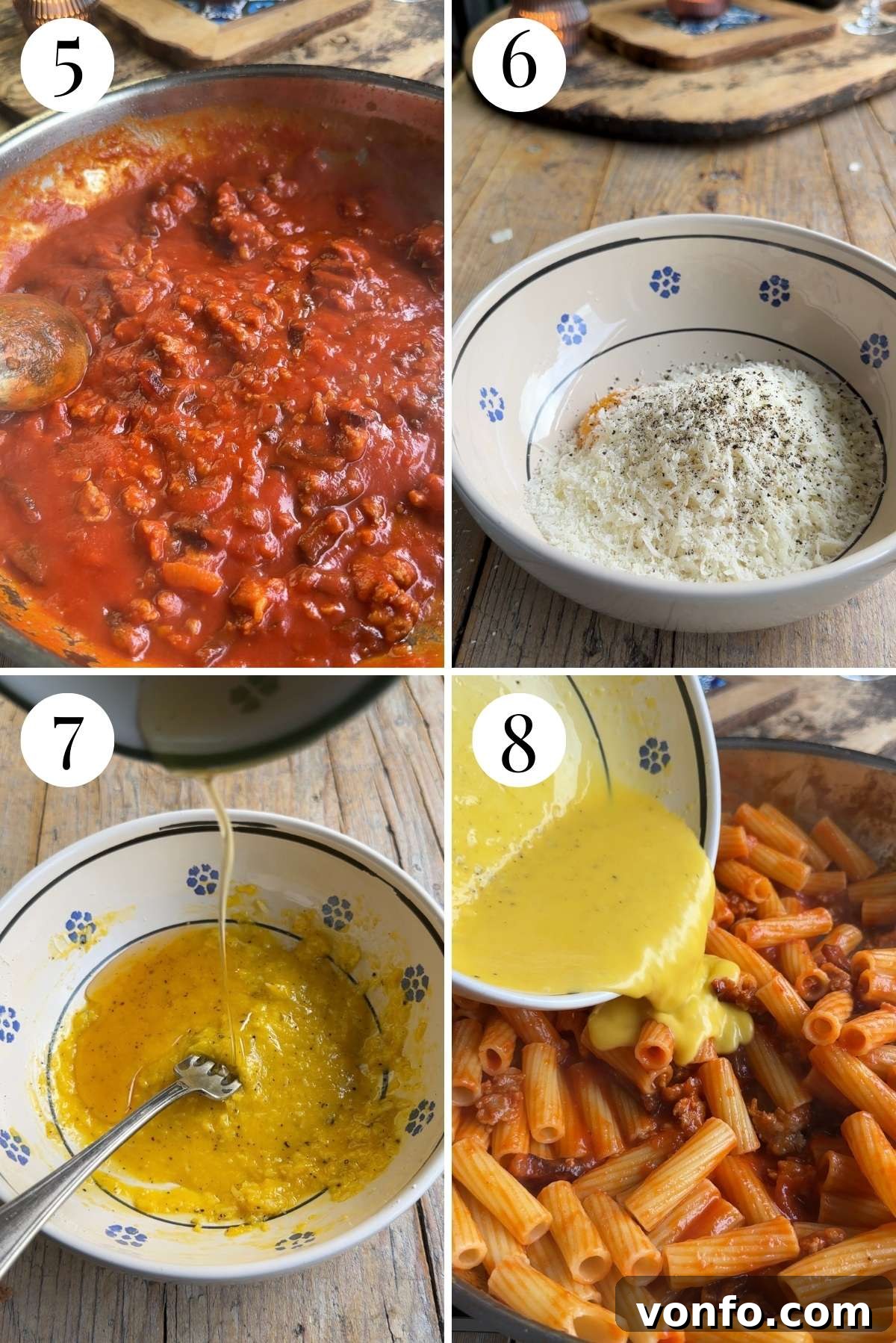
- Combine and Serve – Once your pasta is perfectly al dente, drain it, reserving some pasta water, and add it directly to the simmering sauce. Toss thoroughly to ensure every piece of pasta is coated. Turn off the heat completely before adding the egg yolk mixture. Stir vigorously and continuously until the egg yolks emulsify with the sauce, creating a thick, creamy, and glossy coating. Serve the pasta immediately in warm bowls, topped with the remaining crispy guanciale and an extra sprinkle of grated Pecorino cheese (photo 8).
More Classic Roman Dishes to Try
If you’ve fallen in love with the rich flavors of Pasta alla Zozzona, you’ll surely enjoy exploring other authentic Roman culinary delights. Here are some more traditional dishes that capture the essence of Roman cooking:
Mains
Veal Saltimbocca with Prosciutto and Sage
Pasta
Penne all’Arrabbiata: Spicy Italian Tomato Pasta
Gnocchi
Gnocchi Carbonara
Pasta
Pasta alla Gricia
If you’ve tried this Pasta alla Zozzona recipe or any other recipe on the blog, please don’t forget to rate the recipe and let me know how you got on in the comments below. We love hearing from you! You can also follow us on Facebook, Instagram, and Pinterest, or sign up to our Newsletter to discover more of our delicious food.
Step By Step Photos Above
Most of our recipes come with step by step photos, helpful tips and tricks to make it perfectly first time and even video!
Pasta alla Zozzona
Rated 5 stars from 4 votes
By Emily
Print Recipe
Save this recipe!
Get this sent to your inbox, plus get new recipes from us every week!
Ingredients
- 14 oz (400g) Rigatoni, or other short pasta
- 5.3 oz (150g) guanciale, cut into cubes or strips (about 1.5 cups), can also use pancetta
- 5.3 oz (150g) Italian sausages, removed from their casings (about 1 large sausage or 2 small)
- 1 white onion, finely chopped
- ¼ cup (60ml) dry white wine
- 14 oz (400g) passata (tomato puree US)
- 1.5 oz (40g) Pecorino Romano, grated, plus more for serving
- 3 large egg yolks
- Salt and freshly ground black pepper, to taste
Instructions
- Bring a large pot of salted water to a rolling boil for the pasta.
- Meanwhile, in a large, heavy-bottomed pan, add the guanciale over medium heat and fry until golden and crispy. Remove the guanciale with a slotted spoon and set aside. Pour most of the rendered guanciale fat into a small ramekin and reserve for later, leaving about a tablespoon in the pan.
- Next, add the finely chopped onion to the pan and sauté until soft and translucent. Add the Italian sausage (removed from casings) and brown, breaking it up with a spoon. Once browned, add about two-thirds of the crispy guanciale back to the pan, reserving the rest for garnish.
- Pour in the white wine and let it simmer for 1-2 minutes, allowing it to reduce and deglaze the pan. Stir in the passata (tomato puree) and bring the sauce to a gentle simmer. Reduce the heat to medium-low and let it cook for about 10 minutes while the pasta cooks.
- While the sauce is simmering, add the rigatoni to the boiling salted water and cook until al dente, according to package directions.
- In a separate bowl, whisk the egg yolks. Add the grated Pecorino Romano cheese and a generous amount of freshly ground black pepper, then whisk with a fork until you have a thick paste.
- To make the egg mixture extra creamy, whisk in some of the reserved guanciale fat. Alternatively, you can use a tablespoon or two of hot pasta water to loosen the egg mixture to your desired consistency.
- Once the pasta is al dente, drain it, reserving a cup of pasta water. Turn off the heat under the sauce pan. Add the cooked pasta to the tomato sauce and toss vigorously to combine. Immediately add the egg yolk mixture and stir continuously and quickly until the sauce becomes creamy and coats the pasta beautifully. Do not put it back on the heat, as this will scramble the eggs.
- Serve immediately in warmed bowls, topped with the remaining crispy guanciale and an extra sprinkle of Pecorino Romano cheese.
Video
Notes
- Don’t throw out your egg whites – Egg whites can be frozen and later used to make a variety of delicious savory or sweet dishes. Consider using them for traditional Tuscan Ricciarelli cookies or our soft Amaretti cookies.
- Leftovers – Pasta alla Zozzona is truly best served immediately to enjoy its creamy texture and fresh flavors. However, if you have leftovers, you can refrigerate them in an airtight container for 1-2 days. To reheat, gently warm on the stovetop over low heat. You may need to add a splash of water or broth to help loosen the sauce and restore its consistency.
Helpful Info for All Recipes
- I always use extra virgin olive oil in all of my recipes unless stated otherwise.
- When I use canned or jarred tomatoes of any kind, I always recommend Cirio or Mutti brands for the best results and flavor.
- All vegetables are considered medium-sized unless specified otherwise.
- All recipes are tested and developed using a fan (convection) oven.
- Find out more about how nutrition is calculated.
- Check out our must-have Italian Pantry Staples.
- You can also find all our Essential Kitchen Tools for Italian Cooking.
Nutrition
Calories: 611 kcal | Carbohydrates: 59g | Protein: 20g | Fat: 32g | Saturated Fat: 12g | Polyunsaturated Fat: 2g | Monounsaturated Fat: 5g | Cholesterol: 150mg | Sodium: 511mg | Potassium: 563mg | Fiber: 4g | Sugar: 6g | Vitamin A: 497IU | Vitamin C: 9mg | Calcium: 124mg | Iron: 3mg
Nutrition information is automatically calculated, so should only be used as an approximation.
Did you try this recipe?
Leave a comment below!