
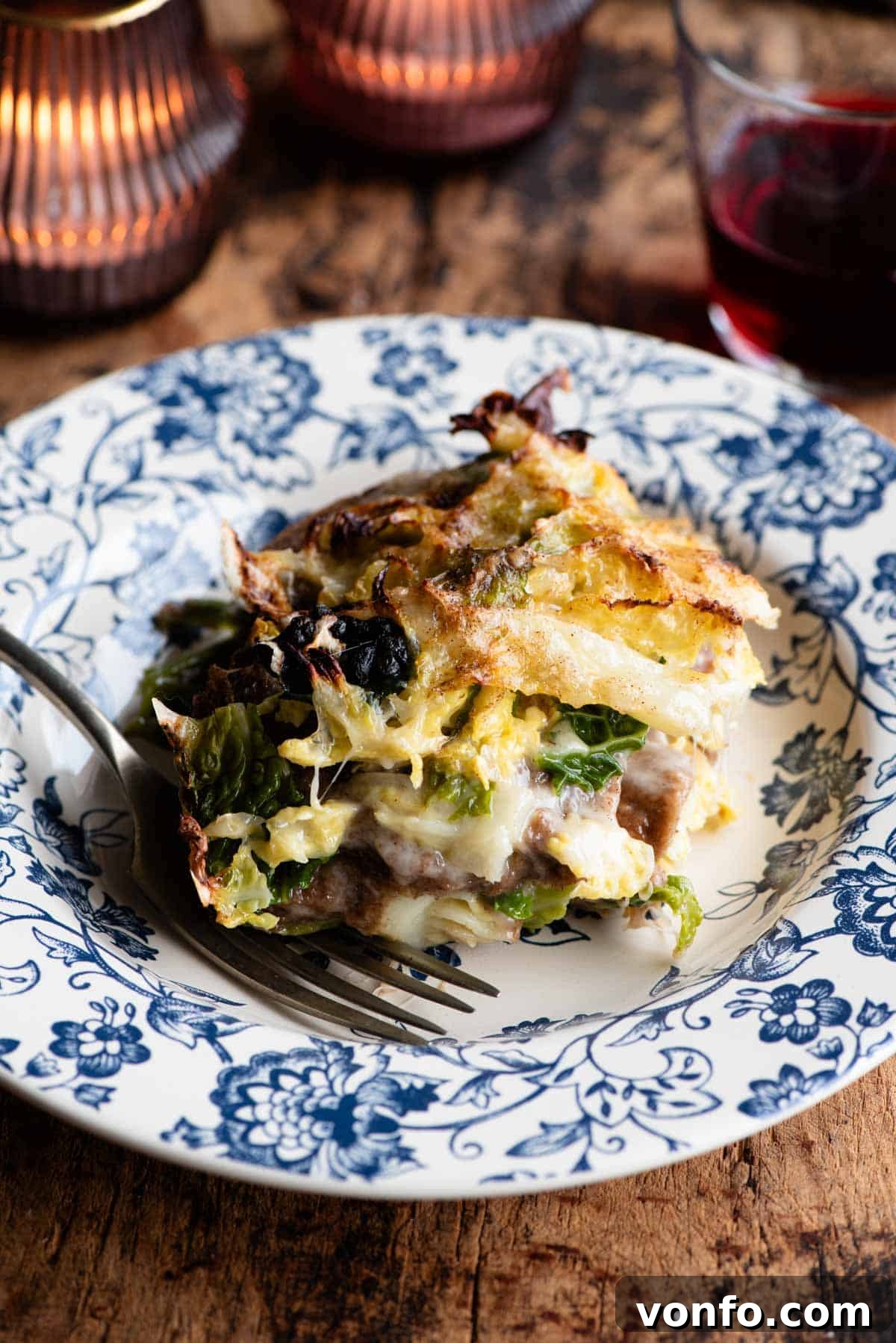
Zuppa alla Valpellinese is far more than just a soup; it’s a magnificent, rich, and deeply satisfying casserole hailing from the picturesque Aosta Valley in northern Italy. This rustic dish masterfully combines layers of crusty rye bread, sweet and tender cabbage, the distinctive nutty flavor of Fontina cheese, all bathed in savory beef stock and kissed with a hint of cinnamon. It’s the quintessential comfort food, simple to prepare yet brimming with incredible, complex flavors that evoke the warmth of an Italian Alpine kitchen. If you’re seeking a dish that truly nourishes the soul and provides a cozy embrace, Zuppa alla Valpellinese is your perfect culinary companion.
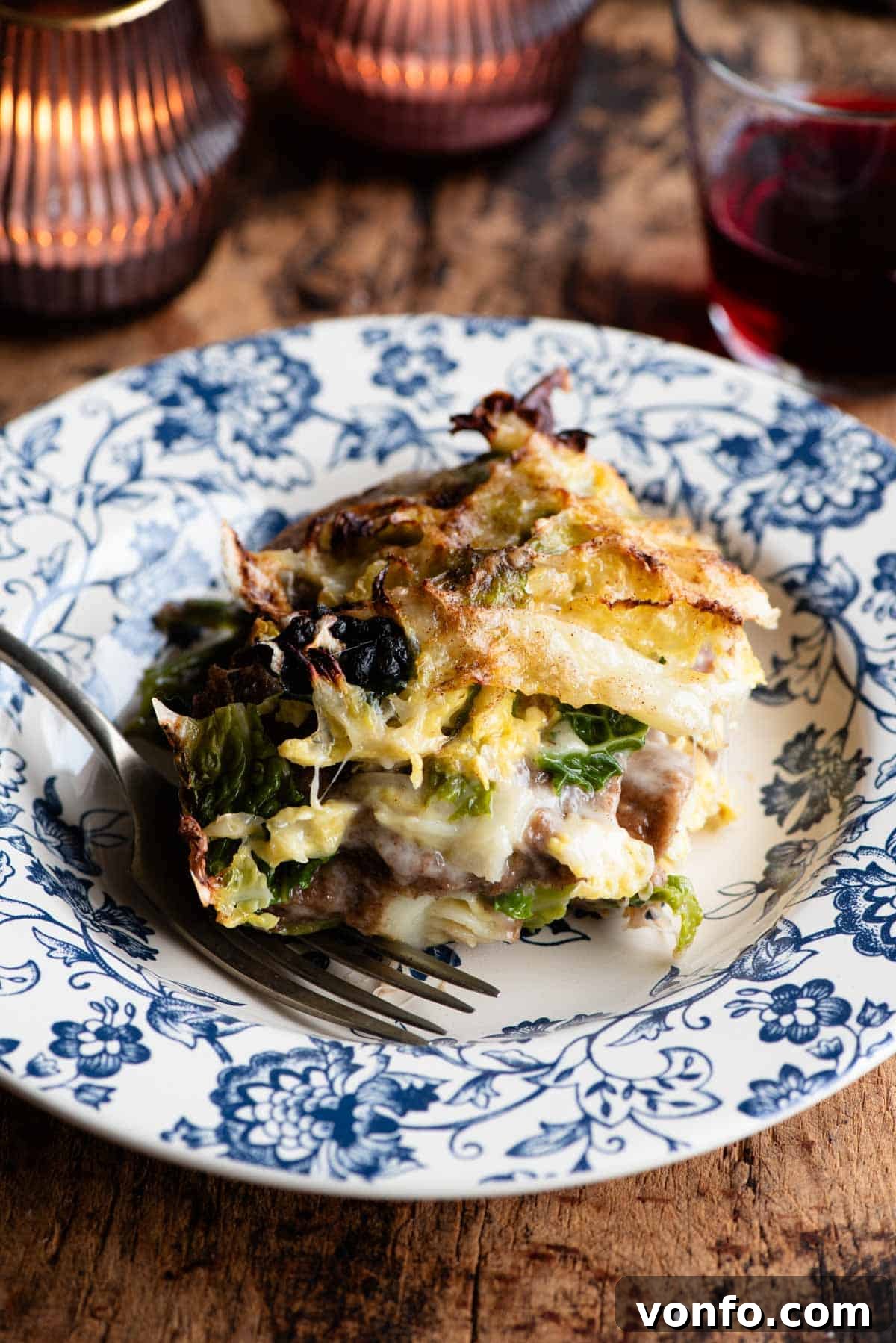
The Aosta Valley, nestled in the Italian Alps, is renowned for its robust and heartwarming cuisine, designed to provide sustenance and comfort in its mountainous landscape. Zuppa alla Valpellinese stands as a prime example of this culinary tradition. Despite its name, which translates to “soup,” in Italy, the term “zuppa” often refers to a thicker, heartier stew or casserole, and this dish perfectly fits that description. It’s not a brothy soup in the conventional sense, but rather a substantial baked creation where the bread lovingly soaks up the rich beef broth, infusing every bite with immense flavor and creating an irresistible texture.
This traditional casserole is a celebration of humble, readily available ingredients transformed into something extraordinary. The secret to its incredible texture lies in using stale, crusty bread, which effectively absorbs the beef stock without becoming mushy. This not only enhances the flavor but also provides a fantastic way to utilize leftover bread, minimizing food waste while creating a masterpiece. Plan ahead by slicing your bread a couple of days in advance and allowing it to air-dry, or simply choose a day-old loaf from your local bakery.
Essential Ingredients for Authentic Zuppa alla Valpellinese
Crafting the perfect Zuppa alla Valpellinese begins with selecting the right ingredients. Each component plays a vital role in building the dish’s distinct flavor profile and comforting texture. We’ve extensively tested various options to guide you towards the most delicious results.
Choosing the Best Bread
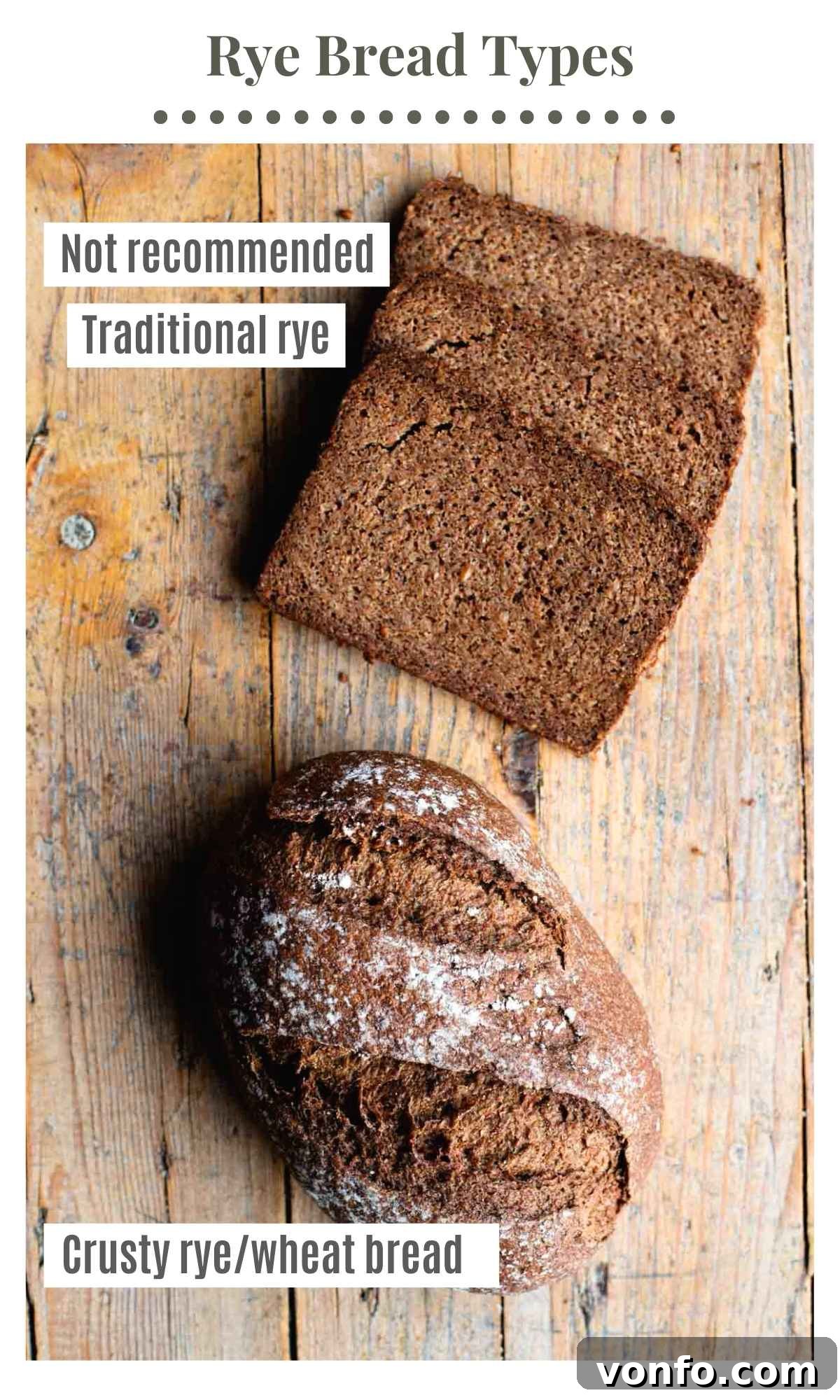
The bread is the foundation of this casserole, and selecting the correct type is crucial for both flavor and texture. While some traditional recipes might suggest a dense, wheat-free rye bread, our testing revealed that this specific type can lead to a less desirable outcome, failing to absorb the liquid effectively and resulting in a crumbly, heavy texture.
Instead, we highly recommend using a crusty loaf that is a blend of rye and wheat. This combination offers the perfect balance – the robust flavor of rye with the lighter, more absorbent qualities of wheat. If a rye and wheat mix is unavailable, a good quality brown or wholemeal crusty bread makes an excellent substitute. We found that wholemeal bread also performs admirably, soaking up the broth beautifully and contributing a delightful, rustic flavor.
Detailed Ingredient Notes and Smart Substitutions
- Beef Stock: The Flavorful Base
Using reduced-salt beef stock is absolutely essential for this recipe. Regular beef stock, especially store-bought liquid varieties, can be intensely strong and overpower the delicate balance of flavors in the casserole. We achieved the best results with a beef jelly stock pot dissolved in water, which provided rich beefy notes without excessive salinity. If you must use standard liquid beef stock, we strongly advise diluting it with an equal part of water to prevent the dish from becoming overly salty and concentrated. You want the stock to complement, not dominate, the cheese and cabbage. - Cabbage: The Sweet Counterpoint
The cabbage provides a wonderful earthy sweetness and a satisfying textural element. Both savoy cabbage and green cabbage are suitable options. Savoy cabbage tends to be a bit more tender and frilly, offering a slightly softer texture, while green cabbage is firmer and holds its shape a little more. Either choice will yield delicious results, so use what is most accessible or what you prefer. - Fontina Cheese: The Aosta Valley Star
Fontina cheese is indigenous to the Aosta Valley and is an absolute star in this dish. Its semi-soft, nutty, and slightly earthy flavor, coupled with its excellent melting properties, makes it perfect for creating those gooey, golden layers. If authentic Fontina is hard to find, a good alternative is Gruyère cheese, another Alpine cheese known for its similar melting qualities and rich, savory profile. Other possible substitutes include Emmental or even a sharp aged cheddar if you’re looking for a bolder flavor. - Cinnamon: The Unexpected Warmth
A generous pinch of ground cinnamon might seem unusual in a savory casserole, but it’s a traditional and crucial element in Zuppa alla Valpellinese. It doesn’t make the dish taste sweet; instead, it adds a subtle, warm, and aromatic note that beautifully complements the richness of the cheese and beef stock, elevating the overall complexity of the flavor. Don’t skip it, but use it sparingly – a little goes a long way to achieve that perfect hint of spice.
Step-by-Step Visual Guide and Detailed Instructions
This visual and detailed guide will walk you through each step of preparing Zuppa alla Valpellinese, ensuring a perfect result. For a quick reference of ingredient amounts and a printable recipe card, please scroll to the end of the article.
- Prepare the Cabbage with Care: Begin by taking your chosen cabbage and removing its tough core. Then, cut the cabbage into even strips. It’s crucial to wash the cabbage thoroughly under cold running water to remove any dirt or grit. Next, bring a large pot of water to a rolling boil and season it generously with salt – this will help flavor the cabbage from within. Add the cabbage strips to the boiling water and cook for approximately 5 minutes, or until tender-crisp. Drain the cabbage completely, pressing out any excess water, and set it aside to cool slightly. This pre-cooking step ensures the cabbage is perfectly tender in the final casserole. (Refer to photos 1 and 2 in our visual guide for precise cutting and boiling techniques).
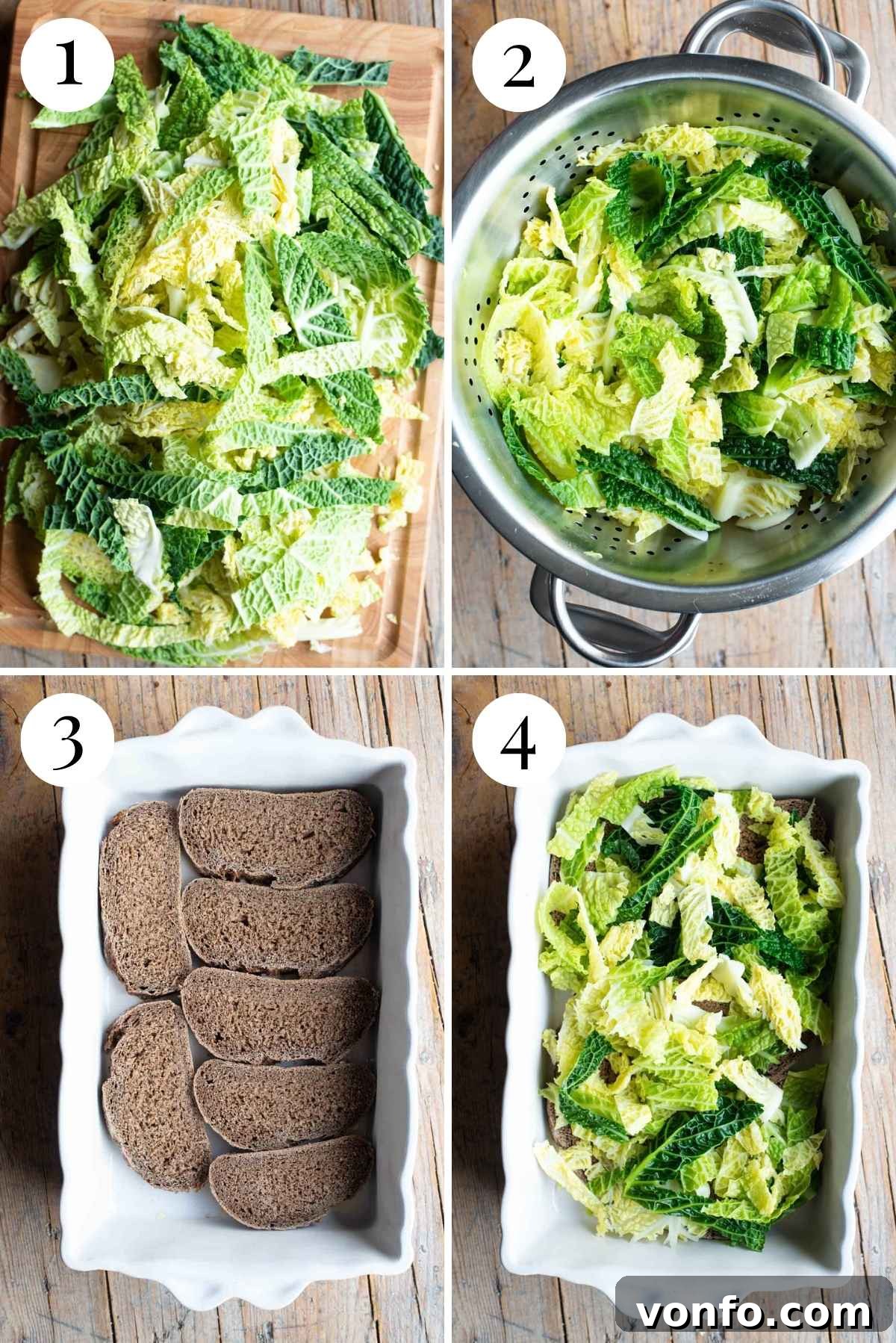
- Establish the Bread Base: While your cabbage cools, prepare your baking dish. Lightly grease the entire interior of an 11.5×7.5 inch baking dish with butter. This prevents sticking and adds a wonderful flavor to the crust. Carefully arrange a single, even layer of your sliced, crusty stale bread (each slice should be about ½ inch thick) across the bottom of the prepared dish. Ensure there are no large gaps, as this layer will soak up the delicious broth. (See photo 3 for proper bread placement).
- Layer with Cabbage and Cheese: Once the bread base is established, follow with an even layer of the drained, pre-cooked cabbage, spreading it out evenly over the bread. Immediately top the cabbage with a generous layer of grated Fontina cheese. For this first cheese layer, use just under half of your total grated cheese, reserving a slightly larger portion for the very top of the casserole to achieve that ultimate golden crust. The Fontina will melt beautifully into the cabbage and bread, creating pockets of rich flavor. (Observe photos 4 and 5 for accurate layering of cabbage and cheese).
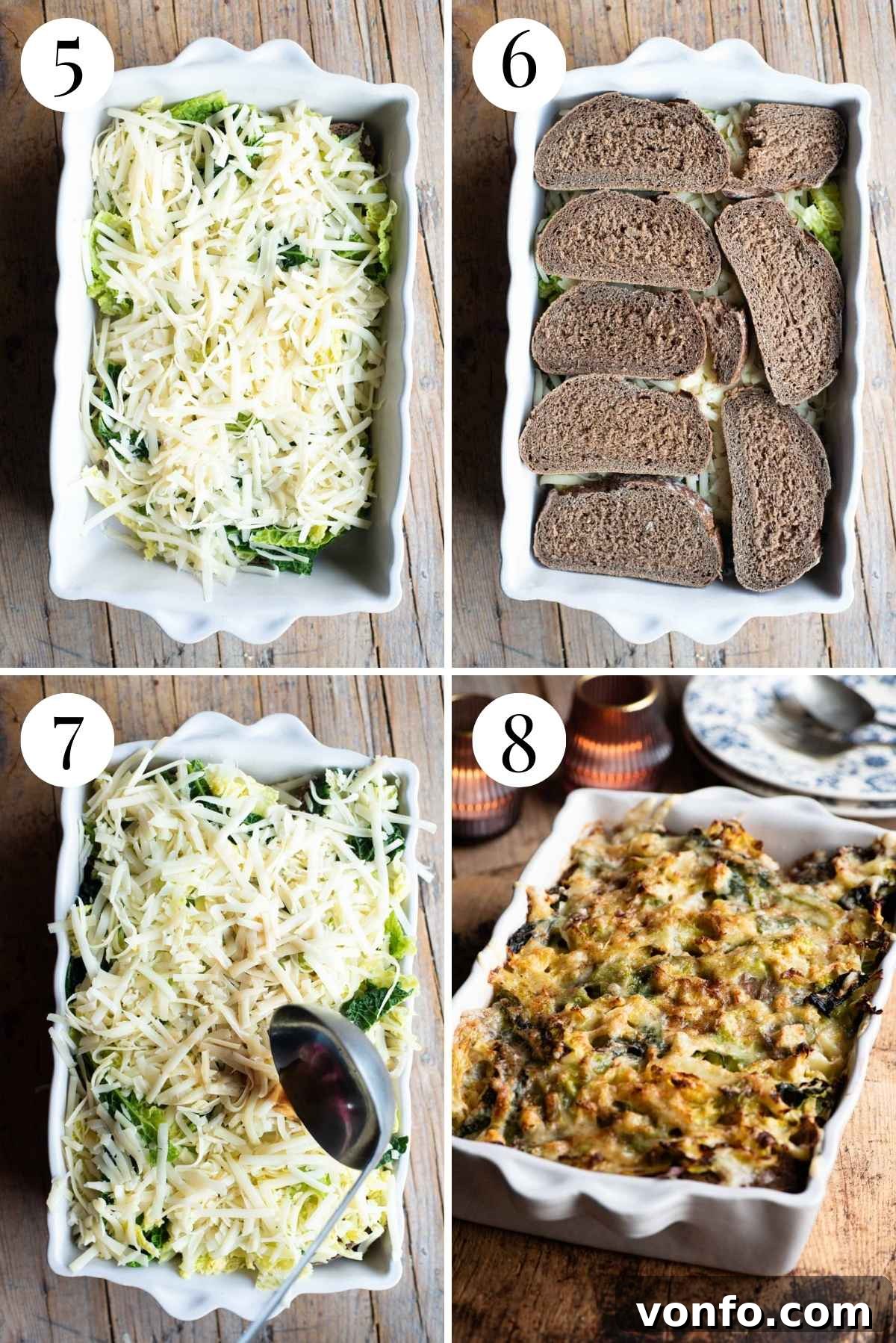
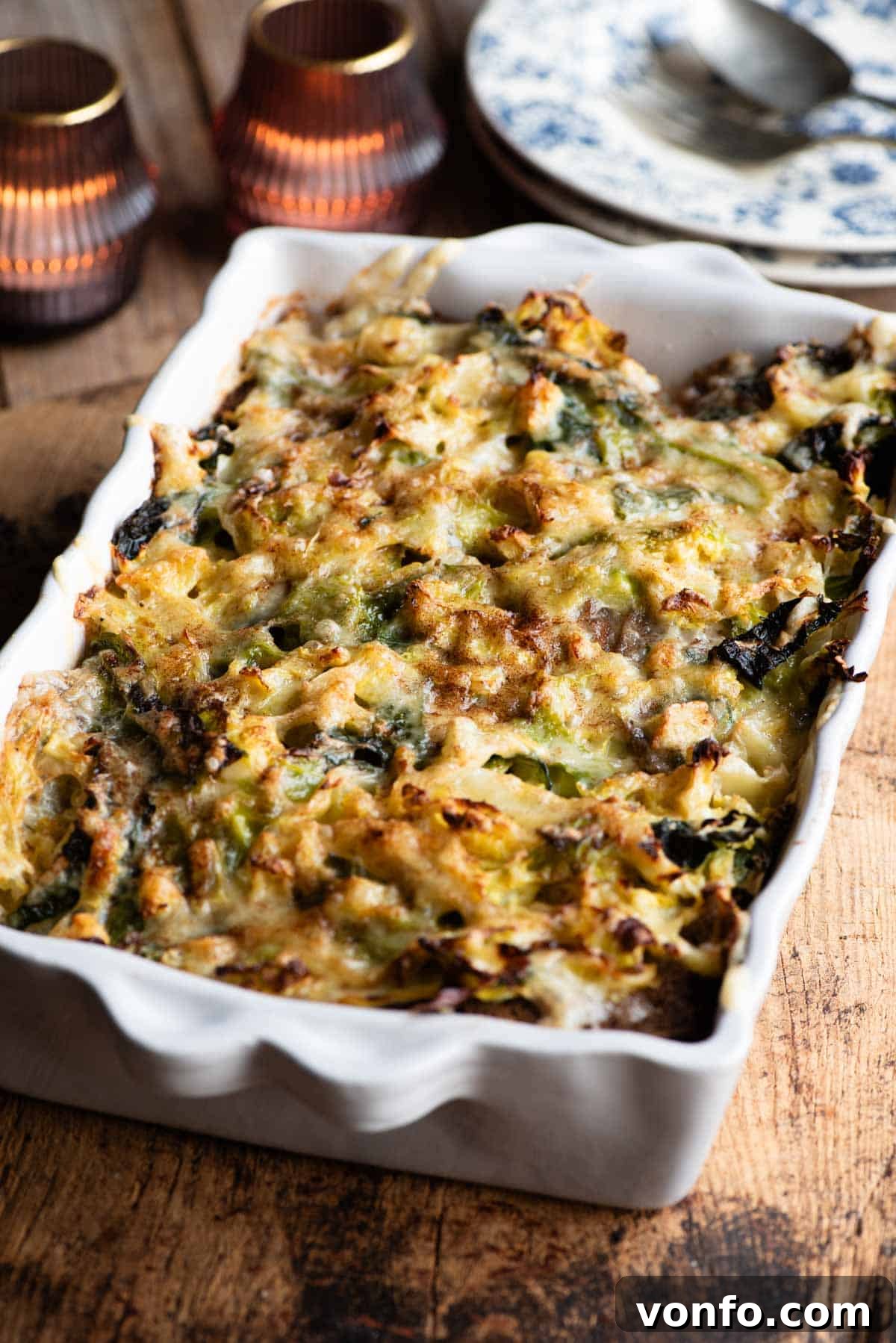
- Complete the Layers and Bake to Perfection: Repeat the layering process with another layer of sliced bread, followed by the remaining cabbage. Finally, top the entire casserole with the rest of your grated Fontina cheese, ensuring an even spread to create a magnificent golden crust. Carefully pour the warm beef stock over the layered ingredients. The bread will immediately begin to absorb the liquid, which is exactly what you want. Finish by sprinkling a generous pinch of ground cinnamon (approximately just under ¼ teaspoon) evenly over the top – this subtle spice is key to the dish’s authentic flavor. Bake the casserole in your preheated oven at 180℃ (350℉) for 30-35 minutes, or until the cheese is beautifully bubbling and achieves a rich golden-brown hue. Once baked, remove from the oven and allow it to rest for at least 5 minutes before serving. This brief resting period helps the casserole set, making it easier to serve and allowing the flavors to meld perfectly. (Photos 6-8 provide a clear visual of the final layering, stock addition, and the magnificent baked result).
Explore More Culinary Treasures from the Aosta Valley
The Aosta Valley’s culinary heritage is rich with dishes that embody the region’s unique blend of Italian and French influences, alongside hearty Alpine traditions. Known for its cheeses, cured meats, and comforting one-pot meals, Aosta Valley cuisine offers a delightful journey for any food enthusiast. If you’ve enjoyed the authentic flavors of Zuppa alla Valpellinese, we invite you to delve deeper into the gastronomic delights of this captivating Italian region. Here are more recipes that showcase the distinct charm and robust flavors of the Aosta Valley, perfect for expanding your repertoire of traditional Italian comfort food.
Italian Cookies
Tegole Valdostane (Hazelnut and Almond Cookies)
Mains
Costoletta alla Valdostana (Stuffed Breaded Veal)
Risotto
Risotto alla Valdostana (Fontina Cheese Risotto)
Sides
Creamy Polenta (Italian Cornmeal)
We hope you’ve enjoyed learning about and making this authentic Zuppa alla Valpellinese recipe. If you’ve tried this dish or any other recipe from our blog, please don’t hesitate to rate the recipe and share your experience in the comments section below. Your feedback means the world to us! You can also follow us on Facebook, Instagram, and Pinterest to stay updated with our latest delicious creations. For more recipes and culinary inspiration delivered straight to your inbox, be sure to sign up for our Newsletter.
Step By Step Photos Above
Most of our recipes come with step-by-step photos, helpful tips and tricks to make it perfectly the first time, and sometimes even video tutorials!
Zuppa alla Valpellinese (Cheese and Cabbage Casserole)
By Emily
20
35
55
6 – 8 servings
Equipment
-
11.5×7.5 inch baking dish
-
Large pot
-
Grater (for cheese)
Ingredients
- 1 savoy cabbage (or green cabbage)
- 700 ml (3 cups / 23.5 fl oz) beef stock (reduced salt is crucial)
- 600 g (1.4 lbs) stale rye and wheat crusty bread, (or wholemeal crusty bread)
- 400 g (14 oz) Fontina cheese, (approx. 4.5 cups grated)
- Butter for greasing
- Generous pinch of ground cinnamon, (just under 1/4 teaspoon for a subtle hint)
Instructions
-
1. Preheat your oven to 180℃ (350℉). Bring a large pot of water to a boil and salt it well.
-
2. Keep your reduced-salt beef stock warm in a separate saucepan, but do not allow it to simmer or boil. If it starts to boil, turn off the heat.
-
3. Prepare the cabbage: Remove the tough core from the savoy cabbage and cut it into even strips. Wash the strips thoroughly in cold running water. Add the prepared cabbage to the salted boiling water and boil for 5 minutes until tender-crisp. Drain the cabbage well and let it sit to release any remaining excess water.
-
4. While the cabbage drains, cut your stale bread into ½-inch thick slices. Grate all the Fontina cheese.
-
5. Assemble the casserole: Lightly grease your 11.5×7.5 inch baking dish with butter. Lay a single, even layer of sliced bread at the bottom of the dish, covering it completely. Follow with an even layer of the drained cabbage. On top of the cabbage, spread a layer of Fontina cheese, using just under half of your total grated cheese. Reserve slightly more cheese for the final top layer.
-
6. Repeat the layers: Add another layer of bread, then another layer of cabbage. Top with the remaining Fontina cheese, ensuring it covers the casserole evenly.
-
7. Pour the warm beef stock evenly over the assembled casserole. Sprinkle a generous pinch of ground cinnamon (about just under ¼ teaspoon) over the top.
-
8. Bake the Zuppa alla Valpellinese in the preheated oven, uncovered, for 30-35 minutes. The casserole is ready when the cheese is bubbling vigorously and has turned a beautiful golden-brown color.
-
9. Remove the baking dish from the oven and let it sit for at least 5 minutes before serving. This resting time allows the casserole to set and makes for easier, cleaner serving. Enjoy this rustic and comforting Italian masterpiece!
Recipe Notes and Expert Tips
- Seasoning with Salt: Even though this recipe uses reduced-salt beef stock, there’s generally no need to add any additional salt or seasoning to the casserole itself, other than salting the water for boiling the cabbage. The Fontina cheese, crusty bread, and beef stock collectively provide ample flavor and saltiness. Taste before adding more!
- Optimal Bread Choice: For the best results, avoid using traditional wheat-free rye bread, as it tends to be too dense and doesn’t absorb enough liquid, leading to a dry casserole. We highly recommend a crusty loaf made from a blend of wheat and rye. Alternatively, a good quality wholemeal or brown crusty bread will also work wonderfully, providing excellent absorption and a delightful texture.
- Cheese Alternatives: While Fontina cheese is traditional and highly recommended for its unique flavor and melting properties, it can be substituted. Gruyère cheese is an excellent alternative due to its similar Alpine origins and robust, nutty flavor profile. Other semi-hard, meltable Alpine cheeses like Emmental could also be considered.
- Leftovers and Storage: Zuppa alla Valpellinese makes fantastic leftovers. Store any remaining casserole in an airtight container in the refrigerator for 1-2 days. To reheat, cover the dish with foil and warm it in the oven at 160℃ (325℉) until it is piping hot throughout. While delicious as leftovers, the dish is truly at its peak, texture-wise, on the same day it is freshly made.
- Make-Ahead Tip: To save time, you can pre-boil the cabbage and grate the cheese a day in advance. Store them separately in the refrigerator. Assemble the casserole just before baking to ensure the bread doesn’t get too soggy before hitting the oven.
- Serving Suggestions: This hearty casserole is a complete meal on its own, perfect for a cold evening. For a lighter accompaniment, serve it with a simple green salad dressed with a vinaigrette. A glass of robust red wine from the Aosta Valley, such as a Fumin or Petit Rouge, would pair beautifully.
Helpful Info for All Our Recipes
- I consistently use extra virgin olive oil in all my recipes unless otherwise specified, for its superior flavor and quality.
- When utilizing canned or jarred tomatoes, I always opt for premium brands like Cirio or Mutti, as they consistently deliver the best results and flavor profile.
- All vegetables listed are assumed to be medium-sized unless a different size is explicitly stated.
- Every recipe shared here has been meticulously tested and developed using a fan (convection) oven to ensure reliable results.
- For details on how our nutrition information is calculated, please refer to our dedicated page.
- Discover our list of must-have Italian Pantry Staples to stock your kitchen.
- Explore our recommendations for all the Essential Kitchen Tools for Italian Cooking you’ll need.
Nutrition Information
Carbohydrates: 60g |
Protein: 31g |
Fat: 24g |
Saturated Fat: 13g |
Polyunsaturated Fat: 2g |
Monounsaturated Fat: 7g |
Cholesterol: 77mg |
Sodium: 1413mg |
Potassium: 773mg |
Fiber: 10g |
Sugar: 9g |
Vitamin A: 2116IU |
Vitamin C: 47mg |
Calcium: 502mg |
Iron: 4mg
Nutrition information is automatically calculated, so should only be used as an approximation. Actual values may vary based on specific ingredients and preparation methods.