
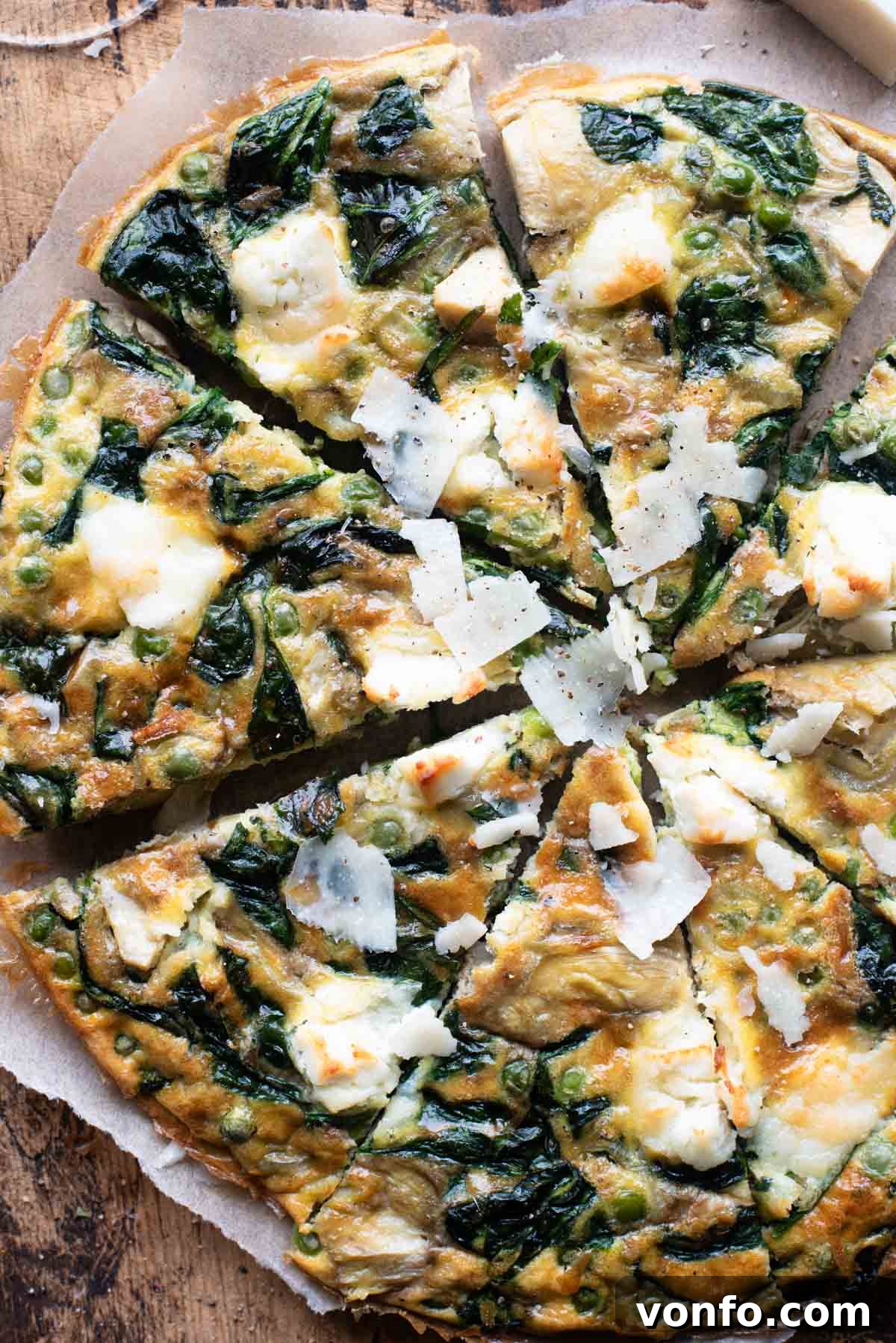
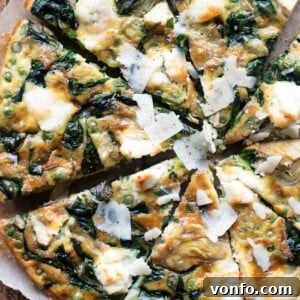
Prepare to delight your taste buds with this incredibly easy and utterly delicious Spinach and Artichoke Frittata. Infused with the sweetness of fresh peas and the creamy tang of goat’s cheese, this frittata is a versatile culinary marvel. Whether you’re planning a light lunch, a savory brunch, or a delightful picnic spread, this recipe delivers on flavor and convenience, ready from start to finish in less than 30 minutes. It’s an ideal choice for anyone seeking a wholesome, satisfying meal that doesn’t compromise on taste or require hours in the kitchen.
Why This Spinach and Artichoke Frittata Will Be Your New Favorite
In the quest for quick, healthy, and irresistibly tasty meals, this spinach and artichoke frittata stands out as a true culinary gem. It effortlessly checks all the boxes: it’s incredibly quick to prepare, packed with nutritious vegetables, and offers a delightful combination of flavors and textures. This frittata isn’t just a dish; it’s a solution for busy weekdays, spontaneous outdoor dining, or simply when you crave something light yet deeply satisfying.
The Versatility of a Frittata: An Italian Classic
At its heart, a frittata is a thick, Italian-style omelette, celebrated for its remarkable adaptability. Unlike its French counterpart, the omelette, which is typically folded, a frittata is cooked slowly on the stovetop and often finished in the oven, resulting in a more substantial and sliceable dish. Its beauty lies in its ‘anything goes’ nature. It’s a fantastic vehicle for using up leftover vegetables, cheeses, and even cooked meats, making it a perfect ‘fridge clear-out’ meal that minimizes waste and maximizes flavor. This inherent versatility means you can customize it endlessly to suit your preferences or whatever seasonal ingredients you have on hand.
Our particular recipe elevates the classic frittata with a vibrant blend of ingredients. We combine tender jarred artichoke hearts, sweet fresh or frozen peas, nutrient-rich spinach, and aromatic shallots. The star, however, is the generous addition of creamy goat’s cheese, which melts beautifully into the eggs, imparting a wonderfully tangy and rich flavor that perfectly complements the vegetables. This combination makes it especially ideal for enjoying during the fresh, light days of spring and summer, embodying the essence of seasonal eating.
For a detailed visual guide, including notes on ingredients, step-by-step photos, and expert tips, continue reading below. The full printable recipe card with all measurements and instructions is located at the bottom of this article.
Essential Ingredients for Your Frittata
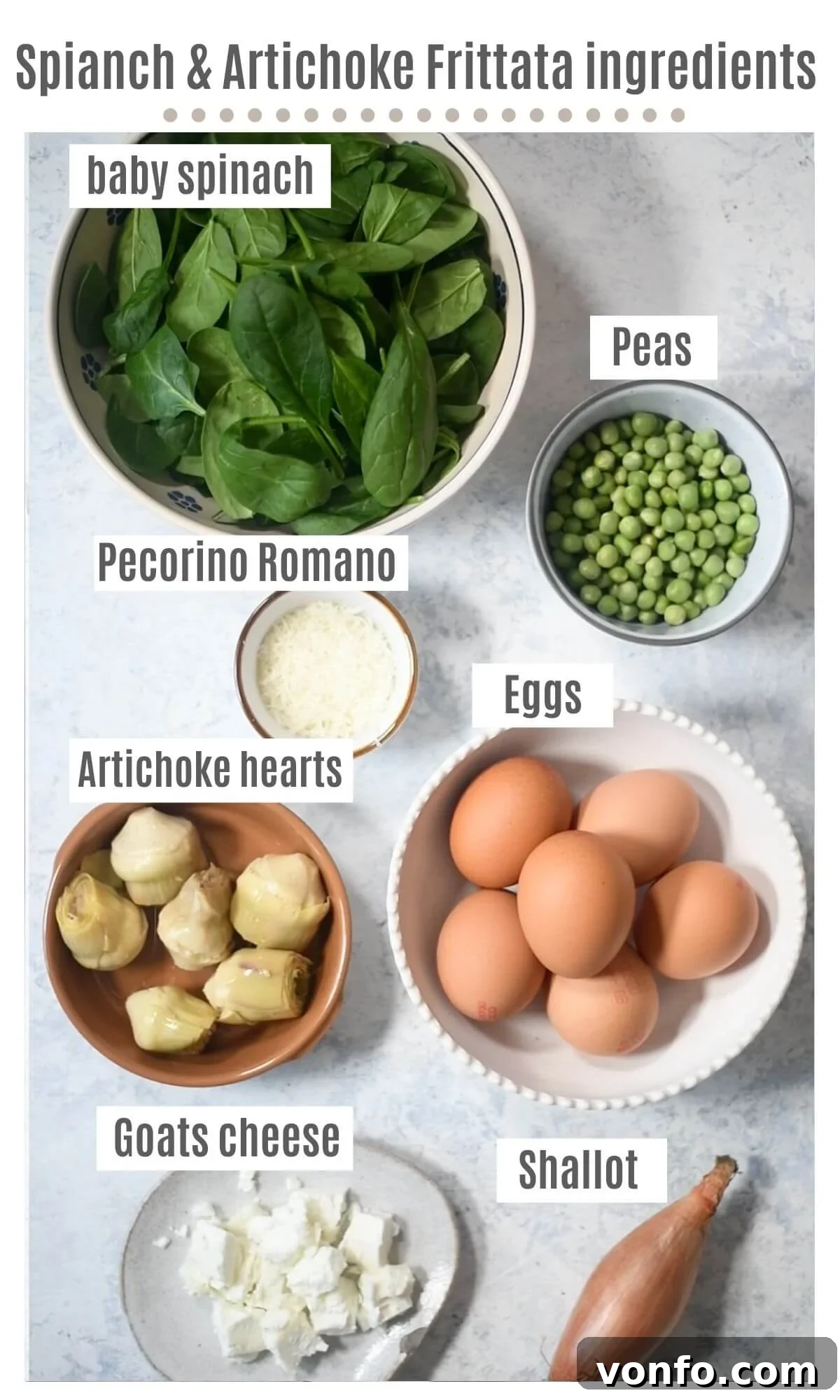
Ingredient Notes and Creative Substitutions
While this recipe is fantastic as written, feel free to get creative with these ingredient suggestions to truly make it your own:
- Shallot: We love the delicate sweetness of shallots in this frittata. However, finely diced red onion or even sweet Tropea onions (if you can find them) make excellent alternatives, each adding their unique depth of flavor.
- Peas: Fresh peas, when in season, offer an unparalleled burst of sweetness and vibrant color. If fresh aren’t available, high-quality frozen peas are a perfectly delicious and convenient substitute. Simply add them directly to the pan from frozen; they’ll defrost rapidly during cooking.
- Goat’s Cheese: Our preference is for a mild, creamy goat’s cheese, which melts beautifully and adds a lovely tang. If goat’s cheese isn’t to your liking, consider using dollops of creamy ricotta, shredded mozzarella, or even cubed Fontina for a different, yet equally delicious, cheesy dimension.
- Artichokes: Jarred artichoke hearts, packed in olive oil, are a fantastic shortcut and bring a wonderful tender texture and savory flavor. Artichokes marinated in herbs will also work beautifully, adding another layer of aromatic complexity. If using frozen artichokes, ensure they are thoroughly defrosted and drained before adding them to the pan.
- Eggs: For the best results and a rich flavor, we always recommend using large, free-range eggs. The quality of your eggs will significantly impact the final texture and taste of your frittata.
- Pecorino Romano: A tablespoon of finely grated Pecorino Romano adds a salty, umami depth to the egg mixture. Parmigiano Reggiano is an excellent alternative if you prefer a slightly milder, nutty flavor.
- Olive Oil: Extra virgin olive oil is crucial for sautéing the vegetables, contributing to the overall Mediterranean flavor profile of the dish.
- Salt and Pepper: Essential for seasoning to taste. Always use freshly ground black pepper for the best aroma.
Step-by-Step Visual Guide to a Perfect Frittata
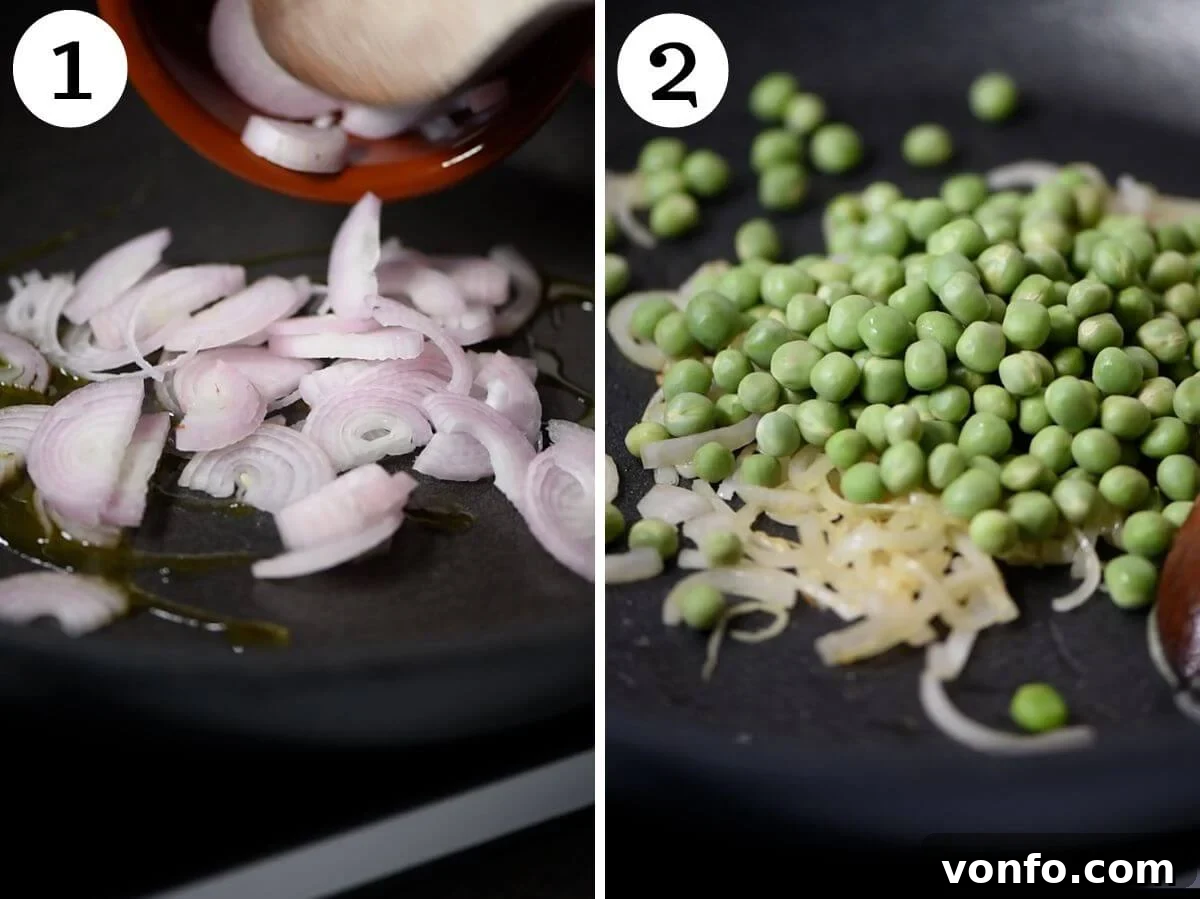
Step 1: Sauté the Aromatics and Peas
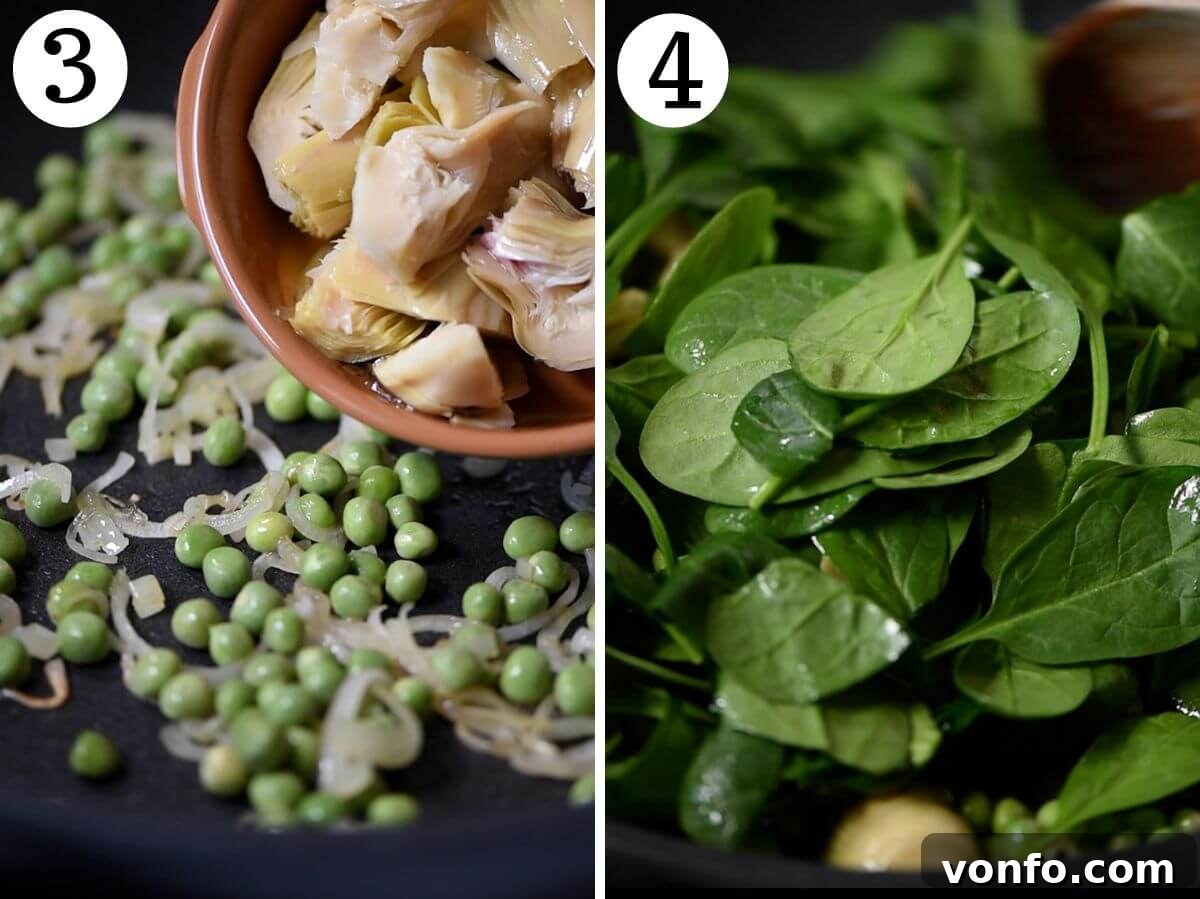
Begin by heating a tablespoon of good quality olive oil in a 28cm (11-inch) oven-safe frying pan over medium-low heat. Add the finely sliced shallot and sauté gently until it becomes soft, translucent, and fragrant, typically taking about 3-4 minutes. This step builds the foundational flavor of your frittata. Next, introduce the peas to the pan. Cook for just a minute or two until they are tender-crisp. If you’re using frozen peas, there’s no need to thaw them beforehand; simply add them straight to the pan – they will quickly defrost and cook through in seconds.
Step 2: Incorporate Artichokes and Spinach
Once the peas are lightly cooked, add the sliced jarred artichoke hearts to the pan. Sauté for another minute to warm them through and allow their flavors to meld with the shallots and peas. Finally, add the fresh baby spinach in batches if necessary, stirring gently until it just wilts down. Spinach cooks very quickly, so be careful not to overcook it to maintain its vibrant color and nutrients. Season lightly with salt and freshly ground black pepper.
Step 3: Prepare and Add the Egg Mixture
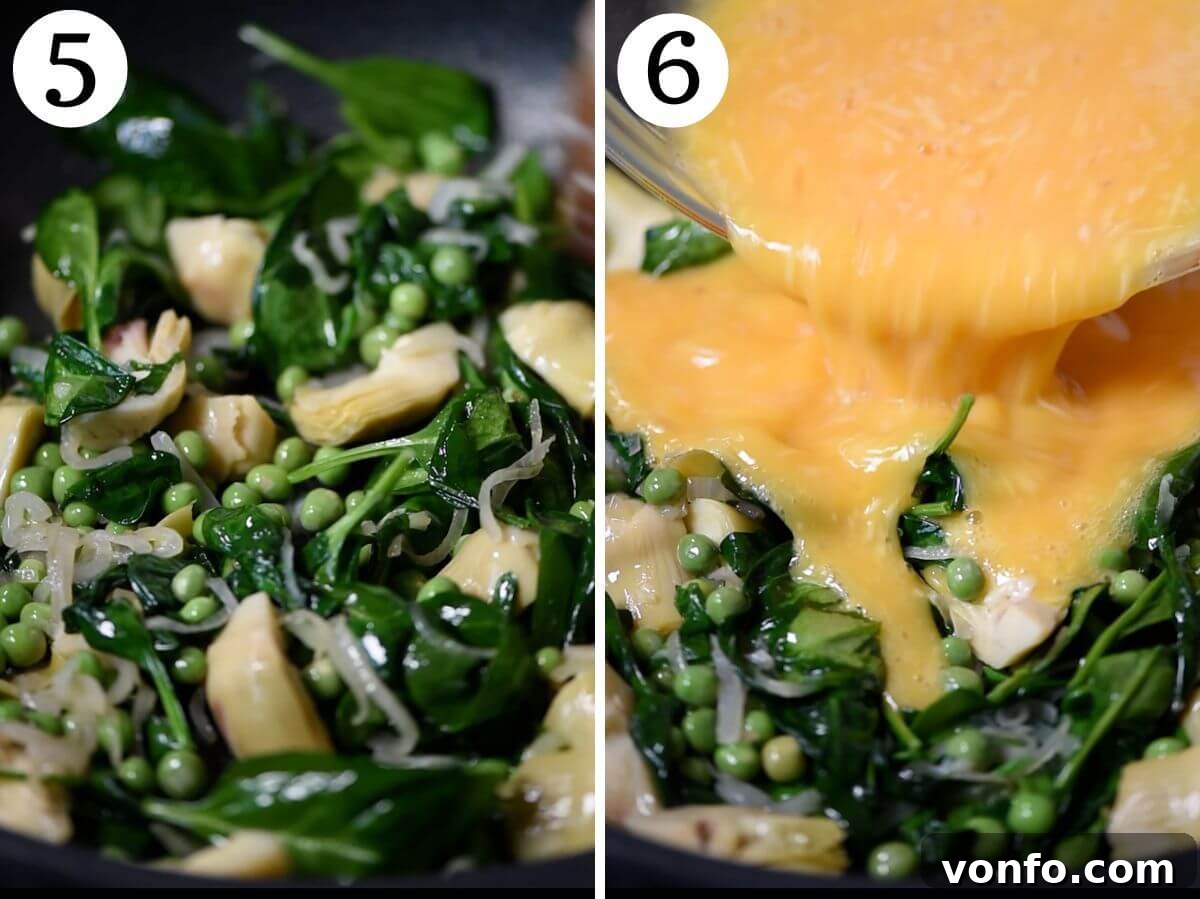
In a separate bowl, whisk together the six large eggs until they are well combined and slightly frothy. Stir in the finely grated Pecorino Romano cheese, along with a pinch of salt and pepper to taste. Once the vegetables in the pan are ready, pour the seasoned egg mixture evenly over them. Ensure the eggs distribute well around all the vegetables, creating a cohesive base for your frittata. Give the pan a gentle shake to ensure an even layer.
Step 4: Bake to Golden Perfection
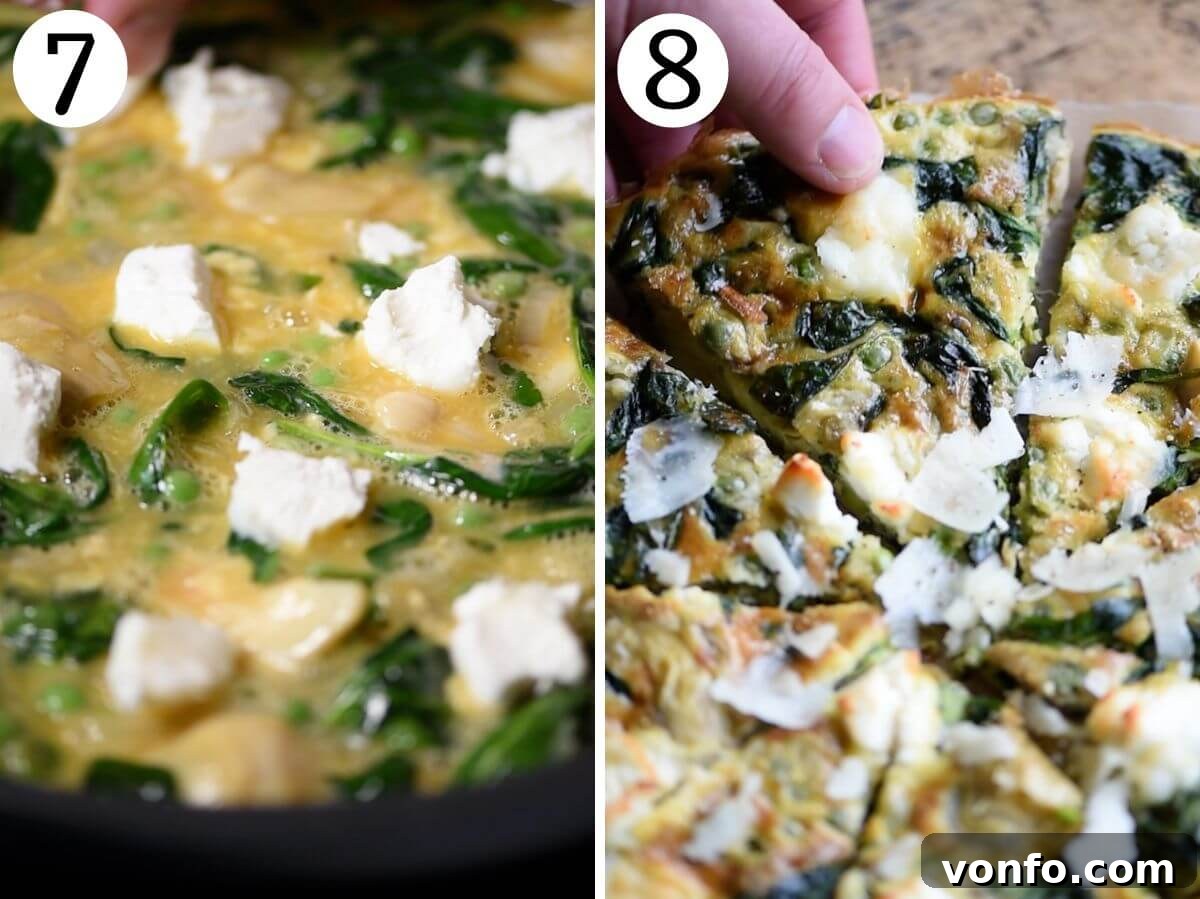
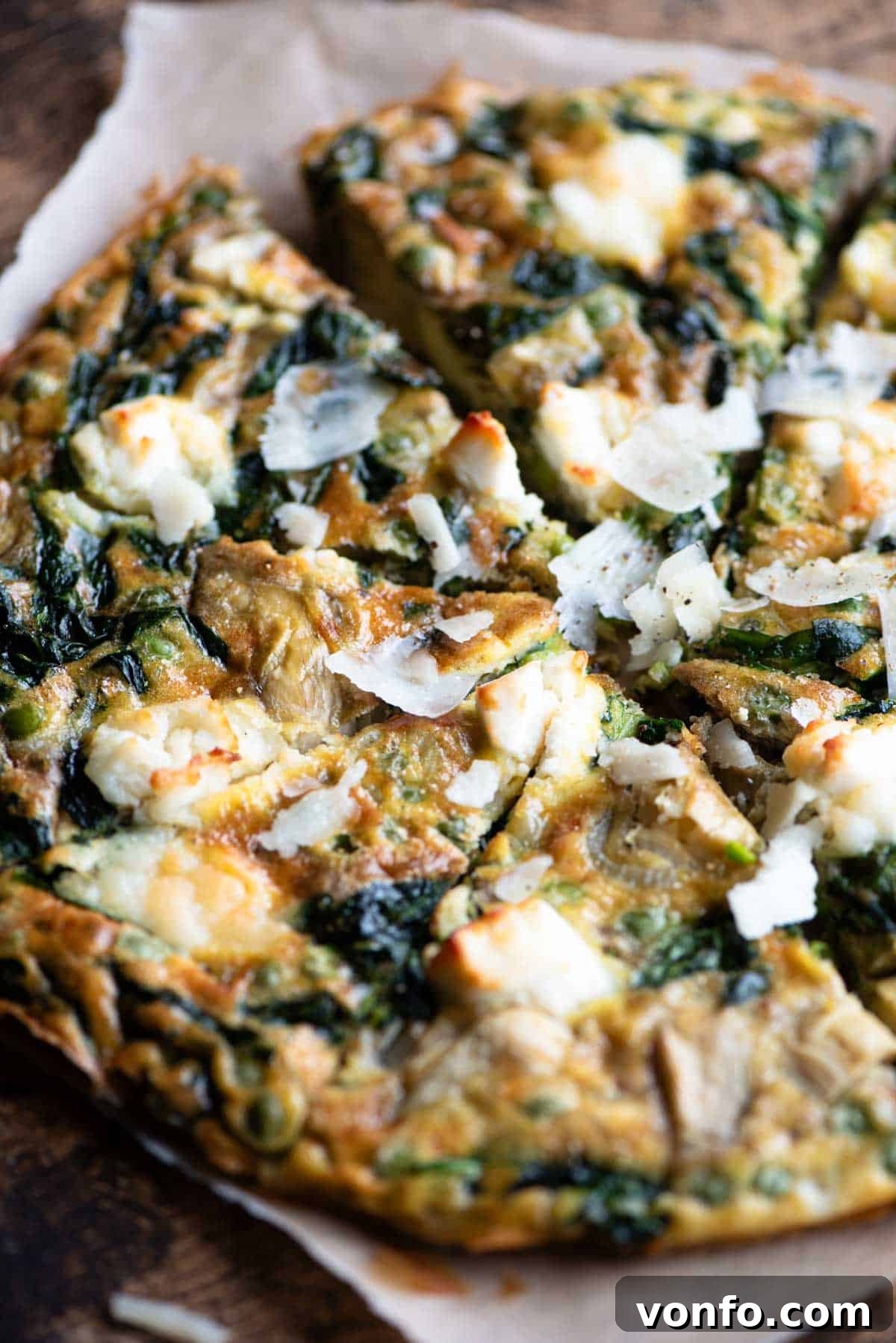
Carefully dot small dollops of creamy goat’s cheese over the top of the egg and vegetable mixture in the pan. The goat’s cheese will melt and slightly brown, adding a beautiful presentation and a burst of flavor. Transfer the oven-safe pan to your preheated oven at 180°C (350°F). Bake for 10-15 minutes, or until the frittata is set, golden brown on top, and cooked through. A knife inserted into the center should come out clean. Keep an eye on it to prevent overcooking, which can lead to a dry texture.
Expert Tips & Frequently Asked Questions for Frittata Success
Achieving a perfect frittata is simple with these helpful pointers and answers to common questions:
- Always Use an Oven-Safe Pan: This is a crucial requirement for making a frittata, as it starts on the stovetop and finishes in the oven. A well-seasoned cast-iron skillet or a stainless steel oven-safe frying pan works wonderfully. If you don’t have an oven-safe pan, simply sauté the vegetables as instructed, then transfer them to a small to medium-sized casserole or baking dish before pouring over the egg mixture and baking.
- Choosing the Best Artichokes: Jarred artichoke hearts, particularly those packed in olive oil (marinated ones are also excellent), are highly recommended for their convenience and tender texture. They are a staple to keep in your pantry for quick meals. If using frozen artichokes, remember to defrost them completely and drain any excess moisture before adding them to your pan to prevent a watery frittata.
- Goat’s Cheese Alternatives: If the distinct flavor of goat’s cheese isn’t for you, there are plenty of delicious alternatives. Creamy ricotta cheese offers a subtle richness, while fresh buffalo mozzarella or Fontina, cut into small cubes, will provide a delightful melty texture and mild, savory notes. Experiment to find your favorite!
- Embrace Variations and Seasonal Produce: The true beauty of a frittata lies in its flexibility. Don’t hesitate to adapt this recipe based on your personal taste and whatever fresh, seasonal vegetables are available. Consider adding diced bell peppers, cherry tomatoes, asparagus, mushrooms, or even cooked sausage. It’s a fantastic way to utilize ingredients and prevent food waste.
- Preventing Your Frittata from Sticking: Ensure your oven-safe pan is adequately greased with olive oil or butter, especially if not using a non-stick pan. Heating the pan properly before adding ingredients also helps create a natural non-stick surface.
- Achieving the Perfect Frittata Texture: Overcooking can lead to a rubbery frittata. Keep an eye on it in the oven; it should be just set in the center but still appear moist. The edges should be golden brown. A gentle jiggle of the pan should show minimal movement in the center.
- Storage and Reheating: Once baked and cooled, your frittata will keep beautifully in an airtight container in the refrigerator for up to 2-3 days. It’s delicious served cold, making it ideal for packed lunches or picnics. To reheat, warm individual slices in the oven at 160°C (325°F) for about 10-15 minutes, or gently in a microwave until heated through.
How long does Spinach and Artichoke Frittata last in the fridge?
Once baked and properly cooled, this frittata will stay fresh in an airtight container in the refrigerator for up to 2-3 days. It can be enjoyed cold or gently reheated.
Delightful Serving Suggestions
A frittata is wonderfully versatile and truly shines during the warmer months. It’s fantastic on its own as a fulfilling meal, but it also pairs beautifully with a fresh side salad, making it perfect for al fresco dining in the sunshine or a light, wholesome dinner. Here are some exquisite suggestions to complete your meal:
Complementary Side Dishes You’ll Love:
Salads
Arugula Salad with Lemon and Parmesan
A simple yet elegant peppery arugula salad, brightened with lemon and savory Parmesan, offering a refreshing contrast to the frittata’s richness.
Antipasti
Mozzarella Bocconcini, Pesto and Sun Blushed Tomatoes
Fresh mozzarella bocconcini paired with vibrant pesto and sweet sun-blushed tomatoes for a burst of Mediterranean flavor.
Salads
Classic Caprese Salad – Easy, Fresh & Delicious
The timeless simplicity of Caprese salad – fresh tomatoes, mozzarella, and basil – offers a perfect light accompaniment.
Salads
Cannellini Bean Salad with Tuna and Tropea Onions
For a heartier side, this protein-packed cannellini bean salad with tuna and sweet Tropea onions is an excellent choice.
We love hearing from you! If you’ve tried this Easy Spinach and Artichoke Frittata recipe or any other recipe from our blog, please don’t hesitate to rate the recipe and share your feedback in the comments section below. Your experiences and insights are invaluable! You can also connect with us and discover more delicious culinary inspirations by following us on Facebook, Instagram, and Pinterest. For a weekly dose of new recipes delivered straight to your inbox, consider signing up for our Newsletter.
Easy Spinach and Artichoke Frittata
By Emily
An easy and delicious Spinach and Artichoke Frittata made with peas and creamy goat’s cheese. This frittata is perfect for a light lunch or picnic and is ready from start to finish in under 30 minutes.
Prep Time: 5 mins
Cook Time: 20 mins
Total Time: 25 mins
Servings: 8 servings
Print Recipe
Equipment
- 28cm (11 inch) oven-safe frying pan (see notes if you don’t have one)
Ingredients
- 6 large eggs, whisked together
- 1 shallot, finely sliced
- ½ cup (80g) fresh or frozen peas
- ¾ cup (60g) baby spinach
- 6-8 (130g) jarred artichoke hearts in olive oil
- 1.5 oz (40g) goat cheese
- 1 tablespoon Pecorino Romano, finely grated (can also use Parmigiano Reggiano)
- 1 tablespoon olive oil
- Salt and pepper, to taste
Instructions
- Pre-heat the oven to 180°C (350°F).
- Add the olive oil to a 28cm (11-inch) oven-safe pan on a medium-low heat. Sauté the finely sliced shallot until soft and translucent, about 3-4 minutes. Next, add the fresh or frozen peas and cook for about 2 minutes.
- Add the sliced artichoke hearts and fresh baby spinach to the pan. Sauté until the spinach has just wilted, about 1-2 minutes.
- In a separate bowl, whisk the eggs with the grated Pecorino Romano, a pinch of salt, and pepper. Pour this egg mixture evenly over the cooked vegetables in the pan.
- Dot small pieces of goat cheese over the top of the frittata. Transfer the pan to the preheated oven and bake for 10-15 minutes, or until the frittata is set and golden brown on top.
- Allow the frittata to rest for a couple of minutes before cutting into slices and serving. Optionally, garnish with extra shavings of Pecorino for an enhanced flavor.
Video Tutorial
Watch our step-by-step video to ensure your frittata turns out perfectly every time:
Video tutorial available here. Click to watch!
Chef’s Notes and Important Tips
- Oven-Safe Pan: An oven-safe pan is essential. If you don’t own one, transfer the sautéed vegetables to a small to medium-sized casserole dish before adding the eggs and baking.
- Artichoke Selection: Jarred artichokes (in olive oil or marinated) are most convenient. If using frozen, ensure they are fully defrosted and drained to avoid excess moisture.
- Cheese Alternatives: Ricotta, buffalo mozzarella (cubed), or Fontina (cubed) are excellent substitutes for goat’s cheese.
- Customizable Variations: Feel free to experiment with other vegetables like asparagus, bell peppers, or mushrooms based on seasonal availability and personal preference.
- Storage: The baked frittata can be stored in the fridge for up to 2-3 days in an airtight container. Enjoy it cold or reheated.
General Helpful Information for All Recipes
- I always use extra virgin olive oil in all of my recipes unless stated otherwise.
- When I use canned or jarred tomatoes of any kind, I always use Cirio or Mutti brands for the best results and flavor.
- All vegetables are medium-sized unless stated otherwise.
- All recipes are tested and developed using a fan (convection) oven.
- Find out more about how nutrition is calculated.
- Check out our must-have Italian Pantry Staples.
- You can also find all our Essential Kitchen Tools for Italian Cooking.
Nutrition Facts (per serving)
Calories: 108 kcal |
Carbohydrates: 3g |
Protein: 6g |
Fat: 8g |
Saturated Fat: 2g |
Polyunsaturated Fat: 1g |
Monounsaturated Fat: 3g |
Trans Fat: 0.01g |
Cholesterol: 126mg |
Sodium: 141mg |
Potassium: 124mg |
Fiber: 1g |
Sugar: 1g |
Vitamin A: 1175 IU |
Vitamin C: 10mg |
Calcium: 46mg |
Iron: 1mg
Nutrition information is automatically calculated and should be used as an approximation only.
Did you try this delicious recipe?
We’d love to hear from you! Please leave a comment and rate the recipe below!