
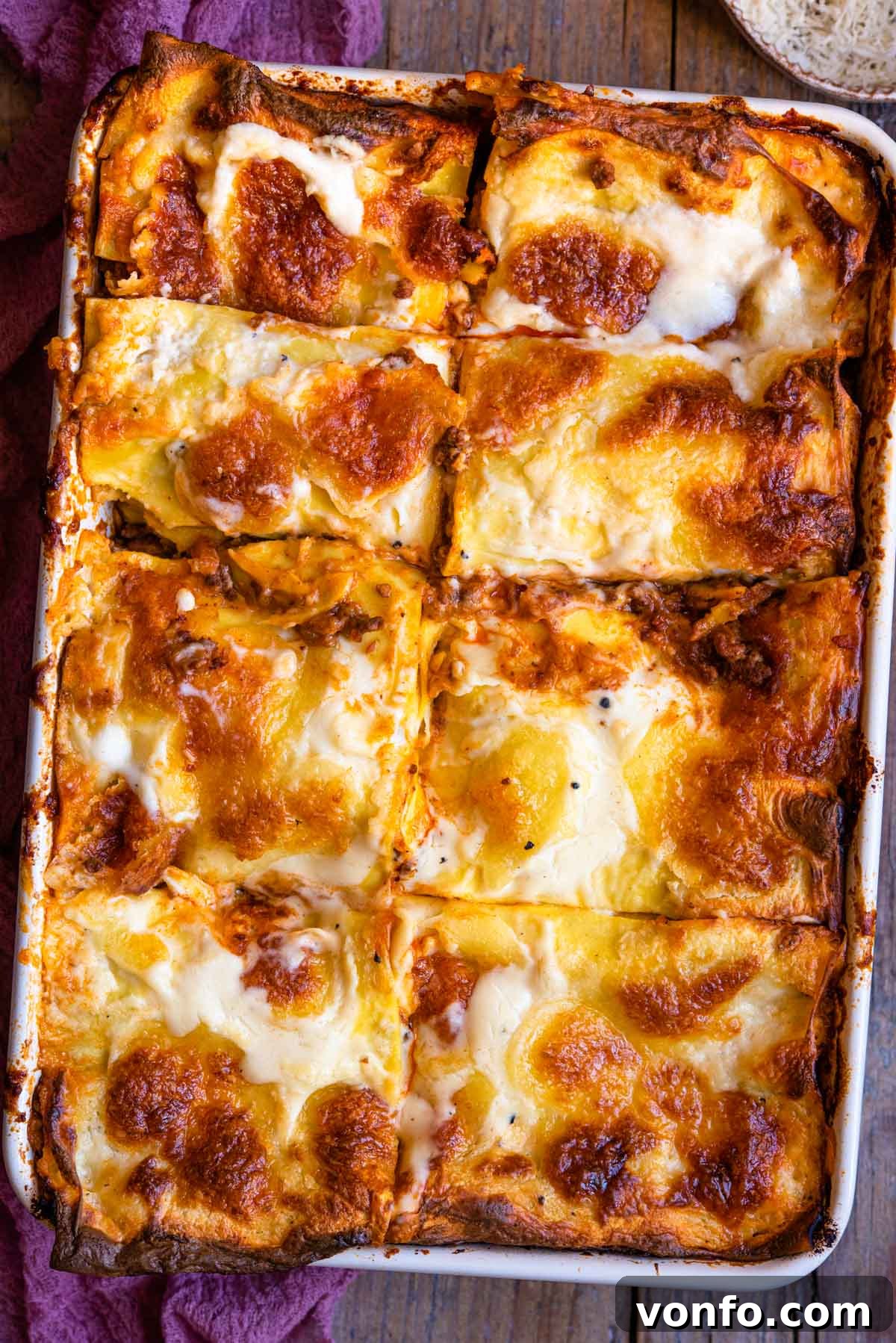
Authentic Lasagne al Forno: The Ultimate Italian Beef Lasagna Recipe
There’s a reason Lasagne al Forno remains a timeless classic across Italian households and dinner tables worldwide. This cherished dish, often referred to as Italian Beef Lasagna, is the epitome of comfort food, a symphony of rich flavors and satisfying textures. Imagine layers of tender, silky pasta embracing a slow-simmered homemade beef ragu, enveloped in a creamy, velvety bechamel sauce, and crowned with bubbling, melted mozzarella. Our comprehensive guide will walk you through crafting this traditional masterpiece entirely from scratch, ensuring a deeply rewarding culinary experience that will quickly become a cherished family favorite.
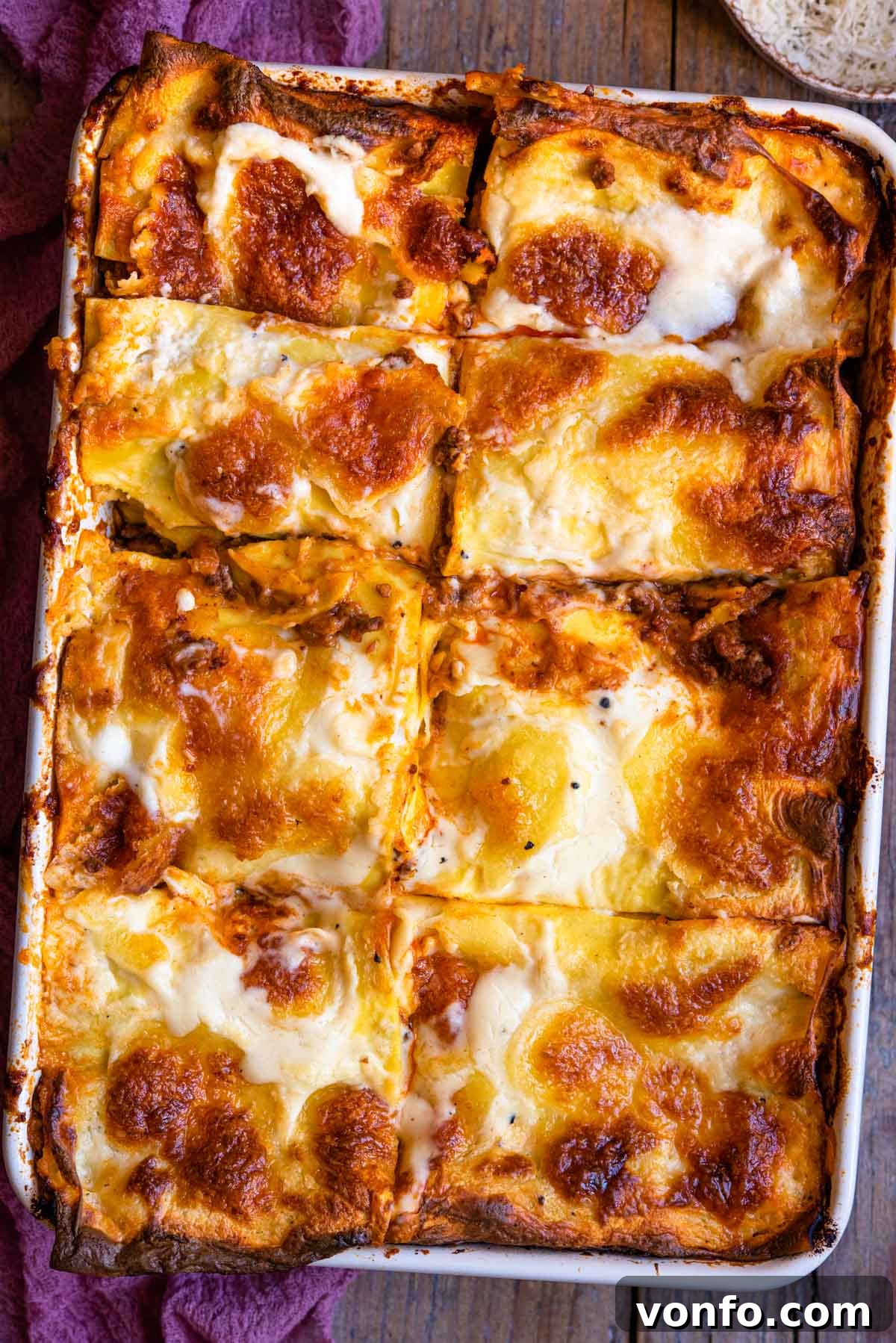
This exquisite Lasagne al Forno recipe is the perfect centerpiece for a relaxing Sunday dinner or any special occasion that calls for a truly heartwarming meal. While the rich beef ragu lovingly simmers for hours, deepening its complex flavors, you’ll have ample time to prepare the creamy bechamel sauce. For those who wish to embark on a full culinary adventure, you can even craft your own homemade pasta sheets, elevating this dish to an unparalleled level of freshness and authenticity. The dedication put into each component truly makes this lasagna a special culinary creation.
Mastering Homemade Lasagne: Is It Really That Hard?
The thought of preparing lasagne from scratch can often seem intimidating, especially with its multiple components. However, the process is far less daunting than it appears, and each step is quite manageable. Let’s break down the elements, revealing how straightforward it truly is to create an authentic Italian beef lasagna:
- The Heart of the Dish: Rich Beef Ragu – The robust beef ragu, a cornerstone of traditional Italian lasagna, requires approximately 10-15 minutes of active preparation. This involves finely chopping the vegetables for the soffritto and browning the meat. Once these initial steps are complete, the ragu simmers gently on low heat for several hours, allowing its flavors to meld and deepen beautifully. This largely hands-off cooking time means you can attend to other tasks or simply relax while your kitchen fills with an irresistible aroma.
- Choosing Your Pasta: Fresh vs. Dried – While making homemade pasta adds a wonderful dimension and significantly enhances the texture of your lasagne, it does increase the overall preparation time. If you’re seeking to minimize active cooking, opting for pre-bought fresh lasagna sheets is an excellent alternative. Fresh pasta offers a superior, more tender texture compared to dried varieties and eliminates the need for pre-boiling, streamlining the assembly process. We highly recommend fresh pasta for the best results, though dried sheets can be used if you follow the package instructions carefully.
- The Creamy Embrace: Traditional Bechamel Sauce – Our recipe follows the traditional Italian method, utilizing a rich, smooth bechamel sauce rather than ricotta cheese, which is more commonly found in Italian-American variations. Don’t let this traditional sauce scare you; crafting a homemade bechamel takes no more than 10 minutes from start to finish. It can even be prepared in advance, making assembly quick and easy when you’re ready to layer your lasagna. Its creamy texture provides a perfect counterpoint to the robust ragu.
- The Art of Layering: Assembling the Lasagne – This is arguably the most enjoyable part of the process and typically takes a mere 10 minutes (or less!). It involves simply layering the cooked pasta sheets with generous amounts of ragu, decadent bechamel sauce, and a sprinkle of cheese. It’s a straightforward, satisfying task that quickly brings your components together into a cohesive dish ready for baking.
- The Golden Finish: Baking Perfection – Once assembled, your lasagne bakes in the oven for about 45 minutes, transforming into a hot, bubbling, golden-brown marvel. While the entire process, from simmering the ragu to baking, spans a few hours, remember that much of this time is inactive. With our detailed tips and a little patience, you’ll discover that making lasagne from scratch is not only simple but incredibly rewarding, producing a dish far superior to any store-bought alternative.
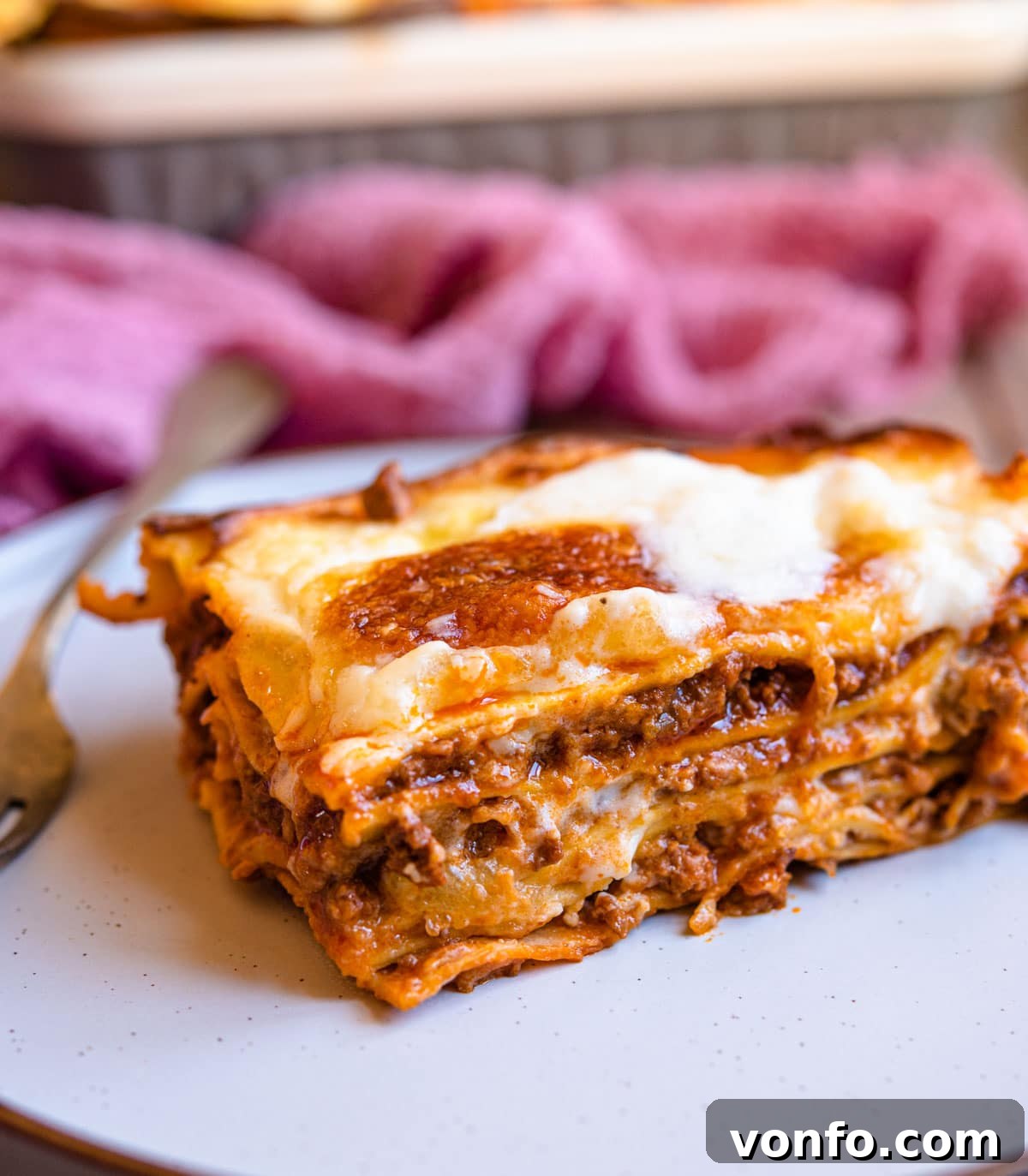
A Linguistic Bite: The Difference between Lasagna and Lasagne
For culinary enthusiasts curious about the subtle differences in spelling, the distinction between “lasagna” and “lasagne” is quite simple and rooted in Italian grammar.
In Italian, the word “lasagna” refers to a single sheet or noodle of pasta. Conversely, “lasagne” is the plural form, signifying multiple sheets of pasta. Therefore, because this hearty pasta dish is constructed with several layers of lasagna noodles, it is correctly referred to as Lasagne or Lasagne al Forno in Italy.
However, outside of Italy, the entire baked dish is most commonly known as “lasagna,” regardless of the number of pasta sheets used. Whatever your preferred spelling or pronunciation, we are all undoubtedly speaking of the same irresistibly bubbling, beautifully layered, and utterly delicious creation!
Crafting Your Lasagne al Forno: A Step-by-Step Guide
The Foundation: Il Soffritto
The journey to an exceptional ragu, and indeed many classic Italian sauces, stews, and soups, begins with Il Soffritto. This aromatic base is a testament to the simplicity and depth of Italian cooking.
Il Soffritto is a finely chopped medley of carrot, celery, and white onion, gently sautéed in a touch of olive oil. Cooked slowly for about 10 minutes until perfectly softened and translucent, this humble combination unlocks an incredible depth of savory flavor, serving as the aromatic backbone for countless dishes. It’s a fundamental technique that imparts a rich, sweet foundation, distinguishing authentic Italian flavors.
Expert Tip: Prepare a generous batch of soffritto in advance and freeze it in portions. You can add it directly from frozen to your weeknight meals for an instant boost of authentic Italian flavor.
Crafting the Perfect Ragu
To begin your rich ragu, finely chop the carrot, celery, and onion. In a large, deep skillet or heavy-bottomed pan, gently sweat these vegetables with a tablespoon of olive oil over medium-low heat. Continue cooking until they are beautifully softened and translucent, which typically takes around 10 minutes (as illustrated in Photo 1 of our step-by-step guide).
Next, introduce the ground beef and pork to the pan. Increase the heat slightly and brown the meat thoroughly, breaking it up with a wooden spoon as it cooks. Ensure there are no large clumps and that the meat is evenly browned on all sides (refer to Photo 2 for visual guidance).
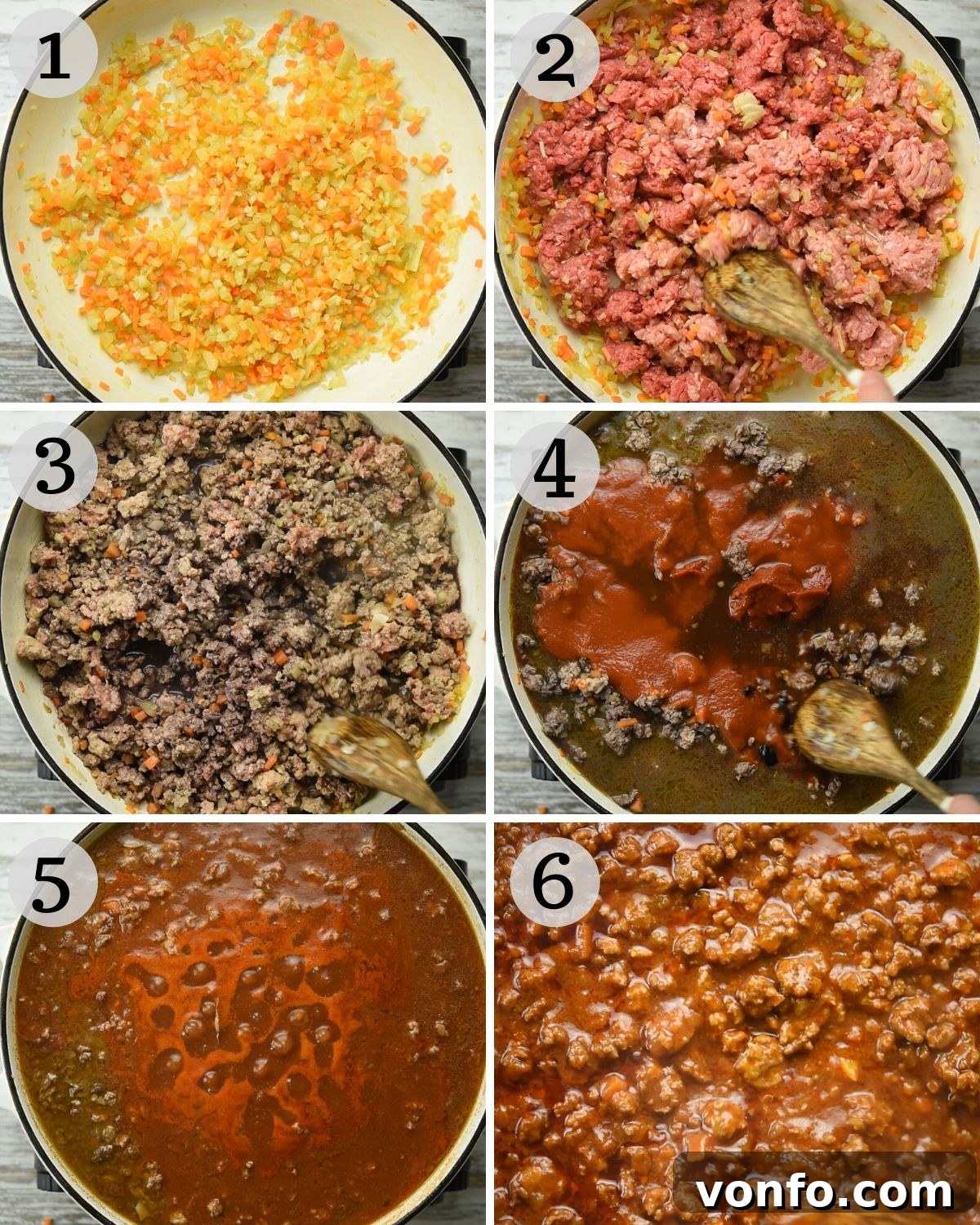
If you notice a significant amount of excess fat in the pan after browning the meat, carefully spoon some out to ensure a balanced flavor profile. Pour in the red wine and bring it to a simmer, allowing it to reduce by half. This step is crucial for developing a deep, complex flavor and burning off the alcohol, leaving behind a rich essence.
Once the wine has reduced, add the sieved tomatoes (passata), tomato paste, two bay leaves, four cups of beef stock, and a generous pinch of sea salt flakes and freshly ground pepper. Stir all the ingredients together until well combined. Lower the heat to a gentle simmer, leaving the pan uncovered, and let the ragu cook slowly for 2.5 to 3 hours. Midway through the simmering process, add the remaining two cups of beef stock. This slow, patient cooking allows the flavors to intensify and the sauce to thicken to a perfect consistency, ensuring a ragu that is incredibly rich and flavorful (follow Photos 3-6 for detailed visuals of this process).
Mastering the Creamy Bechamel Sauce
The bechamel sauce adds a luxurious creaminess that is essential to authentic Italian lasagna. To prepare it, begin by melting the butter in a medium-sized saucepan over medium heat. Cook the butter until it’s fully melted and gently bubbling, taking care not to let it brown (as depicted in Photo 7).
Once the butter is melted, sprinkle in the all-purpose flour. Stir vigorously with a whisk or wooden spoon to form a smooth paste, known as a roux. Allow this roux to cook for approximately 1 minute, stirring continuously. This step is important to cook out the raw flour taste, ensuring a perfectly smooth and flavorful sauce (see Photo 8).
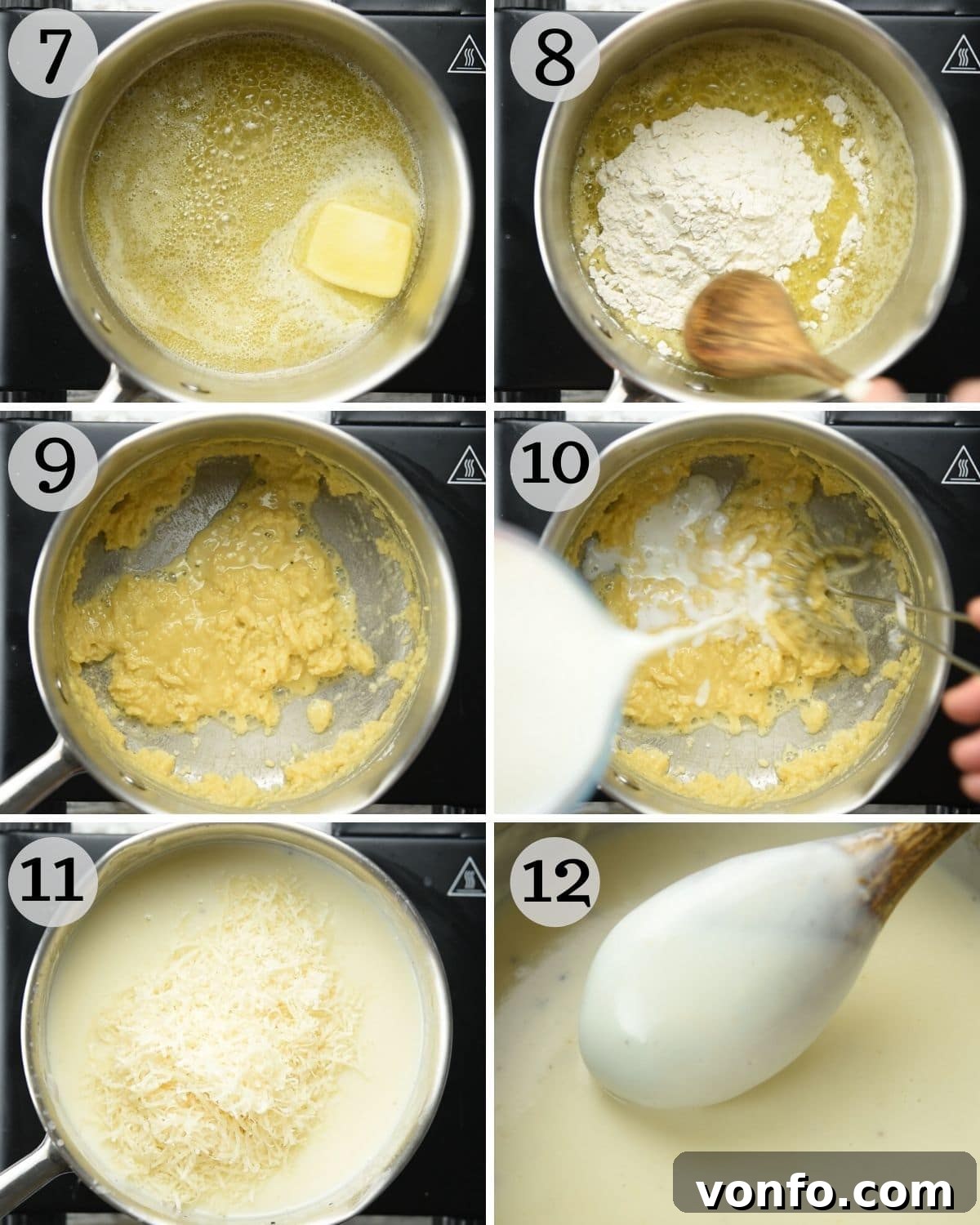
Gradually begin to whisk half of the full-fat milk into the butter-flour paste. Whisk constantly and vigorously to prevent any lumps from forming, ensuring a silky-smooth base. As the sauce starts to thicken, incorporate the remaining milk, along with half a teaspoon of nutmeg, one cup of freshly grated Parmesan cheese, and a pinch of salt and pepper (refer to Photos 9-11 for this process).
Continue to heat the sauce over medium-low heat, stirring constantly, until it thickens sufficiently to coat the back of a wooden spoon. This indicates your bechamel has reached the perfect consistency. Remove the saucepan from the heat and set the creamy sauce aside, ready for assembling your magnificent lasagne (Photo 12 provides a visual cue for the ideal thickness).
Assembling Your Magnificent Lasagne
With your rich ragu and creamy bechamel prepared, it’s time for the exciting final stage: assembling your lasagne. Preheat your oven to 350°F (180°C).
To begin, spoon a small, even layer of the beef ragu onto the very bottom of your 9×13 inch baking dish. This initial layer prevents the pasta from sticking and infuses flavor from the base up. Next, lay down an even layer of fresh lasagna pasta sheets. If necessary, trim the pasta sheets to fit your baking dish perfectly, ensuring a seamless foundation (observe Photos 13 & 14 for correct layering).
Follow the pasta with a few more generous spoonfuls of ragu, ensuring the pasta is completely covered. Then, ladle two large spoonfuls of your creamy white bechamel sauce over the ragu, spreading it gently to create an even, luxurious layer (as shown in Photos 15-16).
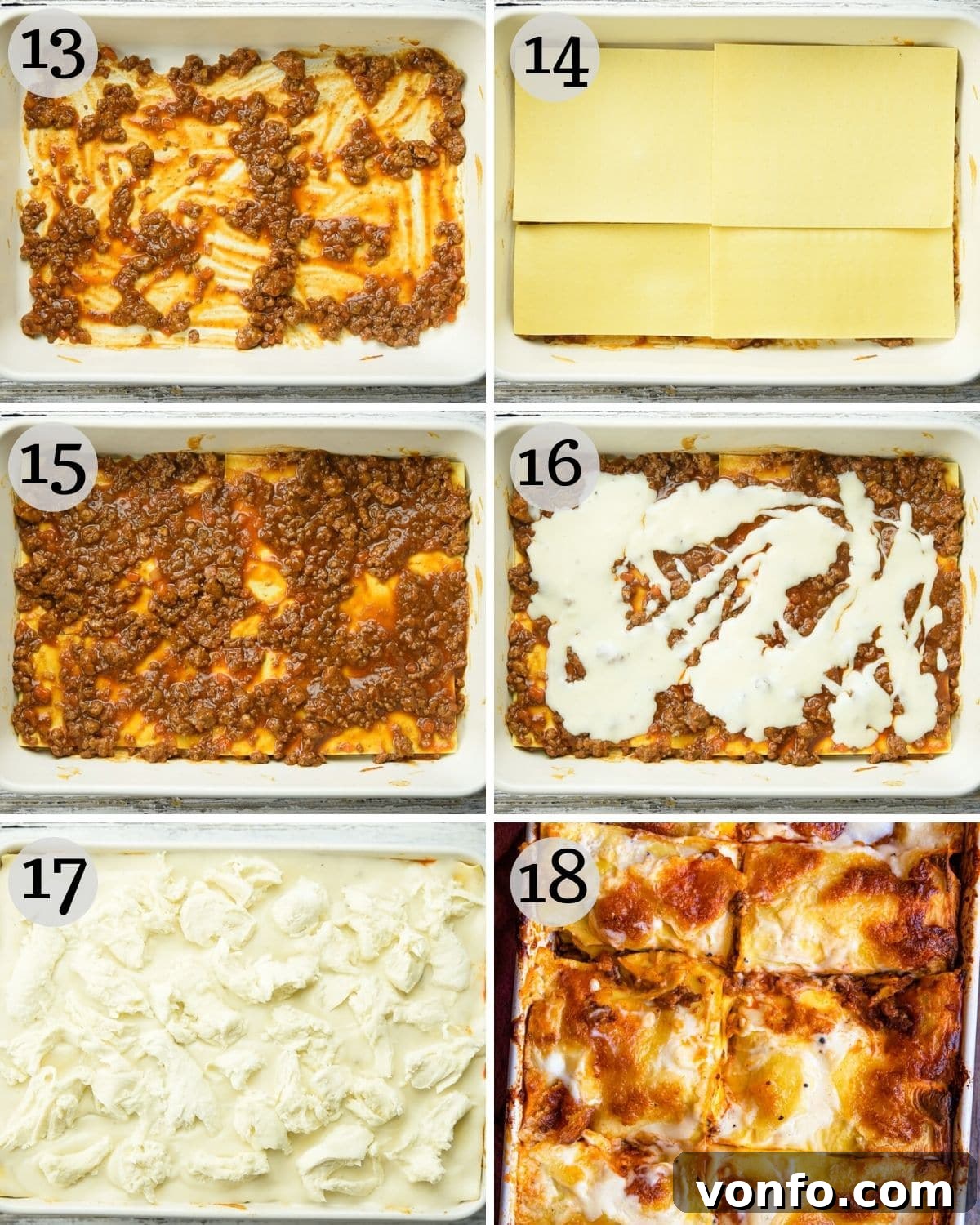
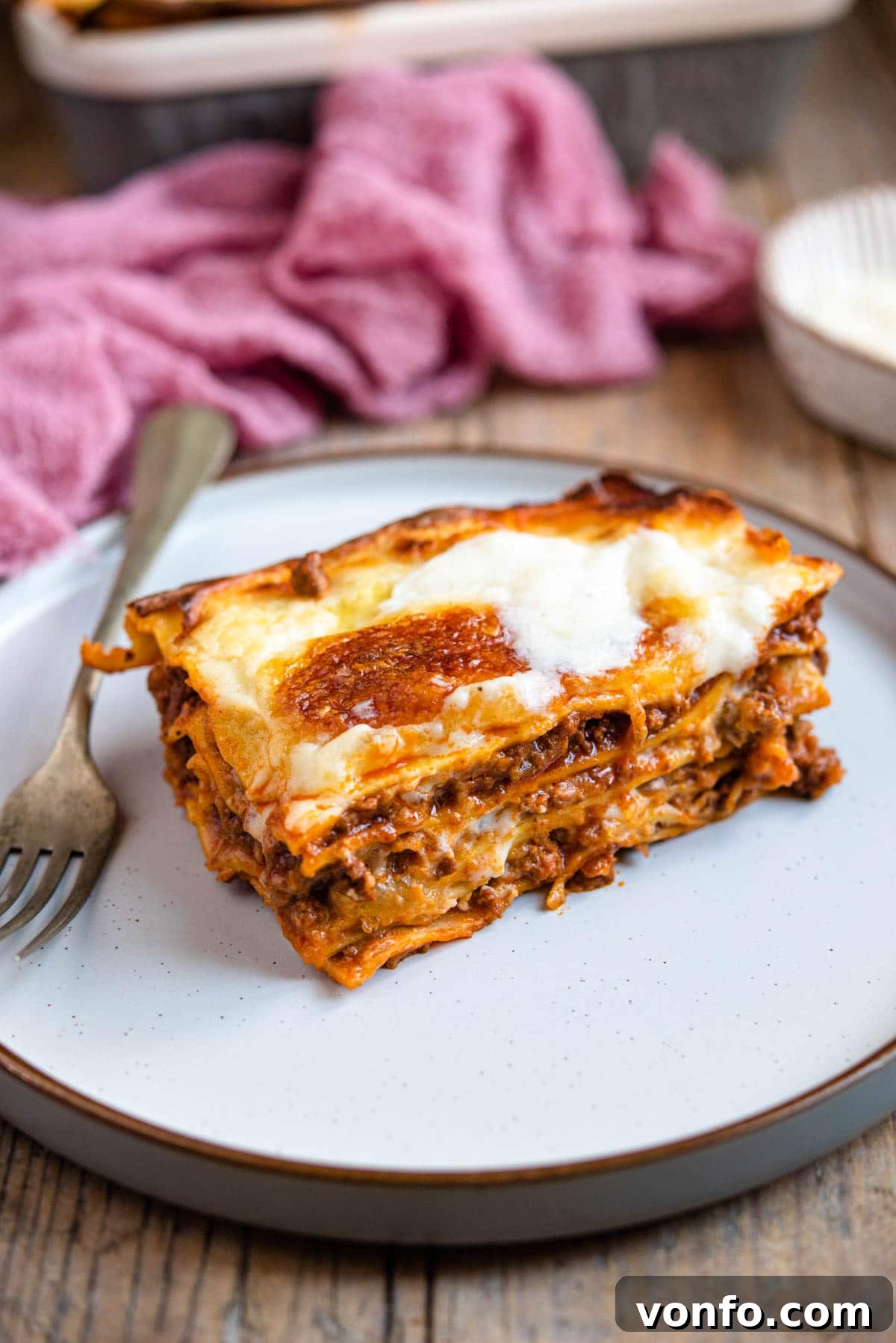
Continue to repeat these layers: pasta, followed by ragu, then bechamel sauce. Aim for 4-5 layers of pasta, making sure to reserve enough bechamel sauce to generously cover the very top layer of the lasagne. This final bechamel layer will provide a creamy foundation for your melted cheese. Once all layers are complete, cover the entire top of the lasagne with torn pieces of fresh mozzarella cheese. Bake the lasagne in your preheated oven for approximately 45 minutes, or until it’s gloriously bubbling, golden brown, and cooked through. Allow the lasagne to cool slightly for 5-10 minutes before slicing and serving. This resting period allows the layers to set, preventing it from collapsing on the plate (Photos 17 & 18 show the final assembly and baked result).
Dried Vs. Fresh Lasagna Sheets: A Comparative Guide
When it comes to preparing an exceptional lasagne, the choice of pasta sheets can significantly impact the final texture and overall experience. For truly authentic results, we consistently recommend using fresh lasagna sheets. If time allows, making your own homemade pasta dough takes this dish to an even higher level of freshness and quality.
Fresh lasagna sheets offer a distinctly superior texture compared to their dried counterparts. They are more tender and yield a softer, more luxurious bite. Crucially, fresh pasta sheets typically do not require pre-boiling, which is a significant time-saver during the assembly phase. This eliminates an extra step and ensures that your pasta layers cook perfectly within the oven, absorbing the rich flavors of the ragu and bechamel without becoming overcooked.
In contrast, dried lasagna sheets can sometimes curl up during cooking, which can lead to less defined and somewhat uneven layers in your finished dish. While dried sheets are a viable option, carefully read and follow the package instructions regarding pre-boiling to ensure they soften adequately and cook evenly within the lasagne.
Expert Tips for a Flawless Lasagne al Forno
- Patience with the Ragu: The slow simmering of the ragu for at least 3 hours is non-negotiable for achieving truly profound flavor. This extended cooking time allows the ingredients to meld, concentrate, and develop a richness that simply cannot be replicated with shortcuts or higher heat. Resist the urge to rush this crucial step.
- Uncovered Simmering: Always simmer your ragu uncovered. This allows moisture to evaporate, concentrating the flavors and thickening the sauce to the ideal consistency. If you find your ragu reduces too much and becomes overly thick, add warm water in ½ cup (125ml) increments until it reaches the desired consistency.
- Strategic Prep in Advance: To minimize stress on cooking day, prepare your beef ragu a day or two in advance. The flavors often deepen and improve overnight, making for an even more delicious lasagne. Store it in an airtight container in the refrigerator.
- Freezing for Future Feasts: Beef ragu freezes beautifully. Prepare a large batch and portion it for future meals. Thaw overnight in the refrigerator before using it to assemble your lasagne.
- Elevate Your White Sauce: While Parmesan cheese provides excellent flavor to the bechamel, consider adding other strong, melting cheeses like Gruyère or Fontina for an extra layer of indulgent creaminess and depth.
- Homemade Pasta Perfection: For the ultimate authentic experience, consider making your own pasta. Our Homemade Pasta Dough recipe offers a detailed guide to crafting silky-smooth pasta sheets from scratch.
- Preventing Collapse: If your lasagne tends to collapse when served, it’s often an indication that your ragu was not reduced enough and was too watery. A properly reduced ragu, combined with a thick bechamel, helps the layers hold their structure. Pay close attention to the consistency of both sauces during preparation.
- Using Dried Lasagna Sheets: If you opt for dried lasagna sheets, always follow the specific pre-boiling instructions on the packet. Some brands require a brief boil, while others are “oven-ready.”
Explore More Lasagna Creations
If you’ve fallen in love with the art of making lasagna, you might enjoy exploring other delicious variations from our kitchen:
- Eggplant Lasagna with Prosciutto and Mozzarella
- Butternut Squash Lasagna – Sage, Prosciutto & Goats Cheese
- Lentil Ragu Lasagne
We love hearing about your culinary adventures! If you’ve tried this Classic Beef Lasagne or any other recipe from our collection, please consider leaving a comment below with your feedback and a rating. Your input inspires us to create even more delicious content for you. You can also connect with us and discover more mouthwatering food by following us on FACEBOOK, INSTAGRAM, and PINTEREST.
Step By Step Photos Above
Most of our recipes come with step by step photos, helpful tips and tricks to make it perfectly first time!
Lasagne al Forno (Italian Beef Lasagna)
Average rating: 4.97 from 161 votes
By Emily
Prep: 15 mins
Cook: 4 hrs
Total: 4 hrs 15 mins
Servings: 8 – 10 servings
A classic recipe for homemade Lasagne al Forno (Italian Beef Lasagna) made entirely from scratch. There’s truly nothing more comforting than a hot bubbling baked lasagna made with homemade beef ragu, bechamel sauce, silky pasta and topped with melted mozzarella cheese! This traditional Italian recipe will be a comfort food favourite.
Equipment
- 9×13 inch baking dish
Ingredients
Ragu
- 1 tbsp olive oil
- 1 cup carrot, finely chopped (1 large)
- 1 cup stalk celery, finely chopped (1 large)
- 1 cup white onion, finely chopped (1 large)
- 1 lb ground beef (mince), (500g)
- 1 lb ground pork (mince), (500g)
- 2.5 cups Passata (tomato puree US), (540g)
- 3 tbsp tomato paste
- 1 cup red wine, (250ml)
- 6 cups beef stock, (1.5 litres)
- 2 bay leaves
- 1 tsp sea salt flakes and pepper
White Sauce
- 5 tbsp butter, (70g)
- 5 tbsp flour all-purpose, (70g)
- 4 cups full fat milk, (1 litre)
- 1/2 tsp nutmeg
- 1 cup parmesan, freshly grated (70g)
- 1 tsp sea salt and pepper, or to taste
Lasagne
- 1 lb fresh lasagna pasta sheets, (17 oz/500g)
- 2 balls mozzarella, (8 oz/250g)
Instructions
Ragu
- Finely chop the carrot, onion and celery and sauté the vegetables gently in a large frying pan with the olive oil. Once the vegetables are soft add the beef and pork mince and cook until browned.
- If there is a lot of excess fat in the pan, spoon some out. Add the red wine and reduce by half.
- Once the wine has reduced, add the passata (tomato puree), tomato paste, bay leaves, 4 cups of beef stock (1 litre) and a pinch of salt and pepper.
- Stir everything together and leave to simmer on a low heat for 2.5-3 hours uncovered. Add the rest of the beef stock half way through.
White Sauce
- Add the butter to a saucepan and cook until melted and bubbling.
- Add the flour to the melted butter and stir to form a paste. Let the flour cook for 1 minute.
- Slowly whisk half of the milk into the butter and flour, constantly whisking to avoid any lumps. Once it has started to thicken add the rest of the milk, nutmeg, parmesan and a pinch of salt and pepper.
- Continue to heat the sauce whilst stirring until thickened enough to coat the back of a wooden spoon. Take off the heat and set aside.
Assemble the Lasagne
- Preheat the oven to 350F (180C).
- To assemble the lasagne, spoon a small amount of ragu on the very bottom of the baking dish. Top with an even layer of lasagna pasta sheets (cut the pasta sheets to fit your baking dish).
- Add a few more spoons of ragu so the pasta is completely covered, followed by 2 ladles of white sauce.
- Repeat the layers of pasta, ragu and bechamel sauce until everything is used up, making sure to keep enough bechamel sauce for the very top layer (you should have 4-5 layers of pasta).
- Cover the top layer of the lasagne with torn mozzarella and then bake in the oven for 45 minutes or until bubbling and golden.
- Let it cool slightly for 5-10 minutes before serving.
Notes
- Cook Time: The ragu needs at least 3 hours to simmer. This extended time is crucial for developing incredible depth of flavor that cannot be achieved with shortcuts.
- Ragu Simmering: Do not cover the ragu while it simmers; this allows moisture to evaporate, concentrating its flavors. If the ragu reduces and thickens too much, add 1/2 cup (125ml) of water at a time.
- Advance Preparation: You can prepare the beef ragu a day or two ahead of time to significantly reduce your prep time on the day of assembly.
- Freezing: Leftover or pre-made beef ragu freezes well. Thaw it overnight in the refrigerator before using in your lasagne.
- Bechamel Variations: For an even more indulgent white sauce, consider incorporating a good strong melting cheese like Gruyère or Fontina along with the Parmesan.
- Homemade Pasta: For those who wish to elevate their lasagne, explore our Homemade Pasta Dough recipe.
- Structural Integrity: If your lasagna collapses upon serving, it often indicates that the ragu was not reduced enough and was too liquid. Ensure both your ragu and bechamel are thick enough to hold their shape.
- Dried Pasta Sheets: If using dried lasagna sheets, always refer to the package instructions to determine if pre-boiling is required.
- More Lasagna: If you loved this recipe, you might also enjoy our Authentic Lasagna Bolognese recipe.
Helpful Info for All Recipes
- We consistently use extra virgin olive oil in all our recipes unless otherwise specified.
- For canned or jarred tomatoes, we recommend Cirio or Mutti brands for optimal flavor and results.
- All vegetables are assumed to be medium-sized unless noted differently.
- All our recipes are tested and developed using a fan (convection) oven.
- Discover more about how nutrition is calculated on our site.
- Explore our essential Italian Pantry Staples.
- Find all our recommended Essential Kitchen Tools for Italian Cooking.
Nutrition
Nutrition information is automatically calculated, so should only be used as an approximation.
Did you try this recipe?
Leave a comment below!