
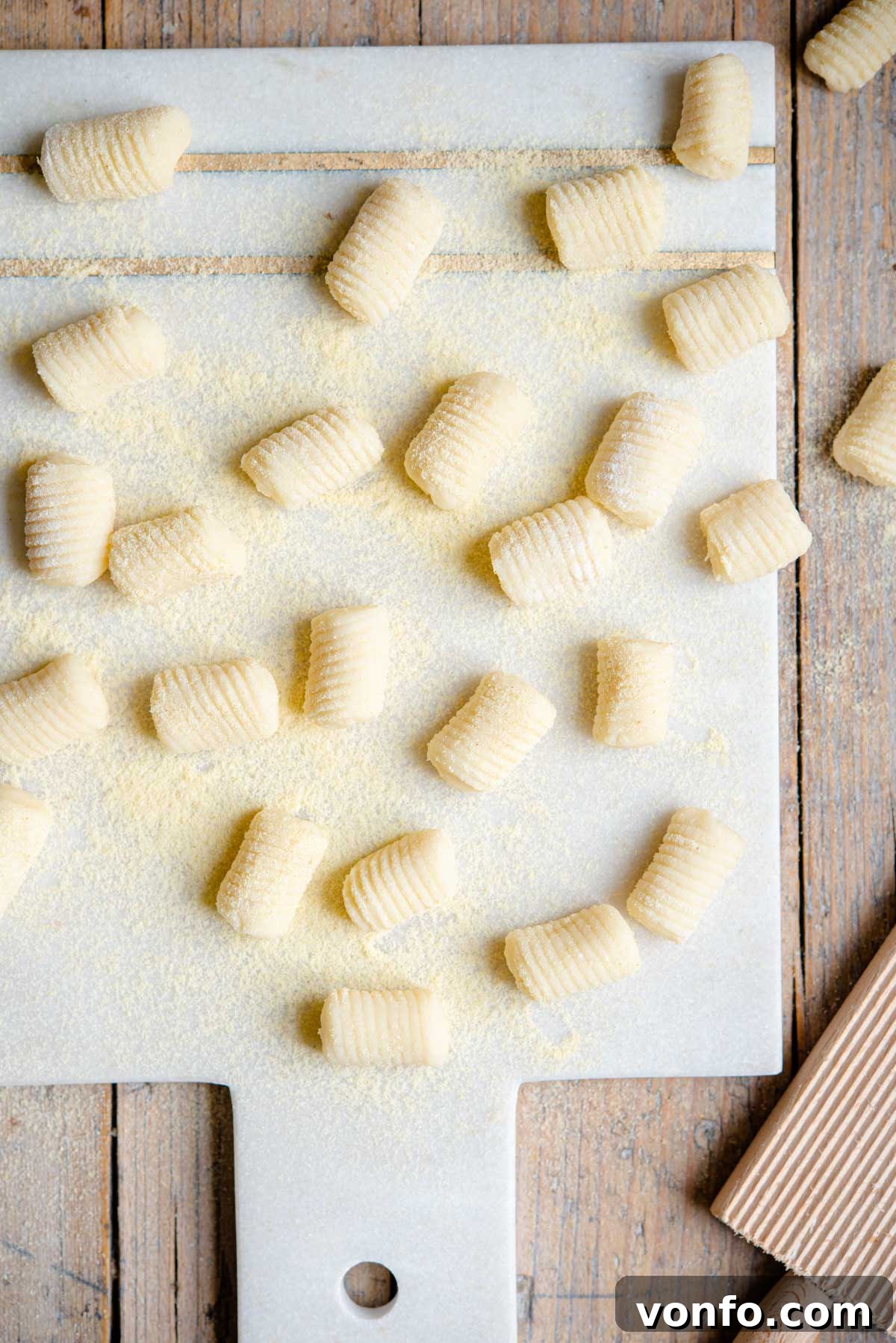
Unlock the secret to creating exceptionally soft, light, and utterly delicious Homemade Potato Gnocchi with this comprehensive, easy-to-follow guide. From selecting the perfect potatoes to shaping delicate dumplings and choosing the ideal sauce, we’ll walk you through every step to achieve authentic Italian perfection right in your kitchen.
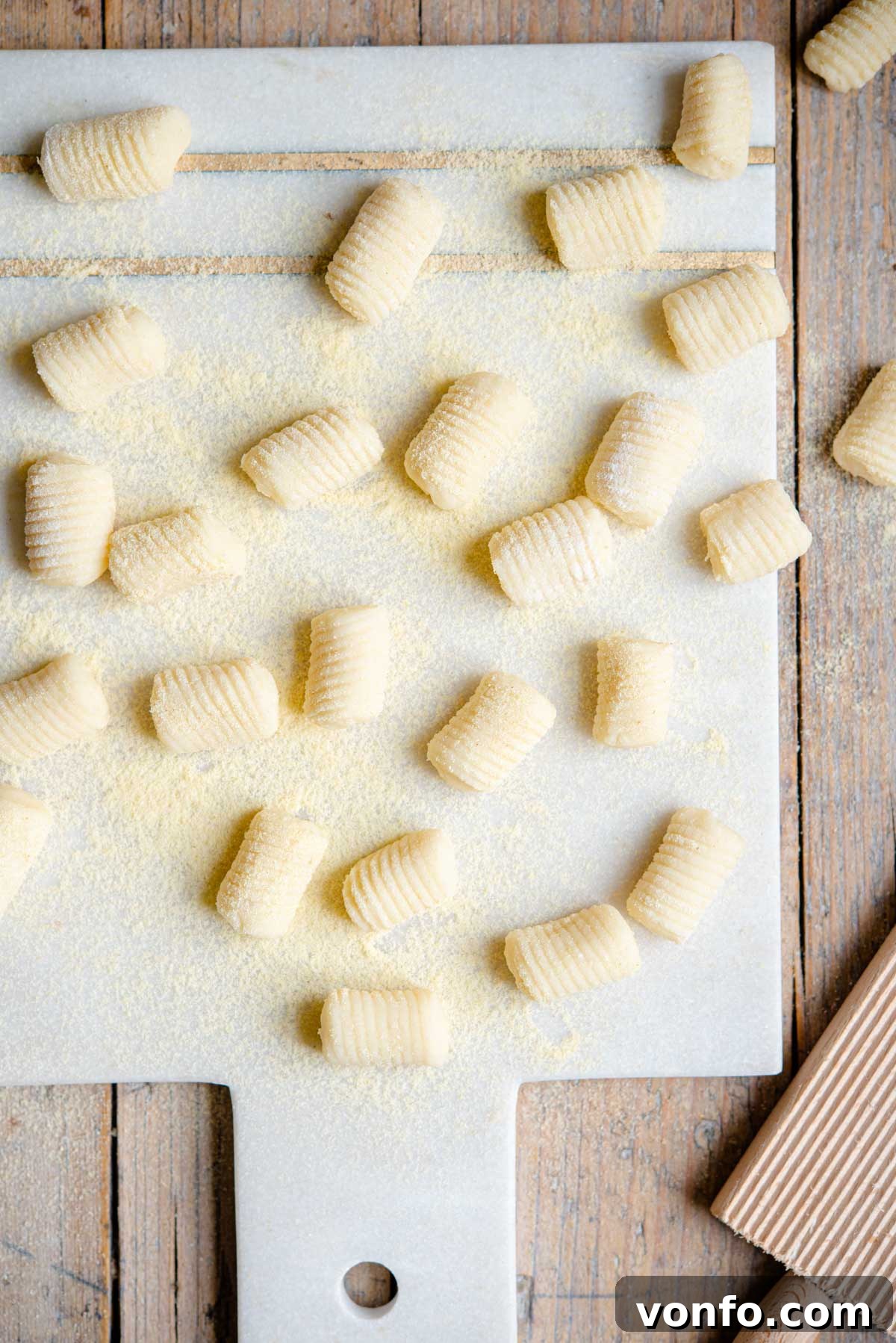
Gnocchi, those delightful little potato dumplings, hold a special place in Italian cuisine. Traditionally served as a primo, or first course, in Italy, they offer a lighter alternative to pasta, often gracing the table in smaller, yet incredibly satisfying, portions. Imagine sinking your teeth into tender, pillowy morsels, each one a testament to simple, wholesome ingredients transformed into something extraordinary.
While often perceived as an intimidating task, making gnocchi from scratch is a truly rewarding experience that elevates your culinary skills and palate. The minimal effort invested yields results far superior to any store-bought variety. Homemade gnocchi boast an unparalleled softness and lightness, making them the ultimate Italian comfort food. There’s truly nothing quite like a steaming bowl of these tender dumplings, lovingly coated in a rich, flavorful sauce, to bring warmth and joy to any meal.
Fear not, aspiring gnocchi makers! This guide is designed to demystify the process, ensuring your homemade gnocchi are consistently perfect. We’ll delve into crucial tips regarding ingredient selection and the meticulous steps involved in preparation, guaranteeing a successful and delicious outcome. Let’s embark on this delightful journey to create gnocchi that will impress even the most discerning palates.
Essential Ingredients for Perfect Homemade Gnocchi
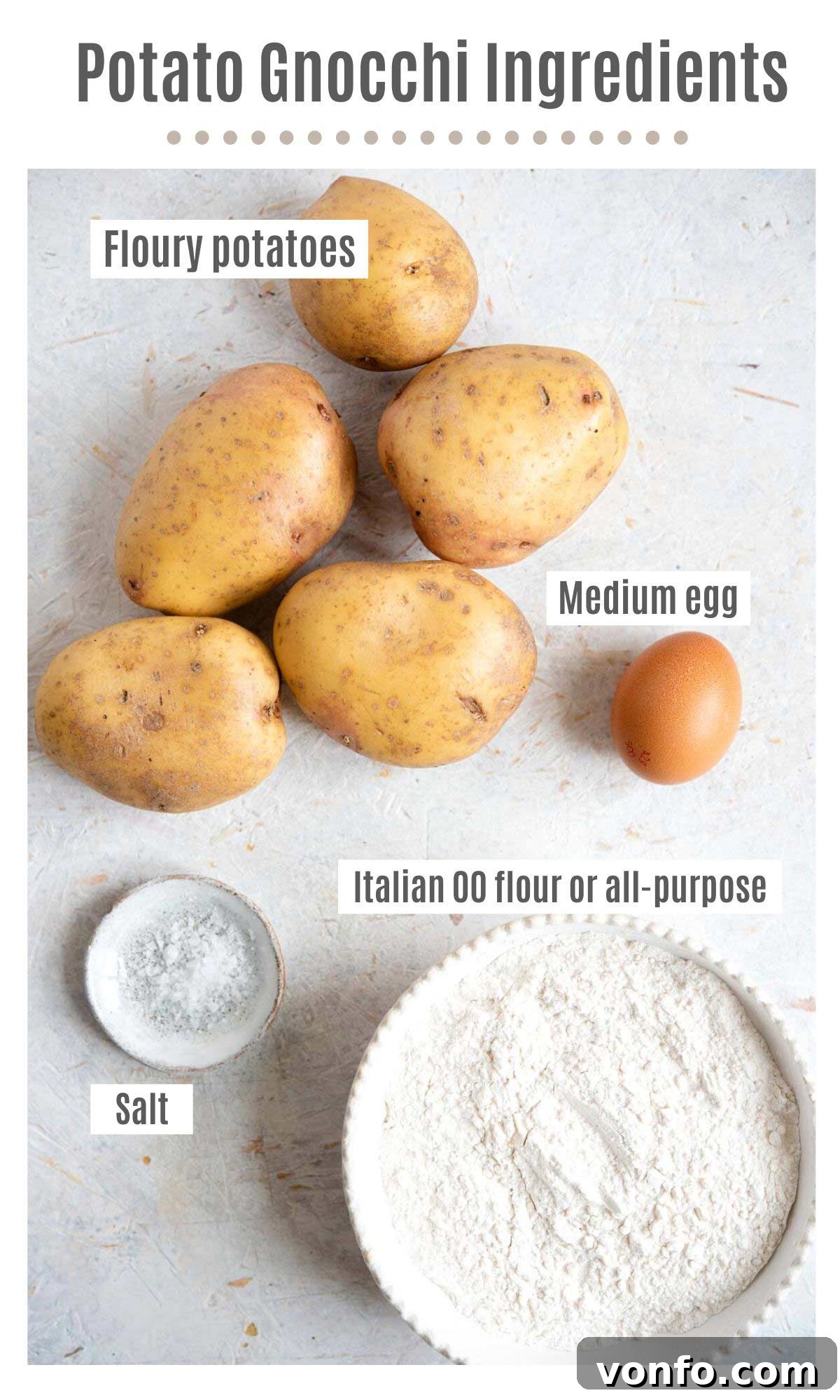
The beauty of authentic potato gnocchi lies in its simplicity. You only need a handful of staple ingredients, but the quality and type of each are paramount for achieving that coveted light and fluffy texture. Here’s what you’ll need:
- Potatoes: This is the star ingredient, and choosing the right variety is non-negotiable. Opt for floury, starchy potatoes such as Yukon Gold, Russet, or Maris Pipers. Waxy potatoes, with their higher moisture content, will result in dense, gluey gnocchi that lack the desired delicate texture. Starchy potatoes absorb less water during boiling and produce a drier, fluffier mash, which is crucial for a workable, tender dough.
- Flour: Italian Tipo 00 flour is often recommended by chefs for its fine grind and lower protein content, which contributes to a wonderfully tender gnocchi. However, if Tipo 00 is not readily available, good quality all-purpose (plain) flour will also yield excellent results. The key is to use as little flour as possible to bind the dough without making it tough.
- Egg: A single medium-sized egg acts as a binder, adding richness and helping the dough come together smoothly. While some traditional gnocchi recipes omit the egg, its inclusion makes the dough significantly easier to handle and contributes to a slightly richer flavor and more consistent texture.
- Salt: Essential for seasoning both the potato boiling water and the gnocchi dough itself, enhancing the overall flavor of your dumplings.
How to Make Potato Gnocchi: A Detailed Step-by-Step Guide
Making gnocchi is an art that combines precision with a gentle touch. Follow these detailed steps to craft your own batch of delightful potato dumplings.
Step 1: Preparing and Cooking the Potatoes
The foundation of great gnocchi begins with properly cooked potatoes. Start by thoroughly cleaning your floury potatoes, but resist the urge to peel them at this stage. Boiling potatoes with their skins on prevents them from absorbing excessive water, which is crucial for a light dough. Place the unpeeled potatoes in a large pot and cover them with cold water. Gradually bring the water to a boil, then reduce the heat and simmer until the potatoes are fork-tender, typically around 30 minutes, depending on their size.
To check for doneness, carefully insert a knife into the center of the largest potato. If it slides in and out with minimal resistance, the potato is cooked. Avoid piercing the potatoes too frequently, as each incision can allow more water to seep in, potentially making your gnocchi heavy. Overcooked potatoes can also become waterlogged, so keep an eye on them.
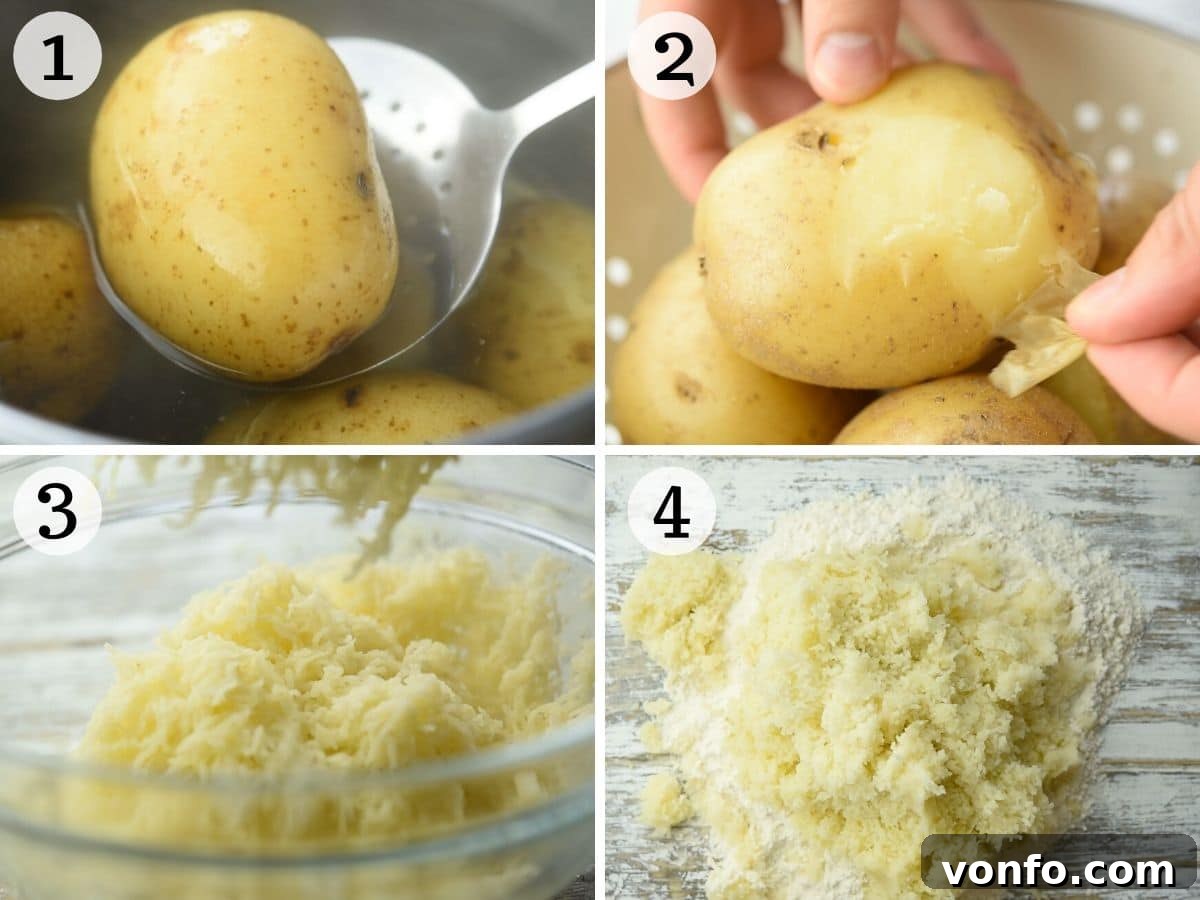
Once cooked, immediately drain the potatoes. Allow them to cool just enough so they are comfortable to handle, but still warm. Peeling them while warm is much easier; the skin should simply rub off with little effort. This also helps any residual moisture evaporate, resulting in a drier potato pulp.
For the fluffiest gnocchi, pass the still-warm, peeled potatoes through a potato ricer. Ricing creates a fine, airy texture free of lumps, which is essential for a smooth and tender dough. If you don’t have a ricer, a sturdy fork or masher can work, but ensure the potatoes are mashed as finely as possible.
Step 2: Crafting the Perfect Gnocchi Dough
Now, it’s time to bring your gnocchi dough to life. Lightly dust a clean, spacious work surface with your chosen flour. Create a mound with the riced potatoes in the center of the flour. Form a well in the middle of the potato mound. Gently begin to incorporate a small amount of flour into the potatoes from the edges. Then, pour the lightly beaten egg and a pinch of salt into the well.
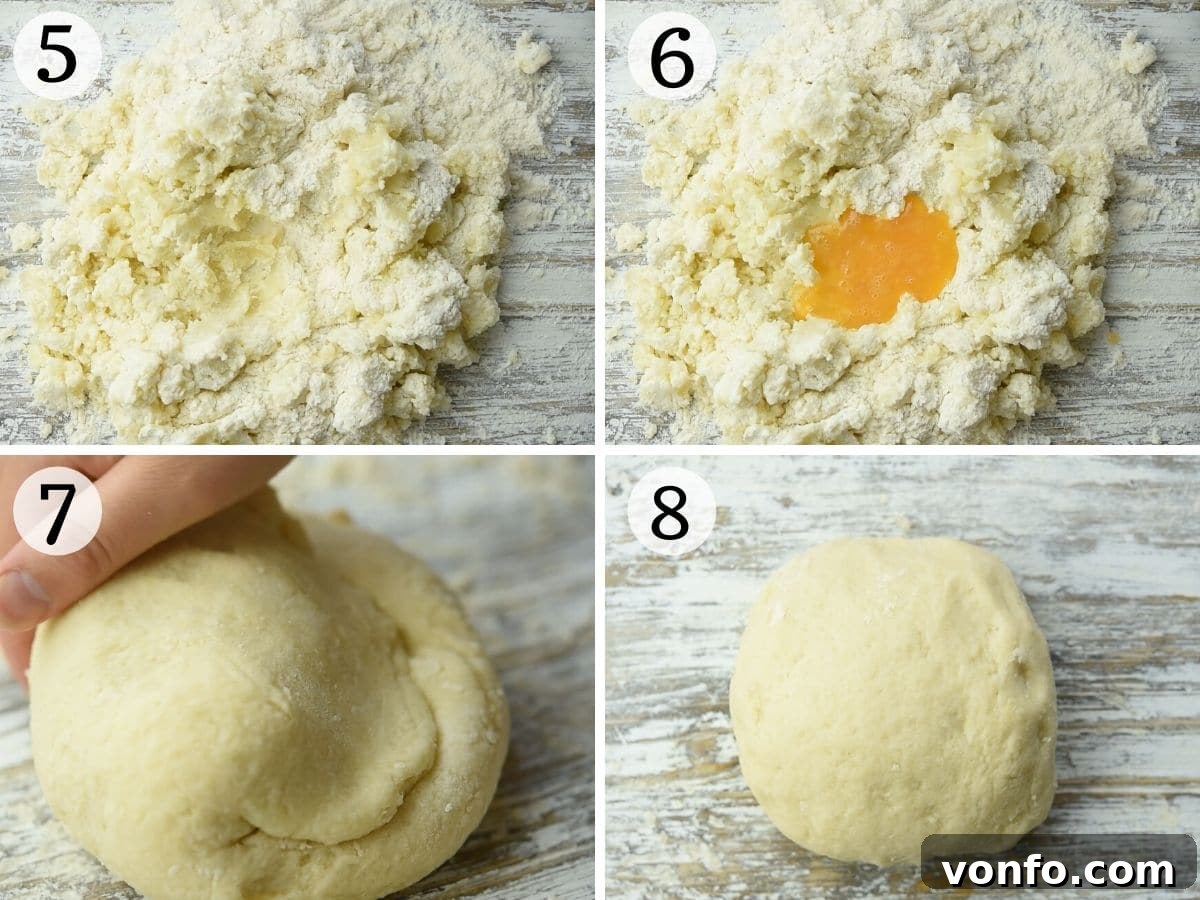
Using your hands, gently fold and knead the mixture, incorporating the remaining flour until a cohesive dough forms. The goal is a dough that is smooth, soft to the touch, and no longer sticky. The crucial tip here is to **avoid overworking the dough**. Excessive kneading develops gluten in the flour, which will result in tough, chewy gnocchi instead of the desired light and tender dumplings. Knead just until the ingredients are combined and the dough is manageable. If the dough still feels excessively sticky after a minute or two of gentle kneading, add a very small amount of extra flour, a teaspoon at a time, until it reaches the correct consistency.
Step 3: Cutting and Shaping Your Gnocchi
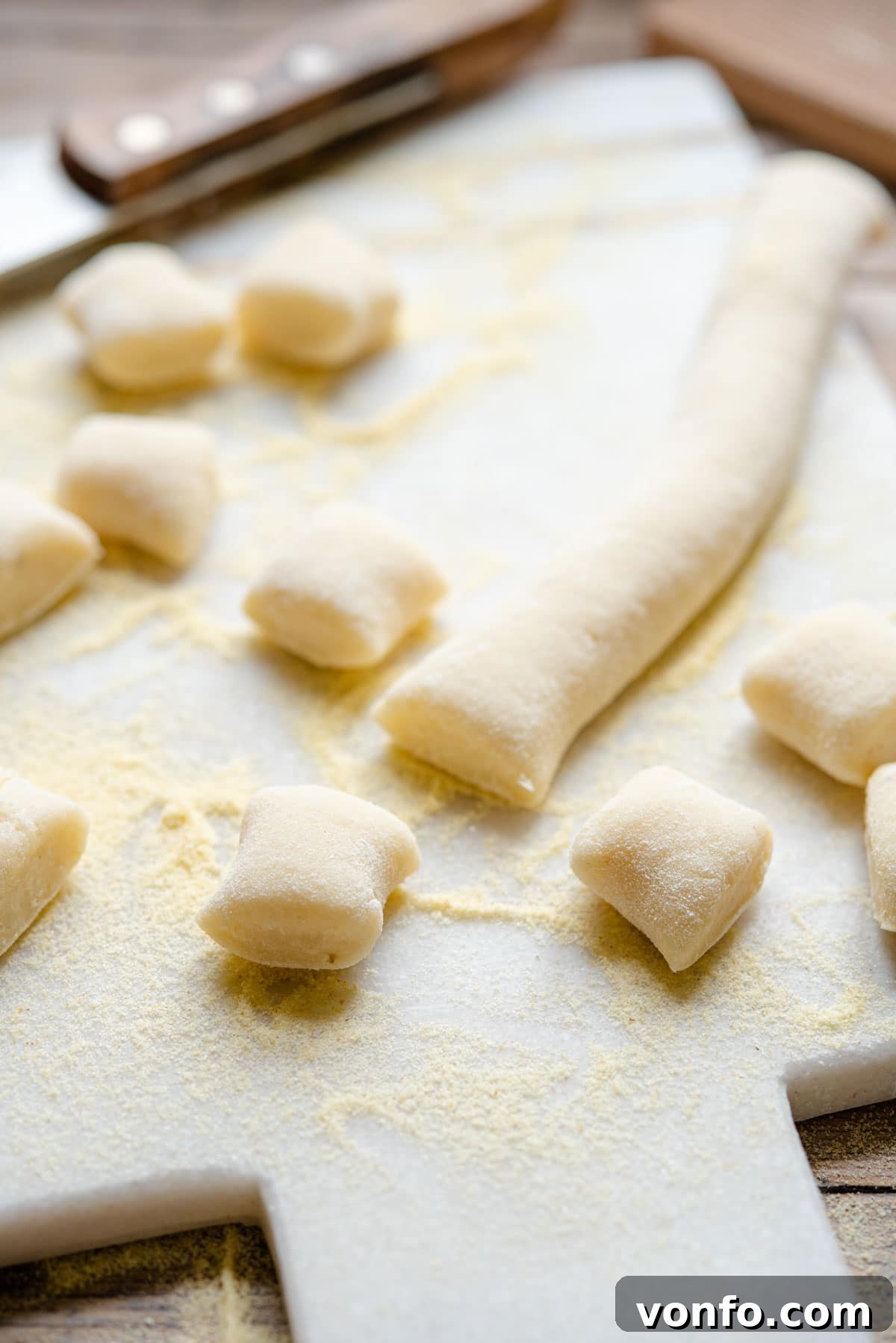
Once your dough is ready, divide it into four equal portions. Work with one quarter of the dough at a time, keeping the rest covered to prevent it from drying out. On your lightly floured surface, roll each quarter into a long, cylindrical log, approximately 2 cm (1 inch) thick. Aim for an even thickness along the entire log. Then, using a knife or dough cutter, slice each log into individual gnocchi pieces, about 2 cm (1 inch) in length. Consistency in size will ensure even cooking.
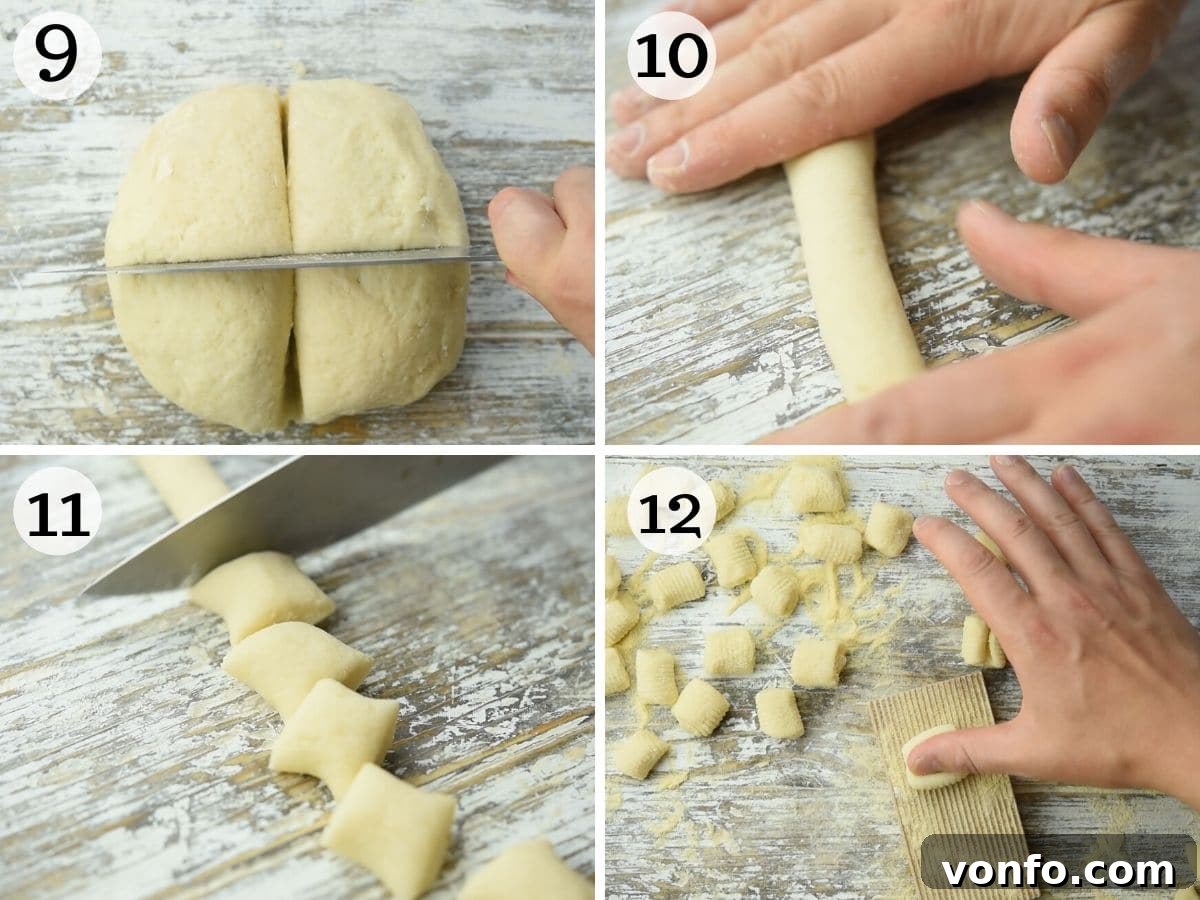
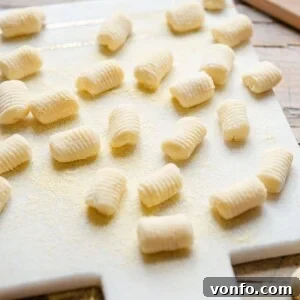
You can cook the gnocchi as simple, unshaped pillows if you prefer. However, for a more authentic touch and to help the sauce cling better, consider shaping them. This can be done using a traditional gnocchi board, or even the tines of a fork or the back of a cheese grater for a rustic texture.
To shape the gnocchi, lightly dust your gnocchi board (or chosen tool) with a little flour or fine semolina. Take one piece of dough and place it at the top of the board. Using your thumb, gently but firmly roll the dough piece down and away from you. The pressure of your thumb and the grooves of the board will create the signature ridges and a slight indentation on one side. These ridges are not just for aesthetics; they are designed to perfectly capture and hold your delicious sauce.
Step 4: Cooking and Serving Your Homemade Gnocchi
With your beautiful gnocchi shaped and ready, it’s time for the final, quick step: cooking. Bring a large pot of water to a rolling boil and generously salt it – the water should taste like the sea, just as you would for pasta. This is your only chance to season the gnocchi thoroughly.
Carefully add the gnocchi to the boiling water in batches, making sure not to overcrowd the pot. Overcrowding can lower the water temperature and cause the gnocchi to stick together or become gummy. The gnocchi will sink to the bottom initially. Once they float to the surface, they are cooked. This usually takes only 1-2 minutes. They cook very quickly, so stay vigilant!
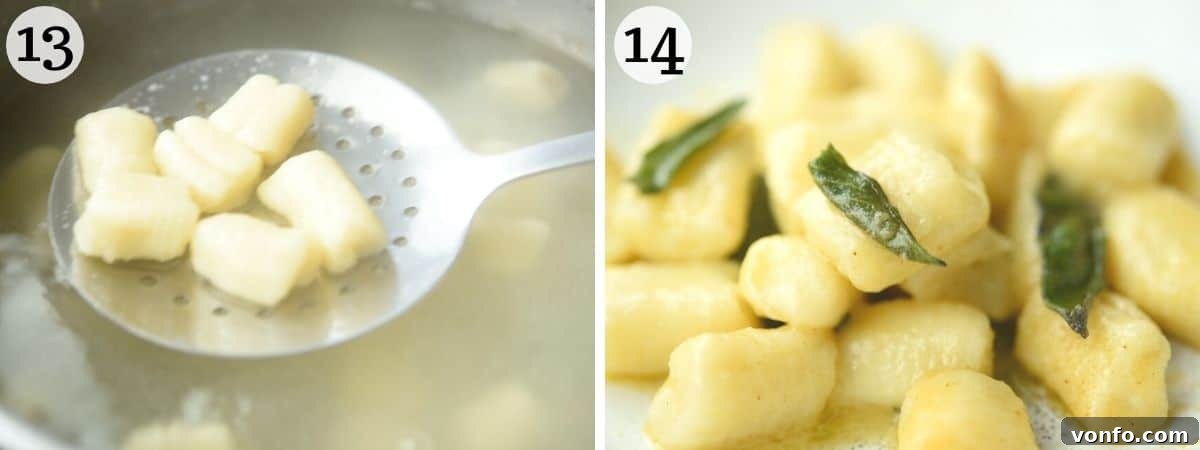
Using a slotted spoon, promptly remove the cooked gnocchi from the water and transfer them directly into your pre-warmed, prepared sauce. Gently toss the gnocchi to ensure each delicate dumpling is beautifully coated. Serve immediately, garnished with fresh herbs or grated Parmesan cheese, if desired.
Choosing the Perfect Sauce for Your Homemade Gnocchi
One of the joys of making homemade gnocchi is the versatility of pairing them with a wide array of sauces. Their neutral, starchy flavor makes them an excellent canvas for both rich and delicate companions. Whether you prefer something hearty and robust or light and fragrant, there’s a perfect sauce waiting for your fresh gnocchi.
Here are some classic and beloved pairings:
- Baked Gnocchi alla Sorrentina: A comforting Neapolitan dish featuring gnocchi baked with a vibrant tomato sauce, fresh mozzarella, and basil. The baking creates a wonderfully gooey, cheesy top.
- Hearty Sausage Ragu: A rich, slow-cooked meat sauce made with savory Italian sausage, perfect for clinging to the gnocchi’s ridges and offering a deeply satisfying meal.
- Classic Beef Ragu: A slow-simmered, tender beef ragu that boasts layers of flavor, ideal for a hearty and traditional Italian feast.
- Brown Butter and Sage: A simple yet elegant choice. The nutty, aromatic brown butter infused with fresh sage leaves offers a luxurious coating that highlights the delicate flavor of the gnocchi.
- Walnut Sauce (Salsa di Noci): A Ligurian specialty, this creamy, rich sauce made from walnuts, garlic, Parmesan, and olive oil provides a unique and indulgent flavor profile.
- Fresh Basil Pesto: The vibrant, herbaceous flavors of classic basil pesto complement gnocchi beautifully, offering a quick and flavorful option, especially during warmer months.
Expert Tips and FAQs for Gnocchi Perfection
To ensure your gnocchi are consistently perfect, keep these expert tips in mind and address common questions:
- Potato Selection is Key: Always use floury, starchy potatoes like Yukon Gold, Russet, or Maris Piper. These varieties have a drier flesh and higher starch content, resulting in a light, airy gnocchi. Waxy potatoes, on the other hand, contain more moisture and will produce a dense, sticky dough.
- Boil Potatoes with Skin On: Never peel your potatoes before boiling! The skin acts as a natural barrier, preventing the potatoes from absorbing excess water. This is a critical step for achieving a dry, workable dough and light gnocchi.
- Start in Cold Water: Place your potatoes in a pot of cold water and then bring it to a boil. Adding them directly to already boiling water can shock the potatoes, causing the skins to split and allowing too much water to penetrate the flesh.
- Rice Potatoes While Warm: For the smoothest, lump-free potato base, rice your potatoes immediately after peeling them while they are still warm. This ensures they break down easily and evenly.
- Gentle Kneading is Crucial: The less you work the dough, the more tender your gnocchi will be. Over-kneading develops gluten, leading to a tough, chewy texture. Mix just until combined and the dough is soft but not sticky.
- Flour Type Matters: Italian Tipo 00 flour is ideal for its fine texture and low protein, yielding a lighter gnocchi. However, good quality all-purpose (plain) white flour is a perfectly acceptable substitute.
- Egg: To Use or Not to Use? Traditionally, some gnocchi recipes omit the egg. However, including one medium egg makes the dough significantly easier to handle, binds the ingredients more effectively, and adds a subtle richness. If you’re an experienced gnocchi maker, you might try without, but for beginners, the egg is recommended.
Gnocchi dough is best used fresh as it tends to become very sticky if left out for too long. However, you can prepare the shaped gnocchi up to an hour in advance. Store them in a single layer on a tray dusted generously with semolina flour (which helps prevent sticking), covered with plastic wrap, and refrigerated. Cook them straight from the fridge.
Absolutely! Freezing gnocchi is a fantastic way to enjoy them later. After cutting and shaping your gnocchi, arrange them in a single layer on a baking sheet lined with parchment paper, ensuring they don’t touch each other. Place the tray in the freezer until the gnocchi are solid (this initial freeze prevents them from sticking together). Once frozen, transfer the gnocchi to a freezer-safe bag or airtight container. Cook frozen gnocchi directly from the freezer in boiling salted water; they may take a minute or two longer to float to the surface.
We hope this detailed guide empowers you to create the most incredible homemade potato gnocchi. If you’ve tried this Homemade Potato Gnocchi Recipe or any other recipe on the blog, please share your experience in the comments below! We love hearing from you! You can also FOLLOW US on FACEBOOK, INSTAGRAM, and PINTEREST for more delicious food inspiration and updates.
Step By Step Photos Above
Most of our recipes come with step by step photos, helpful tips and tricks to make it perfectly first time and even video!
Homemade Potato Gnocchi
By Emily
30 minutes
35 minutes
1 hour 5 minutes
8 – 10 servings
Saved
Pin
Ingredients
- 2 lbs floury potatoes , Yuokon Gold, Russet or Maris Piper (1 kg)
- 2 cups flour, Italian 00 flour or all-purpose (plain) (250g)
- 1 medium egg
- Salt
Instructions
How to prepare the potatoes
-
Clean the potatoes but do not peel them and place them in a large pot of cold water. Bring it to a boil and boil the potatoes until tender, about 30 minutes.
-
To check the potatoes are cooked try inserting a knife into the centre of the largest one, if it enters with ease it’s cooked. Try not to do this too often as the incisions will let water in.
-
Once cooked, drain the potatoes. Peel the potatoes when they are cool enough to touch. The skin should just rub off easily.
-
When the peeled potatoes are still warm place them through a potato ricer.
How to make potato gnocchi dough
-
Tip the flour onto a clean work surface and place the potatoes on top. Start to incorporate the flour into the potatoes then add the beaten egg and salt.
-
Knead the mixture until the dough is smooth and soft to touch without being sticky. Be careful not to overwork the dough or it’ll become tough. Leave out any extra flour that doesn’t incorporate, if you need more flour add a little at a time until the dough is no longer sticky.
How to cut and shape the gnocchi
-
Cut the dough into 4 then working with one quarter of dough at a time, shape it into 2cm / 1 inch thick logs. Cut each log into 1 inch / 2 cm pieces.
-
You can use the gnocchi as they are or you can shape them using a gnocchi board or cheese grater.
-
To shape the gnocchi, sprinkle some flour or semolina onto a gnocchi board. Place one piece of dough on the board and roll the dough over the board away from you whilst pressing firmly with your thumb.
Cooking the gnocchi
-
Bring a large pot of water to a boil and salt it generously. Add the gnocchi to the boiling water, once they float on the surface of the water they are cooked.
-
Remove from the water with a slotted spoon straight into your prepared sauce, toss the gnocchi to coat in the sauce and serve.
Video
Notes
- Potato type – As already mentioned you must use a floury potato such as Yukon Gold, Russet or Maris Piper. New or waxy potatoes will just not work and the dough won’t come together.
- Peeling the potatoes – DO NOT peel the potatoes before boiling or they will absorb too much water which will affect your gnocchi dough.
- Boiling Potatoes – add the potatoes to a pot of cold water and bring to a boil. If you add them to already boiling water it can shock the potatoes causing the skin to split and let in too much water.
- Flour – Using Italian 00 Flour will give you a lighter texture but you can also use all-purpose (plain) white flour
Helpful Info for All Recipes
- I always use extra virgin olive oil in all of my recipes unless stated otherwise
- When I use canned or jarred tomatoes of any kind I always use Cirio or Mutti brands for the best results and flavour.
- All vegetables are medium sized unless stated otherwise
- All recipes are tested and developed using a fan (convection) oven
- Find out more about how nutrition is calculated.
- Check out our must have Italian Pantry Staples.
- You can also find all our Essential Kitchen Tools for Italian Cooking.
Nutrition
Carbohydrates: 50g |
Protein: 6g |
Fat: 1g |
Saturated Fat: 1g |
Cholesterol: 20mg |
Sodium: 53mg |
Potassium: 635mg |
Fiber: 5g |
Sugar: 8g |
Vitamin A: 24052IU |
Vitamin C: 25mg |
Calcium: 55mg |
Iron: 2mg
Nutrition information is automatically calculated, so should only be used as an approximation.