
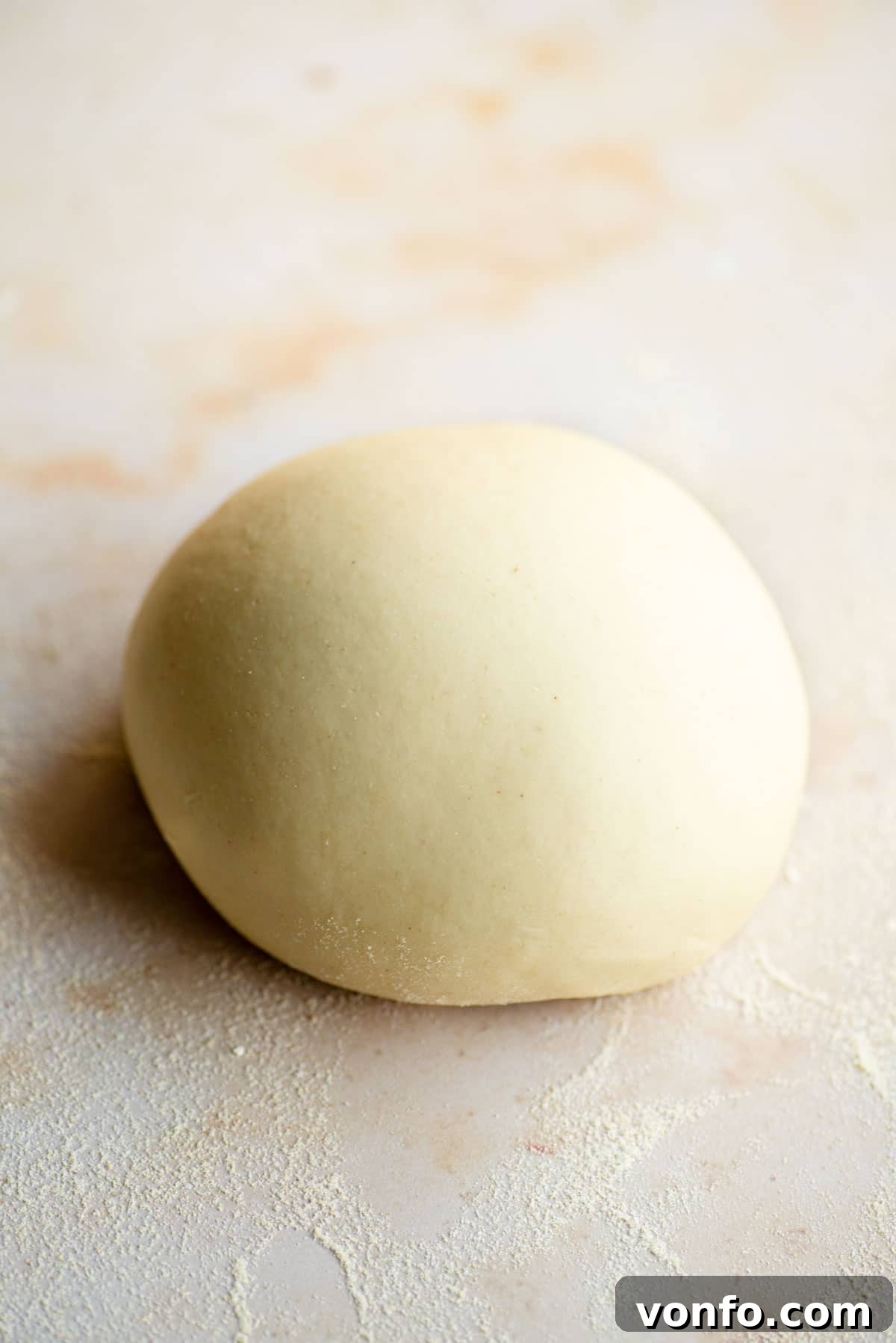
Embark on a culinary journey to the heart of Italy by learning how to make exquisite semolina pasta dough from scratch. This incredibly simple yet versatile recipe requires only two ingredients, proving that authentic, egg-free Italian pasta is within everyone’s reach. Forget the complexities often associated with homemade pasta; this method is super quick, easy to master, and yields a remarkably pliable dough. It’s the perfect foundation for crafting a variety of traditional Italian shapes such as Cavatelli, Gnocchetti Sardi, and Orecchiette, bringing the true taste of Italian tradition right to your kitchen.
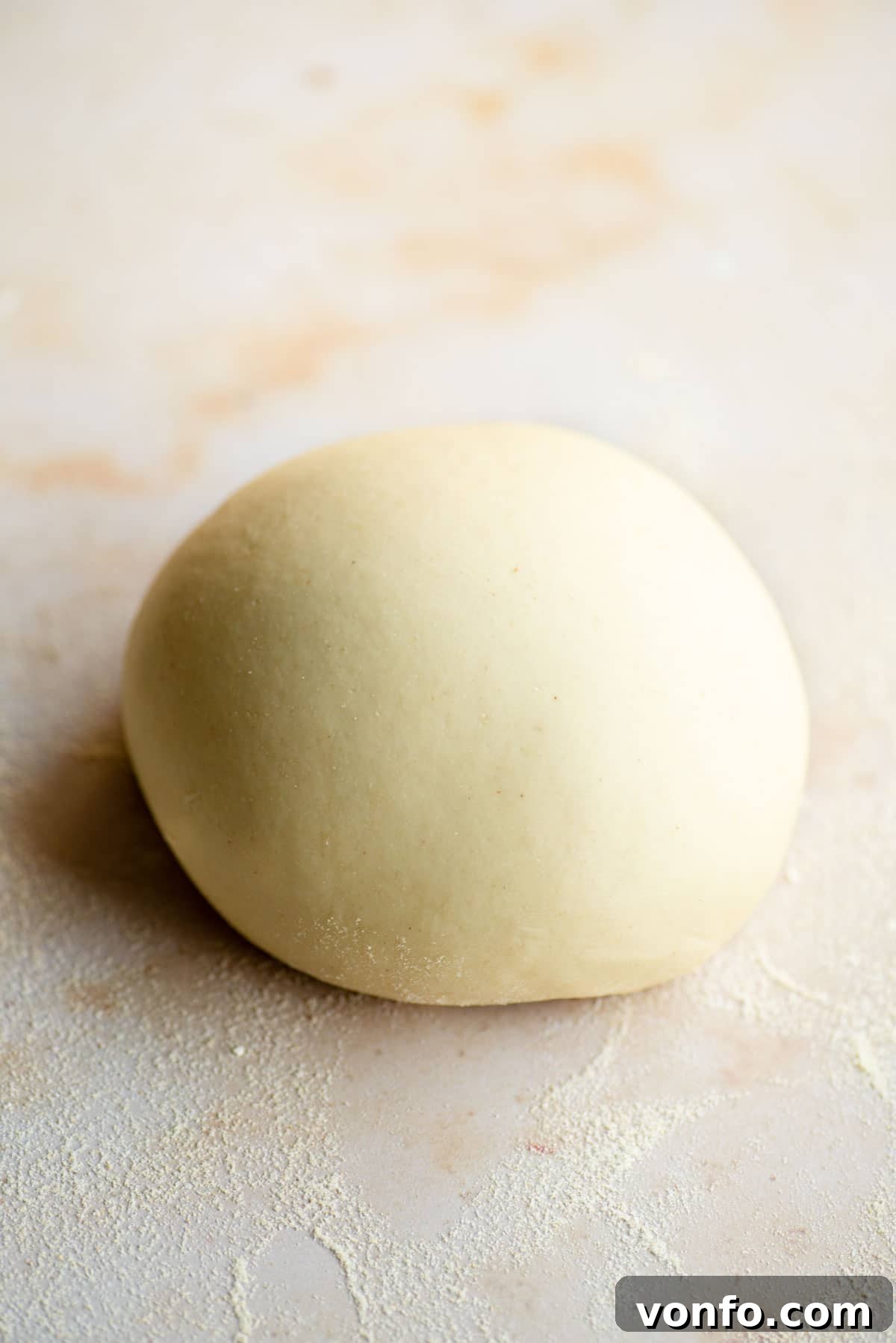
The Magic of Semolina Pasta: A Culinary Revelation
When the conversation turns to homemade pasta, semolina often takes a backseat to its more common counterparts made with eggs or all-purpose flour. However, those in the know understand that semolina pasta dough is not only one of the easiest doughs to work with but also offers a unique texture and bite that truly sets it apart. This humble, two-ingredient wonder is a staple in Southern Italian cuisine, celebrated for its robustness and ability to hold its shape beautifully, even with intricate hand-forming techniques.
The secret lies in the type of flour used: Semola Rimacinata. This finely ground durum wheat semolina is a distinct flour from the coarser semolina typically used for couscous or puddings. Its name, “rimacinata,” literally translates to “re-milled,” indicating its extra-fine texture, almost like talcum powder. Milled from hard durum wheat, this flour boasts a high protein content and a vibrant amber hue, which it imparts to the pasta, giving it that characteristic golden color.
Unlike pasta made with softer 00 flour or eggs, semolina pasta is inherently tougher and more elastic. This characteristic makes it incredibly forgiving and easy to manipulate, perfect for crafting a myriad of traditional shapes without the risk of tearing or becoming too soft. Once cooked, homemade semolina pasta delivers a delightful “al dente” chewiness, a satisfying bite that complements hearty sauces and simple preparations alike. It’s this unique combination of workability and texture that makes semolina an indispensable ingredient for anyone serious about traditional Italian pasta making.
This traditional Italian dough is the base for hundreds of different pasta shapes, particularly those found in the southern regions of Italy. From the iconic Cavatelli, resembling tiny hot dog buns, to the ear-shaped Orecchiette, and the ridged Gnocchetti Sardi, the possibilities are endless. Embracing this dough invites you to have fun, experiment with various shapes, and serve them with your favorite authentic Italian sauces, creating truly memorable meals.
Essential Ingredients for Perfect Semolina Pasta Dough
Creating this delicious egg-free semolina pasta requires only two simple ingredients, but selecting the right ones makes all the difference. Below, you’ll find everything you need, along with crucial tips for achieving the best results.
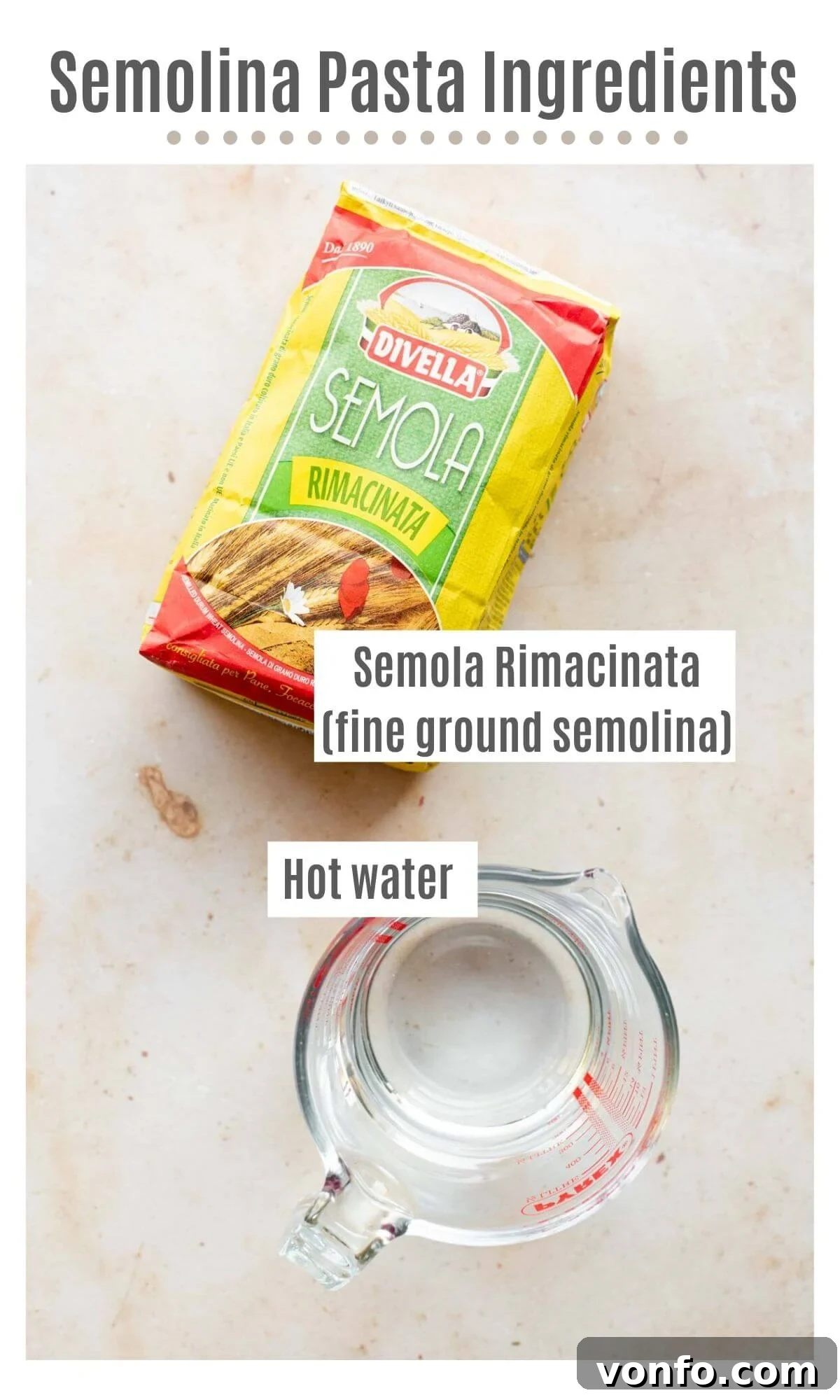
The Star: Semola Rimacinata
- Semola Rimacinata (300g / 2 cups): This is the cornerstone of our egg-free pasta. Semola Rimacinata is a finely ground semolina flour made from hard durum wheat. Its robust nature gives the pasta a firmer, more satisfying bite once cooked, a distinct characteristic compared to softer 00 flour or egg-based pastas. The fine grind contributes to a smooth, pliable dough that is a joy to work with. You can easily find Semola Rimacinata online or in specialty Italian food stores. For optimal results, ensure you’re using the “rimacinata” variety, which indicates its extra-fine texture.
Just the Right Hydration: Hot Water
- Hot Water (150ml / ⅔ cup): While cold water can certainly be used, hot or warm water is highly recommended. The warmth helps to activate the gluten in the semolina more quickly and efficiently, making the dough much easier to knead into a smooth, elastic consistency. It also aids in the hydration process, resulting in a more uniform and pliable dough.
Optional: A Pinch of Salt. While not strictly necessary for the dough’s structure, a small pinch of fine sea salt (about ½ teaspoon) can be added to the flour to enhance the overall flavor of your pasta. This is a matter of personal preference.
Step-by-Step Guide to Crafting Your Semolina Pasta Dough
Making semolina pasta dough is a meditative and rewarding process. Follow these simple steps to create a perfect batch every time.
Preparation and Mixing
- Prepare the flour: Begin by tipping the Semola Rimacinata onto a clean, dry work surface, such as a large wooden board or a spacious countertop. Alternatively, you can use a large mixing bowl. Form a wide well in the center of the flour, creating a “volcano” shape. This well will hold the water. (Refer to photo 1 for visual guidance).
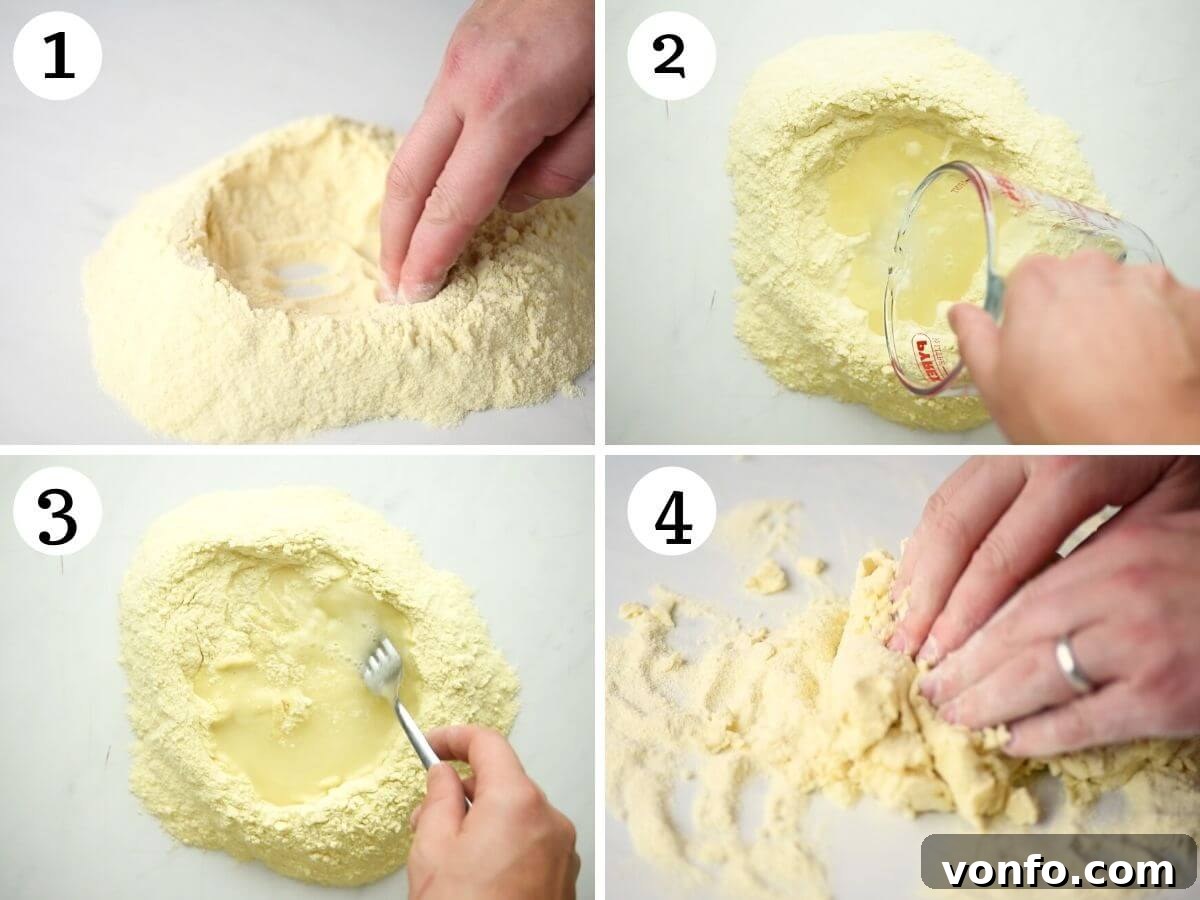
- Add the water: Carefully pour the hot water into the well. Using a fork, gradually start incorporating the semolina from the inner edges of the well into the water. Work slowly, drawing small amounts of flour into the liquid until a shaggy, rough dough begins to form. This methodical approach prevents the water from spilling out and ensures even hydration. (Refer to photos 2 & 3 for visual guidance).
The Art of Kneading
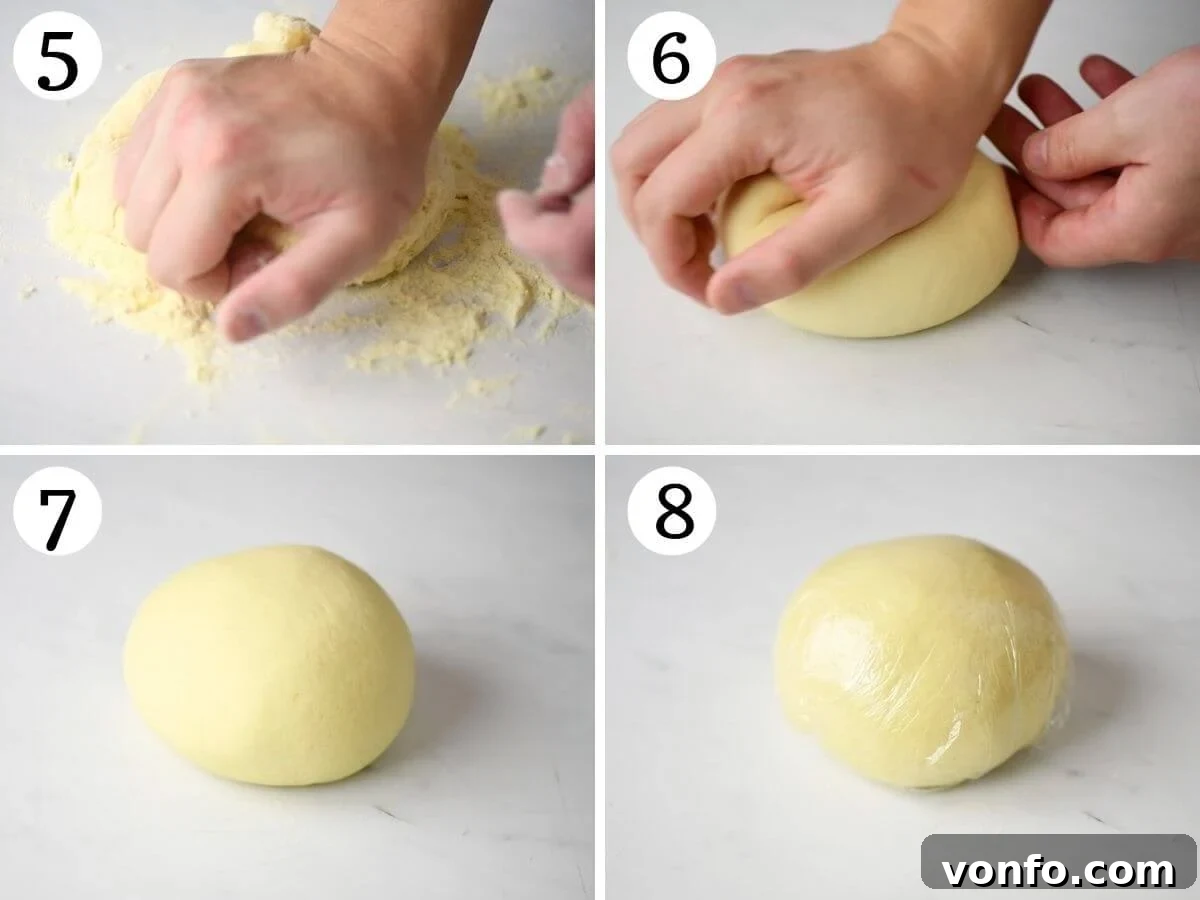
- Knead the dough: Once the flour and water have largely come together and a rough mass has formed, discard the fork and use your hands to continue mixing. Bring the dough together and begin kneading. Push the dough away from you with the heel of your hand, then fold it back over itself, turn, and repeat. Knead vigorously for about 10-15 minutes until the dough transforms into a smooth, elastic, and uniform ball. It should be firm but pliable, and when pressed lightly, it should spring back slightly. If the dough feels too tough to knead at any point, wrap it in plastic wrap and let it rest for 5-10 minutes. This short rest will allow the gluten to relax, making it much softer and easier to work with. (Refer to photos 4-7 for visual guidance on kneading technique).
The Crucial Rest
- Let it rest: After kneading, wrap the dough tightly in plastic wrap (cling film) or place it in an airtight container. Allow the dough to rest at room temperature for at least 30 minutes. This resting period is crucial as it allows the gluten to relax completely and the semolina to fully hydrate, resulting in a more manageable dough that is less likely to tear during shaping.
Your dough is now perfectly prepared for shaping! For detailed guidance on specific shapes, follow our step-by-step tutorials for Homemade Cavatelli Pasta or Gnocchetti Sardi – two very easy and simple shapes that are ideal for this versatile semolina dough.
Unleashing Creativity: Shaping Your Semolina Pasta
The beauty of semolina pasta dough lies in its incredible versatility, particularly for hand-shaped pasta. Its firm yet pliable texture, thanks to the durum wheat, means it holds its form beautifully, making it ideal for creating intricate or rustic shapes without the need for a pasta machine. This opens up a world of possibilities for expressing your culinary creativity.
Popular Hand-Shaped Varieties
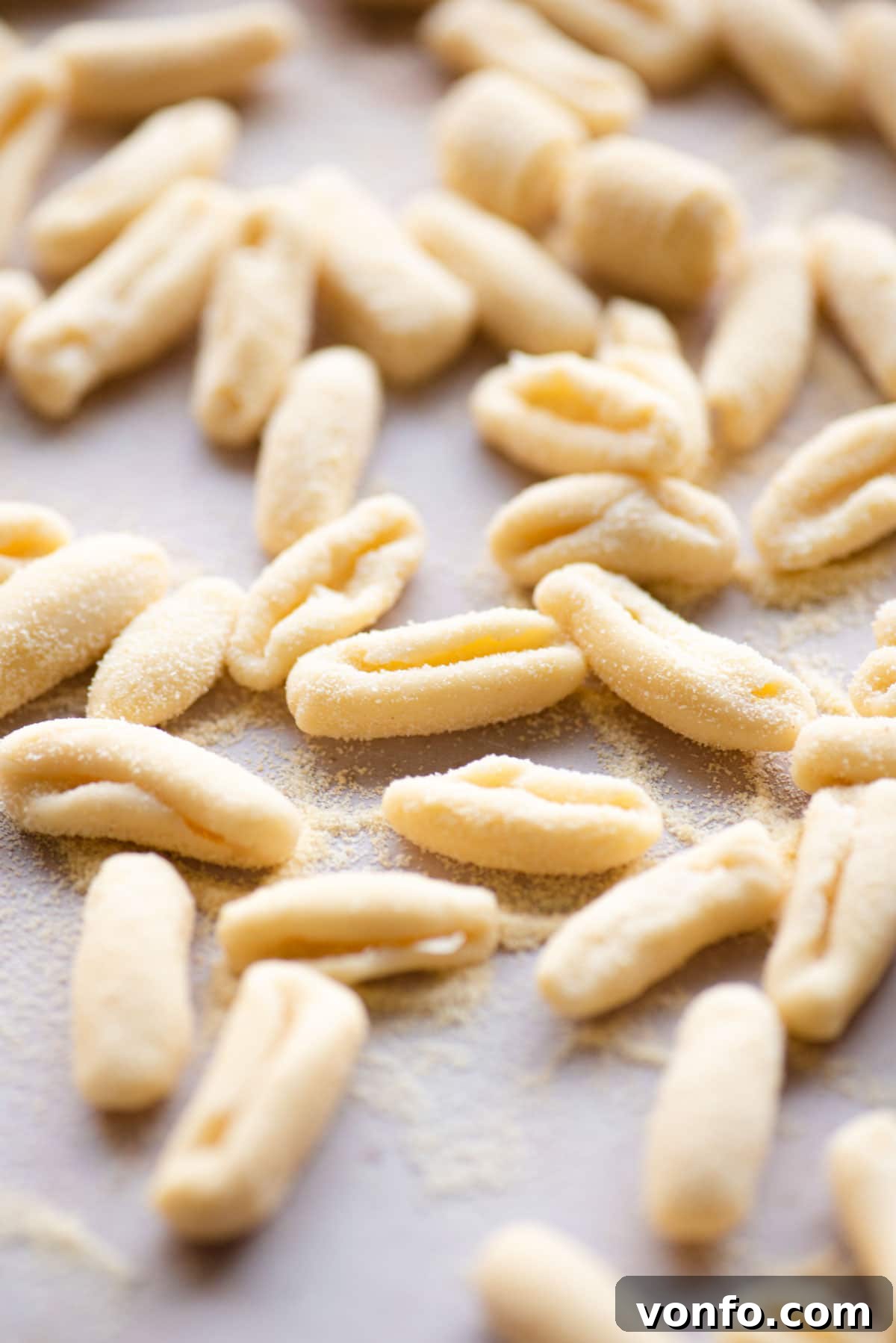
- Homemade Cavatelli: These charming, shell-like pasta pieces are incredibly simple to make. Typically formed by rolling small pieces of dough into cords and then pressing and dragging them with a finger or thumb against a ridged board (or even a fork!), they create a perfect pocket for capturing chunky sauces. Cavatelli are a fantastic starting point for beginners.
- Gnocchetti Sardi (Malloreddus): Often called Sardinian gnocchi, these are similar to cavatelli but boast distinctive ridges, usually created by rolling them across a traditional gnocchi board. The ridges are not just for aesthetics; they wonderfully grip sauces, making every bite flavorful.
- Orecchiette: Meaning “little ears,” Orecchiette are iconic in Puglia, Italy. They are formed by dragging small pieces of dough across a surface with a knife, then flipping them over a thumb, creating a concave shape. Their unique cup-like form is perfect for capturing vegetable-rich sauces.
- Spaghetti alla Chitarra: While this name implies a machine (the “chitarra” or guitar), semolina dough is firm enough that it can also be rolled and cut into rustic, square-sided spaghetti by hand with a sharp knife, offering a more robust alternative to round spaghetti.
- Strozzapreti: Translating to “priest stranglers,” these hand-rolled twists are simple, rustic, and incredibly satisfying. They are formed by rolling strips of dough between your palms.
- Maccheroni al Ferretto: Another traditional shape, particularly from Southern Italy, created by wrapping strips of dough around a thin knitting needle (ferretto) or skewer, then removing it to create hollow tubes.
Don’t be afraid to experiment! The beauty of durum wheat pasta is its forgiveness. Start with simpler shapes and gradually move to more complex ones. The process is part of the joy, and the reward is truly unparalleled homemade pasta.
Perfect Pairings: Sauces for Your Homemade Semolina Pasta
The robust texture and slightly nutty flavor of homemade semolina pasta make it an ideal canvas for a wide range of sauces. It stands up beautifully to heartier, chunkier sauces, but also shines with lighter, fresher preparations. Here are some delectable pairing ideas:
- Cavatelli and Broccoli: A quintessential Southern Italian dish, especially popular with cavatelli. The small crevices of the pasta perfectly hold tender broccoli florets, garlic, and chili flakes, often finished with a drizzle of good quality olive oil. A truly comforting and classic combination.
- Gorgonzola Cream Sauce: For those who love a rich and quick cheesy sauce, the assertive flavor of Gorgonzola melds wonderfully with the chewiness of semolina pasta. Add a touch of cream for luxurious silkiness.
- Classic Pomodoro Sauce: Sometimes, simplicity is key. A vibrant sauce made with ripe tomatoes, fresh basil, and garlic allows the quality of your homemade pasta to truly shine. The sturdy semolina pasta handles the acidity and freshness beautifully.
- Hearty Italian Beef Ragu: Semolina pasta, especially shapes like Orecchiette or Cavatelli, is fantastic with slow-cooked, rich meat sauces. The nooks and crannies of the pasta become perfect vessels for the tender shreds of meat and flavorful sauce.
- Pesto Genovese or Trapanese: A fresh basil pesto (Genovese) or a tomato-based pesto (Trapanese) offers a burst of fresh flavor. The thick sauce clings wonderfully to the surface of hand-shaped pasta.
- Aglio e Olio with Chili: For a minimalist yet incredibly flavorful option, a simple sauce of garlic, olive oil, and a touch of red pepper flakes creates a quick and satisfying meal that highlights the pasta itself.
Frequently Asked Questions (FAQs)
Here are some common questions and helpful answers to ensure your semolina pasta-making experience is a success.
What’s the best kind of semolina to use?
For the very best results in pasta making, you need to use very finely ground semolina, which is specifically known as Semola Rimacinata or Semola di Gran Duro Rimacinata. Its texture should be similar to a very fine powder, much finer than the coarse semolina used for other culinary purposes. This fine grind is essential for a smooth, pliable dough.
Can I prepare this dough in advance?
Yes, absolutely! You can prepare this semolina pasta dough 1 to 3 days in advance. Be sure to keep it tightly wrapped in plastic wrap or an airtight container and store it in the refrigerator. When you’re ready to use it, remove the dough from the fridge and allow it to come to room temperature for at least 30 minutes to 1 hour before shaping. Cold dough is much too stiff and difficult to work with.
Can I freeze the dough?
While you can technically freeze the dough itself, because this recipe is so quick to make, we recommend making it fresh whenever possible. If you need to freeze it, it’s best to shape the pasta first and then freeze the individual shaped pieces. You can then cook your frozen pasta shapes directly in boiling water without thawing, adding an extra minute or two to the cooking time.
My dough is too dry/sticky, what should I do?
Pasta dough consistency can be affected by factors like humidity and the specific brand of semolina. If your dough feels too dry and crumbly, add water sparingly, a teaspoon at a time, until it comes together. If it’s too sticky, add a sprinkle of Semola Rimacinata, a tablespoon at a time, and continue kneading until the desired texture is achieved. Always aim for a firm but elastic dough.
How long should I cook semolina pasta?
The cooking time for homemade semolina pasta is much shorter than for store-bought dried pasta. Once formed into small shapes, cook your pasta in plenty of heavily salted boiling water for approximately 2-4 minutes, or until it reaches your desired al dente consistency. Taste test frequently! Serve immediately with your favorite sauce.
Semolina Pasta Dough (Egg-Free) Recipe
A simple and authentic recipe for making delicious semolina pasta dough from scratch with just two ingredients. This egg-free method yields a robust and versatile dough perfect for hand-shaped Italian pasta.
- Prep Time: 30 minutes
- Resting Time: 30 minutes
- Total Time: 1 hour
- Servings: 4 servings (makes approximately 1 pound/450g of pasta)
Equipment
- Clean work surface or large mixing bowl
- Fork
- Plastic wrap (cling film)
- Kitchen scale (recommended for accuracy)
Ingredients
- 300 g Semola Rimacinata (extra-fine semolina), (approximately 2 cups* see notes)
- 150 ml hot water (approximately ⅔ cup)
Instructions
- Prepare the workspace: Tip the Semola Rimacinata onto a clean work surface or into a large mixing bowl. Form a wide well in the middle of the flour, like a volcano.
- Combine ingredients: Pour the hot water into the well. Using a fork, slowly and carefully incorporate the semolina from the inner edges of the well into the water. Continue mixing until a rough, shaggy dough begins to form.
- Knead the dough: Once the dough comes together, use your hands to knead it vigorously. Push the dough away with the heel of your hand, fold it over, turn it, and repeat. Knead for 10-15 minutes until the dough is completely smooth, elastic, and feels firm yet pliable. If the dough feels too stiff, wrap it in plastic wrap and let it rest for 5-10 minutes, then resume kneading.
- Rest the dough: Once kneaded to perfection, wrap the dough tightly in plastic wrap (cling film) and let it rest at room temperature for at least 30 minutes. This step is crucial for gluten relaxation and proper hydration.
- Shape and cook: Your dough is now ready to be shaped. Refer to our tutorials on how to make cavatelli pasta or gnocchetti sardi for easy shaping ideas. Alternatively, form it into any shape you like.
- Cooking: Once formed, cook your pasta shapes in a generous amount of heavily salted boiling water for approximately 2-4 minutes, or until al dente. Serve immediately with your favorite sauce.
Notes
- *Measuring with cups: For best accuracy in pasta making, a kitchen scale is highly recommended. If you are using measuring cups, make sure to spoon the semolina into the cups lightly and then level it off with a knife. Scooping the flour directly with the cup can compact it, resulting in too much flour and a dry dough.
- Preparing in advance: This dough can be made 1-3 days ahead of time. Store it tightly wrapped in plastic wrap in the refrigerator. Before use, let it sit at room temperature for at least 30 minutes to become pliable.
- Storage and freezing: Freshly made semolina dough is excellent for freezing. We recommend shaping the dough into your desired pasta shapes first, then freezing them in a single layer on a baking sheet before transferring them to an airtight container or freezer bag. Cook the frozen pasta shapes directly from frozen in boiling water, no need to thaw.
Nutrition (Approximation)
Nutrition information is automatically calculated and should only be used as an approximation.
- Calories: 254 kcal
- Carbohydrates: 53g
- Protein: 10g
- Fat: 2g
- Saturated Fat: 1g
- Polyunsaturated Fat: 1g
- Monounsaturated Fat: 1g
- Sodium: 3mg
- Potassium: 323mg
- Calcium: 27mg
- Iron: 3mg
Pro Tips for All Your Culinary Adventures
Helpful Info for All Recipes
- I always use extra virgin olive oil in all of my recipes unless stated otherwise, for superior flavor and quality.
- When I use canned or jarred tomatoes of any kind, I exclusively use Cirio or Mutti brands for the best results and authentic Italian flavor.
- All vegetables are considered medium-sized unless specifically stated otherwise in the recipe.
- All recipes shared here are thoroughly tested and developed using a fan (convection) oven. Adjustments may be needed for conventional ovens.
- Find out more about how nutrition is calculated for our recipes.
- Check out our must-have Italian Pantry Staples to stock your kitchen like a true Italian cook.
- You can also find all our Essential Kitchen Tools for Italian Cooking to equip your culinary space.
We hope you love making this Semolina Pasta Dough recipe! If you’ve tried it or any other recipe on the blog, don’t forget to rate the recipe and leave a comment below. We absolutely love hearing from you! You can also FOLLOW US on FACEBOOK, INSTAGRAM, and PINTEREST, or sign up for our NEWSLETTER to receive new delicious recipes weekly.