
Pappa al Pomodoro: The Rustic Tuscan Tomato Bread Soup You Need to Try
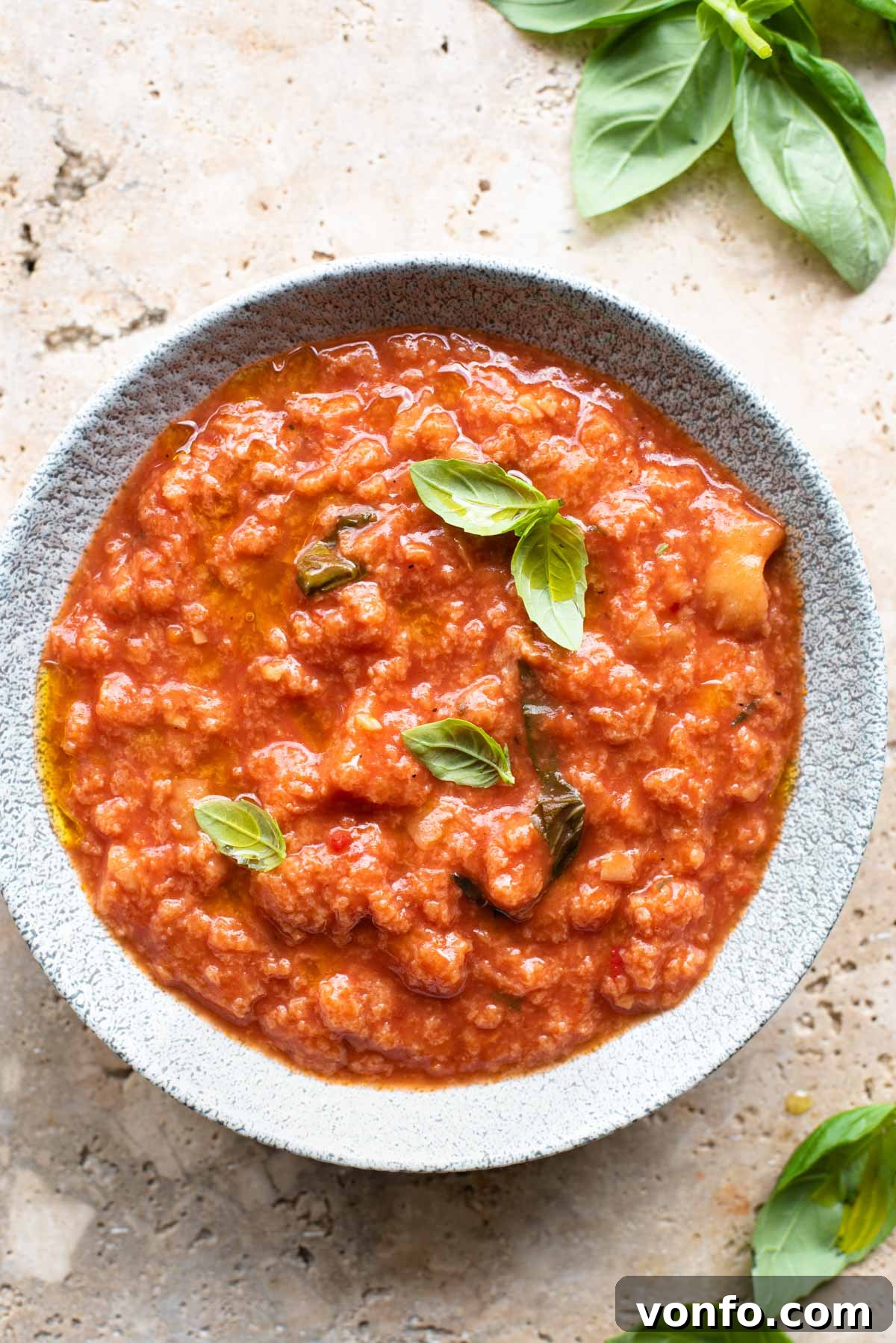
Pappa al Pomodoro, a quintessential Tuscan tomato bread soup, embodies the spirit of “cucina povera” – peasant cooking that transforms humble ingredients into something truly extraordinary. With just a few basic components like ripe tomatoes, fragrant basil, pungent garlic, and, crucially, stale bread, this soup delivers a depth of flavor that belies its simplicity. It’s not just a meal; it’s a warm embrace, a delicious testament to resourcefulness, and the perfect way to revitalize forgotten bread, turning it into a culinary masterpiece.
Originating from the sun-drenched region of Tuscany, Pappa al Pomodoro is more than just a recipe; it’s a culinary tradition passed down through generations. This hearty bread soup skillfully utilizes day-old bread, soaking it in a rich tomato broth to create a thick, velvety texture that is both satisfying and incredibly fresh-tasting. Its adaptability makes it a year-round delight, showcasing its versatility whether you seek warmth or refreshment:
- In warmer months: Serve it just warm or at room temperature, generously adorned with vibrant fresh basil and a luxurious drizzle of high-quality extra virgin olive oil. It offers a refreshing lightness and bright flavors that perfectly complement the summer heat.
- During cooler seasons: Enjoy it piping hot, providing a deeply comforting and warming experience that is ideal for a cozy winter evening, making you feel instantly at home.
The beauty of Pappa al Pomodoro lies in its regional diversity and the freedom it offers to home cooks. Just like many cherished Italian dishes, this soup often varies delightfully from one Tuscan household to another. Some families might enrich the base with a classic *soffritto* of finely diced carrots, celery, and onions, or even leeks, for added aromatic complexity and depth of flavor. The choice of tomatoes can also differ, with some preferring the vibrant intensity and sweetness of fresh, ripe summer tomatoes, while others opt for the convenience and consistent quality of canned varieties like whole peeled or crushed tomatoes. Even the precise quantities of each ingredient are often adjusted to personal preference, a reflection of the true artisan nature of Italian home cooking and the spirit of improvisation in the kitchen.
Our rendition of Pappa al Pomodoro focuses on a straightforward yet profoundly delicious approach, celebrating the core ingredients without unnecessary frills or complications. This recipe promises a rustic, authentic, and utterly delightful experience that captures the true essence of Tuscan comfort food. We encourage you to follow our detailed guide, complete with essential tips, step-by-step photographs, and a video tutorial to ensure your success in crafting this heartwarming soup. Feel empowered to adapt it to your unique taste and discover your own favorite version. Prepare to savor a true taste of Tuscany, a dish that feels both ancient and utterly contemporary. Buon Appetito!
Essential Ingredients for Crafting Authentic Pappa al Pomodoro
Creating an exceptional Pappa al Pomodoro starts with selecting the right ingredients. Each component plays a vital role in building the layers of flavor that define this classic soup. Below, you’ll find a visual guide to everything you need, along with crucial tips to help you choose the best quality components for an unforgettable and truly authentic Tuscan experience.
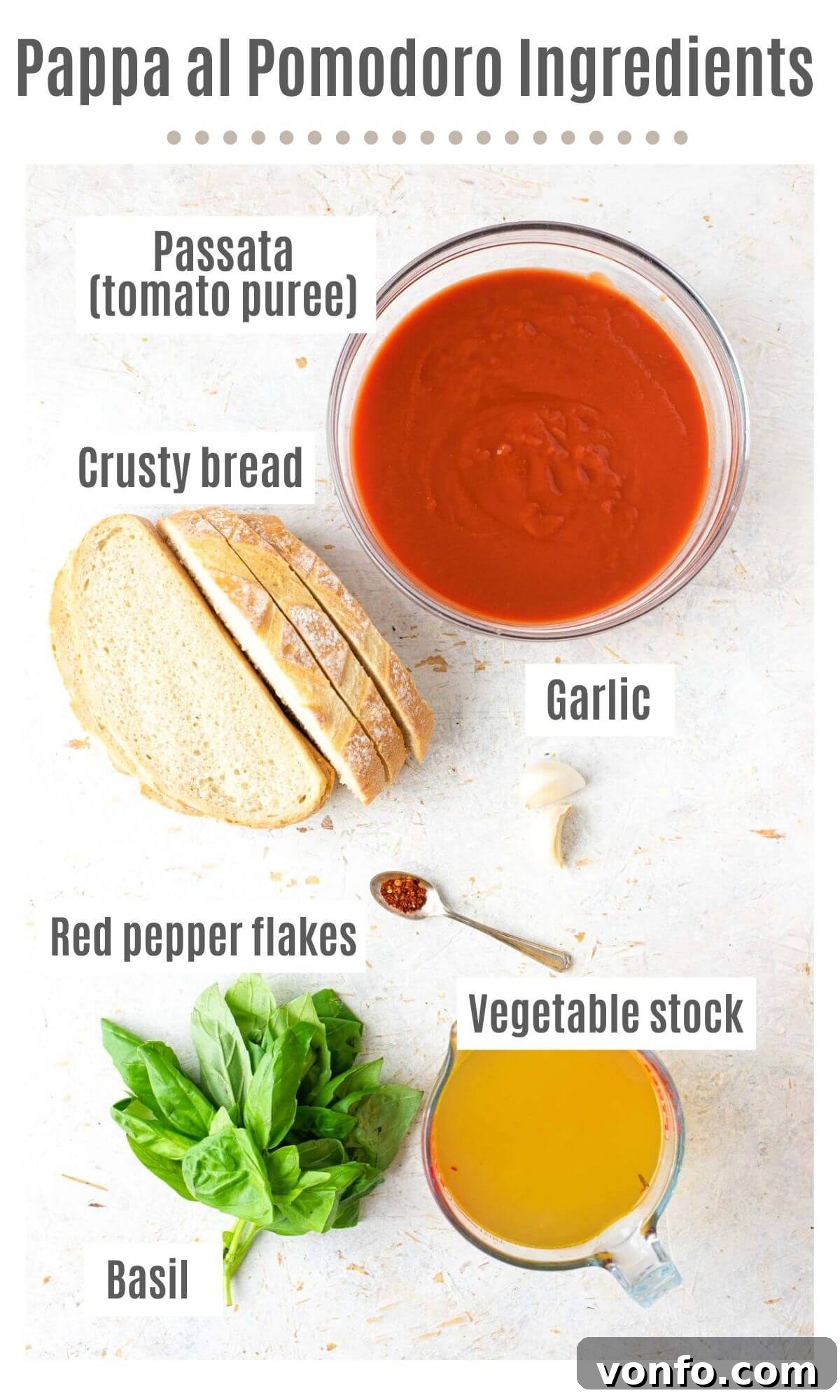
- Garlic: Fresh garlic cloves are an absolute must for this recipe. Their pungent, aromatic qualities form the crucial backbone of the soup’s flavor profile. Under no circumstances should you resort to garlic powder; its dullness simply won’t do justice to the vibrant and fresh essence of this dish. Aim for finely chopped garlic to ensure its potent flavor is evenly distributed and gently infuses the olive oil without becoming overpowering.
- Red Pepper Flakes (Chilli Flakes): We advocate for incorporating just a tiny pinch of red pepper flakes. This subtle addition introduces a gentle warmth and a mild kick that beautifully elevates the overall profile of the soup, adding a nuanced layer of flavor. However, personal preference reigns supreme here. Feel free to increase the quantity for a spicier version, or omit them entirely if you prefer a completely mild taste, especially if serving to young children or those sensitive to heat.
- Passata (Pureed Tomatoes): This is arguably the true star of the show and the heart of your Pappa al Pomodoro. Passata, often known as tomato puree in the US, consists of sieved, uncooked tomatoes, offering a wonderfully smooth texture and a concentrated, bright tomato flavor. The quality of your passata will dramatically impact the final taste of your soup, making it paramount to choose wisely. We highly recommend investing in reputable Italian brands like Mutti or Cirio, which are renowned for their superior taste, consistent texture, and vibrant color, ensuring a rich, authentic, and deeply flavorful tomato base.
- Stock: Traditionally, Pappa al Pomodoro is a completely vegetarian dish, making vegetable stock the classic and most recommended choice. A good quality vegetable stock will complement the fresh tomato and basil beautifully without introducing competing flavors, allowing the core ingredients to shine. However, if you only have chicken stock on hand, it can be used as an alternative, though it will subtly alter the traditional flavor profile by adding a richer, more savory undertone.
- Bread: The very essence and unique texture of this “bread soup” relies heavily on stale white crusty bread. The staleness is absolutely key; it allows the bread to absorb the rich tomato broth without disintegrating into an unappetizing mush too quickly, contributing to the soup’s signature thick, rustic, and satisfying consistency. There’s no need to meticulously remove the crusts; they add to the rustic charm, texture, and inherent goodness of the dish. While stale bread is ideal, fresh crusty white bread can be used in a pinch, though it might result in a slightly different, perhaps less ‘pappa-like’ texture.
- Fresh Basil: This fragrant herb is simply indispensable for Pappa al Pomodoro. Fresh basil provides a wonderfully aromatic, sweet, and subtly peppery note that brightens the entire soup, creating a harmonious balance with the rich tomatoes. Dried basil, unfortunately, utterly lacks the vibrant aroma and fresh, delicate flavor required for this dish. Always use fresh basil leaves, ideally torn rather than finely chopped, to release their essential oils gradually into the soup as it rests, enhancing its overall fragrance and taste.
- Olive Oil: A good quality extra virgin olive oil is not merely an optional addition but an essential component, used both for sautéing the aromatics and, more importantly, for drizzling generously over the finished soup. It adds a fruity, often peppery note, and a luxurious, silky mouthfeel that truly completes the dish, adding a final layer of Tuscan authenticity.
- Salt and Pepper: Simple seasonings are all that’s needed to enhance and draw out the natural, inherent flavors of these fresh, high-quality ingredients. Season to taste throughout the cooking process, adjusting as needed to bring out the best in the tomatoes and basil.
Step-by-Step Guide to Crafting Perfect Pappa al Pomodoro
Follow these straightforward and easy-to-understand steps, beautifully complemented by our visual aids, to create a truly authentic, comforting, and deeply flavorful Pappa al Pomodoro right in your own kitchen.
-
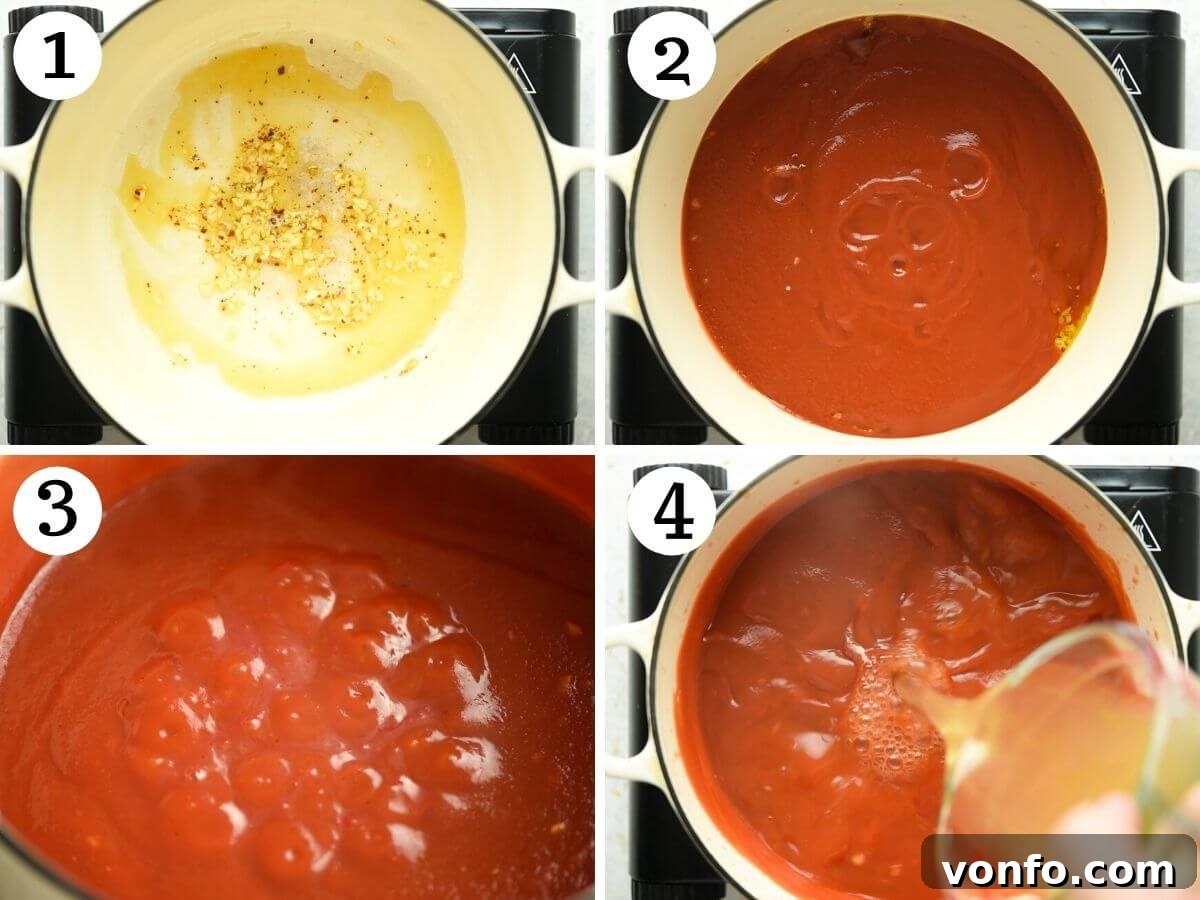
Begin your culinary journey by adding one tablespoon of high-quality extra virgin olive oil to a large, heavy-bottomed pot or a Dutch oven. Place the pot over a medium heat. Once the oil is shimmering gently, add the two finely chopped garlic cloves and the quarter teaspoon of red pepper flakes (if using). Sauté these aromatics for a brief 30 seconds, just until the garlic becomes wonderfully fragrant and releases its perfume. It is absolutely crucial not to let the garlic brown, as this can quickly lead to a bitter taste that will permeate the soup. The goal here is to gently infuse the olive oil with its delightful aromatic essence, laying a foundational layer of flavor for the soup.
-
Next, carefully pour in the three cups of passata (pureed tomatoes). Stir well to thoroughly combine the fragrant garlic-infused oil with the vibrant tomatoes. Bring this mixture to a gentle boil, allowing the initial flavors to meld and deepen slightly. Once boiling, carefully add the four cups of vegetable stock, stirring again to ensure everything is well incorporated. Bring the soup back to a boil once more, then immediately reduce the heat to a steady, gentle simmer. Let the soup simmer, uncovered, for a full 15 minutes. This simmering period is essential for concentrating the rich tomato flavor, allowing the liquids to slightly reduce, and preparing the broth to perfectly absorb the bread later.

Photos 1-4 illustrate the initial stages: gently sautéing aromatics and simmering the rich tomato base to perfection. -
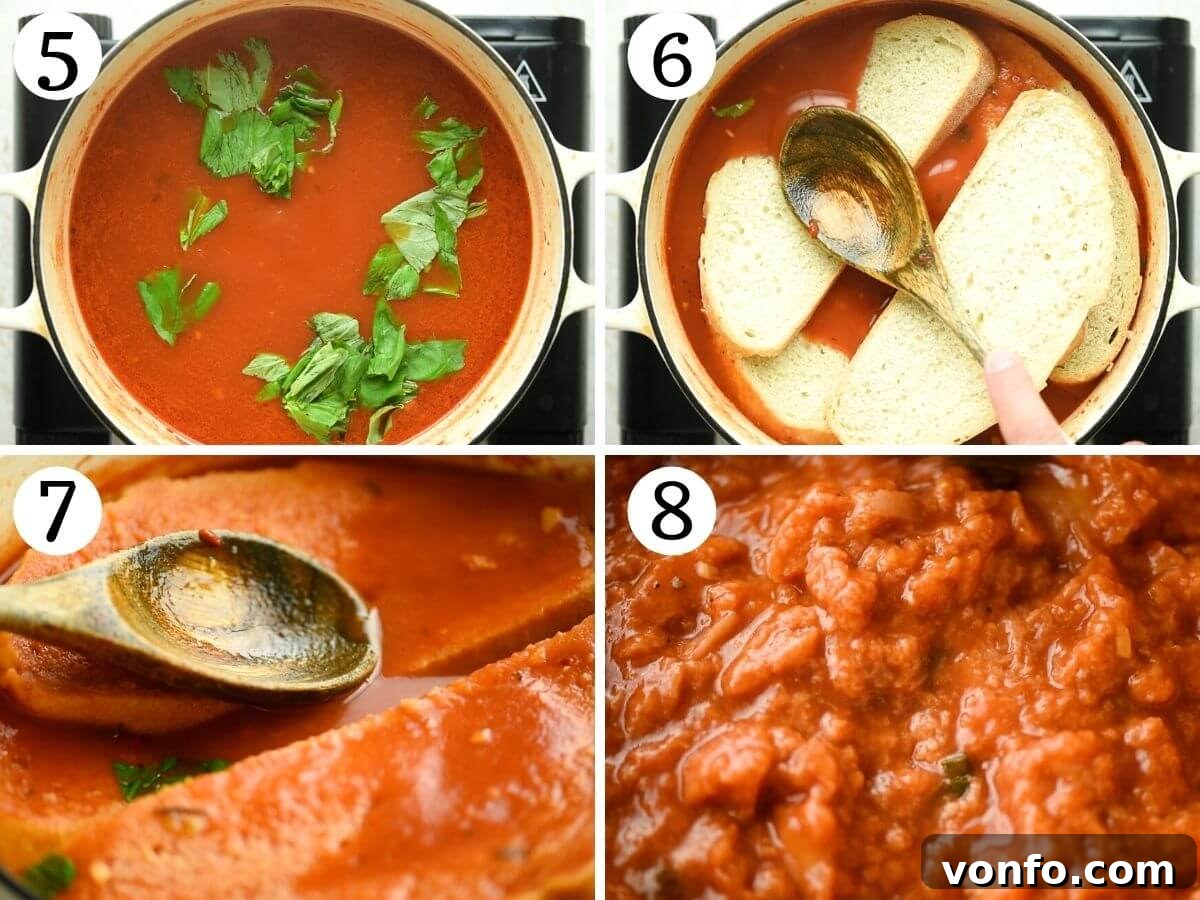
After the 15 minutes of simmering, turn off the heat completely. Take your small handful of fresh basil leaves and tear them gently into the pot, adding a generous pinch of salt and freshly ground black pepper to taste. Stir everything gently to distribute the fragrant basil and seasonings evenly throughout the soup. Now, carefully arrange the four to five thick slices of stale, crusty bread on top of the hot soup. Do not break them apart at this stage; keep them relatively whole. Very gently press the bread slices down so they are fully submerged and completely soaked in the rich, warm tomato broth. This allows them to absorb the liquid thoroughly and soften beautifully without disintegrating. Cover the pot with a tight-fitting lid and leave it undisturbed to rest for a full hour. This resting period is absolutely vital; it’s when the bread truly transforms, absorbing all the wonderful flavors and thickening the soup to its characteristic “pappa” consistency.
Photos 5-7 capture the crucial steps of adding basil and bread, then allowing the soup to rest and meld its flavors. -
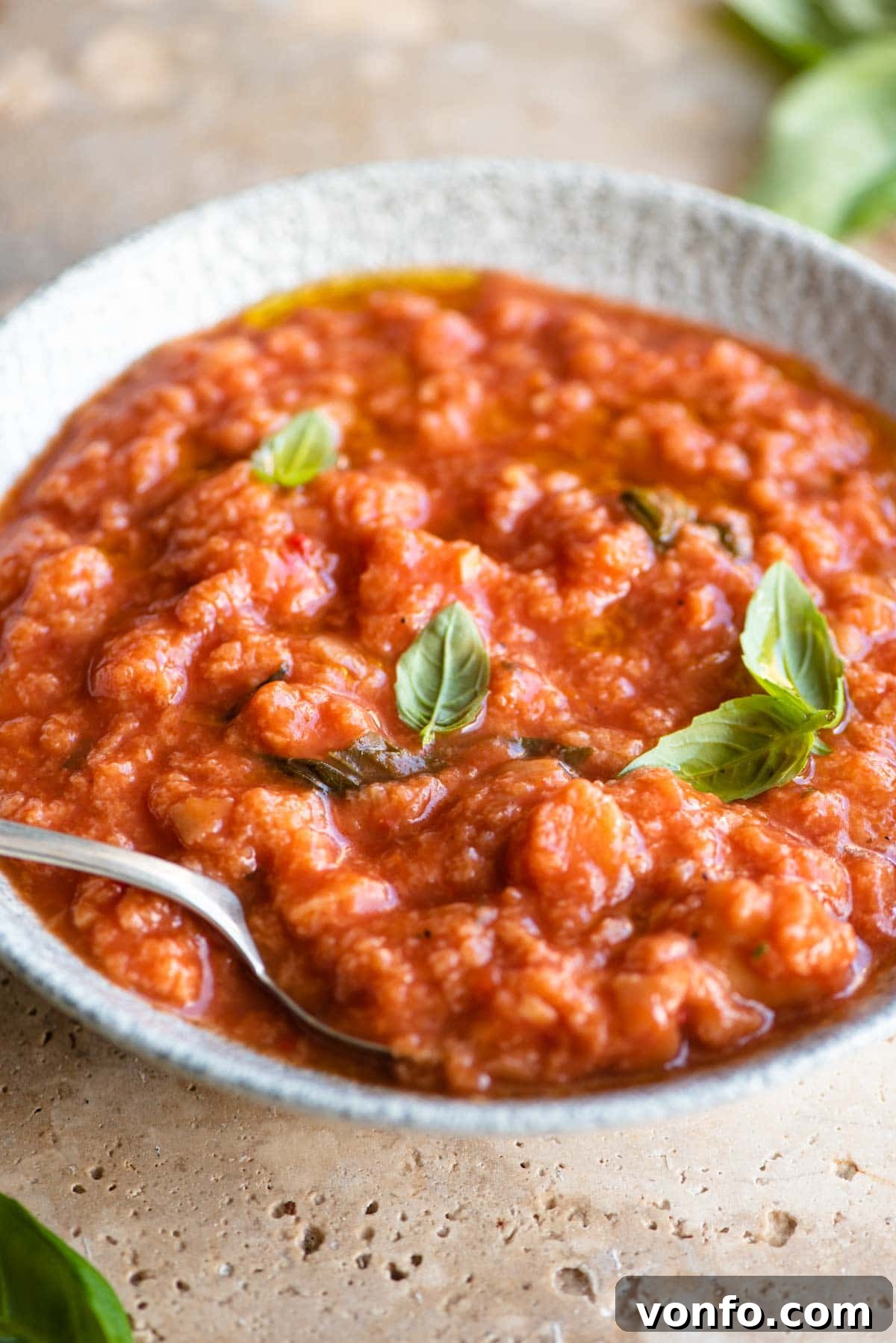
Once the full hour of resting is complete, remove the lid from the pot. Using a sturdy spoon or ladle, gently stir the soup, breaking up the softened bread until it achieves a thick, creamy, yet still wonderfully rustic consistency. The bread should be thoroughly integrated into the tomato base, giving the soup its characteristic body and texture. Serve the Pappa al Pomodoro warm in individual bowls. For the perfect and authentic Tuscan finish, top each serving with an extra scattering of fresh basil leaves and a final luxurious drizzle of your finest extra virgin olive oil. This simple yet elegant garnish adds a burst of freshness, enhances the overall aroma, and elevates the flavor of this timeless Italian dish to new heights.
Recipe Tips & Frequently Asked Questions for Pappa al Pomodoro
Here are some additional insights, clever tips, and answers to common questions to help you master this delightful Tuscan soup and ensure every batch is as perfect as the last.
- Tomato Quality Matters Immensely: As previously emphasized, passata is simply pureed, uncooked tomatoes typically sold in jars, often labeled “tomato puree” in the US. The superior taste of high-quality brands like Cirio or Mutti cannot be overstated. These premium brands offer a sweeter, less acidic, and more vibrantly flavorful tomato base, which is fundamental to the soup’s success and authentic taste. Investing in good tomatoes is like building your house on a strong foundation – it makes all the difference.
- Adjusting Spice Levels: The red pepper flakes are entirely optional and can be adjusted precisely to your personal taste. Start with a small pinch for a subtle warmth that complements the tomatoes, or increase it to your liking for a more pronounced spicy kick. For those who prefer no heat, they can be omitted entirely, making the soup enjoyable for a wider audience, including children.
- The Magic of Stale Bread: You might wonder why stale bread is so crucial. The reason is simple yet profound: fresh bread tends to turn mushy and can disintegrate too quickly when soaked in liquid, resulting in a less desirable, gloopy texture. Stale bread, particularly crusty white varieties like a country loaf, rustic Italian bread, or even a good sourdough, holds its structure much better while still absorbing the liquid beautifully, contributing to the soup’s characteristic “pappa” (which translates to “pap” or “gruel”) texture. It’s the secret to that perfectly thick, hearty consistency.
- Serving Temperature Versatility: Pappa al Pomodoro is one of those rare and wonderful dishes that truly shines at various temperatures. While most commonly served warm, enjoying it at room temperature, especially on a warm day, allows the fresh basil and bright tomato flavors to pop even more vibrantly. Experiment to find your preferred serving temperature!
- Enhancing Flavor with Cheese: For an even richer and more complex flavor profile, consider adding a small amount of finely grated Pecorino Romano or Parmigiano Reggiano cheese to the soup just before serving, or sprinkle some generously on top of each bowl. This is a common and beloved variation in many Tuscan homes, adding a salty, umami depth.
- Choosing the Right Pot: A large, heavy-bottomed pot or Dutch oven is ideal for this recipe. Its even heat distribution prevents scorching and allows the soup to simmer gently and consistently, ensuring optimal flavor development.
Frequently Asked Questions (FAQs)
- What’s the best bread to use for Pappa al Pomodoro?
- Stale white crusty bread is absolutely ideal for Pappa al Pomodoro. Think of varieties like a day-old country loaf, rustic Italian bread, or a firm sourdough. The crusts can and should be left on, as they add to the rustic character and provide a good chew once softened. If truly stale bread isn’t available, fresh crusty white bread can be used as a substitute, but be aware that the texture might be slightly softer and less ‘pappa-like.’
- Can I make Pappa al Pomodoro in advance?
- Yes, absolutely! This bread soup is one of those fantastic dishes that often tastes even better the next day. The resting period allows the flavors to truly meld and deepen, resulting in a more harmonious and delicious experience. Prepare it, let it cool completely, and then refrigerate until ready to reheat and serve.
- How long does Pappa al Pomodoro last and can I freeze it?
- Properly stored in an airtight container, the soup will keep beautifully in the refrigerator for up to 3 days. It also freezes exceptionally well. For freezing, allow the soup to cool completely to room temperature, then transfer it to freezer-safe containers or heavy-duty freezer bags. It can be frozen for up to 3 months. To reheat, thaw in the refrigerator overnight and gently warm it on the stovetop over low heat, adding a splash of water or vegetable stock if needed to adjust consistency.
- Is Pappa al Pomodoro vegetarian or vegan?
- When prepared with vegetable stock, Pappa al Pomodoro is inherently vegetarian. To make it completely vegan, ensure your chosen bread is free of any dairy or eggs (many artisanal breads are naturally vegan), and strictly use a plant-based stock. Drizzle generously with good quality olive oil instead of any dairy-based garnishes like Parmesan cheese.
Explore More Delicious Italian Soup Recipes
If you’ve enjoyed the rustic charm, comforting flavors, and the simple elegance of Pappa al Pomodoro, we warmly invite you to delve deeper into the wonderful world of Italian soups. These carefully curated recipes offer a diverse taste of Italy’s rich culinary landscape, ranging from hearty legume-based stews to savory and aromatic onion broths, each with its own unique story and flavor profile.
- Carabaccia (Tuscan Onion Soup): A flavorful and historic onion soup from Tuscany, often considered an intriguing precursor to the more widely known French onion soup, offering sweet, caramelized notes.
- Hearty Tuscan Farro Soup with Beans: A wholesome and immensely satisfying soup featuring ancient grains like farro and nutritious legumes, perfect for a hearty and healthy meal that warms you from the inside out.
- Authentic Italian Lentil Soup (Zuppa di Lenticchie): A simple yet incredibly flavorful lentil soup, deeply rich in Italian tradition and packed with healthy, nourishing ingredients, ideal for a wholesome dinner.
- Comforting Pastina Soup (Italian Chicken Noodle Soup): A beloved Italian remedy and ultimate comfort food, often enjoyed when feeling under the weather or simply craving a gentle, nourishing, and nostalgic meal.
- Wholesome Tuscan Farro Soup with Beans: A second link to this excellent and nourishing soup, highlighting its popularity, versatility, and numerous health benefits. It’s worth trying!
Your Complete Pappa al Pomodoro Recipe Card
Pappa al Pomodoro (Authentic Tuscan Bread Soup)
Rating: 5 out of 5 stars (based on 4 votes)
Recipe by Emily
Cook Time: 15 minutes
Total Time: 1 hour 15 minutes
Servings: 4 people
Summary: Pappa al Pomodoro is a classic Tuscan tomato bread soup, made with the most basic yet flavor-packed ingredients: ripe tomatoes, crusty stale bread, fresh basil, and aromatic garlic. It’s incredibly delicious, wonderfully rustic, and the perfect resourceful way to transform stale bread into a comforting meal. Serve it garnished with extra fresh basil and a final luxurious drizzle of extra virgin olive oil.
Ingredients
- 2 cloves fresh garlic, finely chopped
- 1/4 tsp red pepper flakes (chilli flakes), optional, adjust to taste
- 3 cups (approx. 720g) passata (pureed tomatoes), high-quality brands like Cirio or Mutti recommended
- 4 cups (1 litre) vegetable stock
- 4-5 thick slices stale white crusty bread (approx. 8.8oz/250g)
- 1 tbsp extra virgin olive oil, plus more for drizzling
- 1 small handful fresh basil leaves, torn
- Salt and freshly ground black pepper, to taste
Instructions
- Add 1 tbsp of olive oil to a large pot over medium heat. Add the finely chopped garlic and red pepper flakes (if using). Sauté for 30 seconds until fragrant, taking care not to let the garlic brown.
- Pour in the passata (pureed tomatoes) and bring to a boil. Once boiling, add the vegetable stock. Bring the soup back to a boil, then reduce the heat to a gentle simmer. Let it simmer, uncovered, for 15 minutes to concentrate the flavors.
- Turn off the heat completely. Stir in the torn fresh basil leaves, salt, and pepper. Carefully place the slices of stale, crusty bread on top of the soup. Gently push the bread down so it is fully submerged in the tomato broth, but do not break it apart yet. Cover the pot with a lid and let it rest for 1 hour. This resting period is crucial for the bread to absorb the liquid and for the soup to thicken.
- After 1 hour, remove the lid. Stir the soup gently, breaking up the softened bread with your spoon until it forms a thick, rustic, and creamy consistency. Serve warm in bowls, garnished with more fresh basil leaves and a generous drizzle of extra virgin olive oil.
Video Guide
For a visual guide to making this delicious Pappa al Pomodoro, please watch our video tutorial:
Video Description: Learn how to make Pappa al Pomodoro, a rustic Tuscan tomato bread soup, using simple pantry ingredients like tomatoes, stale bread, fresh basil, and garlic. This easy and delicious soup is the perfect way to utilize stale bread and can be enjoyed warm or at room temperature.
Recipe Notes
- Tomatoes: Always opt for high-quality passata (pureed tomatoes) like Cirio or Mutti for the richest and most authentic flavor profile. The quality of your tomatoes truly makes a difference.
- Red Pepper Flakes: The quantity of red pepper flakes can be adjusted to personal taste. Feel free to add more for extra heat or omit them entirely for a mild version.
- Prepare in Advance: For an even more flavorful experience, prepare this soup a day ahead. The flavors deepen and meld beautifully overnight, enhancing its overall taste.
- Storage and Freezing: Store any leftover Pappa al Pomodoro in an airtight container in the refrigerator for up to 3 days. It freezes exceptionally well too; cool completely before freezing in suitable containers for up to 3 months.
Helpful Information for All Our Recipes
- We consistently use extra virgin olive oil in all our recipes unless otherwise specified, as it adds a superior flavor.
- When using canned or jarred tomatoes of any kind, we strongly recommend opting for Cirio or Mutti brands for the best possible results and authentic Italian flavor.
- All vegetables listed in our ingredient lists are assumed to be medium-sized unless specifically stated otherwise.
- All recipes featured on our blog are meticulously tested and developed using a fan (convection) oven to ensure consistent results.
- Find out more about how nutrition information is calculated on our website.
- Explore our comprehensive guide to Essential Italian Pantry Staples to stock your kitchen like an Italian nonna.
- Discover our must-have Essential Kitchen Tools for Italian Cooking that will elevate your culinary creations.
Approximate Nutrition Information (Per Serving)
Nutrition information is automatically calculated and should be used as an approximation.
- Calories:
- 297 kcal
- Carbohydrates:
- 56g
- Protein:
- 11g
- Fat:
- 5g
- Saturated Fat:
- 1g
- Polyunsaturated Fat:
- 1g
- Monounsaturated Fat:
- 3g
- Sodium:
- 1316mg
- Potassium:
- 913mg
- Fiber:
- 5g
- Sugar:
- 13g
- Vitamin A:
- 1520 IU
- Vitamin C:
- 21mg
- Calcium:
- 65mg
- Iron:
- 6mg
Did you try this Pappa al Pomodoro recipe?
We’d love to hear about your experience! Please leave a comment below and share your thoughts!
If you’ve had the pleasure of preparing this delightful **Pappa al Pomodoro** recipe or embarked on any other culinary adventure from our blog, we would be absolutely thrilled to hear from you! Please don’t hesitate to rate the recipe and share your thoughts, tips, or any variations you tried in the comments section below – your feedback is incredibly valuable to us and our community of home cooks. To stay connected with our latest delicious creations, remember to **FOLLOW US** on FACEBOOK, INSTAGRAM, and PINTEREST. You can also sign up for our exclusive NEWSLETTER to receive new, inspiring recipes directly in your inbox every single week, ensuring you never miss a delicious update.
This post was originally published on August 17th, 2017, and has since been extensively updated and improved to enhance user experience, provide more comprehensive information, and reflect the latest culinary insights.